Spoiler warning: This article reveals major endings and plot twists from all ten movies discussed below. Proceed only if your watchlist is caught upor if spoilers are simply another genre to you.
A great movie ending closes the story. An unforgettable ending leaves one window suspiciously open, allowing viewers to climb back inside with notebooks, screenshots, and enough red string to alarm the neighbors.
Movie fan theories flourish wherever filmmakers leave ambiguity. Sometimes viewers identify genuine clues planted by a director. Sometimes they transform continuity errors into evidence of time travel. The most captivating theories do more than “solve” a movie ending: They change what the entire story means.
The following interpretations range from highly plausible to delightfully unhinged. None should automatically be treated as canon, but each demonstrates how ambiguous movie endings and hidden clues can keep a film alive long after the credits roll.
1. Cobb Is Still Dreaming at the End of Inception
The theory
After completing his mission, Dom Cobb returns home and spins his top, which falls in reality but continues indefinitely in dreams. He walks away before checking it. The camera remains behind, watching the top spin, wobble slightly, and disappear beneath a cut to black. Fans have debated ever since whether Cobb actually escaped the dream world.
Why it remains convincing
The final scene feels suspiciously perfect. Cobb clears immigration without trouble, finds his children in nearly the same position he remembers, and receives the reunion he desperately wanted. That dreamlike neatness supports the theory that his subconscious has constructed a comforting conclusion.
There is evidence for reality, however. Michael Caine has said Christopher Nolan told him that scenes featuring his character occur in the real world, and Caine appears during the reunion. Other viewers point to Cobb’s wedding ring: He generally wears it in dreams but not while awake.
Nolan’s larger point is more emotionally interesting than a laboratory-certified answer. Cobb no longer looks at the top because he has stopped allowing uncertainty to control him. The spinning top tests the audience, not Cobband millions of viewers have been failing that test enthusiastically since 2010.
2. Childs Is the Creature in The Thing
The theory
John Carpenter ends The Thing with MacReady and Childs sitting among the burning remains of their Antarctic station. Either man could be human, infected, or moments away from freezing to death. One popular theory argues that Childs has been assimilated and MacReady quietly realizes it.
The supposed evidence
Fans have examined the scene like investigators studying extremely frosty surveillance footage. Childs appears to produce less visible breath than MacReady. His eyes seem to lack the reflected light seen in human characters. Another theory claims MacReady hands him a bottle filled with gasoline rather than whiskey. Childs drinks without reacting, causing MacReady to laugh because he has confirmed his suspicion.
These clues are far from decisive. Childs’ breath can be seen in some shots, changing light may explain his eyes, and the gasoline idea is never established onscreen. Cinematographer Dean Cundey discussed using eye reflections elsewhere in the movie, but Carpenter later rejected the idea that this lighting trick reveals the ending.
Carpenter has said he knows the answer while refusing to share it. Appropriately, the film’s final monster may be uncertainty itself. Even if both men are human, neither can trust the otherand in The Thing, distrust spreads almost as efficiently as alien cells.
3. Everything After Rekall Is a Dream in Total Recall
The theory
Douglas Quaid visits Rekall to purchase the artificial memory of being a secret agent on Mars. The procedure appears to malfunction, and Quaid discovers that he may already be a highly trained operative with erased memories. The fan theory proposes a simpler explanation: The procedure worked perfectly, and nearly everything afterward is the fantasy Quaid bought.
The clues hidden in the sales pitch
Before the implant begins, Rekall employees describe an adventure remarkably similar to the plot that follows. Quaid will travel to Mars, become a secret agent, fight villains, and romance an athletic brunette. A technician even mentions a “blue sky on Mars,” precisely the image that concludes the movie.
Later, Dr. Edgemar appears and warns Quaid that he is trapped in a delusion. He predicts that the fantasy will become increasingly chaotic before Quaid suffers permanent psychological damage. Moments later, a bead of sweat convinces Quaid that the doctor is lyingbut that nervous detail could itself be part of the simulation.
The final image fades to white rather than black, which some viewers interpret as Quaid being lobotomized or dying at Rekall. Director Paul Verhoeven deliberately supported both readings. Consequently, Total Recall offers the rare twist in which “it was all a dream” is not a lazy escape hatch. It is half of the movie’s carefully engineered trap.
4. Deckard Is a Replicant in Blade Runner
The theory
Rick Deckard hunts artificial humans called replicants, yet the movie repeatedly invites viewers to ask whether the hunter belongs to the group he is killing. The most famous interpretation of Blade Runner holds that Deckard is an unaware replicant equipped with manufactured memories.
The unicorn clue
In later cuts of the film, Deckard dreams about a unicorn. At the end, he discovers an origami unicorn left by fellow officer Gaff. If Gaff knows the content of Deckard’s private dream, the dream may be an implanted memory stored in police records. Gaff also tells Deckard that he has “done a man’s job,” a phrase that becomes deliciously loaded under this interpretation.
Director Ridley Scott has repeatedly supported the replicant reading. Harrison Ford historically preferred Deckard to be human, while sequel director Denis Villeneuve preserved the ambiguity in Blade Runner 2049. That disagreement has become part of the film’s mythology.
The theory matters because it completes the movie’s central irony. Deckard begins as an emotionally numb executioner, while the replicants display fear, loyalty, rage, and a fierce desire to live. Whether he is biologically human becomes less important than whether he behaves humanely. The test was never hidden in his bloodstream; it was hiding in his choices.
5. Andrew Chooses His Fate in Shutter Island
The theory
The film reveals that “U.S. Marshal Teddy Daniels” is actually Andrew Laeddis, a patient whose elaborate investigation has been staged by his doctors. Andrew briefly accepts that he killed his wife after she drowned their children. By the next morning, however, he appears to have returned to his Teddy identity, making a lobotomy inevitable.
The popular theory says Andrew has not relapsed at all. He deliberately pretends to be Teddy because living with the truth is more painful than losing himself.
The final question changes everything
Before walking toward the orderlies, Andrew asks whether it is worse “to live as a monster or to die as a good man.” That strangely lucid question implies that he understands who he is and what will happen next. He may be choosing psychological death rather than continuing to live with unbearable guilt.
Dr. Sheehan’s reaction strengthens this reading. He calls after Andrew as if realizing, a second too late, that his patient remains aware. The line was created for the film rather than taken directly from Dennis Lehane’s novel, giving the adaptation a more ambiguous conclusion.
Lehane has offered another possibility: Andrew experiences only a momentary flash of sanity within a genuine relapse. Either way, the ending converts the movie’s mystery from “Who is Teddy?” into the much sadder question, “How much truth can one person survive?”
6. The Briefcase Holds Marsellus Wallace’s Soul in Pulp Fiction
The theory
When Vincent Vega opens Marsellus Wallace’s mysterious briefcase, golden light illuminates his face. Viewers never see the contents. The most enduring fan theory claims that the case contains Marsellus’s stolen soul.
Why fans made the supernatural connection
The briefcase combination is 666, traditionally associated with the devil. Marsellus has a bandage on the back of his neck, which theorists connect to folklore about souls being removed through that area. The supernatural reading also makes Jules and Vincent’s survival during the apartment shooting feel like genuine divine intervention rather than astonishingly poor marksmanship.
The problems are considerable. The neck bandage reportedly covered a real scar on actor Ving Rhames, and there is no established myth declaring the back of the neck a standard soul-delivery entrance. Quentin Tarantino has treated the object as a MacGuffin whose contents belong to the audience’s imagination. During filming, its famous glow came from an orange light.
Still, the soul theory adds thematic unity. Jules believes he has witnessed a miracle and decides to transform his life; Vincent dismisses the experience and soon dies. The briefcase does not need to contain a literal soul to ask whether these characters are in danger of losing theirs.
7. The Overlook Absorbs Jack in The Shining
The theory
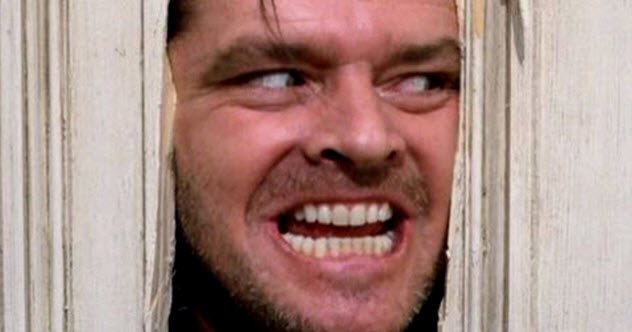
After Jack Torrance freezes in the hedge maze, the camera moves through the Overlook Hotel and settles on a photograph from its 1921 Fourth of July Ball. Jack stands smiling in the crowd despite the main story occurring decades later. The theory suggests that the hotel has absorbed him into its historyor that he has always been one of its recurring servants.
A cycle disguised as a ghost story
Grady tells Jack that he has “always” been the caretaker. Jack also repeats the violence of an earlier caretaker who murdered his family. Under the cyclical interpretation, the Overlook recruits vulnerable people, encourages them to reenact old atrocities, and then adds them to its permanent collection.
Another reading treats the photograph as evidence of reincarnation. Jack is not merely influenced by a former guest; he is the latest version of someone repeatedly drawn back to the hotel. The impossible architecture and slippery sense of time support the idea that the Overlook does not obey ordinary reality.
More extravagant theories claim Stanley Kubrick planted coded references to the Apollo 11 mission, American imperialism, or the Holocaust. Kubrick’s longtime assistant Leon Vitali dismissed many such claims. The historical-cycle interpretation survives better because it grows directly from the ending and the film’s recurring violence. The Overlook remembers everythingand apparently runs the world’s most murderous loyalty program.
8. The Invaders in Signs Are Demons, Not Aliens
The theory
The creatures in Signs are generally described as extraterrestrials, but the film never provides a scientific explanation of their origin. A fan theory argues that they are demons and that their defeat is a spiritual event rather than an alien invasion with a strangely inconvenient water allergy.
Faith, water, and “signs”
Graham Hess is a former Episcopal priest who has lost his faith. The creatures arrive during his spiritual crisis, and the story concludes only after a chain of apparent coincidences restores his belief. His daughter Bo leaves glasses of water throughout the house; his dying wife’s final words direct Merrill to swing his baseball bat; and Morgan’s asthma prevents him from inhaling the creature’s poison.
Supporters suggest the water functions as holy water. Reports in the film mention that a primitive method of defeating the invaders was discovered in the Middle East, adding to the religious interpretation. The crop-circle imagery has even been compared to demonic symbols.
The theory is not canon, and the film openly uses the language of extraterrestrial invasion. Yet viewing the creatures as demons resolves the familiar question of why beings vulnerable to water would attack a planet covered in it. More importantly, it fits the movie’s actual subject: a grieving man deciding whether meaningful patterns exist or whether life is merely an untidy pile of coincidences.
9. Snowpiercer Is a Dark Sequel to Willy Wonka
The theory
The gloriously strange “Wonkapiercer” theory proposes that Wilford, the ruler of the perpetually moving train in Snowpiercer, is an adult Charlie Bucket who inherited Willy Wonka’s factory, adopted his mentor’s name, and eventually built a self-sustaining transportation empire.
From chocolate factory to frozen train
Both movies follow a group moving through a fantastic industrial structure. Participants disappear along the way until one person reaches the eccentric owner, who reveals that the journey was partly designed to identify a successor. Both stories revolve around food, children, class, temptation, and elaborate machinery controlled by one secretive businessman.
The theory claims that Wonka’s experimental transportation technology evolved into the Snowpiercer engine. Wilford’s “W” branding resembles Wonka’s, while his carefully staged succession test echoes Charlie’s factory tour. One especially dark suggestion holds that the train once relied on Oompa Loompas as essential workers. After they died out, children became small enough to replace broken engine components.
There is no official connection between the films, and Snowpiercer was adapted from a French graphic novel. Nevertheless, the parallels produce a startling thematic bridge. Wonka’s whimsical factory becomes the ancestor of an authoritarian machine, while innocent Charlie becomes the kind of industrialist who values a system more than the people trapped inside it. Childhood officially canceled.
10. Billy’s Death Ends the Horror in The Mist
The theory
At the devastating end of The Mist, David Drayton and four other survivors become stranded in a car surrounded by monsters. With only four bullets remaining, David kills everyone elseincluding his young son, Billyto spare them from a worse death. He steps outside expecting to be killed, only to see the military arrive moments later.
One chilling theory argues that Billy’s death is not tragic timing. It is the sacrifice that causes the mist to retreat.
Mrs. Carmody may have been horribly right
Inside the supermarket, religious fanatic Mrs. Carmody repeatedly demands that Billy be sacrificed. Her predictions seem to become more accurate as the crisis worsens, helping her gain followers. Shortly after David finally performs the sacrifice she demanded, the monsters are defeated and organized rescue forces appear.
The interpretation suggests Carmody understood the supernatural rules even though she was cruel, manipulative, and dangerous. It makes David’s decision cosmically necessary rather than merely prematurewhich may be even more disturbing.
A less supernatural explanation is stronger: The army was already advancing, and David surrendered moments before salvation arrived. That reading supports the film’s bleak warning about despair. Either way, the theory intensifies one of modern horror’s most punishing endings. Stephen King’s original novella ended more openly; director Frank Darabont created the film’s final shock, proving that sometimes adaptation means looking at hope and deciding it has had things too easy.
Why Movie Fan Theories Remain So Captivating
The best fan theories live in the narrow space between evidence and uncertainty. A theory supported by nothing is merely an entertaining invention. A theory confirmed beyond doubt becomes ordinary plot. The irresistible ones offer enough clues to seem possible while leaving enough gaps for viewers to argue about them for years.
These interpretations also reveal what audiences care about. The debate over Inception concerns the nature of reality, but it is equally about whether emotional peace requires certainty. The Blade Runner discussion asks whether identity comes from biology, memory, or behavior. The ending of Shutter Island forces viewers to consider whether truth is always preferable to illusion.
Even the wilder theories perform useful work. Wonkapiercer turns two unrelated films into a playful examination of inherited power. The soul inside the Pulp Fiction briefcase provides a supernatural framework for a story about moral choices. A strong fan theory does not have to be correct. It only has to make the next viewing more interesting.
The Fan-Theory Experience: Watching Movies Like a Detective
The first viewing belongs to the story
The most enjoyable way to encounter a twist-heavy movie is usually to watch it without trying to defeat it. When every prop is treated as evidence and every supporting character is questioned like a suspect, suspense can begin to feel like homework. Let the first viewing deliver its emotional impact. Be surprised, confused, delighted, or personally offended by a spinning top. Analysis can wait until the nervous system returns to normal.
The second viewing becomes a different movie
Rewatching after learning a theory is a wonderfully strange experience. Scenes that once seemed ordinary become loaded with possible meaning. In Shutter Island, hospital employees no longer appear merely unfriendly; their wary expressions suggest that they are interacting with an unpredictable patient. In Blade Runner, every conversation about memory becomes potentially autobiographical for Deckard. The plot remains unchanged, but the viewer has changed, which is one of cinema’s cheapest and most reliable special effects.
Group discussions reveal more than “the answer”
Fan theories are particularly enjoyable after a group screening. One viewer focuses on dialogue, another remembers a background object, and someone else confidently invents a detail that was never in the movie. That last person is often the loudest, so keep the remote nearby.
The discussion becomes revealing because people interpret ambiguity through personal experience. An optimistic viewer may see Cobb’s reunion as reality. A skeptic may assume it is another dream. Someone who views truth as morally necessary may believe Andrew genuinely relapses in Shutter Island, while another person may read his final decision as deliberate escape. The theories become informal personality tests disguised as conversations about cinematography.
Checking evidence is part of the fun
A rewarding theory should survive contact with the actual film. Pause the scene, inspect the claimed clue, and compare different cuts when relevant. Many famous pieces of “evidence” weaken under examination. Childs does show visible breath in parts of The Thing finale. The glowing briefcase in Pulp Fiction has a practical production explanation. Those discoveries do not necessarily ruin a theory; they simply separate textual interpretation from internet folklore.
Creator interviews can help, but they do not always settle the matter. Directors sometimes preserve ambiguity intentionally, actors may hold conflicting interpretations, and later sequels can complicate earlier answers. Once a film reaches audiences, its meaning becomes a conversation between what the creators made and what viewers genuinely find within it.
A theory should deepen the movie, not flatten it
The least satisfying theories explain every unusual event by declaring that a character was dead, dreaming, hallucinating, or secretly connected to another franchise. Occasionally those ideas fit beautifully. More often, they erase the choices and consequences that made the story compelling.
A useful test is simple: Does the theory add thematic meaning, or does it merely replace the movie with a clever sentence? “Deckard is a replicant” strengthens Blade Runner because it sharpens the film’s questions about humanity. “Everything was imaginary” can weaken a story if it makes every relationship irrelevant.
The finest fan-theory experience therefore ends without total certainty. You notice new clues, test an interpretation, debate it with friends, and return to the movie with a slightly altered perspective. The goal is not always to close the case. Sometimes the unsolved case is precisely why the movie remains worth watching.