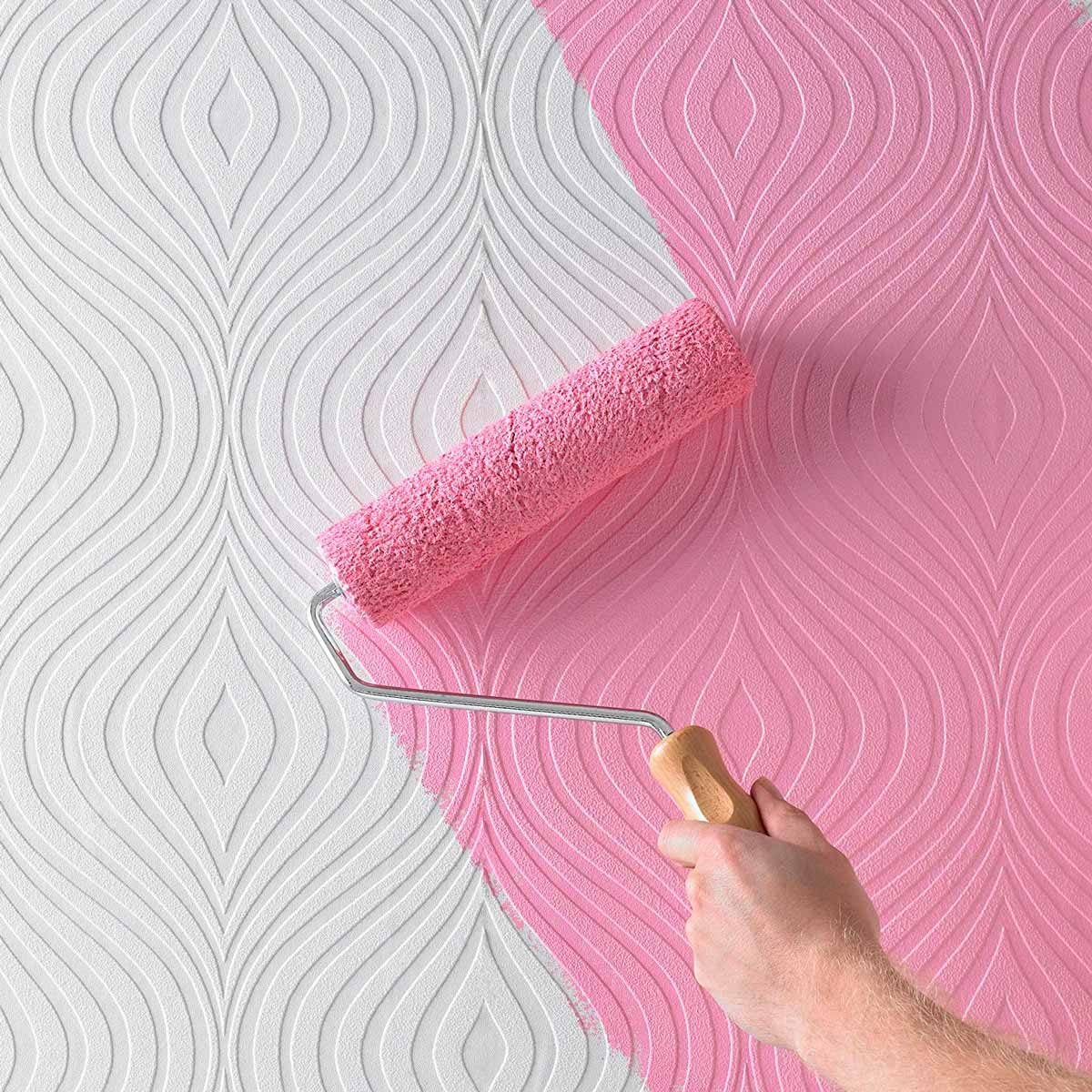
There is paint. There is wallpaper. And then there is paintable wallpaperthe home-decor equivalent of ordering fries and discovering they come with cheese. You get two familiar ideas in one surprisingly useful wall treatment.
Paintable wallpaper is designed to add texture, architectural detail, or subtle pattern to a surface while still letting you choose the final color. Instead of committing to a printed floral, geometric, or trendy color palette, you install a textured wallcovering and paint it almost any shade that works with your room.
It can also be a clever option for imperfect walls, older plaster, boring ceilings, faux beadboard treatments, and accent areas where plain paint feels a little too plain. But before you start rolling paint onto freshly hung wallpaper, there are some important details to understand. Installation methods, drying times, surface preparation, paint finishes, and even roller nap can affect the final result.
What Is Paintable Wallpaper?
Paintable wallpaper is a wallcovering specifically manufactured so its surface can accept paint. Most varieties feature a raised or embossed design that remains visible after painting, creating dimension that ordinary wall paint cannot easily reproduce.
Products available in the U.S. market include paper-backed expanded vinyl, embossed vinyl, textured paper, peel-and-stick styles, prepasted wallpaper, and traditional unpasted wallcoverings. Decorative designs range from understated linen and plaster effects to brick, beadboard, tin-ceiling patterns, geometric motifs, scrollwork, and dramatic architectural textures.
Some products can even be left white if that happens to suit the room. Think of them as walls with optional wardrobe changes.
Paintable Wallpaper Is Not the Same as Painting Over Wallpaper
This distinction matters.
Paintable wallpaper is intentionally designed to receive paint. Painting over ordinary wallpaper is a different renovation technique, usually considered when existing wallpaper is difficult to remove. Conventional wallpaper may have coatings, seams, damaged edges, adhesives, or finishes that behave unpredictably under paint.
If you want a textured painted finish from the beginning, buy a product specifically labeled paintable wallpaper. Do not assume that any random roll of wallpaper becomes paintable just because you own a roller and feel optimistic.
Why Homeowners Use Paintable Wallpaper
1. It Adds Texture Without Major Construction
The biggest attraction is dimension. A normal painted drywall surface is flat. Paintable textured wallpaper can imitate plaster, beadboard, decorative ceiling tiles, fabric, brushstrokes, brick, or other raised finishes.
Once painted, the wall may look more like a custom architectural surface than wallpaper. Light naturally catches the high and low areas, creating shadows that make even one solid color look more sophisticated.
2. It Can Make Minor Wall Imperfections Less Noticeable
Older houses rarely contain perfectly smooth walls. Small dents, shallow cracks, patched areas, uneven plaster, and other minor defects can become painfully obvious after applying ordinary paint.
Thicker textured wallcoverings may disguise some of these cosmetic imperfections. Manufacturers even market certain paintable wallpapers specifically for problem walls.
That does not mean wallpaper can rescue a wall that looks as if it lost an argument with a sledgehammer. Large cracks, loose plaster, water damage, mold, active leaks, and major unevenness still require proper repairs.
3. You Control the Final Color
Traditional wallpaper forces you to choose both pattern and color at the same time. Paintable wallpaper separates those decisions.
You can select the texture first, install it, and then choose a paint color that coordinates with flooring, cabinets, furniture, trim, or other finishes. Years later, many paintable products can be repainted when your color scheme changes.
This flexibility is especially appealing when you love texture but do not want your wall color dictated by a manufacturer’s printed palette.
Common Types of Paintable Wallpaper
Embossed and Textured Vinyl
Textured vinyl is one of the most common choices. Raised patterns create noticeable relief while the vinyl surface adds durability. Depending on the exact product, it may also offer washable or scrubbable performance.
Designs can resemble stucco, woven fabric, bark, brick, abstract plaster, or elaborate historical ornamentation.
Anaglypta-Style Wallpaper
Anaglypta is strongly associated with deeply embossed, paintable wallcoverings. These designs can range from subtle textures to ornate patterns that resemble carved plasterwork.
They are particularly useful when you want traditional architectural character without hiring a plaster artisan and explaining to your family why the wall renovation suddenly requires a second mortgage.
Paintable Beadboard Wallpaper
Beadboard-style wallpaper creates vertical raised lines intended to imitate traditional wood paneling. It can work particularly well below a chair rail or molding where the finished installation visually resembles painted wainscoting.
It weighs less, typically requires fewer tools, and may be easier to install than sheets of real beadboard.
Prepasted, Unpasted, and Peel-and-Stick Options
Application methods vary considerably.
- Prepasted wallpaper: Adhesive is already on the backing and is normally activated with water according to the manufacturer’s instructions.
- Unpasted wallpaper: Wallpaper adhesive must be applied during installation.
- Paste-the-wall products: Adhesive is applied directly to the prepared wall.
- Peel-and-stick paintable wallpaper: Uses a self-adhesive backing and can simplify certain installations.
Never assume the installation method from appearance alone. Read the label for the specific wallcovering you purchase.
Where Paintable Wallpaper Works Best
Living rooms, dining rooms, bedrooms, home offices, entryways, powder rooms, and accent walls are natural candidates. Paintable wallpaper also works beautifully in smaller architectural areas such as alcoves, niches, built-ins, or the wall behind a headboard.
Ceilings are another interesting application. An embossed ceiling paper painted a single color can mimic decorative plaster or vintage pressed-tin effects without installing actual metal panels.
However, location matters. Some paintable wallpapers are unsuitable for bathrooms, kitchens, or areas exposed to substantial moisture. Others are washable vinyl products that tolerate more demanding environments.
Always follow the individual manufacturer’s room and moisture recommendations rather than assuming every paintable wallpaper behaves alike.
How to Prepare Walls for Paintable Wallpaper
Wallpaper has an annoying habit of remembering everything you hoped it would hide. Proper preparation therefore matters as much as the decorative surface itself.
Repair the Surface
Fill holes, dents, and cracks with an appropriate patching compound. Sand repaired areas smooth after they dry. Remove loose paint and repair damaged drywall or plaster.
If the existing wall has heavy orange-peel, knockdown, or another pronounced texture, simply covering it may produce poor adhesion or visible irregularities. Skim coating can provide a flatter substrate when necessary.
Clean the Wall
Dust, grease, and grime interfere with adhesion. Walls should be clean and completely dry before installation.
This is especially important in kitchens, hallways, or other areas where invisible layers of grease and fingerprints can accumulate over time.
Prime When Required
Many professional wallpaper instructions recommend an appropriate wallcovering primer or primer-sealer. Priming can seal porous surfaces, improve installation, create more consistent adhesion, and help make future removal less destructive.
Requirements differ by wallpaper type. Some peel-and-stick products, for example, may be installed over properly cured painted surfaces without a separate wallpaper primer.
The safest rule is remarkably unglamorous but effective: read the instructions that came with the roll.
How Paintable Wallpaper Is Installed
The exact process depends on whether the wallpaper is prepasted, unpasted, paste-the-wall, or self-adhesive, but the general sequence is similar.
- Measure the wall carefully.
- Determine the pattern repeat and matching requirements.
- Establish a level or plumb starting line.
- Cut the first panel with extra material for trimming.
- Activate or apply adhesive as directed.
- Position the panel without stretching the material.
- Smooth from the center toward the edges.
- Remove trapped air and excess adhesive.
- Align the next panel accurately at the seam.
- Trim around ceilings, baseboards, outlets, and other obstacles.
Pattern alignment still matters even when the wallpaper will eventually be one solid color. Raised motifs that jump awkwardly from one strip to another can remain obvious after painting.
How Long Should You Wait Before Painting?
Do not install wallpaper at breakfast and start painting it by lunch simply because patience did not make the shopping list.
The adhesive needs enough time to dry and the wallcovering needs to stabilize. Painting prematurely may contribute to bubbling, wrinkling, seam problems, or movement of the wallpaper.
Drying recommendations vary by product and environmental conditions. Some professional guidance suggests roughly 36 to 72 hours, while certain products may specify a different waiting period.
Temperature, ventilation, wall porosity, adhesive type, and humidity can influence drying. Follow the wallpaper manufacturer’s instructions whenever they specify a curing time.
What Paint Should You Use?
Interior latex or acrylic wall paint is commonly used on many modern paintable wallcoverings, but compatibility should always be confirmed with the product manufacturer.
Low-sheen finishes such as matte and eggshell can emphasize texture softly without creating excessive reflection. Satin can offer additional washability in suitable rooms while producing a slightly brighter appearance.
Very glossy finishes tend to highlight every ridge, seam, bump, and installation imperfection. That can be attractive when intentionally creating a dramatic embossed effect, but it is much less forgiving.
Test Before Painting the Whole Wall
If possible, save a scrap or create a sample panel. Paint it with your intended color and finish.
A sample helps answer several questions immediately:
- Does the paint obscure too much of the texture?
- Does the sheen make the pattern attractive or overly shiny?
- Does the color produce enough contrast between highlights and shadows?
- Will one coat provide coverage, or are additional coats necessary?
A ten-minute test can prevent an entire afternoon of muttering at your wall.
Use the Right Roller for the Texture
A smooth or lightly textured paintable wallpaper may accept paint easily with an ordinary roller. Deeply embossed wallpaper can require a medium or deeper nap so paint reaches recessed areas.
Apply paint evenly without flooding the surface. Excessive paint can pool inside fine details and reduce the definition that made you buy textured wallpaper in the first place.
A brush is useful around corners, molding, outlets, and other areas where a roller cannot reach cleanly.
Deep patterns may need two coats for consistent coverage. Allow the first coat to dry according to the paint manufacturer’s directions before recoating.
Advantages and Disadvantages
Advantages
- Adds physical texture and dimensional detail.
- Allows nearly unlimited paint-color customization.
- May disguise minor cosmetic wall imperfections.
- Can imitate beadboard, plaster, tile, brick, or other finishes.
- Works on walls and, with suitable products, ceilings.
- Many varieties can be repainted later.
- Can create architectural impact without major carpentry.
Disadvantages
- Installation requires more work than simply painting a wall.
- Pattern matching and seams can challenge inexperienced DIYers.
- Major wall defects still need repair.
- Deep textures may require additional paint.
- Not every product is appropriate for humid spaces.
- Painted wallpaper may be harder to remove in the future.
- Poor installation becomes even more obvious after certain paint finishes are applied.
Can Paintable Wallpaper Be Repainted?
In many cases, yes. Repainting is one of the main reasons people choose it.
However, every coat of paint slightly fills the recesses of an embossed design. After repeated repainting, fine detail may become less pronounced.
Before repainting, clean the surface appropriately, repair damaged seams, and confirm that the existing coating is sound. A dramatic color change may also require an appropriate primer or additional finish coats.
What About Cleaning?
Cleaning requirements depend primarily on the material and paint finish. Some vinyl paintable wallpapers are marketed as washable or even scrubbable, while more delicate materials require gentler treatment.
Once painted, the durability of the finish also depends on the paint itself. Washable interior paint can make a suitable wallpaper easier to maintain in busy areas.
Avoid soaking wallpaper seams. Excess moisture can find its way behind the surface and potentially affect the adhesive.
Is Paintable Wallpaper Worth It?
Paintable wallpaper makes the most sense when texture is the goal. If you simply want a different wall color, ordinary paint is faster and cheaper. There is no need to turn a Saturday painting project into a small wallpapering expedition for no reason.
But if you want a wall to resemble beadboard, embossed plaster, linen, dimensional geometric work, brick, or another textured treatment, paintable wallpaper can provide an appealing middle ground between flat paint and expensive architectural construction.
It is particularly useful in older homes where subtle wall irregularities are common and in newer rooms that need more visual character.
Final Thoughts
Paintable wallpaper succeeds because it offers something ordinary paint cannot: custom color plus physical texture. That combination can transform a plain wall into an architectural feature without requiring elaborate carpentry or specialized plasterwork.
The best results come from choosing the right product for the room, preparing the wall properly, following the manufacturer’s installation method, allowing adequate drying time, and testing your paint before committing to the whole surface.
Do those things correctly and the finished wall can look surprisingly sophisticated. Skip them, and your glamorous embossed feature wall may begin developing bubbles, wandering seams, and enough personality to qualify as another member of the household.
Real-World Experience: Lessons From Working With Paintable Wallpaper
The first lesson paintable wallpaper teaches is that texture changes everything. A color that looks calm and ordinary on smooth drywall can become dramatically more interesting on an embossed surface. Light catches the raised areas while recessed sections appear slightly darker, so a single paint color can suddenly produce several visual tones throughout the day.
This is particularly noticeable with medium and darker colors. A muted navy, charcoal, olive green, or warm brown over a raised geometric or plaster-style pattern can look substantially richer than the same paint on a flat wall. Lighter colors create a quieter effect, making texture visible without allowing it to dominate the room.
Another useful lesson is that buying a sample is rarely wasted money. Wallpaper photographs are normally taken under flattering lighting, and embossed patterns may appear deeper online than they seem in person. Testing a sample against the actual wall lets you examine scale, depth, flexibility, and how easily the material dents when handled.
It also provides the perfect opportunity to experiment with paint. Paint half of the sample with one coat and the other half with two coats. Look at it in morning daylight, afternoon sun, and evening artificial lighting. The difference can be surprisingly large.
Installation also becomes easier when you stop trying to work too quickly. The first panel deserves extra attention because it establishes the alignment for every panel after it. Spending another ten minutes making that first strip perfectly plumb is considerably faster than discovering four panels later that your pattern is marching diagonally toward the ceiling.
Deeply embossed paper should also be handled gently. Aggressive smoothing can crush raised areas, especially when the material has been softened by moisture or adhesive. Smooth firmly enough to create adhesion and release trapped air, but do not attack the wallpaper like you are ironing denim.
Painting provides another surprise: textured wallpaper can consume more paint than expected. The effective surface area is greater than a perfectly smooth wall, and deep recesses require additional paint to cover evenly. Keeping extra paint from the same batch is smart, particularly when working with a pronounced texture or dark color.
A roller with appropriate nap makes the job considerably easier. Too little nap leaves unpainted pockets inside the pattern. Too much paint on a thick roller, however, can flood the grooves and soften the design. Several controlled passes usually create a cleaner result than one heroic, dripping pass.
Accent walls are a particularly forgiving introduction to paintable wallpaper. A wall behind a bed, dining table, console, or fireplace provides enough surface area to show the texture without requiring an entire room’s worth of cutting and seam matching. It also reduces the consequences of beginner mistakes.
For a traditional look, beadboard or ornamental patterns paired with molding can be surprisingly convincing once everything is painted the same color. For contemporary rooms, linen, brushed plaster, waves, and geometric patterns create visual depth without requiring bold printed wallpaper.
Perhaps the most practical lesson is that paintable wallpaper should be treated as a decorative finish rather than a magical wall-repair product. It can disguise small imperfections, but good preparation still determines how professional the finished surface looks. Repair the wall, clean it, use the recommended primer and adhesive, measure carefully, and respect the drying time.
That extra preparation may feel tedious when the exciting part is sitting in a paint can nearby, but it is what separates an attractive long-term finish from a weekend project you quietly hide behind a bookcase six months later.
Note: Installation, primer, adhesive, drying-time, paint, cleaning, and moisture recommendations vary by product. Always follow the instructions supplied by the wallpaper and paint manufacturers for your specific materials.