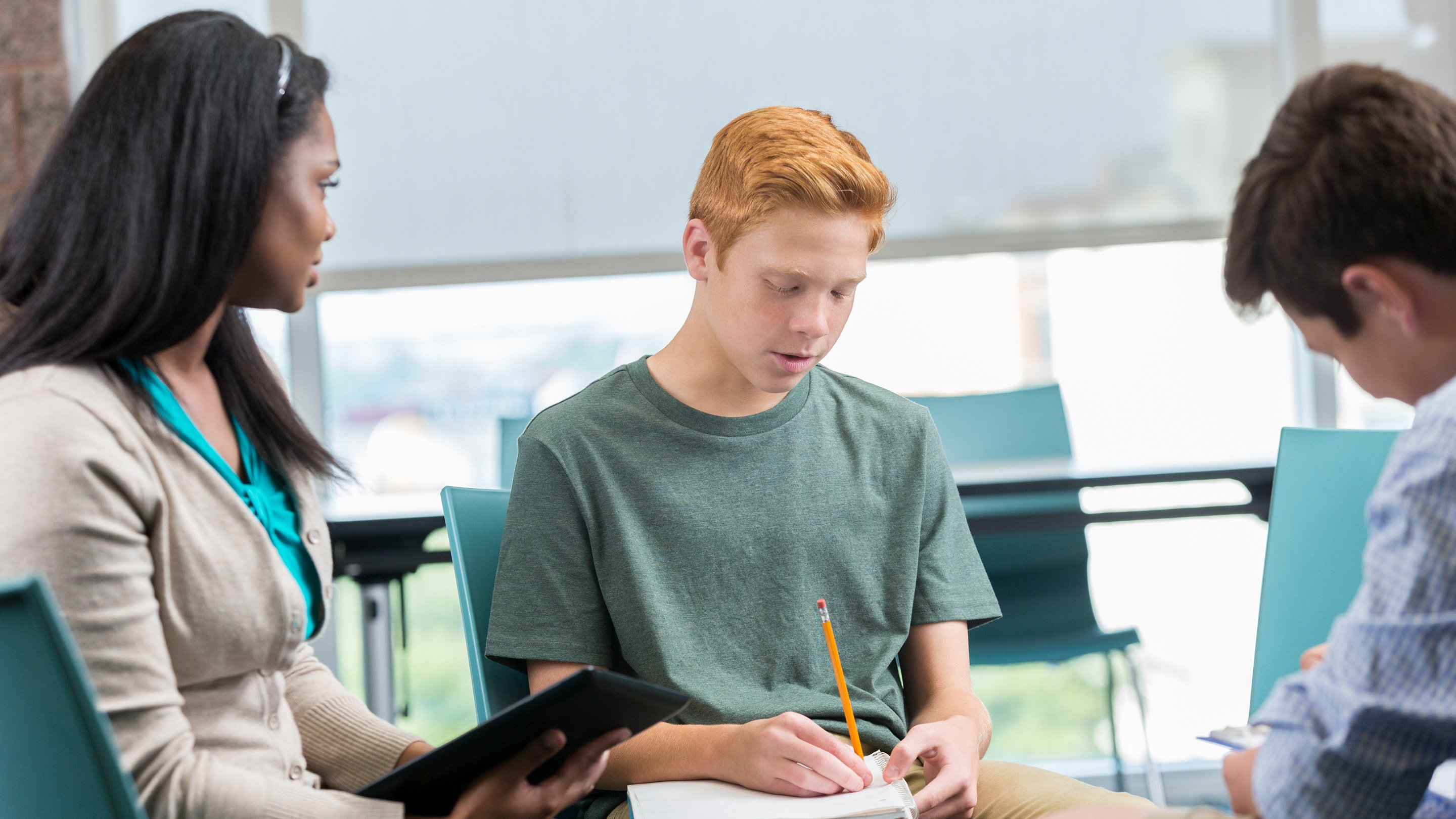
A disagreement over a borrowed pencil can become a hallway feud before lunch. Add a misunderstood text message, a few spectators, and one dramatic group chat, and suddenly the conflict has more sequels than a superhero franchise. Traditional discipline may stop the immediate disruption, but it does not always repair the damaged relationships left behind.
Restorative conversations offer another path. Instead of asking only, “Which rule was broken, and what punishment applies?” educators also ask, “Who was affected, what harm occurred, and what would help make things right?” This approach does not excuse misconduct or eliminate reasonable consequences. It helps students understand the effects of their choices, take meaningful responsibility, and rebuild trust.
When restorative practices are implemented thoughtfully, they can strengthen school relationships, improve communication, support a positive school climate, and reduce reliance on exclusionary discipline. The conversation itself may look simple, but successful restoration requires preparation, emotional safety, skilled facilitation, and follow-through.
What Is a Restorative Conversation?
A restorative conversation is a structured dialogue used to understand conflict, identify harm, encourage accountability, and develop a realistic plan for repair. It may involve two students, a student and teacher, several classmates, or members of the wider school community.
The process comes from the broader field of restorative practices, which includes proactive community-building circles, informal check-ins, affective statements, peer mediation, restorative conferences, and reintegration meetings. Some practices build healthy relationships before trouble occurs; others respond after harm has been done.
That distinction matters. A school cannot ignore relationships all semester, hold one circle after a cafeteria disaster, and expect everyone to emerge holding hands. Restorative school culture is built through consistent opportunities to listen, speak honestly, solve problems, and experience fair treatment.
Restoration Is More Than an Apology
A forced “sorry” is not necessarily restorative. Students can pronounce the word while mentally planning their escape to lunch. Genuine accountability requires a clearer understanding of what happened, how others were affected, and what actions could repair the damage.
Repair might include replacing damaged property, correcting a rumor, changing an established behavior, helping restore a shared space, or honoring a communication agreement. An apology can be part of the plan, but it should not be treated as a magic eraser.
Why Relationships Matter in School Discipline
Students learn best when they feel safe, respected, and connected to their school community. Strong relationships also make everyday correction easier. A student is generally more willing to hear difficult feedback from an adult who has already demonstrated fairness and genuine interest.
Exclusionary discipline may sometimes be necessary for immediate safety, but removing a student does not automatically teach conflict-resolution skills or rebuild trust. It can also cost valuable instructional time. Research on school restorative practices has found promising results, including reductions in suspensions and improvements in some measures of behavior, belonging, school climate, and academic engagement.
The evidence is not a license to declare restorative practices a cure-all. Outcomes vary according to training, staff commitment, leadership support, available time, and implementation quality. A poorly facilitated conversation can feel performative or even unfair. A schoolwide approach requires considerably more than printing five restorative questions on a laminated card.
When to Use Restorative Conversations
Restorative dialogue can be useful for classroom disruptions, friendship conflicts, disrespectful comments, damaged property, rumor spreading, social exclusion, recurring disagreements, and tensions between students and staff. Brief conversations may resolve low-level issues, while complex incidents may require a counselor, social worker, psychologist, administrator, or trained restorative-practice coordinator.
Not every case belongs in a face-to-face meeting. When an incident involves violence, credible threats, sexual misconduct, severe harassment, coercion, major power imbalances, or ongoing bullying, safety and formal school procedures come first. The person harmed should not be pressured to meet, forgive, accept an apology, or educate the person who caused the harm.
Participation should be informed and voluntary, especially for the person affected. Alternative formatssuch as separate meetings, written reflections, shuttle mediation, or communication through a facilitatormay be safer and more appropriate.
A Step-by-Step Restorative Conversation Process
1. Stabilize the Situation
Do not begin while students are shouting, trembling, or preparing their next verbal missile. Separate the participants if necessary, address injuries or immediate risks, and allow time for emotions to settle. Regulation comes before reflection.
An adult might offer water, a quiet space, breathing time, movement, or a check-in with a trusted staff member. This pause is not avoidance. It creates the conditions for students to think rather than react.
2. Meet With Each Participant Separately
Private preparation gives each person an opportunity to explain the incident without interruption. The facilitator should listen for facts, feelings, needs, cultural context, power differences, and readiness to participate.
Helpful questions include:
- What happened from your point of view?
- What were you thinking and feeling at the time?
- Who has been affected, and in what way?
- What has been the hardest part for you?
- What do you need in order to feel safe moving forward?
- What responsibility can you take for your part?
The facilitator should also explain the process, its limits, and any school consequences that remain separate from it. Families or caregivers may need to be informed, particularly when school policy requires notification or their insight would help support the students.
3. Decide Whether a Joint Conversation Is Appropriate
Before bringing participants together, confirm that they can listen without intimidation, retaliation, or renewed escalation. The goal is not to force agreement on every detail. People often remember stressful events differently. The goal is to recognize impact, clarify responsibility, and create a workable path forward.
If a student denies obvious harm, mocks the process, or intends to dominate the other person, more preparation is needed. Restorative conversations work through honest participation, not through seating arrangements and wishful thinking.
4. Establish Clear Ground Rules
Begin the joint meeting by describing its purpose and setting expectations. Participants should speak one at a time, avoid insults, listen to understand, respect confidentiality within its stated limits, and ask for a pause if they become overwhelmed.
The facilitator must remain impartial without becoming morally vague. Neutral facilitation does not mean pretending harmful behavior was harmless. The adult can name the impact while continuing to treat every participant with dignity.
5. Explore What Happened and Who Was Affected
Each participant shares a perspective while the others listen. The facilitator may use affective language and reflective statements such as:
- “I want to make sure I understood you correctly.”
- “What did you hear the other person say?”
- “How did that action affect the class?”
- “What were you hoping would happen?”
- “What do you understand differently now?”
These questions move the discussion away from labels such as “troublemaker” and toward specific choices and consequences. The deed is addressed directly without defining the student by the deed.
6. Create a Repair Agreement
A useful agreement is specific, achievable, and connected to the harm. “Be nicer” is admirable but difficult to measure. “Do not post about this conflict, return the missing materials by Friday, and ask a counselor for help before confronting each other” gives everyone a clearer map.
The plan should identify who will do what, when it will happen, and how adults will provide support. Both accountability and reintegration matter. Students need to know that completing the agreement allows them to return as valued members of the communitynot as permanently branded villains in a very small school soap opera.
7. Follow Up
Restoration is a process, not a single meeting. A brief follow-up after several days can reveal whether the agreement is working, whether retaliation has occurred, and whether additional support is needed. Without follow-through, even a thoughtful agreement can become one more sheet of paper quietly aging in an office drawer.
A Practical Example of Restorative Dialogue
Imagine that Jordan makes a joke about Sam’s class presentation. Several students laugh, and Sam responds by knocking Jordan’s notebook onto the floor. A punishment-only approach might assign both students detention. A restorative response still addresses the rule violations but also investigates the damaged relationship.
After separate preparation, the facilitator asks Jordan what happened and who was affected. Jordan recognizes that the joke embarrassed Sam publicly. Sam acknowledges that throwing the notebook escalated the incident and disrupted the class. The two agree that Jordan will correct the joke in front of the classmates who heard it, Sam will replace a torn notebook divider, and both will use a private signal to request space if tension returns.
The plan does not require them to become best friends by third period. It requires respectful behavior, repair, and a safer way to handle future conflict. That is a realistic win.
Common Mistakes That Undermine the Process
Using Restoration as a Shortcut
A rushed conversation held mainly to close a disciplinary case can make students feel managed rather than heard. Adequate preparation is especially important when emotions are strong or the participants have a history of conflict.
Forcing an Apology or Forgiveness
Students should never be required to forgive someone as proof that the meeting succeeded. Forgiveness is personal. The school’s responsibility is to establish safety, accountability, behavioral expectations, and access to support.
Ignoring Power and Identity
Race, disability, gender, language, social status, age, and staff authority can shape how safe a conversation feels. Facilitators need culturally responsive training and must consider whether the process unintentionally places a heavier burden on a marginalized student.
Treating Restorative Practice as Consequence-Free
Accountability is central to restoration. Logical or policy-based consequences may still apply. The important difference is that the response also teaches, repairs harm, and supports reintegration instead of relying only on exclusion.
Expecting Teachers to Do Everything
Teachers can handle many brief, low-level restorative conversations, but serious cases need trained support. School leaders should provide professional development, planning time, coaching, clear referral pathways, and mental health personnel. Enthusiasm is useful; staffing is better.
Building a Restorative School Culture
The strongest restorative systems are proactive. Teachers can use regular check-in circles, collaborative classroom agreements, emotional vocabulary, active-listening exercises, and short relationship-building questions. These routines give students practice speaking and listening before conflict raises the difficulty level.
Adults must model the same accountability expected of students. A teacher who speaks harshly can say, “My tone was disrespectful, and it affected the class. I apologize. Next time I will pause before responding.” That statement does not weaken authority. It shows students that responsibility applies to everyone.
School leaders should also examine data on referrals, suspensions, repeat incidents, attendance, student belonging, and disciplinary disparities. Numbers cannot capture every repaired friendship, but they help schools determine whether the approach is producing fair and meaningful results.
Experiences From Restorative Conversations in Schools
The following composite experiences reflect common situations reported by educators and restorative-practice programs. Names and identifying details are fictionalized.
The Lunchroom Conflict That Was Really About Belonging
Two seventh graders, Maya and Elena, repeatedly argued over seats at lunch. Staff initially treated the problem as simple defiance: both students had been told where to sit, yet the dispute continued. Separate restorative conversations revealed that the seat represented membership in a friendship group. Maya believed she was being deliberately excluded, while Elena thought Maya had shared private information and could no longer be trusted.
During the joint conversation, neither student offered an instant apology. Instead, they explained how the conflict had affected their concentration, friendships, and willingness to attend school. Maya acknowledged repeating part of a private conversation. Elena acknowledged encouraging other students to freeze Maya out.
The repair plan included correcting the rumor, ending group-chat comments, choosing separate lunch seats temporarily, and meeting with a counselor the following week. They did not leave the room planning matching friendship bracelets. They did leave with fewer assumptions and a practical agreement. Staff later reported that the public arguments stopped.
When a Teacher Took Responsibility Too
In another composite example, a high school student named Marcus walked out after a teacher accused him of refusing to work. During preparation, Marcus explained that he had not understood the assignment and felt embarrassed when corrected in front of his classmates. The teacher believed Marcus had ignored several instructions and experienced the walkout as disrespectful.
The restorative conversation changed direction when the teacher acknowledged that her public comment had sounded sarcastic. Marcus then admitted that leaving without permission disrupted the lesson and worried classmates who knew he had been struggling.
Their agreement was wonderfully unglamorous: Marcus would use a colored card to request private help, the teacher would check comprehension before interpreting silence as refusal, and Marcus would speak with her before leaving unless there was an emergency. The relationship improved because accountability traveled in both directions.
A Circle That Needed to Stop
Not every attempt should continue. In one middle school scenario, a student agreed to discuss repeated online harassment but became visibly distressed when the other participant minimized the posts. The facilitator paused the meeting and ended the face-to-face format.
The school continued its investigation, strengthened the student’s safety plan, involved caregivers, and used separate communications to address accountability. This experience illustrates an essential principle: completing a restorative meeting is never more important than protecting the person harmed. Stopping can be evidence of good facilitation, not failure.
The Quiet Power of Follow-Up
A fifth-grade class used a restorative circle after several students mocked a classmate’s reading. The initial meeting produced sincere comments and a plan for encouraging participation. Two weeks later, however, the teacher noticed smaller eye rolls returning.
Rather than waiting for another major incident, she held a short follow-up circle about what respectful academic risk-taking should look like. Students revised their agreement to prohibit interrupting, imitation, and exaggerated sighing. Yes, even the dramatic sigh received its own rule. The classmate gradually began volunteering again.
The lasting lesson was that relationships rarely repair themselves on schedule. Students need repeated opportunities to practice empathy, receive feedback, and correct their course. Restorative conversations are most effective when schools treat them as part of daily learningnot as emergency equipment stored behind glass.
Conclusion
Using restorative conversations to mend relationships in schools changes discipline from a simple transaction into a learning process. Students still face boundaries and consequences, but they also learn to identify harm, understand other perspectives, take responsibility, and participate in repair.
The approach works best when conversations are voluntary, developmentally appropriate, culturally responsive, and supported by trained adults. Safety must always come first, and serious misconduct still requires formal procedures. When those safeguards are respected, restorative dialogue can turn conflict into an opportunity to strengthen communication, belonging, and trust.
Note: The scenarios in the experience section are educational composites rather than accounts of identifiable students. Schools should apply their own safety, reporting, family-notification, and disciplinary policies when responding to actual incidents.