Every generation has a comedy that feels like it escaped from a snack-stained dorm room, sprinted through a mall, crashed into a sci-fi convention, and somehow ended up in theaters nationwide. For the early 2000s, one of those movies was Dude, Where’s My Car?, the 2000 cult comedy starring Ashton Kutcher and Seann William Scott as two gloriously clueless friends trying to solve the greatest mystery of their lives: where, exactly, did they park the car?
At the time, the movie looked like harmless nonsense with a sugar rush. It had two TV-ready young stars, a one-crazy-night structure, goofy sci-fi twists, and the kind of quote-friendly absurdity that could live forever in school hallways, DVD collections, and late-night cable reruns. But according to screenwriter Phil Stark, the movie also belongs very specifically to its moment. Looking back 25 years later, Stark has said the film would never be made today, and not in the usual “people are too sensitive now” way that gets tossed around whenever an old comedy ages badly. His point is sharper, more honest, and frankly more useful: some jokes that once passed as silly now feel dated, careless, and aimed at the wrong targets.
That makes Dude, Where’s My Car? a fascinating case study in 2000s comedy, nostalgia, cultural change, and the disappearing world of mid-budget studio movies. It is not just about whether one ridiculous film “deserves” a remake. It is about what happens when comedy grows up, audiences grow up, and the people who made the jokes grow up too.
The Movie in Question: Dude, Where’s My Car?
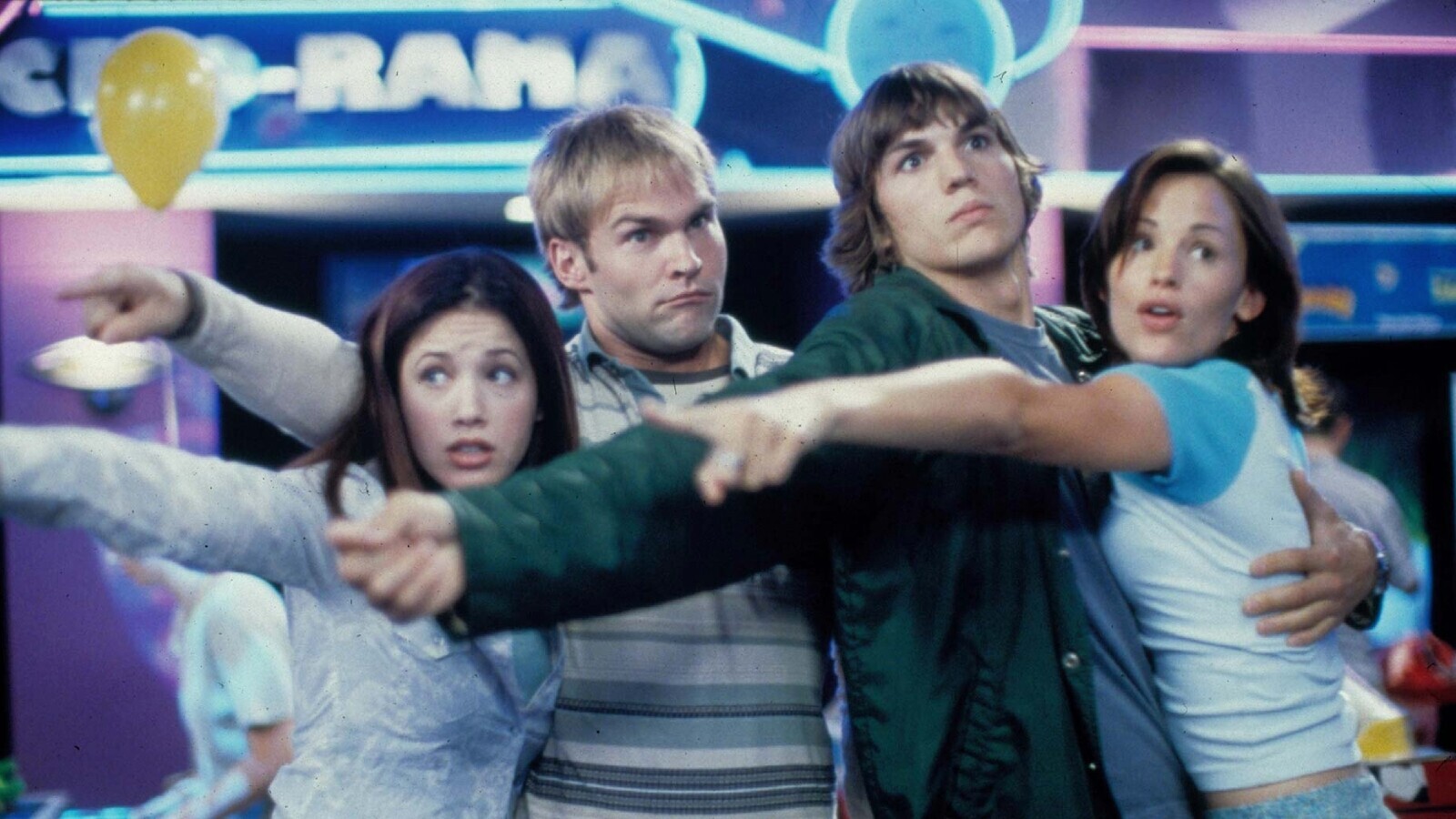
Released in December 2000, Dude, Where’s My Car? was directed by Danny Leiner and written by Philip Stark. The film follows Jesse and Chester, played by Ashton Kutcher and Seann William Scott, two lovable underachievers who wake up after a chaotic night with no memory of what happened and no idea where their car is. Their search pulls them through a chain of increasingly absurd encounters involving angry girlfriends, strange clues, sci-fi weirdness, cult-like oddballs, and a general mood of “someone definitely ate too much gas station candy before writing this.”
The movie was not exactly treated like a masterpiece by critics. Its Metacritic score landed in “generally unfavorable” territory, and Rotten Tomatoes lists it as a poorly reviewed comedy. Yet the film performed far better commercially than its critical reputation might suggest. With a reported production budget of about $13 million and a worldwide gross of more than $73 million, it became a profitable studio comedy and later developed a cult following.
That contradiction is important. Dude, Where’s My Car? was never trying to be elegant. It was not polishing a monocle and quoting Shakespeare. It was wearing a graphic tee, looking confused in a drive-thru, and somehow turning that confusion into a brand. The movie’s success depended on a very specific early-2000s atmosphere: young stars from hit comedies, a market hungry for teen and slacker humor, and studios still willing to give broad, silly theatrical comedies a chance.
What Phil Stark Said About the Movie Today
Phil Stark has reflected on the film with an unusual amount of self-awareness. In later comments about writing Dude, Where’s My Car?, he described the original comic energy as a blend of old-school chaos and stoner-comedy absurdity. He was in his mid-twenties when he wrote it, and the movie was full of things that made his younger self laugh: broad situations, bizarre characters, and the kind of anything-goes comic escalation that defined a lot of late-1990s and early-2000s studio comedy.
But revisiting the film decades later, especially as a parent watching it with his children, Stark found himself cringing. Not simply because the movie is silly. Silliness ages beautifully when it is rooted in character, timing, or surprise. The problem is that some of the humor relies on groups of people being treated as punchlines. Stark has acknowledged that the film includes jokes at the expense of transgender people, ethnic minorities, women, gay men, and religious groups. In 2000, those jokes may have been treated as normal background noise in mainstream comedy. Today, they stand out for a less flattering reason.
This is the key distinction: Stark is not arguing that comedy should become flavorless oatmeal. He is saying that comedy changes because people change. A joke that once felt “edgy” may later reveal itself as lazy. A gag that once got a laugh because it shocked people may later feel like it was punching sideways or downward. In other words, the problem is not that audiences forgot how to laugh. It is that audiences got better at noticing who the joke is laughing at.
Why “You Couldn’t Make This Today” Is Usually the Wrong Conversation
The phrase “you couldn’t make that today” has become one of the most overworked lines in pop culture. It is often used as a complaint, as if comedy has been locked in a museum and replaced by a stern librarian holding a clipboard. But Dude, Where’s My Car? complicates that cliché. The real issue is not whether a modern studio would allow a silly movie about two friends looking for a car. Of course that premise could still work. Confused people making bad decisions remains one of humanity’s most renewable energy sources.
The issue is whether the exact 2000 version of the movie, with its specific targets and assumptions, would pass through today’s development process unchanged. It probably would not. A modern version would likely keep the friendship, the mystery, the escalating absurdity, and the “how did we get here?” structure. But it would rethink jokes built around identity, stereotypes, and casual humiliation. The comedy would need to come from character stupidity, not from treating marginalized people as props.
That is not censorship. That is craft. Good comedy has always evolved by finding fresher angles. A better joke usually survives scrutiny because it is specific, surprising, and aimed with purpose. A weaker joke collapses when the only engine inside it is, “This person is different, therefore laugh.”
How the 2000s Comedy Machine Made This Movie Possible
To understand why Dude, Where’s My Car? existed, you have to remember the comedy landscape around 2000. The late 1990s and early 2000s were packed with theatrical comedies aimed at teens and young adults. American Pie had recently become a major hit. Slacker comedies, gross-out comedies, buddy comedies, and absurd high-concept comedies all had room to breathe. Studios could release a moderately budgeted movie, market it around a simple hook, and hope it found an audience in theaters and later on home video.
That ecosystem barely exists in the same form now. Big-screen comedy has shifted toward streaming, while theatrical releases are increasingly dominated by franchises, horror, animation, action spectacles, and recognizable intellectual property. Industry analysis has repeatedly pointed to the decline of mid-budget films, especially the kind of original studio comedy that once lived comfortably between indie cinema and blockbuster territory.
That means Dude, Where’s My Car? is doubly difficult to remake today. First, parts of its humor would need a serious rewrite. Second, the business model that made it viable has changed. A studio looking at a strange, low-to-mid-budget comedy about two dim pizza-delivery slackers and cosmic nonsense might now ask, “Can this launch a universe?” And the honest answer would be, “Only if the universe has a very confused parking lot.”
The Cast Helped Turn Dumb Into Lovable
One reason the movie still has fans is that Kutcher and Scott play Jesse and Chester with a goofy sweetness that softens the chaos. They are not masterminds. They are not even regular minds on a good day. But the performances have a puppy-like quality: enthusiastic, loyal, easily distracted, and probably not allowed near important machinery.
That matters because the film’s best material is not its most offensive or dated material. The best parts are the ones built on rhythm, repetition, and the sheer commitment of the actors to the foolishness. A dumb line becomes memorable when delivered with perfect sincerity. A ridiculous plot turn becomes watchable when the leads react as if it is both shocking and completely normal. In that sense, Dude, Where’s My Car? works less as a polished screenplay machine and more as a comic vibe.
Jennifer Garner, Marla Sokoloff, Kristy Swanson, and the supporting cast also helped give the film its frantic early-2000s texture. It feels like a movie assembled from sitcom energy, mall culture, sci-fi parody, and a stack of jokes that were probably written on napkins. That is part of its charm. It is also part of why it can feel so frozen in time.
What Has Aged Poorlyand What Still Works
The parts that have aged poorly are not hard to identify. Jokes that lean on stereotypes, gender panic, casual objectification, or mocking people for identity-related reasons now feel stale at best and cruel at worst. They also interrupt the movie’s otherwise lightweight spirit. When the humor is just Jesse and Chester being magnificently useless, the movie can still float. When the joke turns someone’s identity into the gag, the air leaks out.
What still works is the basic engine: two fools retracing a lost night and discovering that every clue leads to an even stranger problem. That structure remains durable. It powered older farces, 1980s teen adventures, 1990s buddy comedies, and later hits like The Hangover. People enjoy watching characters walk into a situation they do not understand, behave with absolute confidence, and make everything worse. That is not dated. That is practically a documentary of adulthood.
The movie’s central friendship also remains its most durable asset. Jesse and Chester are not cool in any meaningful way. They are ridiculous, but they care about each other. Their bond gives the film a gentle core beneath the noise. A modern comedy could absolutely build on that: two underqualified friends, one missing object, a chain reaction of mistakes, and a world that keeps getting weirder.
Could a Modern Version Work?
A modern Dude, Where’s My Car? would need to be less interested in shock-for-shock’s-sake humor and more interested in character-based absurdity. Instead of relying on stereotypes, it could satirize influencer culture, gig work, surveillance tech, crypto bros, AI assistants, wellness scams, overpriced parking apps, or the nightmare of trying to cancel a subscription. Imagine two friends waking up with no car, no memory, and 47 phone notifications from people they apparently offended, paid, hired, followed, unfollowed, and accidentally joined in a group chat called “Operation Space Pancake.” That movie could exist.
The title question would also hit differently now. In 2000, losing a car could remain a mystery for an entire movie. Today, someone would immediately ask, “Did you check Find My Phone? Did you check the parking app? Did you check the dashcam? Did you check the security footage? Did your car post a TikTok?” Technology makes amnesia plots harder, but not impossible. Writers simply have to make the confusion bigger than the tools designed to solve it.
The trick would be preserving the innocence of the original while replacing the lazier jokes with sharper ones. The modern version would not need to be “safe.” It would need to be smarter. Comedy can still be chaotic, rude, strange, and wildly immature. It just has to know the difference between making a character look foolish and asking the audience to laugh at people who already get treated unfairly in real life.
Why Nostalgia Should Not Mean Excusing Everything
Many fans still love Dude, Where’s My Car?, and that does not automatically make them villains. Nostalgia is complicated. People often remember where they were when they watched a movie more vividly than they remember every joke in it. A person may associate the film with sleepovers, DVD shelves, cable reruns, old friends, or the innocent joy of laughing at something aggressively dumb after a long week.
But nostalgia works best when it is honest. Loving an old comedy does not require pretending every part of it aged perfectly. In fact, the more mature response is usually, “I understand why this mattered to me, and I also understand why parts of it do not work anymore.” That is not betrayal. That is media literacy with snacks.
Phil Stark’s reflection is valuable because it models that honesty. He does not deny the movie’s role in his career. He does not pretend it had no charm. He also does not hide behind the excuse that “it was a different time” as if that phrase magically repairs every joke. Instead, he recognizes that comedy has consequences, even when the tone is light.
The Bigger Lesson for Screenwriters
The lesson for modern screenwriters is not “avoid risk.” The lesson is “choose your risks better.” The funniest movies often take big swings. They exaggerate human weakness, social absurdity, and bad decision-making. They let characters embarrass themselves. They push situations past reason. None of that has disappeared.
What has changed is the expectation that writers understand the target of the joke. A joke aimed at arrogance, hypocrisy, greed, cluelessness, fake confidence, or institutional nonsense can age beautifully. A joke aimed at someone’s identity may age like milk left in a gym bag. Screenwriters who want their work to last should ask a simple question: in ten or twenty years, will this joke still feel like it was pointing in the right direction?
Dude, Where’s My Car? is a reminder that movies are time capsules. Sometimes they preserve fashion, slang, music, and hairstyles. Sometimes they preserve blind spots. The goal is not to erase those time capsules, but to read them accurately.
Personal Viewing Experiences and Reflections on the Topic
Watching a movie like Dude, Where’s My Car? today can feel like opening an old drawer and finding a flip phone, a burned CD, and a receipt from a restaurant that somehow charged $6.99 for an entire meal. There is immediate nostalgia, but also disbelief. The pacing, the fashion, the attitudes, and the jokes all come from a world that feels close enough to remember but distant enough to require translation.
One common experience with 2000s comedies is the split reaction: you laugh at one scene, then wince at the next. That emotional whiplash is not rare. It happens with many older movies because comedy dates faster than almost any other genre. Action scenes may still impress. Romance may still charm. Horror may still scare. But comedy depends heavily on shared assumptions, and shared assumptions change. What once felt rebellious can later feel lazy. What once seemed harmless can later seem oddly mean. The audience has not necessarily become humorless; it has become more aware of the room.
Another experience is realizing how much the context of viewing matters. A teenager watching Dude, Where’s My Car? in 2001 may have experienced it as pure nonsense: two goofy guys, strange clues, quotable lines, and a plot that behaves like a vending machine dropped down a staircase. An adult watching it in 2026 may see the same movie and notice the business model behind it, the cultural assumptions baked into it, and the parts that reveal how mainstream comedy once treated certain groups as easy targets.
That does not mean the original viewer was wrong to laugh. It means the later viewer has more tools. Growing up does not delete the old reaction; it adds a new layer. You can remember laughing at a film and still admit that you would not write the same jokes today. In fact, that is exactly the kind of growth artists should hope for. If a writer looks back after 25 years and thinks, “I would make every choice exactly the same,” that may sound confident, but it can also sound suspiciously like someone who has not updated the software since dial-up internet.
There is also something refreshing about a screenwriter publicly reconsidering his own work. Hollywood often encourages creators to defend everything forever, as if admitting regret will cause the DVD shelf to collapse. Stark’s reflection shows a healthier model. A person can be grateful for a career-making project and still critique it. A creator can say, “This opened doors for me,” while also saying, “Some of this does not represent what I would do now.” That kind of honesty makes the conversation better because it avoids both extremes: blind cancellation on one side and blind nostalgia on the other.
For viewers, the best approach may be to treat older comedies as cultural snapshots rather than instruction manuals. Watch them with curiosity. Laugh where the joke still works. Notice where it does not. Ask why. The answer might reveal something about the film, the era, or even your own sense of humor. That process is more interesting than pretending every old favorite is perfect or every dated joke destroys the entire movie.
In the end, Dude, Where’s My Car? may not deserve to be remade exactly as it was, but it does deserve to be discussed. It shows how comedy can be silly, profitable, beloved, flawed, and culturally revealing all at once. It also proves that the question “Could this be made today?” is less useful than “What would we do better today?” That second question is where the real creative opportunity lives.
Conclusion: The Movie Should Stay Parked in 2000
Dude, Where’s My Car? is not the worst-aged comedy of its era, nor is it a secret masterpiece cruelly misunderstood by critics. It is something more interesting: a profitable, goofy, much-quoted studio comedy that now functions as a mirror. It reflects the comic tastes of 2000, the theatrical comedy business that once supported movies like it, and the ways audiences have changed since then.
Phil Stark’s view that the movie would never be made today should not be read as a funeral for comedy. It is better understood as an invitation to make better comedy. The premise of two friends lost in their own stupidity still has life. The friendship still has warmth. The absurd mystery structure still works. But the jokes that depend on outdated stereotypes should remain exactly where they are: in the past, next to low-rise jeans, frosted tips, and the belief that every computer problem could be solved by yelling at the monitor.
So, does Dude, Where’s My Car? deserve to be made today? Not in its original form. But does it deserve to be remembered, analyzed, and learned from? Absolutely. Sometimes the most useful old comedies are not the ones that aged perfectly. They are the ones that make us ask why we laughed, what changed, and how the next joke can be sharper, kinder, and much funnier.
Note: This article is written as original SEO content in standard American English, synthesized from real publicly available information about the film, its screenwriter, reception, box office performance, and the changing landscape of theatrical comedy.