Thirty days may not sound like much unless you are talking about a gym challenge, a sourdough starter, or a spool of 3D printing filament sitting on your desk whispering, “Print something ridiculous.” For makers, hobbyists, teachers, engineers, and curious beginners, a month of filament experiments can teach more than a dozen glossy product pages ever could. PLA behaves like the polite guest who brings cookies. PETG arrives with useful toughness but leaves stringy little spider webs if you ignore it. TPU bends like a yoga instructor. Nylon absorbs moisture as if it has unresolved emotional issues with humidity.
This guide turns thirty days of 3D printing filament into a practical, entertaining journey through material choice, print settings, storage habits, troubleshooting, and real workshop lessons. Whether you are printing desk organizers, cosplay parts, replacement brackets, plant labels, prototypes, or the inevitable tiny articulated dragon, the right filament can make the difference between “Wow, I made that” and “Why does this look like a melted cheese crime scene?”
What Is 3D Printing Filament?
3D printing filament is the thermoplastic feedstock used in FDM and FFF 3D printers. It usually comes wound on a spool, most commonly in 1.75 mm diameter, and feeds into a heated nozzle. The printer melts the material and lays it down layer by layer until a digital model becomes a physical object. Simple idea, magical result, occasional spaghetti disaster.
The most popular filament types include PLA, PETG, ABS, ASA, TPU, nylon, polycarbonate, and specialty composites filled with carbon fiber, wood, metal powder, glow pigments, or other additives. Each material has its own personality. Some are easy and forgiving. Some need high temperatures, dry storage, enclosures, hardened nozzles, or careful ventilation. The trick is not choosing the “best” filament in the universe. The trick is choosing the best filament for the job in front of you.
The Thirty-Day Filament Challenge: What You Learn
A thirty-day filament challenge is simple: print regularly for a month while testing different materials, settings, storage methods, and project types. The goal is not to burn through plastic like a tiny desktop volcano. The goal is to understand how filament behaves in real life.
By the end of the month, you should know which filament works best for decorative prints, mechanical parts, outdoor objects, flexible components, prototypes, and everyday household fixes. You will also learn the quiet truth of 3D printing: most failed prints are not random. They are clues. A clicking extruder, popping filament, stringing, warping corners, weak layers, and rough surfaces are all little messages from the machine. Unfortunately, the machine speaks in noodles.
Days 1–5: PLA, The Friendly Starting Point
PLA is the most beginner-friendly 3D printing filament and the perfect material for the first week. It prints at moderate temperatures, has low warping, does not usually require an enclosure, and comes in a carnival-level selection of colors. If 3D printing had a golden retriever, it would be PLA.
Use PLA for prototypes, models, toys, desk accessories, organizers, planters, display pieces, and educational prints. It is stiff and easy to print with sharp detail, making it excellent for calibration cubes, miniatures, brackets that will not face heat, and decorative objects. However, PLA is not ideal for hot cars, outdoor summer use, dishwasher exposure, or high-impact mechanical parts. Leave a PLA phone holder on a dashboard in July and it may return as modern art.
PLA Tips For Better Prints
Start with the manufacturer’s recommended nozzle and bed temperatures. If you see stringing, lower the nozzle temperature slightly and tune retraction. If corners lift, clean the print surface and use a modest heated bed. If the print looks dull, rough, or under-extruded, check filament flow, nozzle condition, and slicer speed. PLA is forgiving, but it still appreciates basic respect.
Days 6–10: PETG, The Practical Workhorse
PETG is the filament many makers choose after PLA because it offers better toughness, improved impact resistance, and more flexibility while still being easier to print than ABS or nylon. It is great for functional parts, clips, storage bins, light-duty brackets, tool holders, jigs, and objects that need to survive more handling than a shelf decoration.
PETG’s little joke is stringing. It loves to leave fine hairs between travel moves, as if your print spent the night in a haunted attic. Dry filament, correct temperature, good retraction settings, and slightly slower print speeds can help. PETG also tends to bond aggressively to some build surfaces, so use the recommended sheet or a release layer when needed.
When PETG Beats PLA
Choose PETG when the part needs more durability, a little flex, better chemical resistance, or improved temperature tolerance. For garage organizers, utility hooks, cable guides, protective covers, and workshop fixtures, PETG often hits the sweet spot between ease and performance.
Days 11–14: ABS And ASA, The Heat-Resistant Cousins
ABS and ASA are useful when heat resistance and toughness matter. ABS has long been used for durable plastic parts, while ASA is often preferred for outdoor applications because it has better UV resistance. These materials are popular for enclosures, automotive-adjacent parts, outdoor fixtures, tool components, and items that need to survive warmer environments.
They also demand more from your setup. ABS and ASA usually print best in an enclosure because they can warp as they cool. They require higher nozzle and bed temperatures than PLA. They can also release stronger odors and emissions, so ventilation is important. Printing ABS in a tiny bedroom with the door shut is not a heroic maker move. It is how your room starts smelling like an electronics factory with commitment issues.
ABS vs ASA
Use ABS when you need a tough, heat-resistant filament and have an enclosure. Use ASA when the part will live outdoors or face sunlight. ASA is especially useful for garden clips, exterior mounts, weather-exposed covers, and practical prints that need to handle UV exposure better than standard ABS.
Days 15–18: TPU, The Flexible Problem Solver
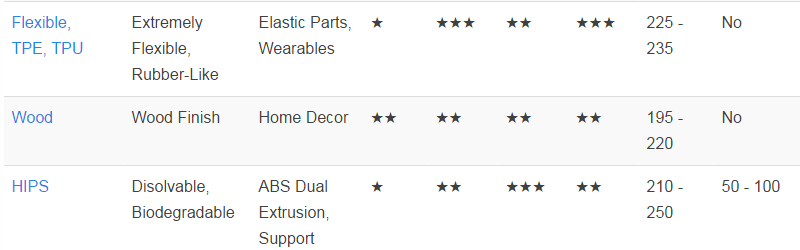
TPU is flexible filament, and it opens a different world of 3D printing. Phone bumpers, gaskets, feet, soft grips, protective sleeves, cable strain relief, wheels, and custom pads all become possible. TPU is strong, bendable, and often surprisingly durable.
The challenge is feeding it reliably. Softer TPU can buckle or jam in long Bowden tube setups, while direct-drive extruders usually handle it better. Slow print speeds are your friend. So are dry filament, minimal retraction, and patient slicing. TPU does not like being rushed. Think of it as printing with a tiny rubber noodle that has opinions.
Days 19–22: Nylon, The Moisture Magnet With Muscle
Nylon is strong, tough, wear-resistant, and useful for mechanical parts such as gears, hinges, bushings, clips, and functional prototypes. It can be one of the best materials for demanding prints, but it is also famously hygroscopic, meaning it absorbs moisture from the air. Wet nylon can pop, hiss, string, foam, and produce ugly surfaces. In other words, nylon can go from engineering-grade hero to swamp spaghetti if stored poorly.
For nylon, drying is not optional. Store it in sealed containers with desiccant and print from a dry box if possible. Use the correct bed surface, enclosure, and high enough nozzle temperature for the specific brand. Nylon rewards preparation and punishes optimism.
Days 23–25: Specialty Filaments And Composite Materials
Once you understand the basics, specialty filaments become tempting. Wood-filled PLA can create warm, organic-looking prints. Silk PLA produces glossy decorative parts. Carbon-fiber-filled PETG, nylon, or polycarbonate can increase stiffness and produce a clean matte finish. Glow-in-the-dark filament is fun, especially if you enjoy explaining to guests why a tiny ghost is charging under your desk lamp.
Composite filaments often require extra care. Abrasive materials like carbon fiber, glow additives, and metal-filled blends can wear down standard brass nozzles. A hardened steel, ruby, or other wear-resistant nozzle may be needed. Composite filaments can also be more brittle on the spool, so avoid tight filament paths and sharp bends.
Days 26–27: Filament Drying And Storage
Moisture is one of the sneakiest enemies in 3D printing. Some filaments absorb moisture slowly, while others soak it up quickly. Wet filament can cause popping sounds, stringing, weak layers, bubbles, rough surfaces, and inconsistent extrusion. If a print suddenly looks terrible even though your slicer settings have not changed, the spool may be damp.
Good storage is simple: sealed containers, dry boxes, reusable desiccant, humidity indicators, and original bags when possible. Prioritize careful storage for nylon, TPU, PETG, PVA, and polycarbonate. PLA is less sensitive, but it still benefits from being kept dry. A filament dryer can rescue many spools, but prevention is easier than recovery. The best filament dryer is often a boring plastic storage box used consistently.
Day 28: Safety, Ventilation, And Common Sense
3D printing is fun, but it is still a heated plastic process. Desktop printers can release ultrafine particles and volatile organic compounds, and emissions vary by filament, temperature, printer design, and ventilation. PLA is generally considered one of the lower-emission common materials, while ABS and some higher-temperature materials call for more caution.
Use printers in well-ventilated spaces. For ABS, ASA, nylon, and long print jobs, consider an enclosure with filtration or exhaust. Avoid placing printers near return air vents, beds, or areas where people sit for hours. Follow manufacturer instructions, use reasonable temperatures, and do not hover over the nozzle inhaling fumes like you are judging a plastic soup competition.
Day 29: Troubleshooting Filament Problems
Stringing usually points to temperature, retraction, travel speed, or moisture. Warping often means the material is cooling unevenly, the bed is not hot enough, the surface is dirty, or the printer needs an enclosure. Brittle filament may be old, damp, or low quality. Weak layer adhesion may come from low nozzle temperature, excessive cooling, under-extrusion, or printing too fast.
Clogs can happen when filament contains debris, when the nozzle is worn, when heat creep softens material too early, or when a high-temperature filament follows a low-temperature one without proper purging. Keep spare nozzles, cleaning needles, and patience nearby. Patience is not sold on spools, sadly.
Day 30: Choosing The Right Filament For The Right Job
After thirty days, the biggest lesson is clear: filament selection should start with the object’s job. For display models, PLA is usually enough. For stronger household parts, PETG is a reliable step up. For flexible pieces, TPU is the answer. For outdoor use, ASA is often a smart pick. For wear-resistant mechanical parts, nylon deserves attention. For high stiffness and a professional finish, carbon-fiber composites can be excellent when your printer is ready for them.
Do not buy filament only because the color looks cool, although nobody will blame you for owning galaxy purple silk PLA. Instead, ask practical questions. Will the part face heat? Will it be outdoors? Does it need to flex? Will it hold weight? Will it rub against another part? Does it need to look beautiful, or does it need to survive being dropped by a cousin named Trevor?
Real-World Examples: Matching Filament To Projects
Desk Accessories
PLA is excellent for pen cups, cable clips, headphone stands, and display models. It prints cleanly and comes in colors that make your desk look organized even when your browser has 47 tabs open.
Workshop Fixtures
PETG is a strong choice for bins, hooks, drill guides, battery holders, and tool wall accessories. It offers a practical balance of durability and printability.
Outdoor Mounts
ASA is a better candidate for sun-exposed parts such as garden labels, camera mounts, sensor housings, and exterior brackets. PETG can work for some outdoor projects, but ASA generally handles UV exposure better.
Flexible Parts
TPU works well for rubber-like pads, feet, bumpers, vibration dampers, and protective covers. Print slowly and keep the filament dry.
Mechanical Components
Nylon or carbon-fiber-reinforced nylon can be useful for hinges, gears, clips, and wear-resistant parts. These materials demand drying, higher temperatures, and printer tuning, but they can produce impressive functional results.
Thirty Days Of Experience: What A Month With Filament Really Teaches
The first experience a month of 3D printing filament teaches is humility. On day one, you may believe the slicer profile is a sacred scroll. By day four, you realize the profile is more like a recipe written by someone who has never seen your kitchen. PLA may print beautifully in the morning and then string slightly in the evening because the room changed temperature, the spool absorbed a little moisture, or the model has too many tiny travel moves. The machine is consistent, but the environment is not always polite.
The second lesson is that cheap filament can be a bargain or a prank. Some budget spools print wonderfully. Others have inconsistent diameter, odd additives, brittle winding, or colors that look different after extrusion. A good habit is to label every spool with purchase date, material, brand, nozzle temperature range, and your best settings. After a few weeks, this turns your filament shelf from “plastic chaos” into a useful database.
The third lesson is that drying filament feels unnecessary until the first time it saves a print. A damp PETG spool can make a clean model look hairy. Wet nylon can sound like breakfast cereal in a hotend. TPU can become stringy and stubborn. Once you dry a troublesome spool and watch the print quality improve, you stop treating desiccant packets like useless little pillows and start treating them like workshop insurance.
The fourth lesson is that every filament has a favorite pace. PLA is happy at normal speeds. PETG often likes a slower, more deliberate approach. TPU practically demands calm behavior. Nylon wants heat, dryness, and discipline. ABS and ASA want an enclosure so they can cool evenly without curling up like a frightened potato chip. Speed is exciting, but a finished print is more exciting.
The fifth lesson is emotional: filament changes how you see problems. A broken drawer clip is no longer trash; it is a design challenge. A missing knob is a modeling exercise. A messy cable corner becomes a custom organizer. After thirty days, you start measuring the world with calipers. This is both useful and slightly alarming to family members.
Finally, the month teaches that 3D printing is not really about plastic. It is about iteration. The first print gives you information. The second print gives you improvement. The third print gives you confidence. The fourth print gives you a tiny plastic frog because you deserved a reward. Filament is the material, but curiosity is the fuel. Keep the spools dry, the bed clean, the room ventilated, and the expectations flexible. In 3D printing, as in life, a little retraction can prevent a lot of stringing.
Conclusion
Thirty days of 3D printing filament can transform a beginner into a smarter, more confident maker. PLA teaches the basics. PETG introduces practical strength. ABS and ASA explain heat resistance and enclosures. TPU brings flexibility. Nylon proves that preparation matters. Specialty filaments add creative possibilities, but they also remind us that every material has trade-offs.
The best filament is not always the strongest, prettiest, cheapest, or trendiest. It is the one that fits the project, the printer, and the environment. Start simple, test often, store carefully, document settings, and respect safety basics. Do that for a month, and your 3D printer stops feeling like a mysterious robot toaster and starts feeling like a real tool.