Valentine’s Day is supposed to be the Super Bowl of romance: candles, dessert menus, dramatic reservations, and at least one person at every restaurant whispering, “Do we split the check or pretend love has solved capitalism?” But in one widely shared restaurant story, the evening did not end with roses, chocolate, or a soft-focus couple selfie. It ended with a boyfriend watching how his date treated a waitressand deciding the relationship had served its final course.
The viral story, originally discussed in online service-worker communities and later covered by lifestyle sites, centers on a girlfriend whose behavior toward a waitress reportedly became so rude, demanding, and humiliating that her boyfriend could no longer ignore it. The incident struck a nerve because it was not really about one plate, one delay, or one awkward dinner. It was about character. More specifically, it was about the simple but powerful “waitress test”: how does someone treat a person who is working hard, under pressure, and expected to stay polite no matter what?
That question matters more than people think. A romantic partner can be charming when they want approval. They can be sweet when the lighting is flattering and the appetizer is hot. But when the restaurant is busy, the reservation is late, the steak is more medium than medium-rare, and the server is juggling six tables, the mask can slip. And when it slips, sometimes it reveals a red flag big enough to be seen from the dessert station.
The Valentine’s Day Dinner That Became a Relationship Test
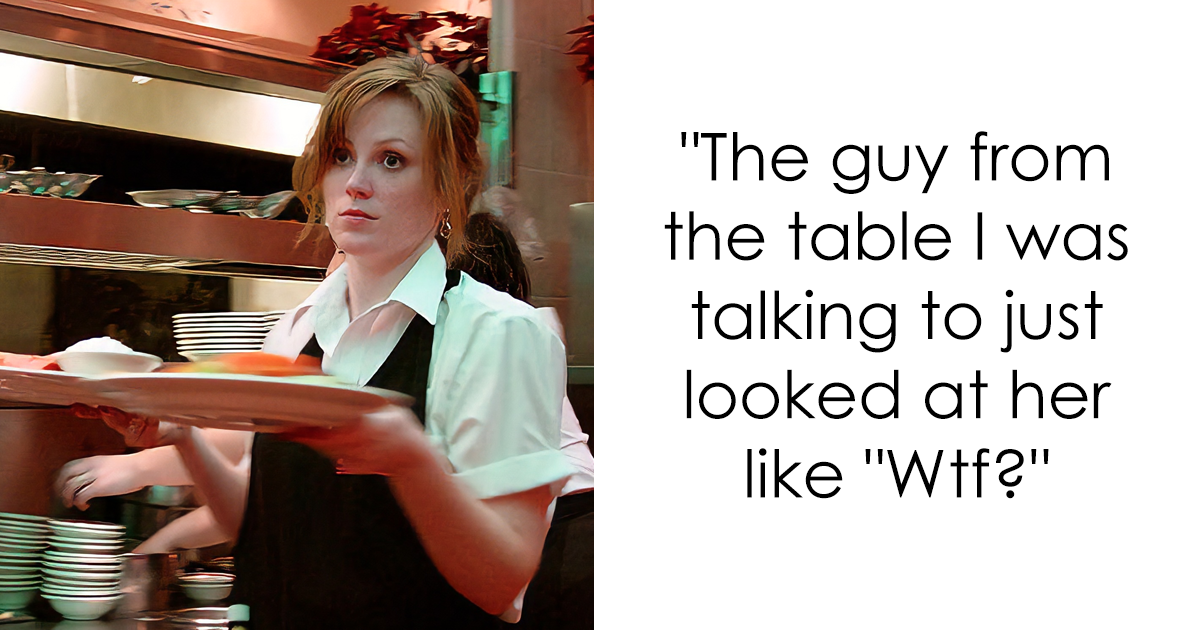
According to the viral account, a server was working a hectic Valentine’s Day shift when a couple came in for dinner. The girlfriend’s behavior quickly turned the meal from romantic to radioactive. She allegedly complained, snapped, and treated the waitress as if the server were personally responsible for every inconvenience in the building. Her boyfriend, instead of joining in or silently pretending nothing was happening, noticed.
That is the part people loved most about the story. He did not excuse it as “she’s just stressed.” He did not laugh nervously and over-tip as emotional cleanup. He recognized the behavior for what it appeared to be: a glimpse of how his girlfriend handled power, frustration, and people she considered beneath her. By the end of the dinner, the romance had evaporated faster than a sizzling fajita plate.
While online stories should always be read with a little cautionbecause the internet loves drama the way toddlers love markers on white wallsthe reason this one spread is easy to understand. It captures a social truth many people have learned the hard way: the way someone treats service workers can reveal how they may treat anyone once comfort replaces courtship.
Why Rudeness to a Waitress Feels Like a Dating Red Flag
Being rude to restaurant staff is not just “bad manners.” It can signal entitlement, low empathy, poor emotional control, and a need to dominate people in less powerful positions. That is why so many people use restaurant behavior as a quiet screening tool on dates. You do not need a 200-question compatibility quiz when someone is already rolling their eyes at the host, snapping their fingers at the server, and treating the busser like background furniture.
It Shows How Someone Handles Power
A customer has temporary power in a restaurant. They can complain, tip, request changes, and influence whether a server’s night goes smoothly or terribly. A decent person uses that power reasonably. They ask politely. They say thank you. They understand that a server did not personally grow the lettuce, butcher the steak, program the point-of-sale system, and create the restaurant’s staffing schedule.
An entitled person uses that power like a tiny throne. They confuse service with servitude. They act as though paying for dinner includes permission to belittle someone. That distinction is exactly why the boyfriend’s reaction in the viral story resonated. He was not simply watching a disagreement over service. He was watching a character preview.
It Reveals Emotional Regulation
Everyone gets annoyed. Food comes out wrong. A table waits too long. A drink gets forgotten. Life happens, and sometimes life forgets your side of ranch. But emotional maturity means addressing a problem without turning into a public thunderstorm.
A person who cannot handle a small restaurant mistake without insulting the waitress may struggle with bigger conflicts later. If a delayed entrée produces cruelty, what happens during financial stress, family problems, parenting decisions, or everyday disagreements? The dinner table can become a tiny laboratory for future relationship behavior.
It Can Expose a Lack of Empathy
Servers often work on their feet for hours, handle multiple customers at once, manage kitchen delays, memorize orders, carry heavy trays, and remain cheerful through complaints they did not cause. On holidays like Valentine’s Day, the pressure gets even more intense. Restaurants are crowded, expectations are high, and everyone wants the evening to feel special.
Empathy does not mean accepting truly bad service without saying anything. It means remembering that the person at the table is dealing with another personnot a vending machine wearing an apron.
The Waitress Was Not the ProblemThe Behavior Was
One reason this story became so shareable is that it flips the usual restaurant complaint script. Many customers tell stories about terrible servers. This story focused on a terrible customer. And anyone who has worked in food service knows that the customer is not always right. Sometimes the customer is hungry, impatient, dramatic, under-caffeinated, or convinced that a missing lemon wedge is a federal emergency.
Restaurant work is real work. In the United States, waiters and waitresses serve food and beverages, take orders, coordinate with kitchens, process payments, answer questions, and provide customer service. Many work evenings, weekends, and holidaysthe exact times other people are relaxing, celebrating, or falling in love over overpriced chocolate lava cake.
Tips are also a major part of the American dining system. While tipping culture is debated, etiquette guidance commonly places sit-down restaurant tipping around 15% to 20% before tax. Federal wage rules also allow tipped employees to be paid a lower direct cash wage in some circumstances, as long as tips bring them up to at least the legal minimum. In plain English: the way customers behave can affect not only a server’s mood, but sometimes their income too.
That is why cruelty toward waitstaff lands so badly. It is not just awkward. It is punching down at someone who is expected to remain professional while being treated poorly.
Why Valentine’s Day Made the Moment Even Bigger
Valentine’s Day is already a high-pressure dining holiday. People book tables weeks ahead, restaurants design special menus, and couples arrive with big expectations. Some want a proposal-worthy evening. Some want proof that the relationship still has sparkle. Some just want pasta and peace.
Because of that pressure, behavior on Valentine’s Day can feel symbolic. A bad mood at dinner becomes more than a bad mood. It becomes a statement: this is how you act when the spotlight is on. This is how you handle disappointment. This is what “romance” looks like when things do not go exactly your way.
For the boyfriend in the viral story, the evening likely became a sudden clarity moment. It is one thing to hear someone say, “I’m a kind person.” It is another thing to watch them make a waitress miserable during one of the busiest restaurant nights of the year.
Was Dumping Her on Valentine’s Day Too Harsh?
That question is where the story gets interesting. Some people would say yes. Breaking up with someone on Valentine’s Day, especially in connection with a public restaurant incident, sounds brutal. It is not exactly the kind of memory that pairs well with heart-shaped candy.
But others would argue that the timing was not the main issue. The behavior was. If the boyfriend saw a side of his girlfriend that changed how he viewed her, ending the relationship may have been honest. A breakup does not require a courtroom trial. Sometimes one moment is enough because it confirms a larger patternor reveals a value mismatch too big to ignore.
The most reasonable take is this: dumping someone impulsively in the heat of embarrassment may not be ideal, but refusing to overlook cruelty is healthy. A partner who mistreats service workers is showing something important. Whether the breakup happens at the table, in the parking lot, or after a calm conversation later, the message is the same: kindness is not optional.
The “Waitress Test” Is Really a Humanity Test
The phrase “waitress test” may sound casual, but the idea is serious. Watch how people treat those who cannot easily push back. Servers, cashiers, delivery drivers, hotel staff, janitors, receptionists, rideshare drivers, and customer support workers all see sides of people that their friends and romantic partners may not notice at first.
A person who is only polite to people they want to impress is not necessarily polite. They are strategic. Real kindness shows up when there is no reward, no audience, and no social advantage.
That is why this Valentine’s Day breakup story keeps traveling around the internet. It is not just gossip. It is a reminder that values are visible in small actions. Saying “please” to a waitress, making eye contact with a host, being patient when the kitchen is overwhelmed, and apologizing when you are wrongthese are not tiny details. They are social fingerprints.
How to Handle Restaurant Problems Without Becoming the Villain
Restaurant mistakes happen. The goal is not to pretend every meal is perfect. The goal is to handle problems like an adult who has met other humans before.
If the Order Is Wrong
Say something clearly and calmly. Try: “I’m sorry, I ordered the salmon, but this looks like chicken. Could you check on it for me?” That sentence solves the problem without turning the server into a suspect in a food crime drama.
If Service Is Slow
Ask for an update instead of assuming laziness. A server may be waiting on the kitchen, covering extra tables, dealing with a short-staffed shift, or trying to rescue another table’s anniversary dinner from disaster. A little patience costs nothing and makes you look emotionally stable, which is always attractive.
If You Are Upset About the Bill
Discuss it politely. If a charge seems wrong, ask for clarification. If the issue is serious, request a manager. Do not punish the server for a policy they did not create. The menu price, service fee, reservation rule, or kitchen delay is usually not controlled by the person refilling your water.
If You Are on a Date
Remember that your date is watching more than your outfit. They are watching your patience, your voice, your generosity, and your reaction when things go sideways. Being kind to staff is not just good mannersit is excellent romantic marketing.
What This Story Teaches About Healthy Relationships
Healthy relationships are built on respect, not just chemistry. Chemistry can get two people to the restaurant. Respect determines whether they should stay together after dessert.
The boyfriend in the story appeared to recognize a mismatch in values. He may have wanted a partner who treated people with basic decency. He may have realized that public rudeness was not funny, glamorous, or excusable. He may have imagined a future filled with similar scenes: arguments with customer service agents, complaints at hotels, embarrassment in front of friends, and a slow erosion of respect.
That is the hidden danger of bad behavior on a date. It does not stay confined to the moment. It invites the other person to picture the future. And if the future looks like apologizing to waiters for the rest of your life, a breakup can start to look less dramatic and more like self-preservation.
Experience Notes: Real-Life Lessons From Dining, Dating, and the Waitress Test
Many people have a personal version of this story. Maybe it happened on a first date, when someone was charming until the server forgot the bread basket. Maybe it happened at brunch, when a friend snapped at a barista over oat milk as if civilization itself had collapsed. Maybe it happened during a family dinner, when one relative treated the host like a personal assistant and everyone else sank lower into their chairs.
The experience is memorable because secondhand embarrassment is powerful. When someone mistreats a service worker, the whole table feels it. The air changes. The server smiles tightly. The date looks down at the menu. Someone coughs into their napkin as if that will erase the moment. Suddenly, the evening is no longer about the food. It is about damage control.
People who have worked in restaurants often say they remember two kinds of customers: the wonderfully kind ones and the spectacularly awful ones. The kind ones are not always big spenders. Sometimes they are simply patient. They say, “No rush.” They stack nothing unless asked. They smile even when the restaurant is slammed. They understand that a server can be doing their best and still be trapped between a late kitchen, an impatient table, and a manager asking why Table 12 has not ordered dessert.
The awful customers are memorable for the opposite reason. They act as if every inconvenience is personal. They interrupt. They insult. They perform disappointment like they are auditioning for a reality show called “America’s Next Top Complaint.” They may believe they are showing confidence, but what they usually reveal is insecurity wrapped in entitlement.
In dating, this behavior becomes even more revealing. A person who is warm to their date but cold to the waitress is creating a split-screen image: charm on one side, contempt on the other. At first, the date may try to explain it away. “Maybe they had a bad day.” “Maybe they are just hungry.” “Maybe the service really was slow.” But there is a difference between frustration and cruelty. Frustration says, “Could we please check on our order?” Cruelty says, “You are beneath me, and I want you to feel it.”
The best dining experiences often come from mutual respect. Customers are allowed to have expectations. Servers are allowed to be treated like people. Dates are allowed to notice whether someone’s kindness disappears when they are inconvenienced. That is the real lesson behind the Valentine’s Day breakup: romance is not proven by flowers, reservations, or dramatic declarations. It is proven in the small moments when patience would be easier to abandon.
If you want to impress someone at dinner, do not overthink it. Be on time. Put your phone away. Ask your date questions. Tip appropriately. Say thank you. Treat the waitress with the same respect you would give someone you wanted to impressbecause, in a way, you are impressing your date through how you treat everyone else.
Conclusion: Kindness Is the Real Valentine’s Day Flex
The story of the girl who got dumped because of how she treated the waitress is funny in the way internet drama is funny, but it also carries a serious point. Character is not measured only by how someone behaves when they are happy, comfortable, and getting exactly what they want. Character shows up when the reservation is late, the restaurant is crowded, the meal is imperfect, and the person serving you still deserves dignity.
For anyone dating, the takeaway is simple: pay attention. Watch how someone treats servers, cashiers, drivers, and strangers. Watch how they respond to inconvenience. Watch whether they can be disappointed without being demeaning. Those small moments may tell you more than a dozen romantic speeches.
For anyone dining out, the message is even simpler: be kind to the waitress. It might save someone’s night. It might save your reputation. And, as one viral Valentine’s Day story suggests, it might even save your relationship.