A headboard is not just the thing your pillows lean against. It is the bedroom’s eyebrows: change the outline, and the whole room looks calmer, sharper, grander, or much more interesting. The right headboard shape can turn a plain sleep space into a finished retreat without requiring a full renovation or a truckload of decorative pillows.
From crisp rectangular panels to soft arches, dramatic wings, and playful scallops, this guide explains what each silhouette does, where it works best, and how to choose one that looks intentional rather than purchased during a midnight scroll.
Why Headboard Shape Matters
Because the bed is typically the largest piece of furniture in a bedroom, its headboard becomes a visual anchor. A low, wide shape emphasizes horizontal space. A tall profile draws the eye upward. Curves soften a room full of square windows and straight-lined furniture, while angular shapes give airy spaces more structure.
Shape also affects mood. A slim wood panel feels practical and relaxed. A padded wingback feels private and hotel-like. A wall-to-wall headboard can make even a basic room seem custom. Think of the silhouette as the opening sentence of your bedroom: it tells the rest of the décor how to behave.
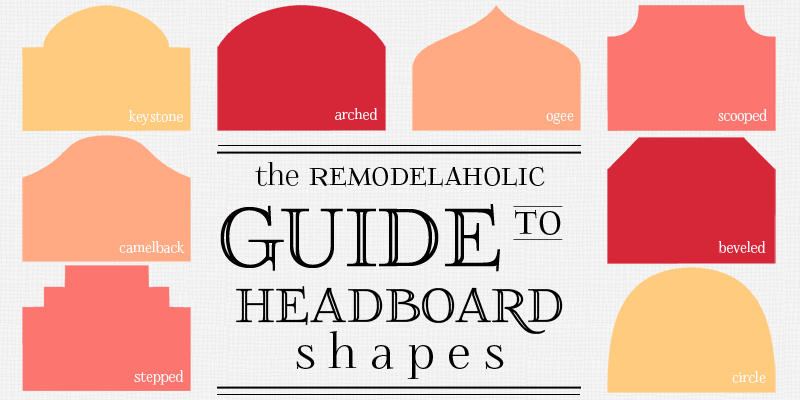
10 Popular Headboard Shapes and How to Use Them
1. Rectangular Panel Headboards
The rectangular panel is the reliable classic. Its straight top edge works with almost every style, including modern, farmhouse, traditional, and transitional rooms. Choose a low version for a clean, contemporary look or a taller one for more presence. This is a smart choice when wallpaper, lighting, or bedding already provides plenty of movement.
Upholstered rectangles are comfortable for reading, while wood panels add warmth and grain. The silhouette is quiet, but it never has to be boring; texture, piping, tufting, or a rich finish can give it personality.
2. Arched Headboards
An arched headboard has a rounded crown that instantly makes a bedroom feel softer. It can lean French country, Mediterranean, modern organic, or quietly luxurious depending on the fabric, wood finish, and color. A linen arch in a warm neutral feels breezy; a velvet arch in a saturated jewel tone feels like it has arrived with a tiny orchestra.
Arches work especially well against boxy architecture because they break up the grid. They deliver more character than a plain panel without demanding the attention of a full-on sculptural statement piece.
3. Camelback Headboards
The camelback rises at the center and slopes gently toward each side. It is a traditional shape, but it can look remarkably fresh in a simple linen, a subtle stripe, or a modern solid color. Choose it when you like symmetry and want a touch of romance without making your bedroom feel like a costume drama set.
It fits traditional, English cottage, and soft-transitional spaces particularly well. Keep the bedding edited if the curve is pronounced so the silhouette remains the star.
4. Wingback Headboards
Wingback headboards extend forward at the sides, framing the bed with small wings. They are usually upholstered and ideal for readers, late-night television watchers, or anyone who treats their mattress as a temporary office. The shape feels cocooning and tailored, making a large bed look substantial and inviting.
Measure depth before you commit. In a compact bedroom, choose a slim-wing design so the bed does not consume your walking path like a very handsome traffic cone.
5. Scalloped Headboards
Scallops use repeated rounded dips along the top edge. They can be playful, vintage-inspired, coastal, or glamorous. Small scallops feel dainty and tailored; larger ones make a bolder graphic statement. Because the outline already has personality, a solid fabric often works better than a loud print.
Scalloped headboards are lovely in guest rooms and children’s rooms, but they can look sophisticated in adult spaces too. Try velvet, contrast piping, or an earthy color instead of a sugary pastel.
6. Channel-Tufted or Fluted Headboards
Channel-tufted headboards are often rectangular or subtly curved, with vertical seams that create rhythm. They add texture without a busy pattern and can make a room feel taller, particularly in a generous height. Wide channels read relaxed and modern; narrow channels look more tailored.
This style offers real comfort for sitting up in bed. It also needs routine vacuuming, especially in homes with pets, shedding hair, or people who believe crackers are a bedtime food group.
7. Double-Arched and Peaked Headboards
Double arches, cathedral-style peaks, and twin-slope silhouettes create a strong focal point. A softly curved double arch feels gentle and decorative, while a sharper peak looks graphic and architectural. These shapes work best on a relatively open wall, where they have room to breathe.
A dramatic headboard rarely needs a busy gallery wall hovering above it. That is not layering; it is an elevator for the eyes with too many passengers.
8. Extended and Wall-to-Wall Headboards
An extended headboard stretches past the mattress, sometimes linking the nightstands and sometimes spanning the entire wall. Upholstered panels, slatted wood, and shallow built-ins all create this effect. The result feels cohesive, especially in a room with a long blank wall or floating nightstands.
In a small room, keep the profile thin and choose a finish close to the wall color. The design should feel seamless and architectural, not like the bedroom has been lined with padding.
9. Organic, Wavy, and Asymmetrical Headboards
Organic silhouettes use irregular curves, offset peaks, or wavy borders. They are ideal for eclectic, artistic, retro, and maximalist bedrooms. In a bold color or carved wood, an asymmetrical headboard becomes functional wall art.
Let it be the oddball star. Pair it with simpler bedding and restrained nightstands, or the room may begin auditioning for its own reality show.
10. Openwork, Spindle, Cane, and Rattan Shapes
Openwork headboards use negative space instead of a solid slab. Spindles, cane, woven rattan, and metal scrollwork keep a bedroom visually light because the wall remains visible behind them. They are useful in compact rooms and feel natural in coastal, cottage, bohemian, and relaxed traditional interiors.
The trade-off is support. Add large pillows or a reading cushion if you sit up in bed often, unless you enjoy the posture of a folded lawn chair.
How to Choose the Best Headboard Shape
Read the Architecture First
Look at the wall behind the bed before falling in love with a silhouette. Tall windows, sloped ceilings, molding, and beams can guide the decision. A low headboard may be practical under a window. A tall arch can fill a blank wall gracefully. In a room full of hard lines, curves bring relief; in a room overflowing with curves, a crisp rectangle may restore balance.
Get the Scale Right
Measure the mattress, wall, ceiling height, and clearance around the bed. Then mark your proposed outline with painter’s tape. This tiny rehearsal can reveal whether a wingback looks regal or whether it makes the room feel like the bed hired bodyguards.
Match the headboard to your bed size and confirm the manufacturer’s mounting requirements. A design wider than the mattress can be beautiful, but it needs enough wall space and walking room to look deliberate. Compatibility matters even more with platform frames and adjustable bases.
Choose for Everyday Habits
People who read, watch television, or work in bed usually appreciate an upholstered, gently angled, or curved surface. If easy cleaning matters more, wood, metal, cane, or a simple wall-mounted panel might suit you better. Consider durable upholstery when pets, children, or breakfast-in-bed are part of your regular routine. Pale boucle is gorgeous, but it is not automatically thrilled about blueberry muffins.
Pair Material with the Shape
Upholstery makes arches, scallops, wings, camelbacks, and channel tufting feel luxurious. Wood emphasizes construction and suits rectangles, slats, carved forms, and openwork designs. Metal works well for slim arches and cottage-style spindles. Cane and rattan add texture to framed or rounded shapes.
Contrast helps a room feel layered. Pair a soft upholstered headboard with wood nightstands or a metal bench. Pair a hard wood or iron headboard with plush bedding. Bedrooms need a little tension; they do not need to resemble a showroom negotiating a treaty.
Headboard Shapes by Bedroom Style
Modern or minimalist: Try a low rectangle, clean arch, channel-tufted panel, or shallow wall-to-wall design in a calm fabric or simple wood finish.
Traditional or transitional: Camelback, wingback, framed upholstery, and gently curved wood feel appropriate. Choose tailored details over excessive ornament.
Coastal or cottage: Cane, rattan, painted wood, spindles, slim metal arches, and small scallops add easygoing charm.
Bohemian or eclectic: Carved wood, woven textures, wavy forms, and vintage-inspired arches offer personality. Repeat a color or material elsewhere to keep the space coherent.
Glamorous or maximalist: Tall arches, scallops, curved wings, rich channel tufting, and oversized upholstered panels can handle velvet, piping, bold color, and sculptural lighting.
Common Headboard Mistakes to Avoid
Do not assume every headboard fits every frame. Confirm attachment points, hardware, wall clearance, and compatibility before ordering. A headboard that wiggles each time you turn over is less “cozy sanctuary” and more “low-budget haunted house.”
Also consider mattress height. Thick mattresses, foundations, and adjustable bases can hide too much of a low headboard, while a towering design can overwhelm a low platform. Treat the bed as one composition, not as furniture parts reluctantly sharing a zip code.
Finally, do not compete with a dramatic silhouette. A sculptural headboard may need only balanced lamps and well-chosen bedding, not oversized art shouting from directly above it.
Real-World Headboard Experiences: What You Notice After the First Week
The practical lessons of a headboard usually show up after the room is finished and ordinary life takes over. A shape can be dazzling in a product photograph, but daily routines decide whether it earns permanent residence. People who choose tall upholstered headboards often notice comfort first. Reading becomes easier, extra pillows have a softer backdrop, and the bed looks more put together even when the duvet appears to have lost a small argument. The cost of that comfort is upkeep. Fabric captures dust, pet hair, and the occasional trace of a midnight snack, so a hand vacuum and a sensible fabric-care routine become part of the deal.
Wood, cane, and metal headboards often win fans because they are easy to maintain. A light dusting or wipe-down keeps them looking crisp, and their outlines remain clear against layers of bedding. The surprise is that hard surfaces are less forgiving when you sit upright. This is not a reason to regret a wood headboard; it is a cue to build a better pillow arrangement. Euro shams, a lumbar cushion, or a firm reading pillow can make a handsome but stern surface much more comfortable.
Arched and curved profiles create a quieter kind of satisfaction. In rooms filled with plain walls and square furniture, the curve breaks the grid and makes the bed feel deliberately placed. Many homeowners find that a rounded shape completes the room even when the rest of the décor stays simple. Its strength is also its warning: an arch already gives the wall a silhouette, so it rarely needs ornate art, dramatic wallpaper, a giant mirror, and a chandelier campaigning for mayor. Calm bedding and balanced lamps are usually enough.
Wingback and oversized headboards create the strongest feeling of enclosure. They can make a primary bedroom feel like a place to recover from the day rather than a room where a mattress happens to live. A wide design can also connect sconces, nightstands, and the bed into one visual line. Still, these shapes reward careful measuring. People often underestimate the depth of wings or the visual weight of a wall-spanning panel. A few extra inches can matter when opening drawers, making the bed, or attempting to walk through the room without practicing furniture yoga.
Scalloped, peaked, and irregular silhouettes get the most compliments because they turn the bed into an immediate focal point. They also teach an important decorating lesson: once the headboard has a point of view, the rest of the room can relax. A simple quilt, neutral curtains, and one unexpected accent color often make a stronger impression than five additional statement pieces. Think of the headboard as the lead singer. It needs a good band, not five other singers demanding solos.
Renters and frequent movers frequently discover that a detachable or wall-mounted option offers the most freedom. It can update a basic frame, move from one bedroom to another, and let you experiment with a shape without buying a whole new bed. In the end, the best headboard is not necessarily the largest or most expensive. It is the one that fits the room, supports the way you relax, and still makes you happy after you have seen it every morning for several seasons.
Final Thoughts
The ultimate headboard shape is not a universal winner. It is the silhouette that balances your room’s proportions, style, and real-life habits. A rectangular panel may bring the calm you want. A soft arch can make a basic room feel architectural. A wingback can turn bedtime reading into a small ritual. An extended design can make the entire wall feel considered.
Start with the outline, measure before you buy, and choose a material that fits how you live. When the headboard shape is right, the bedroom feels less like a place where a mattress happens to live and more like a space designed for rest.
Note: Before purchasing or installing a headboard, confirm exact dimensions, mounting requirements, and compatibility with your bed frame or adjustable base using the manufacturer’s instructions.