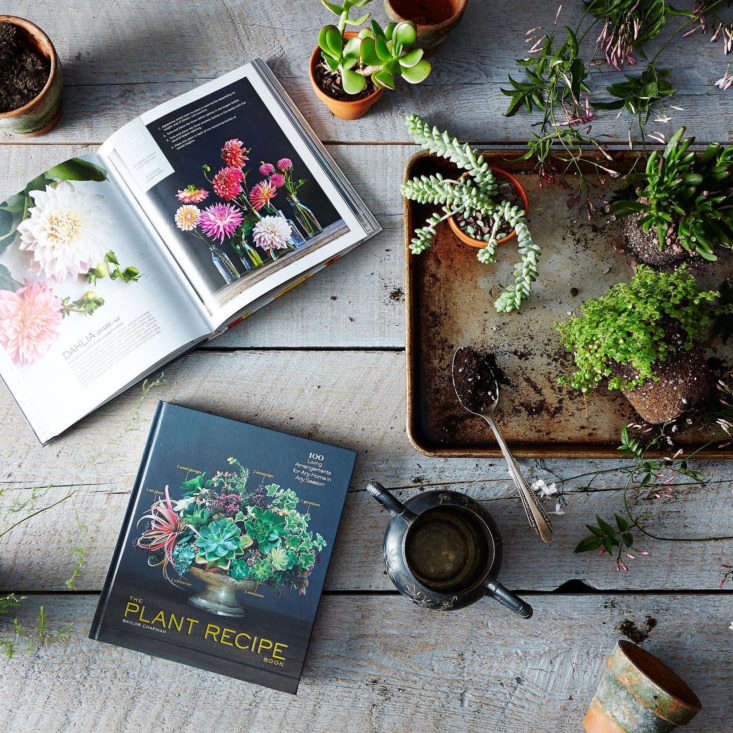
Some design books are destined for the coffee table, where they spend their lives looking handsome beneath a candle and a suspiciously untouched bowl of decorative lemons. The Plant Recipe Book and The Flower Recipe Book are different. They are beautiful enough to display, but practical enough to end up beside a muddy potting bench, a pile of clipped stems, or a kitchen sink full of leaves.
Published by Artisan, these visually driven books approach botanical design with a clever idea: instead of explaining arrangements through intimidating design theory, they present them almost like cooking recipes. The Flower Recipe Book, by Alethea Harampolis and Jill Rizzo of Studio Choo, arrived in 2013. Baylor Chapman’s The Plant Recipe Book followed in 2014, applying a similar step-by-step philosophy to living plant arrangements. The publisher describes both as heavily photographed, approachable guides intended to make botanical design easier for home enthusiasts.
And then there are the signed copies. A signature changes an already attractive gardening or flower-arranging book into something more personala small connection between reader and designer. Signed editions of these books have genuinely circulated over the years; Floret, for example, once offered signed copies of The Flower Recipe Book, while Food52 promoted signed copies of Baylor Chapman’s plant title.
What Is The Flower Recipe Book?
The Flower Recipe Book was created by floral designers Alethea Harampolis and Jill Rizzo, the founders of Studio Choo. Rather than beginning with pages of terminology that make beginners wonder whether they accidentally enrolled in botany school, the authors break arrangements into ingredients and steps.
Published in 2013 by Artisan, the hardcover is an illustrated guide to creating seasonal floral arrangements. Publisher information describes approximately 400 photographs, more than 40 detailed step-by-step demonstrations, and an assortment of arrangements ranging from restrained compositions to fuller, more sculptural designs.
A Cookbook Approach to Flower Arranging
The recipe format is the book’s great strength. Instead of saying, “Create balance while considering rhythm, negative space, texture, and movement,” and then leaving the reader staring nervously at six tulips, the book shows what materials are needed and how the pieces come together.
That makes the concept unusually accessible. Flowers become ingredients. A vessel becomes the mixing bowl. Branches, greenery, focal blooms, and smaller supporting flowers are assembled in stages. The reader can follow the instructions closely at first and gradually improvise after learning what makes an arrangement work.
The approach also encourages people to look beyond the traditional supermarket bouquet. Harampolis has long advocated incorporating branches, foliage, herbs, vines, berries, and other garden materials into arrangements rather than depending entirely on perfect cut flowers. That philosophy appeared in later discussions of her design work as well.
Seasonality Makes the Designs Feel Natural
One reason the arrangements remain visually appealing is their relationship with seasonal materials. Instead of forcing every design into the same symmetrical bouquet shape, the recipes embrace botanical personality.
A branch can lean. A vine can wander. A flower can face slightly away from the viewer without being immediately escorted back into formation.
The result is floral design that often feels closer to a garden than a formal florist’s display. For people who prefer loose, natural-looking arrangements, this is an especially useful source of inspiration. Contemporary flower arranging frequently celebrates movement, asymmetry, texture, and the character of individual stems, and The Flower Recipe Book demonstrates how those principles can be translated into something achievable at home.
What Makes The Plant Recipe Book Different?
If The Flower Recipe Book says, “Let’s arrange the flowers,” Baylor Chapman’s The Plant Recipe Book replies, “Excellentbut what if we kept everything alive?”
Chapman founded the San Francisco-based plant design studio Lila B. Design and developed the book around living botanical arrangements. Published by Artisan in 2014, The Plant Recipe Book: 100 Living Arrangements for Any Home in Any Season contains 100 plant recipes and approximately 400 photographs, along with guidance on materials, planting, sourcing, and care.
Plants Become Decorative Ingredients
The basic recipe concept remains familiar, but the ingredients change dramatically. Instead of primarily working with cut stems, Chapman uses succulents, air plants, orchids, ferns, herbs, and other living materials.
That difference creates an entirely new design challenge. A floral arrangement might be admired for several days before it fades. A living arrangement needs to continue functioning after the photograph-worthy moment has passed.
Drainage, soil, moisture, light, plant compatibility, and long-term care suddenly matter. The centerpiece has become a tiny ecosystem. Congratulations: your home decoration now has opinions.
The Los Angeles Times highlighted Chapman’s emphasis on accessibility, including her willingness to use ordinary household vessels and unconventional containers rather than insisting on specialized pots. The same discussion addressed practical subjects such as watering containers without drainage and reusing plants after an arrangement has run its course.
Unusual Containers Encourage Experimentation
Another entertaining aspect of The Plant Recipe Book is its refusal to treat the standard flowerpot as the only acceptable home for greenery.
The book explores conventional containers as well as more unexpected presentation ideas. That encourages readers to look differently at objects already sitting around the house. A bowl, pitcher, glass vessel, vintage container, or other suitable object may become part of a living arrangement when plant health and watering requirements are properly considered.
This is where the book functions as both gardening instruction and interior-design inspiration. Plants become more than objects lined up along a windowsill. They become compositional elements that interact with furniture, architecture, color, and texture.
The Plant Recipe Book vs. The Flower Recipe Book
Although the books complement each other beautifully, they solve different creative problems.
Choose The Flower Recipe Book If You Love Fresh-Cut Flowers
This is the natural choice for readers interested in bouquets, centerpieces, seasonal flowers, event arrangements, or simply finding something better to do with the flowers they impulsively bought because peonies were on sale.
The recipes demonstrate composition without turning the process into a technical lecture. Readers can study proportion, shape, color relationships, foliage placement, and the importance of allowing individual flowers to remain visible.
Choose The Plant Recipe Book If You Prefer Living Decor
Chapman’s book is better suited to houseplant enthusiasts, container gardeners, succulent fans, and anyone fascinated by botanical displays designed to survive beyond dinner.
It also provides a valuable shift in perspective: plants don’t have to remain isolated in individual nursery pots. They can be combined and displayed creatively, provided their growing requirements are respected.
Own Both for the Full Botanical Experience
Together, the books create a practical mini-library of botanical styling. One focuses primarily on arranging temporary cut materials; the other explores longer-lasting compositions made from living plants.
The connection between the titles is intentional. Chapman’s book was presented as a follow-up to The Flower Recipe Book, adopting a similarly photographic, recipe-oriented structure.
For designers, gardeners, florists, stylists, or enthusiastic amateurs, owning both creates an interesting education in composition. You begin to notice recurring ideas: choosing a focal point, varying height, balancing visual mass, mixing textures, and knowing when to stop adding things.
That final skill is surprisingly difficult. Flowers do not come with an “arrangement full” warning light.
Why Signed Copies Are Especially Appealing
A regular copy is a useful book. A signed copy is simultaneously a useful book and a collectible object.
This does not automatically mean every autographed edition will become financially valuable. Book collecting is more complicated than “signature equals retirement fund.” Value can depend on scarcity, edition, condition, inscription, provenance, demand, and whether the signature can be authenticated.
But financial value is only part of the attraction.
A Signature Adds a Human Connection
Design books are highly personal expressions of their creators. Every photograph represents dozens of choices concerning materials, proportions, styling, containers, backgrounds, and presentation.
Opening a signed copy adds another layer to that experience. The reader is no longer holding only a mass-produced instructional book but an individual copy that passed through an author’s hands.
For admirers of Baylor Chapman, Alethea Harampolis, Jill Rizzo, Studio Choo, or modern botanical design more generally, that distinction can make the book feel substantially more special.
Signed Books Make Thoughtful Gifts
A signed plant or flower design book also works particularly well as a gift because it combines usefulness, visual beauty, and a sense of rarity.
Potential recipients include flower lovers, new homeowners, gardeners, interior designers, professional florists, aspiring floral designers, houseplant collectors, and the person who says, “Please don’t buy me anything,” while owning 47 pots.
The books are attractive enough to display and practical enough to encourage an immediate weekend project.
What to Check When Buying a Signed Copy
Because signed copies may appear through independent bookstores, specialty retailers, author events, or the secondhand market, buyers should examine the details rather than relying entirely on a listing headline.
Confirm Who Signed the Book
This sounds painfully obvious until a listing describes something as “signed” without clearly stating whose signature is inside.
For The Plant Recipe Book, buyers would normally be looking for Baylor Chapman’s signature. For The Flower Recipe Book, a particularly desirable copy might contain signatures from Alethea Harampolis and Jill Rizzo, although signed examples can vary.
Look for Provenance
A book obtained at a documented signing, directly from an author-associated sale, or from an established bookseller may offer stronger provenance than an unexplained signature in an anonymous marketplace listing.
Historical promotions demonstrate that genuine signed copies of these books were distributed. Floret promoted signed Flower Recipe Book copies in 2013, and Food52 advertised signed Plant Recipe Book copies around the release of Chapman’s title.
Evaluate Condition
Collectors should check the dust jacket, cover corners, binding, pages, stains, writing, fading, and general shelf wear. A beautiful signature cannot magically negotiate with a coffee stain covering half the title page.
For a book intended for actual creative use, however, minor wear may not matter. In fact, there is something charming about a flower-arranging book with evidence that somebody actually arranged flowers.
Why These Books Still Work as Practical References
Trends in home decor constantly change, but the underlying principles of plant and floral composition are surprisingly durable.
Knowing how to combine textures, judge scale, establish a focal point, select a container, vary height, and create visual movement remains useful regardless of whether the year’s fashionable vase is ceramic, glass, brass, or something apparently excavated from an ancient Mediterranean shipwreck.
Both books are also strongly visual. That matters because botanical design is much easier to understand when you can see how ingredients are added rather than merely reading descriptions of the finished composition.
For beginners, photographs reduce uncertainty. For experienced designers, they provide inspiration that can be adapted rather than copied literally.
Using the Books Without Copying Every Recipe Exactly
The best way to use either title is not necessarily to reproduce every arrangement stem for stem or plant for plant.
Availability changes by region and season. A specific flower might be impossible to find locally. A particular plant might dislike the light conditions in your home. The useful skill is learning what role each ingredient performs.
If a recipe uses a dramatic upright branch, another structural branch may serve the same purpose. If it calls for a low mound of greenery, a locally available plant with similar growth and care requirements may provide the visual effect.
This approach turns recipes into design lessons.
Eventually, you stop asking, “Where can I find this exact plant?” and start asking, “What is this plant doing in the composition?” That is the moment an instructional book becomes genuinely educational.
My Experience Using Plant and Flower Recipe-Style Books
The most memorable thing about working from recipe-style botanical books is how quickly they expose the difference between looking at a beautiful arrangement and actually making one.
A photograph can make everything appear effortless. Three branches lean elegantly to the left. A flower hovers exactly where it should. A succulent sits in its container looking as though it personally approved the styling.
Then you try it.
The branch rotates. The flower falls forward. Soil appears on a surface you could have sworn was six feet away. Suddenly the word “effortless” feels personally insulting.
But that is also why books structured like The Plant Recipe Book and The Flower Recipe Book are so useful. Instead of staring only at a finished photograph and trying to reverse-engineer it, you can understand the arrangement as a sequence.
Start With Fewer Ingredients Than You Think
One lesson that becomes obvious after experimenting is that more material does not automatically create a better arrangement. Beginners often keep adding stems because empty space feels unfinished.
In practice, restraint can make individual flowers and plants more noticeable. One unusual branch may contribute more character than another twelve filler stems. A single sculptural succulent can sometimes look better than a container crowded with five varieties competing for attention.
The recipe format helps develop that discipline because ingredients have a purpose. You begin thinking about what each addition contributes rather than adding greenery merely because some greenery remains on the table.
Use What Is Available Around You
Another useful experience is substituting local materials. The exact ingredients pictured in a professionally styled book may not be available at your neighborhood nursery, farmer’s market, florist, or backyard.
That initially feels like a limitation. Eventually it becomes part of the fun.
A clipping from a rosemary plant may contribute fragrance and texture. An interesting branch from routine garden pruning might provide the entire structure of a floral arrangement. An inexpensive succulent from a hardware store can become the focal point of a small living centerpiece.
This spirit closely reflects the accessible design approach Chapman discussed when explaining that readers could use everyday containers and readily available plants rather than treating every project like a rare-botanical scavenger hunt.
Expect the Second Attempt to Look Better
The first arrangement made from a recipe may look slightly stiff because you are concentrating on instructions. The second is usually more relaxed. By the third, you may start making deliberate substitutions and changing proportions.
That progression is important. The real purpose of a creative reference book isn’t to produce permanent dependence on instructions. It is to build enough confidence that the reader eventually develops personal judgment.
You start noticing which shapes appeal to you, which plants thrive in your home, which flowers last well, which colors work together, and which supposedly brilliant container ideas are absolute watering nightmares.
Let Living Arrangements Change
Plant compositions offer an additional lesson because they refuse to remain frozen in time.
A living arrangement photographed on day one will eventually grow, stretch, produce new leaves, lean toward light, or need dividing. That is not necessarily a design failure. It is part of working with living material.
Plants can later be moved into separate containers or incorporated into new arrangements. Chapman has specifically discussed repurposing plants from completed compositions, including separating individual specimens for reuse.
This makes plant arranging especially satisfying for people who dislike throwing things away. Today’s centerpiece can become next month’s windowsill plant and next year’s propagated gift.
Signed Copies Make the Experience More Personal
Using a signed creative book feels slightly different from using an ordinary reference. You may still set it on the worktable, but you are probably a little more careful about where the watering can goes.
For collectors, the autograph represents provenance and individuality. For active gardeners and designers, it can represent inspiration from someone whose creative work they admire.
Either way, these books succeed because they invite participation. They are not catalogs showing flawless arrangements that ordinary people are expected to admire from a safe distance. Their recipe structures essentially say: here are the ingredients, here is the process, now make something.
Conclusion: Two Beautiful Books Made to Be Used
The Plant Recipe Book and The Flower Recipe Book occupy an appealing space between design books and practical manuals. Their photography makes them attractive enough for display, while their recipe-based instruction encourages readers to experiment with flowers, foliage, containers, houseplants, succulents, branches, and whatever interesting botanical material happens to be nearby.
The Flower Recipe Book is an excellent starting point for exploring natural, seasonal floral arrangements. The Plant Recipe Book carries the concept into living decor, where plant selection and care become part of the creative process.
Signed copies add another dimension. They may interest collectors, but their greater appeal is often personal: these are working creative books connected directly to the designers who made them. Whether displayed carefully on a shelf or opened beside a gloriously messy pile of stems and soil, both books encourage the same satisfying ideabeautiful botanical design is not reserved for professionals.
You simply need a few ingredients, a little guidance, and the willingness to accept that at least one leaf will somehow end up on the floor.