Note: This article synthesizes established education research and classroom guidance from reputable U.S.-based education, psychology, and learning-science organizations, including the American Psychological Association, Harvard Graduate School of Education, Stanford Teaching Commons, NCTM, Learning Policy Institute, RetrievalPractice.org, Edutopia, Education Week, and Understood.
Introduction: The Classroom Sound Nobody Wants to Hear
There is a special kind of silence that falls over a classroom when a student gives the wrong answer. It is not peaceful. It is not reflective. It is the academic version of a dropped tray in the cafeteria. Everyone hears it. Everyone freezes. The student’s cheeks warm up, the teacher rushes to smooth things over, and somewhere in the back row a pencil suddenly becomes extremely interesting.
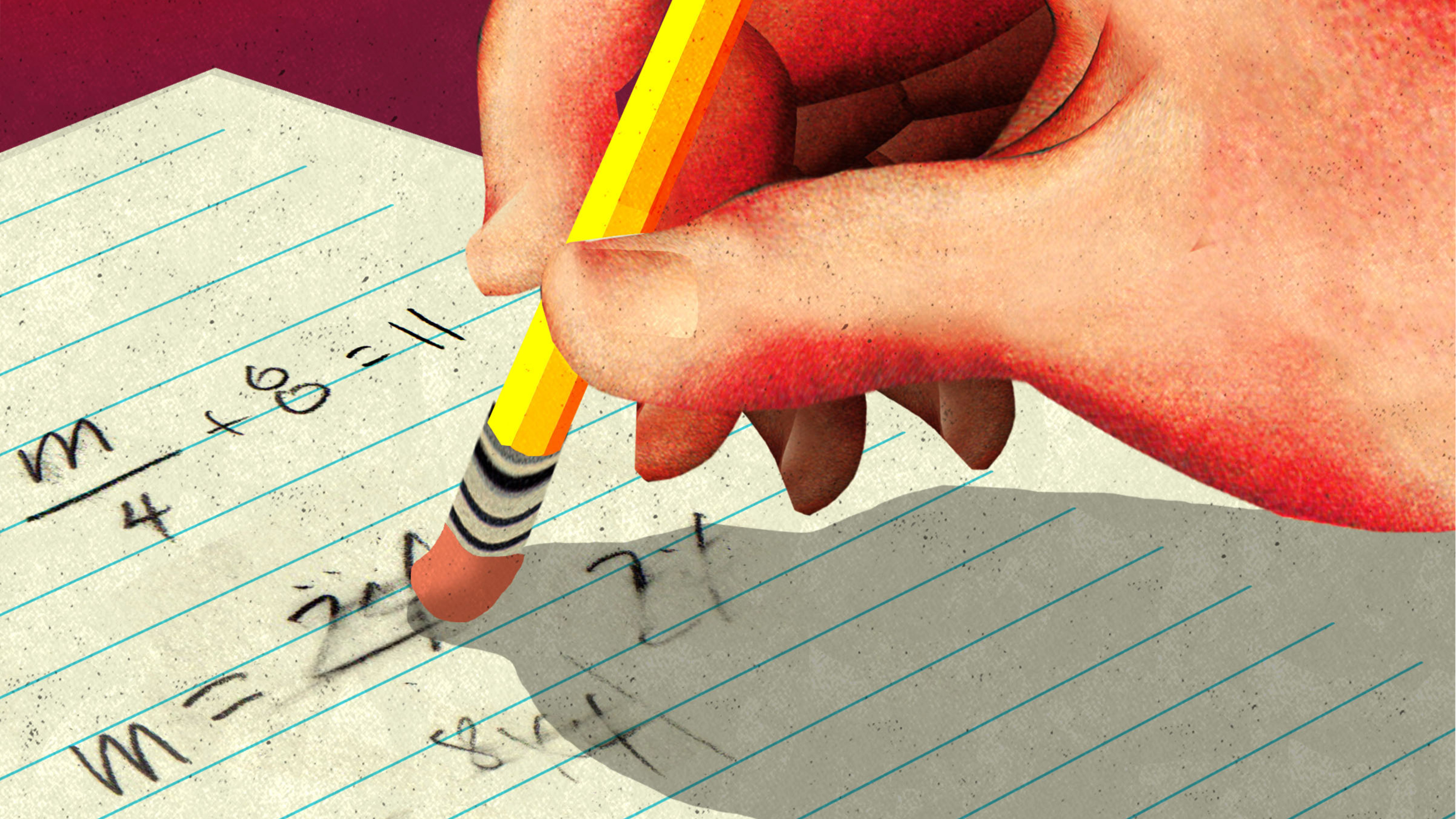
Yet that uncomfortable moment may be one of the most valuable learning opportunities in the room. Student error is not a learning disaster. It is often the doorway into deeper understanding. The problem is that schools, families, and even students themselves have been trained to treat mistakes like stains on a white shirt: hide them fast, wash them out, and pretend lunch never happened.
The mistake imperative is simple: if we want students to think better, learn longer, and become more resilient, we must stop treating errors as evidence of failure and start using them as evidence of thinking. A wrong answer is not the end of learning. In many cases, it is the beginning of the good part.
Why Student Error Makes Adults So Nervous
Teachers do not fear student mistakes because they dislike learning. They fear mistakes because classrooms are crowded, time is short, standards are demanding, and test scores have a way of standing in the doorway with a clipboard. In a high-pressure environment, the wrong answer can feel like a delay, a warning sign, or proof that yesterday’s lesson landed with the grace of a wet sock.
Parents worry too. A child’s mistake on homework may look like a small academic pothole, but adults often imagine a whole highway collapse: bad grades, lost confidence, college admissions panic, and suddenly someone is Googling “Can a third grader recover from long division trauma?”
Students absorb this anxiety quickly. They learn that correct answers are safe and mistakes are socially expensive. The result is a classroom culture where many students would rather say nothing than risk being wrong. That silence may look orderly, but it is not always learning. Sometimes it is fear wearing a school uniform.
The Science of Mistakes: Learning Needs Friction
Learning is not simply the smooth transfer of information from teacher to student. If it were, every classroom would be a USB cable and everyone would leave fluent in fractions. Real learning requires retrieval, correction, reflection, and adjustment. The brain strengthens understanding when it has to work, compare, revise, and reconnect ideas.
This is why strategies such as retrieval practice, formative assessment, productive struggle, and feedback are so powerful. They expose what students know, what they almost know, and what they only think they know because the worksheet was feeling generous that day.
Mistakes Reveal Misconceptions
A student error is useful because it shows the teacher where thinking took a wrong turn. Did the student misunderstand vocabulary? Skip a step? Apply the wrong rule? Guess because the problem looked lonely? Each type of mistake gives different information.
For example, when a student writes that 1/4 is larger than 1/3 because 4 is larger than 3, the problem is not laziness. The student is applying whole-number logic to fractions. That mistake is a gift. It shows exactly what needs to be addressed. Without the error, the misconception stays hidden like a raccoon in the attic: quiet for now, destructive later.
Productive Struggle Builds Deeper Understanding
Productive struggle is not the same as abandoning students to confusion. It means giving learners challenging tasks, enough support to stay engaged, and time to wrestle with ideas before being handed a polished solution. In math, writing, science, and problem-based learning, this kind of struggle helps students build reasoning rather than merely copy procedures.
The key word is productive. Confusion without guidance is just fog. Productive struggle includes meaningful tasks, clear goals, teacher observation, student discussion, and follow-up instruction that helps learners connect their attempts to accurate concepts.
Growth Mindset Is Not a Poster. It Is a Practice.
Many classrooms display cheerful signs that say, “Mistakes help us grow.” Lovely. Also insufficient. A poster cannot carry the whole emotional load of a child who just answered “photosynthesis” in response to a question about the War of 1812.
A true growth mindset culture is built through repeated experiences. Students need to see that effort, strategy, feedback, and revision actually matter. They need assignments where improvement counts. They need teachers who respond to mistakes with curiosity rather than panic. They need adults to praise process, not just performance.
Instead of saying, “You’re so smart,” educators can say, “Your first strategy did not work, but your revision shows stronger reasoning.” That small shift tells students that ability is not a fixed label. It is something developed through practice, feedback, and persistence.
Feedback Turns Error Into Learning
A mistake alone does not guarantee growth. Students can make the same mistake 47 times and mostly become experts in frustration. Feedback is what transforms error into instruction.
Good feedback is specific, timely, and usable. “Try harder” is not feedback; it is a motivational bumper sticker. “Your claim is clear, but your evidence does not prove it yet. Add one quotation and explain how it supports your point” is feedback a student can use.
What Effective Feedback Looks Like
Effective feedback answers three questions: Where am I going? Where am I now? What should I do next? It helps students see the gap between their current performance and the learning goal without making that gap feel like a canyon full of judgmental goats.
In a mistake-friendly classroom, feedback is not saved only for the final grade. It appears during drafts, discussions, practice quizzes, exit tickets, lab revisions, and small-group conferences. The earlier students receive useful feedback, the more time they have to adjust before the learning hardens into habit.
Why “Errorless Learning” Can Be a Trap
It is tempting to make lessons as smooth as possible. Teachers model every step, students follow along, and everyone enjoys the pleasant illusion that learning has occurred. Then comes the independent task, and suddenly the room resembles a software update gone wrong.
When students never get the chance to make decisions, test ideas, and notice errors, they may perform well during guided practice but struggle to transfer knowledge later. They know how to follow the path, but not how to navigate when the path disappears.
Healthy mistakes help students build flexible knowledge. They learn not only what works, but why it works. They learn how to notice when an answer does not make sense. They learn to ask better questions. Most importantly, they learn that confusion is not proof they are incapable. It is often proof they are learning something worth learning.
The Emotional Side of Student Error
Of course, we cannot talk about student mistakes as if students are tiny research subjects wearing backpacks. Mistakes have emotional weight. Some students, especially those with learning differences, anxiety, language barriers, or histories of academic struggle, may experience errors as confirmation of a painful story they already believe about themselves.
This is why psychological safety matters. A classroom that welcomes mistakes is not a classroom with no standards. It is a classroom where students can take intellectual risks without being mocked, labeled, or ignored. It is a place where the teacher protects dignity while challenging thinking.
Shame Blocks Learning
Shame makes students defensive. It narrows attention, reduces participation, and encourages avoidance. When learners believe mistakes will expose them as “bad at school,” they often choose safer behaviors: silence, copying, joking, rushing, or refusing to try.
A teacher’s response can change the emotional meaning of error. “Interestinglet’s look at where that idea came from” feels very different from “No, that’s wrong.” One response opens a door. The other locks it and posts a security guard.
How Teachers Can Build a Mistake-Friendly Classroom
Creating a healthier relationship with student error does not require turning the classroom into a motivational seminar with glitter. It requires consistent routines that normalize, examine, and learn from mistakes.
1. Model Mistake Analysis Out Loud
Teachers can show students how experts think by making errors visible. For example: “I solved this too quickly and forgot to check the units. That changed the meaning of the answer. Watch how I catch it.” This teaches students that competent people make mistakes and correct them.
2. Use “My Favorite No”
In this strategy, the teacher anonymously selects a student mistake that contains useful thinking. The class studies what is strong about the answer first, then identifies the point where the reasoning breaks down. This keeps dignity intact while turning error into shared learning.
3. Separate Practice From Final Judgment
If every attempt is graded heavily, students will avoid risk. Low-stakes quizzes, drafts, practice problems, and revision opportunities help students treat mistakes as part of the process rather than as permanent academic tattoos.
4. Ask Better Follow-Up Questions
When a student is wrong, the next question matters. Try: “What made you choose that strategy?” “Can you show where the answer came from?” “What would happen if we tested it with a simpler example?” These questions keep thinking alive.
5. Teach Students to Categorize Errors
Students can learn to distinguish between careless errors, conceptual misunderstandings, missing information, weak strategies, and communication problems. This reduces helplessness. Instead of “I am bad at math,” a student can say, “I understand the concept, but I need to slow down when distributing negative signs.” That is a much more fixable sentence.
What Parents Can Do at Home
Families play a powerful role in shaping how children interpret mistakes. When a child brings home a disappointing grade, the first adult reaction can either increase fear or open reflection.
Instead of leading with “What happened?” in the tone of a detective entering a crime scene, parents can ask, “What part do you understand now that you did not understand before?” or “What is one thing this mistake is showing us?”
Parents can also share their own learning mistakes. Children benefit from hearing that adults mess up, revise, apologize, recalibrate, and keep going. The goal is not to celebrate failure for its own sake. The goal is to show that mistakes are manageable, informative, and temporary.
The Difference Between Healthy Error and Careless Neglect
Getting over our fear of student error does not mean pretending all mistakes are equally noble. A thoughtful wrong answer and a blank paper caused by not trying are not the same thing. A mistake-friendly classroom still values preparation, effort, accuracy, and responsibility.
The difference lies in what happens next. Healthy error leads to reflection and revision. Careless neglect requires accountability and support. Teachers can communicate both messages clearly: “Mistakes are welcome here, and effort is expected here.” Those two ideas belong together.
Why This Matters Beyond School
Adults make decisions in a world where instructions are rarely printed at the top of the page. People must troubleshoot, collaborate, revise plans, interpret feedback, and recover from poor choices. Students who never learn how to make mistakes productively are not being protected. They are being underprepared.
The future belongs not to people who never err, but to people who can notice errors early, learn quickly, and adapt with humility. Engineers test prototypes. Writers revise drafts. Doctors analyze symptoms. Entrepreneurs pivot. Scientists design experiments that often fail before they clarify anything useful. Learning to handle mistakes is not a soft skill. It is a survival skill with a backpack.
Experiences From the Classroom: What Happens When Mistakes Become Useful
Consider a middle school math classroom where students once treated wrong answers like live bees. Hands stayed down. Eye contact disappeared. The teacher decided to change the routine. Every Friday, students completed a short “beautiful mistake” reflection. They chose one error from the week, explained what they had been thinking, identified the correction, and wrote one sentence about what the mistake taught them.
At first, the reflections were thin. “I forgot.” “I did it wrong.” “Math is rude.” But over time, the language changed. Students began writing, “I multiplied before simplifying,” “I confused radius with diameter,” and “I used the right formula but substituted the wrong value.” That shift mattered. Students were no longer describing themselves as failures. They were describing problems in strategy, attention, and understanding.
In an English class, a teacher used draft conferences to normalize revision. One student had written a dramatic essay introduction that sounded impressive but said almost nothing specific. The teacher did not mark it with a red-pen thunderstorm. Instead, she asked, “What do you want the reader to understand by the end of this paragraph?” The student paused, laughed, and said, “Honestly, I was trying to sound smart.” That honest mistake became the lesson. The student rewrote the introduction with a clearer claim, and the class later discussed the difference between fancy writing and effective writing. Somewhere, a thesaurus sighed in relief.
In science, a lab group measured data incorrectly and produced results that looked wildly different from everyone else’s. The teacher could have simply told them to redo the lab. Instead, she asked the group to present their process. The class discovered that the students had read the scale from the wrong angle. The mistake opened a discussion about measurement, precision, and why scientists repeat trials. The group was embarrassed for about twelve seconds, then proud that their error helped everyone understand the lab better.
These experiences show an important truth: students do not automatically learn from mistakes just because adults tell them to. They learn from mistakes when classrooms provide structure, language, time, and trust. Error becomes useful when students are guided to inspect it without drowning in it.
One of the most powerful changes is also one of the simplest: replace “Who got it right?” with “What did we learn from the different approaches?” This question widens the classroom. It tells students that thinking matters, not just answer-getting. It also helps advanced students, who sometimes fear mistakes most because they have built their identity around always being correct. For these students, error can feel like falling off a very tiny academic throne. Learning to struggle may be exactly what they need.
Another valuable practice is revision with reflection. A corrected paper alone is helpful, but a corrected paper with a short explanation is better. When students explain what changed and why, they strengthen metacognitionthe ability to think about their own thinking. They become less dependent on adults to diagnose every problem. They learn to become their own coaches.
The most memorable classrooms are not the ones where nobody makes mistakes. They are the ones where mistakes are handled with intelligence, humor, and respect. Students leave those rooms with more than content knowledge. They leave with a healthier relationship to challenge. They understand that a mistake is not a verdict. It is data. Sometimes annoying data, yes. Occasionally dramatic data. But data all the same.
Conclusion: Make Room for the Wrong Answer
The mistake imperative asks educators, parents, and students to make a cultural shift. We do not need to lower expectations. We need to raise the quality of our response to error. Student mistakes should not be ignored, mocked, hidden, or worshipped. They should be studied.
When students learn to face errors with curiosity, they become braver thinkers. When teachers use mistakes as instructional evidence, they teach more precisely. When parents respond to setbacks with calm reflection, children learn that struggle is not a catastrophe. It is part of growth.
So the next time a student gives the wrong answer, resist the urge to rush past it like a squirrel crossing traffic. Pause. Look closely. Ask what the mistake reveals. Inside that awkward moment may be the exact lesson the class needs.