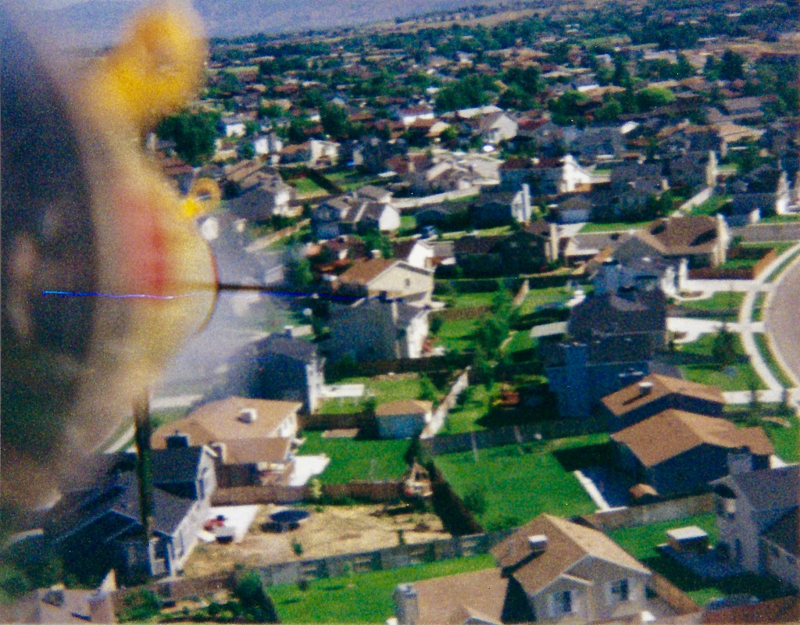
Rocket photography sounds like something that should require a NASA badge, a bunker, and a camera budget large enough to make your credit card quietly resign. But for generations of hobbyists, the magic started with a cardboard tube, a black powder motor, a parachute, and a small camera brave enough to ride the smoke column upward. In that strange and wonderful kingdom, one name still wears the crown: the Estes AstroCam 110.
Before drones made aerial photos feel ordinary and before phones could shoot video sharper than yesterday’s television studio, model rocket photography had a delightful problem: how do you convince a tiny rocket to take a picture while it is accelerating, spinning, vibrating, coasting, popping a recovery charge, and generally behaving like a caffeinated pencil? The answer took decades of tinkering, clever engineering, patient hobbyists, and more blurry photos than anyone wants to admit.
This is the story of rocket photography: the backyard science, the film-era gadgets, the people who kept the hobby alive, and the modern launch photographers who now put cameras next to roaring engines. It is also a celebration of why one imperfect aerial photo from a model rocket can feel more thrilling than a perfect image from a drone. A drone politely hovers. A rocket earns the shot.
Why Rocket Photography Is So Addictive
Rocket photography combines two hobbies that already attract people who like pushing buttons and hoping nothing explodes: rocketry and cameras. A model rocket launch is dramatic on its own, but adding a camera changes the mission. Suddenly the rocket is not just going up; it is reporting back. The flight becomes a tiny space program with a payload, a recovery plan, and a nervous ground crew standing around in grass.
The appeal is partly visual. A rocket-mounted camera can capture a view most people never see: launch pads shrinking into dots, streets bending into maps, school fields becoming miniature landscapes, and smoke trails curling below like white signatures in the air. Even when the picture is crooked, grainy, or partially filled with the rocket’s own body tube, it carries a strange authority. It says, “I was up there.”
The other appeal is technical. Rocket photography forces the builder to care about stability, vibration, shutter timing, exposure, weight distribution, motor selection, wind, and recovery. It turns a weekend launch into a puzzle. The camera does not forgive sloppy construction. If the fins are crooked, the image may look like it was taken from inside a washing machine. If the delay is wrong, the shutter may fire while the rocket is nosing over or while the sky is having a private conversation with the ground.
The Crown Before Digital: Camroc, Cineroc, and AstroCam 110
To understand why the AstroCam 110 became the king of model rocket photography, it helps to meet its ancestors. In the 1960s, Estes introduced the Camroc, a clever but demanding camera payload that took one round black-and-white photograph per flight. The concept was brilliant. The workflow, however, was not exactly “tap to upload.” The Camroc used a small round piece of film that had to be handled and processed carefully. It was a marvel, but it asked the hobbyist to be part rocketeer, part photographer, and part darkroom wizard.
Then came the Cineroc, a more ambitious rocket camera that shot movie footage using Super 8 film. This was not merely a snapshot from the clouds; it was the dream of motion-picture rocketry. For hobbyists who wanted to watch the ride rather than simply admire one frame, the Cineroc became legendary. Its biggest fans treated it with the seriousness normally reserved for vintage race cars, rare guitars, and other objects people claim they are “just storing” while secretly building shrines.
But the AstroCam 110 changed the game because it made the experience easier for ordinary builders. Introduced by Estes in 1979 and credited to designer Mike Dorffler, the AstroCam used Kodak’s 110 film cartridge format. That mattered. Instead of loading a single custom film disc in darkness, hobbyists could use a more familiar cartridge, get multiple exposures, and send film out for processing like normal people with fewer mysterious stains on their fingers.
What Made the AstroCam 110 the “King”?
The AstroCam 110 earned its crown through accessibility. It was not the sharpest camera ever made. It was not the most luxurious piece of optical engineering. It did not glide through the sky whispering, “Ansel Adams would be proud.” But it worked, it was relatively affordable, and it gave hobbyists repeated chances to succeed.
The camera used a mirror system so it could photograph sideways from the rocket body. That meant the ground could be captured during ascent rather than only the sky above. A trigger string activated the shutter at launch, and a properly prepared flight could produce a photo that felt almost impossible: your neighborhood, your launch field, your tiny human friends, all seen from the viewpoint of a rocket.
Not every frame was a masterpiece. In fact, part of the AstroCam experience was learning to love failure with cheerful stubbornness. A 24-exposure roll might produce a handful of usable images, and some flights delivered abstract art that looked like the rocket had photographed its own anxiety. Yet those few successful shots were unforgettable. They made the AstroCam more than a product. They made it a rite of passage.
The Science Behind the Shot
Rocket photography is a great reminder that cameras do not float through physics on a soft little cloud. A rocket-mounted camera must survive acceleration, vibration, rotation, and sudden changes in direction. A model rocket that flies straight gives the camera a fighting chance. A model rocket that corkscrews upward gives the photographer a fine collection of experimental motion blur.
Stability is the first rule. In simple terms, a rocket needs its center of gravity ahead of its center of pressure. If that balance is wrong, the rocket can tumble, arc wildly, or perform what observers may describe as “an exciting learning opportunity.” Fins, body length, payload weight, and nose weight all affect this balance. Add a camera, and the rocket’s behavior can change. The payload is not just decoration; it is part of the flight system.
Motor choice also matters. Too little thrust and the rocket may leave the pad slowly, making it vulnerable to wind and wobble. Too much enthusiasm and the camera may experience the kind of vibration that turns landscapes into soup. Delay timing affects when the recovery charge fires, which affects the rocket’s orientation and the chance of recovering both rocket and camera in one emotionally manageable piece.
Then there is exposure. Film-era rocket cameras needed fast shutter speeds because the rocket was moving quickly. Bright outdoor conditions helped, but strong sunlight also created harsh contrast. Modern digital cameras solve some problems while creating others: batteries, memory cards, rolling shutter effects, file corruption, and the eternal question of whether the “record” button was actually pressed. Technology advances, but human forgetfulness remains undefeated.
From Backyard Launch Pads to NASA Flame Trenches
Rocket photography is not limited to model rockets. At the professional end, launch photography is a serious technical field. Cameras may be placed near launch pads in protective housings, triggered remotely by sound, timers, or electronic systems. Photographers must plan for heat, vibration, shock waves, moisture, debris, and the possibility that the camera will have a very short but heroic career.
Modern launch images from Kennedy Space Center, Cape Canaveral, Vandenberg, and other U.S. launch sites often look effortless, but they are the result of careful planning. A camera near a rocket is not simply “set it and forget it.” It must be positioned before access closes, focused in advance, protected from the environment, and trusted to do its job without anyone standing next to it. When the engines light, the photographer is usually far away, hoping the camera survives and the memory card does not decide to become a tiny brick.
NASA and aerospace engineers also use advanced imaging for analysis, not just beauty. High-speed and high-dynamic-range camera systems can reveal details hidden in bright exhaust plumes, shock patterns, and engine behavior. These images are useful because rockets are extreme machines. The flame is bright enough to overwhelm ordinary sensors, while the surrounding hardware may still contain important details. Good rocket photography can be art, evidence, troubleshooting, and history all at once.
That is what connects a child’s AstroCam launch to professional pad photography. Both are attempts to record a moment too fast, too bright, or too strange for ordinary eyes. One uses a hobby rocket and a small camera. The other uses hardened systems near engines powerful enough to rearrange your hairstyle from a medically unsafe distance. The goal is the same: capture the ride.
Herbert Desind, “Mr. Cineroc,” and the Human Side of the Hobby
If the AstroCam 110 was the kingly object of model rocket photography, Herbert Stephen Desind deserves mention as one of the hobby’s great royal figures. Known in National Association of Rocketry circles as “Mr. Cineroc,” Desind was a science teacher, freelance writer, lecturer, and dedicated model rocketeer who specialized in the Estes Cineroc. His passion went far beyond collecting equipment. He used space history, model rocketry, and photography to teach, write, and inspire students and clubs.
Desind’s story matters because rocket photography is not only about hardware. It is about people who look at a small device and think, “What if this could teach someone how flight works?” It is about teachers who turn launch day into a physics lesson. It is about hobbyists who share checklists, compare photos, repair broken fins, and help new builders understand why their rocket chose a dramatic sideways career path.
The best rocket photography communities are full of this generous curiosity. Someone always knows how to align fins better. Someone has a trick for keeping the camera from fogging. Someone else has lost three rockets in trees and now speaks with the calm wisdom of a forest ranger. The hobby survives because people pass along knowledge, not just equipment.
Why Imperfect Rocket Photos Still Matter
In an age of 4K video, stabilized drones, and AI-enhanced everything, old rocket photos can look charmingly rough. The horizon may tilt. The ground may blur. The colors may be a little strange. A thumbprint, dust speck, or processing flaw may appear like an uninvited guest. But these imperfections are part of the story.
A rocket photo is a record of risk. The camera did not hover gently; it was launched. It endured acceleration, ejection, descent, and landing. If the photo survived, it brought back a souvenir from a tiny adventure. That makes even a flawed image feel alive. It is not merely a picture of a place. It is evidence of a journey.
This is why model rocket photography remains useful for STEM education. It combines design, measurement, prediction, experimentation, and review. Students can ask why one flight produced a clear image while another produced a blurred streak. They can analyze stability, wind, motor power, camera angle, and recovery timing. They can learn that science is not a straight line. Sometimes science is a rocket in a soccer field, a parachute in a tree, and a group of people laughing while pretending this was all part of the plan.
Practical Tips for Better Rocket Photography
Build for Stability First
Before worrying about the photo, make sure the rocket flies safely and predictably. Check fin alignment, body tube integrity, launch lug placement, and payload fit. A beautiful camera setup on an unstable rocket is just an expensive way to photograph confusion.
Use a Checklist
Rocket photography rewards boring preparation. Confirm that the camera is loaded or charged, the shutter or recording system is set, the lens is clean, the trigger works, the recovery system is packed correctly, and the field is clear. Many great failures begin with the sentence, “I’m pretty sure it’s ready.”
Respect Safety Rules
Use certified motors, launch in open outdoor areas, avoid dry grass and unsafe wind, keep spectators at proper distances, and never aim rockets at people, aircraft, buildings, or anything that would make the evening news. A good rocket photograph is not worth a bad decision.
Expect a Low Keeper Rate
Whether using film or digital gear, accept that not every launch will deliver a wall-worthy image. Rocket photography involves speed, vibration, weather, and luck. The trick is to learn from each flight and enjoy the process. A bad photo with a good lesson is still a useful payload.
Experiences From the Launch Field: What Rocket Photography Teaches You
The experience of rocket photography begins before ignition. It starts at the table, with parts spread out like a tiny aerospace garage sale. There is always a moment when the camera looks too small to matter and too important to lose. You check the mount, then check it again, because gravity has a strict no-refund policy. The rocket is light, the camera is delicate, and the sky is waiting with the patience of a cat near a glass of water.
At the launch pad, everything becomes more serious. The rocket that looked like a toy indoors suddenly looks like a machine. The launch rod, the igniter clips, the countdown, the cleared field, the spectators stepping backall of it creates a miniature version of a real launch campaign. There is comedy in the scale, of course. Nobody is wearing a headset and saying “go for main engine start.” Someone may be holding a juice box. Still, the feeling is real.
Then comes ignition. The motor lights, smoke blooms, and the rocket jumps. For one or two seconds, the camera is no longer an object you own. It is a reporter in flight. Everyone looks up. Some people point. Someone says, “There it is!” with the same awe people use for eclipses, meteors, and pizza arriving early. The rocket coasts, tips, pops its recovery charge, and begins its descent. If the parachute opens cleanly, the crowd relaxes. If it does not, the crowd becomes very interested in impact physics.
The walk to recover the rocket is part treasure hunt, part emotional negotiation. You hope the camera survived. You hope the film advanced or the digital recorder worked. You hope the rocket did not land in a tree, on a roof, or in the one patch of mud available in a five-acre field. When you finally retrieve it, the real suspense begins. With film, you waited for processing. With digital, you wait for the file to open. Either way, the first successful image feels like a secret message from the sky.
What rocket photography teaches, more than anything, is humility with a grin. You can calculate, prepare, and still get a photo of mostly blur. You can make one small improvement and suddenly capture a perfect view of the launch site. You learn that failure is not the opposite of success; it is the invoice success sends before delivery. You learn that good engineering is often patient repetition. You learn that a camera does not need to go to orbit to make people feel connected to spaceflight.
Most of all, you learn why the AstroCam 110 became legendary. It made ordinary people feel like mission designers. It turned hobby fields into launch ranges and photo envelopes into data returns. The king of rocket photography was not crowned because it was flawless. It was crowned because it made the impossible feel buildable.
Conclusion: The Crown Is Made of Smoke, Film, and Nerves
The King Of Rocket Photography is not just a nostalgic title. It points to a larger truth about invention: the best tools are not always the most perfect ones. Sometimes they are the tools that invite the most people into the adventure. The Estes AstroCam 110 did exactly that. It took the dream of photographing Earth from a rocket and placed it within reach of hobbyists, students, teachers, and backyard engineers.
From the Camroc’s single-frame challenge to the Cineroc’s moving images, from Herbert Desind’s educational passion to modern launch photographers protecting remote cameras near thunderous engines, rocket photography has always been a blend of courage, curiosity, and controlled chaos. It is technical, but never cold. It is scientific, but never boring. It is the rare hobby where a blurry picture can still make everyone cheer.
That is why rocket photography still matters. It reminds us that exploration does not always begin with a billion-dollar spacecraft. Sometimes it begins with a small rocket, a simple camera, a safe launch field, and the deeply human desire to see the world from a little higher up.