Some headlines sound like the setup to a joke. This is one of them. The International Space Station got a little ding in its “windshield,” which sounds less like orbital engineering and more like the world’s most expensive parking-lot mishap. But the story behind that tiny chip is genuinely fascinating, and a little unsettling. Because in low Earth orbit, even something smaller than a grain of sand can hit like pure bad attitude.
The famous ding showed up in one of the Cupola’s windows, the ISS observation dome where astronauts photograph Earth, monitor spacecraft arrivals, and operate robotics. It was small. The station was safe. Nobody had to start writing a dramatic goodbye speech to the planet. Still, that tiny mark offered a perfect lesson in how dangerous space debris really is, why the ISS is designed like a flying fortress with a view, and why the future of spaceflight depends on cleaning up the mess we have left circling overhead.
What Actually Happened?
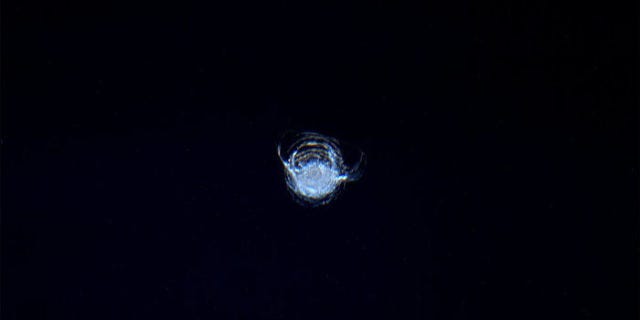
The headline refers to a real impact on the International Space Station’s Cupola window. In 2016, a photograph taken aboard the station showed a chip about 7 millimeters wide in one of the outer window layers. Engineers believed the culprit was a very small piece of orbital debris or a micrometeoroid, likely something tiny enough to sound harmless on paper and terrifying in context. Think paint flake. Think microscopic metal speck. Think “that can’t be serious,” right up until physics reminds you that speed is the whole game in orbit.
This was not a hole blasted through the crew cabin. It was not an emergency depressurization scene from a sci-fi thriller. The damage appeared in an exterior-facing pane rather than the pressure-holding layer that protects the crew. In other words, the ISS did exactly what it was supposed to do. The window system absorbed the hit, the station stayed operational, and the photo became a weirdly elegant reminder that space is beautiful, brutal, and absolutely not interested in your optimism.
The “windshield” nickname is funny, but a little misleading
The Cupola is not a windshield in the road-trip sense. It is more like a panoramic observation post bolted onto an orbiting laboratory. It has seven windows and a robotics workstation, which means it is part scenic overlook, part control booth, part proof that astronauts have better office views than the rest of us combined. Those windows are protected with multiple layers and shutters because NASA knows exactly what is flying around outside: old satellite fragments, spent rocket bits, natural micrometeoroids, and enough high-speed grit to make every piece of exposed hardware earn its paycheck.
Why a Tiny Speck Can Hit Like a Tiny Cannonball
On Earth, a fleck of paint is a nuisance. In orbit, it is a physics lesson with anger issues. The ISS travels around Earth at roughly 17,500 miles per hour, and orbital debris moves at similarly absurd speeds. Relative impacts can happen at around 10 kilometers per second. At that velocity, the usual categories your brain uses for “small,” “medium,” and “please ignore this” completely collapse.
That is why space agencies worry so much about debris in the millimeter-to-centimeter range. Large objects can often be tracked, modeled, and sometimes avoided with a maneuver. Truly tiny particles are hard to stop, but shielding can be designed to cope with some of them. The awkward middle category is the real menace: big enough to damage critical systems, small enough to escape routine tracking. It is the orbital version of a mystery wasp in your house, except the wasp is moving faster than a bullet and your house is worth billions.
Speed is the villain, not size
NASA has long warned that even small debris can cause outsized damage at hypervelocity. A paint fleck around 1 centimeter across can hit with energy comparable to a heavy object smashing into something on Earth at highway speed. That is why the Cupola chip matters. It was never just about the cosmetic crack. It was a visible, easy-to-understand example of an invisible danger that spaceflight engineers have been obsessing over for decades.
The Cupola Was Built for Beauty and Survival
The Cupola may be the station’s most photogenic module, but it is also one of its most practical. Astronauts use it to watch spacewalks, monitor docking operations, and operate Canadarm2, the station’s robotic arm. It is both a lookout tower and a workstation. That job description means the windows must do two things that are usually in conflict: provide a spectacular view and keep everyone alive.
So the windows are not just slabs of glass. They are layered systems designed to manage risk. They have protective shutters. They include sacrificial and protective elements. The outer layers are meant to take punishment so the pressure pane does not have to. That matters because the station cannot simply pull over for repairs at the next service plaza. In orbit, durability is not a nice bonus. It is the difference between a great engineering story and a mission-ending investigation board.
Why the chip did not become a crisis
The 2016 damage is actually a design success story. The impact left a crater-like chip, but it did not compromise the station’s pressure integrity. NASA documentation and later technical reviews show that ISS windows are among many station surfaces that have taken micrometeoroid and orbital-debris hits over the years. The fact that the station remains continuously inhabited is not luck alone. It is the result of shielding, inspection, redundancy, procedures, and a lot of engineers who probably do not enjoy surprise very much.
This Was Not a Weird One-Off
If the Cupola chip were a freak accident, it would still be interesting. But it is more important than that because it fits a larger pattern. NASA technical papers have documented several hundred micrometeoroid and orbital-debris damage sites on the ISS using imagery from station windows, and returned hardware has added more than 1,400 impact records to the database. That is not a typo. Space hardware comes home looking like it has been through a very selective hailstorm.
Window strikes are only part of the story. NASA has also documented damage to radiators, handrails, tools, thermal blankets, solar arrays, and other external systems. In 2021, the station’s Canadarm2 was found to have a small hole caused by either a micrometeoroid or orbital debris. The good news was that the arm could continue operating through the end of the station’s certified life. The bad news was the obvious part: even robust robotic hardware can get tagged by orbital junk.
The ISS sometimes has to dodge the mess
The station does not just sit there and hope for the best. NASA and its partners perform debris avoidance maneuvers when tracking data says an object may come too close. These are not daily events, but they are regular enough to be part of normal operations. In recent years, the ISS has fired thrusters to widen the gap between itself and threatening debris fragments. When a conjunction warning comes too late for a maneuver, crew members may shelter in docked spacecraft as a precaution. That alone tells you this is not theoretical risk dressed up as drama. It is a real operational issue.
Why Space Debris Keeps Getting Worse
Space debris is not just “stuff floating around.” It is an environmental problem in orbit, and the environment is getting crowded. Old rocket bodies, dead satellites, collision fragments, flecks of paint, bits of insulation, and pieces generated by anti-satellite tests all add to the population. Some of those objects remain in orbit for decades or even centuries, depending on altitude. And every collision creates the potential for more collisions, which is how you end up with the infamous Kessler syndrome conversation no one enjoys hearing at a space policy conference.
The modern satellite boom adds another wrinkle. Low Earth orbit is busier than ever. More launch activity means more useful spacecraft, better communications, and more commercial opportunity. It also means more traffic, more operational complexity, and more chances for something to go wrong. Scientific American was right to frame debris cleanup as a problem with no one-size-fits-all solution. A dead satellite is not the same as a cloud of fragments. A tumbling rocket body is not the same as a tiny shard of metal. Space junk is one category in name only; in practice, it is a whole zoo of bad possibilities.
Prevention beats cleanup
The smartest answer is still not to create the debris in the first place. Better disposal rules, post-mission deorbit plans, passivation to prevent explosions, international standards, and improved traffic coordination all matter. NASA has spent years developing debris assessment tools and mitigation guidelines for exactly this reason. Cleaning up orbit after the fact is technically difficult, politically messy, and expensive. Not littering the cosmic front yard remains a wildly underrated strategy.
What the Ding Reveals About Human Spaceflight
The most memorable thing about the ISS window chip is not the damage itself. It is the contrast. Inside the Cupola, astronauts float in shirtsleeves, photographing coastlines, storms, auroras, and city lights. Outside, invisible fragments scream through space at hypervelocity. The station feels serene because engineering is doing an enormous amount of emotional labor on behalf of the crew.
That is the hidden story of the “little ding.” Human spaceflight is never just about rockets and launch dates. It is also about living inside a carefully managed envelope of risk. Every window shutter, shielding panel, inspection checklist, avoidance maneuver, and emergency procedure exists because space is not empty. It is cluttered, dynamic, and occasionally rude.
Small damage can still be a big warning
The Cupola chip did not endanger the crew, but it helped the public understand a serious issue with unusual clarity. Most people do not spend their afternoons reading NASA debris risk tables. Fair enough. But everyone understands a windshield chip. That metaphor works because it translates orbital mechanics into ordinary experience. You do not need an aerospace degree to grasp that if a tiny object can scar a hardened station window, larger objects could do much worse to the wrong system at the wrong time.
The Bigger Picture for the Future of Low Earth Orbit
The ISS has “weathered” hundreds of impacts without losing cabin pressure, which is an impressive engineering achievement and also a reminder that future stations will need at least the same level of care. Commercial stations, private missions, cargo traffic, crew vehicles, science platforms, and satellite constellations are all increasing the value of low Earth orbit. That means debris mitigation is no longer a niche housekeeping issue. It is infrastructure policy.
If humanity wants a lasting presence in orbit, the lesson from the Cupola ding is simple: the space around Earth is not a magical void that forgives bad habits. It is a shared operational zone with real physics and delayed consequences. Every avoided collision, every well-planned deorbit, and every good design decision helps keep that zone usable. Every careless breakup does the opposite.
Conclusion
So yes, the ISS got a little ding in its windshield. That phrase is funny for about three seconds, and then the implications sink in. The station’s window was chipped by something tiny, moving unimaginably fast, in an environment littered with both natural dust and human-made debris. The impact did not become a disaster because the ISS was designed for this kind of punishment. But the incident still tells a larger truth: space is not only hard because it is far away. It is hard because we have made Earth orbit crowded, fast, and unforgiving.
In that sense, the ding is almost poetic. It is a mark left by the modern space age on one of its most iconic outposts. A small scar on a beautiful window, caused by the very environment our technology has helped create. The station kept flying, the crew kept working, and Earth kept glowing below. But the chip remains a useful warning: if we want the next generation of spacecraft to have windows worth looking through, we need to take orbital debris as seriously as the engineers already do.
A Longer Look at the Experience Behind the Ding
To understand why this story sticks in people’s minds, it helps to think about the experience wrapped around it. The Cupola is famous because it turns spaceflight into something emotionally legible. Astronauts do science all over the station, but the Cupola is where orbit becomes personal. It is where Earth looks less like a globe in a textbook and more like a living thing passing silently below your feet. Oceans curl into the horizon. Thunderstorms flash from inside cloud towers. City lights sketch out coastlines like glowing handwriting. The Cupola is where the station stops feeling like machinery for a minute and starts feeling like perspective.
Now place that against the reality of the ding. The same window that frames those breathtaking views is also part of a survival system. Every time the shutters open, you are looking through engineering, risk analysis, materials science, and decades of operational discipline. The image of a chip in that glass changes the emotional tone of the whole module. Suddenly the view is not only beautiful. It is earned.
For astronauts, that balance is normal. Human spaceflight has always involved living with hazards that are controlled, not eliminated. Fire risk, radiation, vacuum exposure, equipment failure, orbital debris, and the simple fact that there is no roadside assistance in orbit all sit in the background of daily routine. What makes the ISS remarkable is that the crew can still do ordinary-seeming things inside that environment: eat lunch, take photos, run experiments, answer questions from students, repair equipment, laugh at floating tortillas, and then return to work. Professional calm is part of the mission architecture.
For mission controllers and engineers on the ground, the experience is different but no less intense. A chip in a window is not just a curious photo. It is data. What layer was struck? How large is the crater? Does the shape match known hypervelocity impact signatures? Is there any growth over time? Do operating rules need to change? Ground teams translate a visible mark into probabilities, procedures, and design implications. They are the people who look at something that makes the internet say, “Whoa,” and reply, “Let’s review the materials stack, impact geometry, and inspection schedule.” That is exactly the energy you want from the people protecting a permanently occupied station.
For the rest of us, the Cupola ding works because it collapses the distance between daily life and spaceflight. A chipped windshield is familiar. We know the instinctive reaction: annoyance, concern, a quick mental calculation about repair costs, maybe a muttered complaint. The ISS version takes that familiar image and scales it into orbit. Same basic idea, wildly different consequences. That contrast makes the story memorable in a way many technical briefings are not.
And maybe that is the deepest reason the ding matters. It reminds us that exploration is not abstract. It happens through real hardware, real people, and real risk management. The window held. The station kept going. The view remained spectacular. But hidden inside that calm success is one of the central truths of life in space: every peaceful moment is supported by systems built for a very unpeaceful environment.