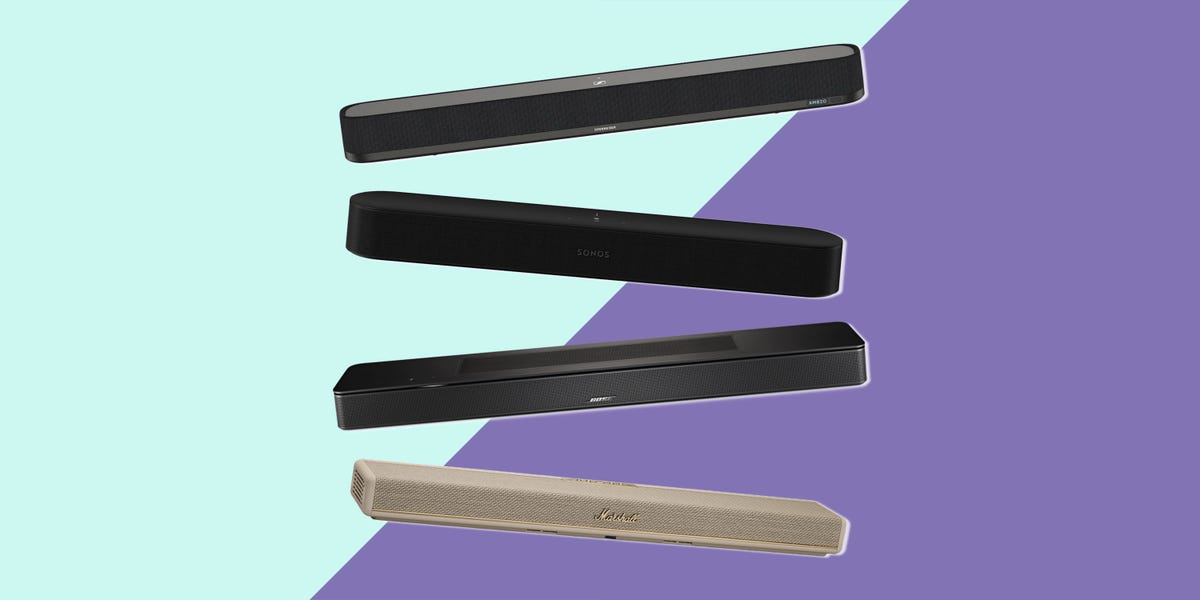
Buying a soundbar under £500 in 2025 is a bit like ordering from a very large coffee menu: everything claims to be “premium,” “immersive,” and “cinematic,” but some options still taste suspiciously like warm milk. The good news? You do not need to spend flagship money to make your TV sound dramatically better. The best soundbars under £500 can sharpen dialogue, add proper bass, support Dolby Atmos, connect neatly with HDMI eARC, and rescue movie night from the tiny speakers hiding inside your otherwise gorgeous flat-screen TV.
This guide focuses on real-world value, not spec-sheet gymnastics. A 9.1.4-channel monster is lovely, but if it costs more than your sofa, it does not belong here. Under £500, the sweet spot is a soundbar that improves everyday TV, makes movies feel bigger, keeps voices clear, and does not require a weekend engineering degree to install. Some models include wireless subwoofers. Some are compact all-in-one bars. Some offer virtual Dolby Atmos. A few even bring rear speakers into the box, which is frankly showing off in the best possible way.
Quick Picks: Best Soundbars Under £500 in 2025
- Best overall value: Hisense AX5125H / AX5140Q-style Dolby Atmos system
- Best compact smart soundbar: Sonos Beam Gen 2
- Best compact Dolby Atmos bar: Bose Smart Soundbar 600
- Best simple Atmos upgrade: Sony HT-S2000
- Best movie soundbar with subwoofer: Samsung HW-Q600C / Q600-series
- Best for dialogue: Polk Signa S4
- Best bass-heavy option: JBL Bar 500
- Best older bargain: Yamaha YAS-209
- Best tiny TV upgrade: Roku Streambar or Sony HT-SF150
What to Look for in a Soundbar Under £500
HDMI ARC or eARC Should Be Your Starting Point
If your TV supports HDMI ARC or eARC, use it. This connection lets the soundbar receive audio from the TV through one cable and usually allows your TV remote to control volume. HDMI eARC is especially useful for higher-quality audio formats, including Dolby Atmos from compatible apps and devices. Optical audio still works for older TVs, but it is more limited. In 2025, buying a soundbar without HDMI ARC is like buying trainers without laces: technically possible, but unnecessarily annoying.
Dolby Atmos Is Nice, But Speaker Design Matters More
Dolby Atmos can make sound feel taller and more spacious, but not every Atmos soundbar performs the trick equally well. Some bars use actual up-firing drivers that bounce sound off the ceiling. Others rely on digital processing to create a virtual height effect. In a small or medium room, virtual Atmos can still be convincing. In a larger room, a soundbar with up-firing drivers, a subwoofer, and rear speakers will usually feel more cinematic.
Dialogue Clarity Beats Big Bass for Most People
Explosions are fun. Being able to understand what the detective just whispered in a gloomy kitchen is more useful. The best budget soundbars have a dedicated center channel or strong vocal processing. Look for features such as dialogue enhancement, voice mode, center-channel tuning, or night mode. These make TV shows, sports commentary, news, and late-night viewing much easier to enjoy.
Check the Width Before You Buy
A soundbar should visually match your TV. A tiny bar under a 65-inch screen can look lost. A huge bar under a 43-inch TV can look like your television is wearing a very serious mustache. For most people, compact bars suit 40- to 50-inch TVs, while wider bars work better with 55-inch sets and above.
Best Overall Value: Hisense AX5125H / AX5140Q-Style System
If your goal is to get the biggest home-theater effect for the least money, Hisense deserves a long look. Its affordable Dolby Atmos soundbar packages have become popular because they often include the things other brands charge extra for: a main soundbar, a wireless subwoofer, and rear surround speakers. That means you get a more convincing wraparound effect without buying add-ons one painful receipt at a time.
The strongest appeal here is value. A 5.1.2 or 5.1.4-style setup gives movies more width, more movement, and more low-end weight than a basic 2.1 soundbar. Voices remain clear enough for daily TV, while action scenes get the kind of room-filling energy that makes your popcorn feel underdressed. It is not as polished as premium Samsung, Sonos, or Sennheiser systems, but under £500, it is one of the most complete packages you can realistically shop for.
Best for:
Movie fans, renters, families, and anyone who wants surround sound without building a full AV receiver system.
Potential drawback:
The rear speakers still need placement, and depending on the exact model, cabling between the surrounds and subwoofer may be required. Measure first, celebrate later.
Best Compact Smart Soundbar: Sonos Beam Gen 2
The Sonos Beam Gen 2 is one of the safest premium compact soundbar buys under £500, especially if you care about clean design, app control, music streaming, and long-term expandability. It does not include a subwoofer, and it does not have physical up-firing speakers, but it produces a surprisingly spacious sound for its size.
Dialogue is a major strength. TV voices sound crisp and centered, while music playback is more refined than many budget soundbars with bigger boxes and louder marketing. The Beam Gen 2 also works beautifully inside the Sonos ecosystem. You can later add a Sonos Sub Mini or rear speakers if your wallet recovers and decides to become ambitious again.
The Beam is best for people who want one elegant bar that handles TV, movies, podcasts, and music without clutter. It is not the bassiest option in this guide, and Atmos height effects are more subtle than spectacular, but the overall balance is excellent.
Best for:
Small living rooms, bedrooms, apartments, design-conscious buyers, and existing Sonos users.
Potential drawback:
No bundled subwoofer, no HDMI passthrough, and deep bass requires an extra purchase.
Best Compact Dolby Atmos Bar: Bose Smart Soundbar 600
The Bose Smart Soundbar 600 is another excellent compact choice under £500, particularly for buyers who want Dolby Atmos support in a small, neat package. Bose leans into spaciousness and vocal clarity, making this bar a strong fit for everyday TV as well as streaming movies.
It supports HDMI eARC and offers smart features, including voice assistant compatibility in many regions. The sound is clean, polished, and bigger than the bar’s size suggests. Bose also does a good job with virtual processing, so you get a broader presentation without needing rear speakers.
Compared with the Sonos Beam Gen 2, the Bose can feel more cinematic out of the box, while the Sonos often feels more natural for music and ecosystem expansion. Either is a strong compact pick. Choosing between them may come down to which app, design, and smart-home platform you prefer.
Best for:
People who want a compact Atmos soundbar with clear voices and minimal setup fuss.
Potential drawback:
Like the Sonos, it does not include a subwoofer, so bass lovers may eventually want an add-on.
Best Simple Atmos Upgrade: Sony HT-S2000
The Sony HT-S2000 is a smart choice if you want a straightforward soundbar that improves TV audio without taking over your living room. It is compact, supports Dolby Atmos and DTS:X, and uses built-in bass rather than a separate subwoofer. That makes it ideal for people who want fewer boxes, fewer cables, and fewer “why is this not pairing?” moments.
Sony’s strength here is clarity. The center-focused design helps dialogue sound more direct, while the built-in dual subwoofer gives enough low-end weight for casual movie watching. It will not shake the floor like a dedicated subwoofer system, but that may be exactly the point if you live in a flat, dorm, or semi-detached house with neighbors who already know too much about your Netflix habits.
Best for:
Small spaces, simple setups, dialogue-heavy TV, and users who want Atmos compatibility without extra speakers.
Potential drawback:
Bluetooth is handy, but Wi-Fi music streaming is limited compared with Sonos, Bose, or JBL options.
Best Movie Soundbar with Subwoofer: Samsung HW-Q600C / Q600-Series
Samsung’s Q600-series soundbars are often among the most tempting midrange buys when they fall below £500. A typical Q600 setup gives you a 3.1.2-channel arrangement, Dolby Atmos, DTS:X support, a dedicated center channel, and a wireless subwoofer. That is a strong recipe for movies, sports, and gaming.
The center channel helps dialogue stay anchored, while the subwoofer adds the rumble missing from most TV speakers. Samsung’s Q-Symphony feature can also pair compatible Samsung TVs with the soundbar for a bigger combined soundstage. Even if you do not own a Samsung TV, the Q600-series remains a strong choice because it balances detail, bass, and ease of use.
This is a particularly good pick for people who want a proper movie-night upgrade but do not want rear speakers in the room. You get some height effect, satisfying bass, and a soundbar that feels more muscular than most compact all-in-one models.
Best for:
Movies, sports, Samsung TV owners, and buyers who want a subwoofer included.
Potential drawback:
Surround immersion is not as convincing as systems with real rear speakers.
Best for Dialogue: Polk Signa S4
The Polk Signa S4 is a practical, affordable Dolby Atmos soundbar that focuses on what many people actually need: clearer voices and better bass. Polk’s VoiceAdjust technology is designed to make speech easier to hear, which is useful if your current TV makes every actor sound like they are mumbling through a decorative cushion.
The Signa S4 includes a wireless subwoofer and uses a 3.1.2-channel layout with up-firing drivers. That combination gives it more cinematic body than a basic stereo soundbar. It is not the flashiest model in the category, but it offers a friendly balance of price, clarity, and plug-and-play simplicity.
Best for:
Dialogue-heavy shows, older viewers, mixed TV use, and buyers who want Atmos plus a subwoofer at a reasonable price.
Potential drawback:
It is more functional than luxurious. If you want premium smart features, look elsewhere.
Best Bass-Heavy Option: JBL Bar 500
The JBL Bar 500 is the soundbar for people who believe movie explosions should arrive with a small weather event. With a powerful wireless subwoofer, Dolby Atmos support, MultiBeam processing, HDMI eARC, and 4K Dolby Vision passthrough, it brings serious entertainment energy when discounted under £500.
JBL’s tuning tends to be bold and lively. This makes action films, sports, and gaming feel exciting. It is also useful for open-plan rooms where smaller soundbars can sound a bit polite. The Bar 500 is not as discreet as a Sonos Beam or Bose Smart Soundbar 600, but it delivers the kind of bass impact those compact bars cannot match without optional subwoofers.
Best for:
Action movies, gaming, open-plan spaces, and anyone who wants big bass without buying a premium flagship package.
Potential drawback:
It may be too much soundbar for small bedrooms or thin-walled apartments.
Best Older Bargain: Yamaha YAS-209
The Yamaha YAS-209 has been around for a while, but that is not automatically bad. Good audio products can age gracefully, unlike smartphones, milk, and certain haircut decisions. This Yamaha package includes a wireless subwoofer, clear voice mode, DTS Virtual:X processing, Bluetooth, Wi-Fi, Spotify Connect, and built-in Alexa in supported regions.
Its biggest advantage is balance. It is simple to set up, easy to live with, and still sounds much better than typical TV speakers. It lacks the latest Dolby Atmos support, so it is not the right choice if 3D audio is your top priority. But if you mostly watch TV, stream films, and listen to music casually, the YAS-209 remains a reliable value when found at the right price.
Best for:
Everyday TV, budget-conscious buyers, and people who want a wireless subwoofer without chasing the newest badge.
Potential drawback:
No Dolby Atmos, and availability can vary because it is an older model.
Best Tiny TV Upgrade: Roku Streambar or Sony HT-SF150
Not every room needs a giant soundbar. For kitchens, guest rooms, student rooms, and smaller bedrooms, a compact bar may be enough. The Roku Streambar is especially useful if you also want streaming features built in, while the Sony HT-SF150 is a simple, affordable way to make TV speakers sound less like they are trapped inside a biscuit tin.
These are not true home-theater systems. They will not deliver deep bass, convincing Atmos, or huge surround effects. But they are inexpensive, tidy, and effective for clearer speech and fuller sound. Sometimes that is all you need.
Which Soundbar Under £500 Should You Buy?
If you want the most complete cinema-style package, choose the Hisense surround system. It gives you the biggest hardware bundle for the money and is hard to beat for immersive value. If you want a compact premium bar, choose the Sonos Beam Gen 2 or Bose Smart Soundbar 600. The Sonos is better for ecosystem growth and music; the Bose is excellent for compact Atmos and voice-forward TV.
If you want a simple all-in-one Atmos bar, choose the Sony HT-S2000. If you want movies with proper bass, choose a Samsung Q600-series model or the JBL Bar 500 when discounted. If dialogue is your main concern, the Polk Signa S4 is an easy recommendation. If you want a dependable older bargain, the Yamaha YAS-209 still has plenty of life left.
Buying Tips Before You Click “Add to Basket”
Check Your TV Ports
Before buying, look at the back or side of your TV. If it has HDMI ARC or HDMI eARC, prioritize a soundbar that supports it. If your TV only has optical audio, make sure the soundbar includes optical input.
Think About Your Room Size
Small rooms do well with Sonos, Bose, Sony, or Roku. Medium rooms benefit from Samsung, Polk, Yamaha, or Hisense. Larger rooms usually need a subwoofer and, ideally, rear speakers.
Do Not Buy on Wattage Alone
Power numbers can be useful, but they do not tell the whole story. Driver quality, tuning, center-channel clarity, subwoofer integration, and room correction matter more than a giant wattage claim printed in a dramatic font.
Look for Discounts
Soundbars are frequently discounted. A model listed above £500 at launch may drop below that during seasonal sales. Watch for deals around Black Friday, Boxing Day, bank holidays, and new-model release windows.
Real-World Experience: What Living With a Sub-£500 Soundbar Actually Feels Like
The biggest upgrade most people notice is not Dolby Atmos. It is dialogue. After switching from built-in TV speakers to a proper soundbar, voices suddenly move from “vague noise somewhere behind the screen” to “actual humans speaking words.” News presenters sound clearer. Sports commentators stop blending into crowd noise. Drama series become less dependent on subtitles, though subtitles remain useful when an actor decides to whisper while standing next to a waterfall, because apparently that is prestige television now.
The second upgrade is bass. A soundbar with a wireless subwoofer changes the emotional weight of movies and games. Footsteps feel heavier. Engines have body. Explosions stop sounding like someone dropped a cereal box in another room. You do not need absurd bass for everyday use, but a controlled subwoofer makes everything feel more grounded. The trick is not to overdo it. If the subwoofer is shaking the door but voices sound buried, turn the bass down. Your neighbors and your future self will both approve.
Setup is usually easier than expected. Most modern soundbars connect with one HDMI cable, then pair automatically with the subwoofer. The hardest part is often deciding where to put the sub. Corners can make bass louder, but sometimes boomy. Near the TV cabinet is convenient, but not always best. A good rule is to place the sub where it sounds full without turning every bass note into a furniture complaint.
Rear speakers are worth it if you watch a lot of movies. A Hisense-style surround package can make streaming films feel much larger because effects come from behind and beside you, not just from the front wall. That said, rear speakers also introduce practical questions: Where do they go? Are there power cables? Will someone knock one over while carrying snacks? For tidy minimalists, a compact Sonos, Bose, or Sony may be the better daily companion.
Music performance varies more than movie performance. Sonos usually does well with music because it sounds balanced and controlled. Bose is smooth and spacious. JBL is energetic and bass-forward. Samsung and Polk are enjoyable but more TV-first. If your soundbar will double as your main music speaker, do not ignore this. A bar that makes explosions thrilling may not make acoustic guitar sound natural.
One underrated feature is night mode. If you watch late at night, night mode reduces loud peaks and keeps dialogue audible. It is perfect for parents, apartment dwellers, students, and anyone who enjoys action films after 10 p.m. without causing a neighborhood incident.
The best experience comes from matching the soundbar to your habits. If you mostly watch sitcoms, news, and YouTube, prioritize dialogue and simplicity. If you love Marvel, football, racing games, or sci-fi, get a subwoofer. If you want the cleanest living room possible, choose an all-in-one bar. If you want the biggest cinema effect under £500, choose a package with surrounds. The “best” soundbar is not the one with the longest spec list. It is the one you actually enjoy using every day.
Conclusion
The best soundbars under £500 in 2025 prove that great TV audio no longer has to cost luxury money. For most shoppers, the Hisense AX5125H or AX5140Q-style package offers the strongest overall value because it delivers a full surround setup at a budget-friendly price. The Sonos Beam Gen 2 and Bose Smart Soundbar 600 are excellent compact premium choices. The Sony HT-S2000 is ideal for simple Atmos upgrades, while Samsung’s Q600-series, Polk Signa S4, JBL Bar 500, and Yamaha YAS-209 each serve different needs beautifully.
Before buying, check your TV connections, measure your space, and decide what matters most: dialogue, bass, Dolby Atmos, smart features, or surround speakers. Spend wisely, and your TV will stop sounding like it is apologizing for itself.