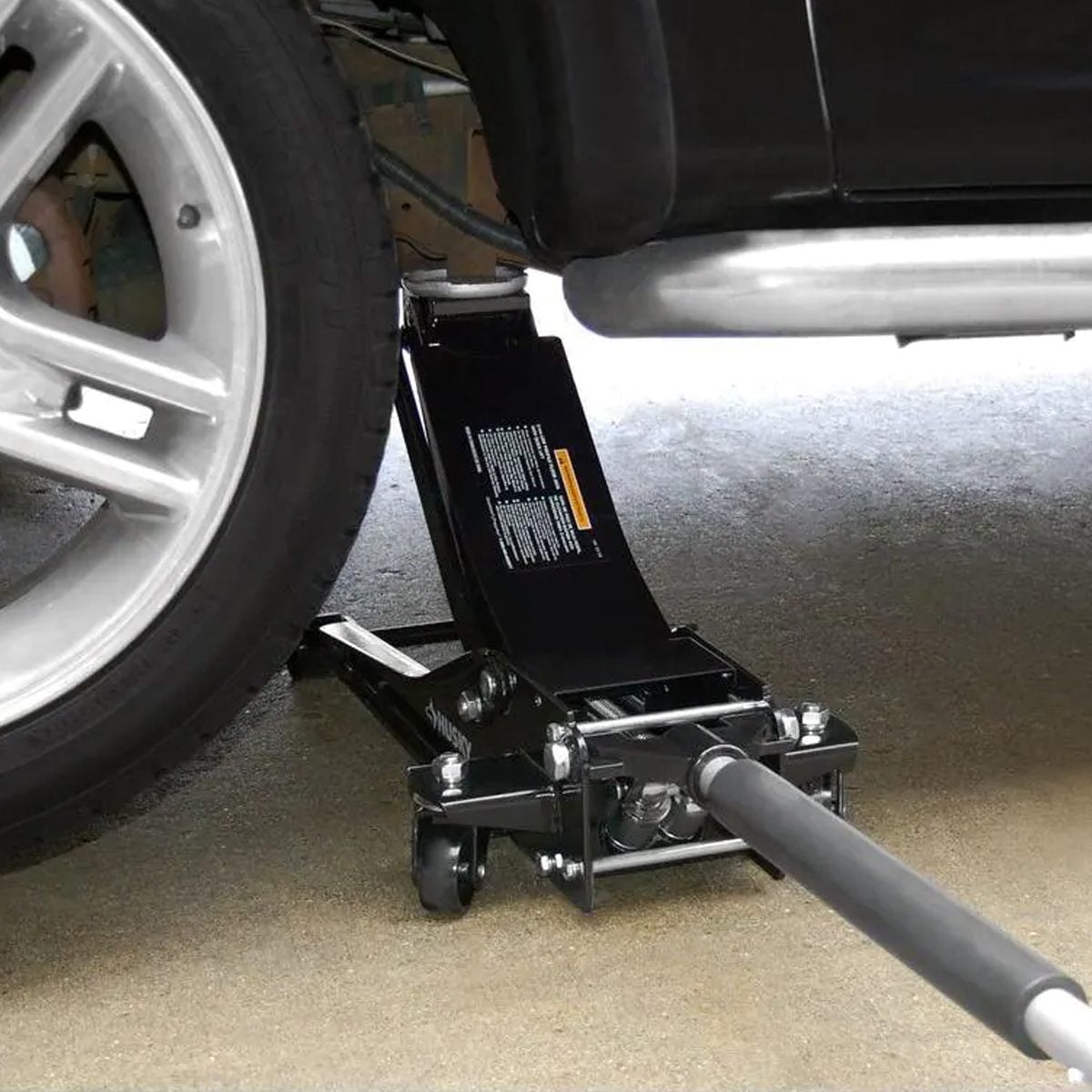
Lifting a vehicle sounds simple until several thousand pounds of metal are hovering above your driveway. At that moment, the difference between dependable automotive lifting equipment and a suspiciously cheap hunk of painted steel becomes extremely important.
The best car jacks, stands, lifts and ramps of 2025 are not necessarily the products with the biggest capacity number printed on the box. A good choice must fit beneath your vehicle, reach the correct lifting points, remain stable on your garage floor and provide enough working height for the repair. It should also be easy enough to use that you do not invent new vocabulary while dragging it across the concrete.
This guide compares standout options for everyday cars, low-clearance performance vehicles, SUVs, pickups and serious home garages. The selections are based on manufacturer specifications, safety standards and independent automotive-tool evaluations rather than flashy claims alone.
Research basis:
Quick Comparison of the Best Automotive Lifting Equipment
| Product | Category | Best For | Rated Capacity |
|---|---|---|---|
| Daytona 3-Ton Low-Profile Super-Duty | Floor jack | Best overall garage jack | 6,000 pounds |
| Blackhawk B6350 Fast Lift | Floor jack | Heavy-duty value | 7,000 pounds |
| ESCO 10498 Performance Stands | Jack stands | Premium vehicle support | 3 tons per stand |
| Daytona Circular-Pad Stands | Jack stands | Unibody cars and flat lift points | 6,000 pounds per pair |
| QuickJack 5000TL | Portable lift | Home mechanics and track cars | 5,000 pounds |
| BendPak MD-6XP | Mid-rise lift | Advanced home garages | 6,000 pounds |
| Race Ramps RR-56 | Service ramps | Low-profile cars | 6,000-pound vehicle rating |
| RhinoGear RhinoRamps MAX | Service ramps | Budget oil changes | 16,000-pound GVW rating |
Best Car Jacks of 2025
Best Overall: Daytona 3-Ton Low-Profile Super-Duty Floor Jack
The Daytona 3-Ton Low-Profile Super-Duty is the strongest all-around choice for a typical home garage. Its minimum saddle height of approximately 3.75 inches allows it to slide under many sports cars and lowered sedans, while its maximum height of about 23.13 inches provides useful clearance for trucks, crossovers and suspension work.
A dual-pump system reduces the number of handle strokes needed to reach the vehicle, and the universal-joint release mechanism offers better control while lowering. That matters because bringing a car down should feel like lowering an elevator, not dropping a piano through a trapdoor.
The major disadvantage is weight. At roughly 104 pounds, this is a garage jack, not something most people will cheerfully carry to a racetrack. Its steel construction and wide chassis feel reassuring on a smooth concrete floor, but storage requires a dedicated corner.
Best for: DIY mechanics who want one dependable jack for sedans, performance cars, SUVs and light pickups.
Sources:
Best Heavy-Duty Value: Blackhawk B6350 Fast Lift Service Jack
The Blackhawk B6350 offers a 3.5-ton rating, giving it extra capacity for heavier SUVs and pickups. Its long chassis makes it easier to reach central crossmembers, and its fast-lift design quickly brings the saddle into contact with the vehicle before the hydraulic system begins doing the serious work.
Independent testing has praised the B6350 for its useful lifting height, efficient pumping action and stable footprint. It is not truly low-profile, however. With a minimum height above five inches, owners of lowered cars may need short approach ramps or a different jack.
This model makes the most sense when capacity and lifting range matter more than portability. It is large, heavy and about as subtle as a cast-iron bathtub, but those qualities can be welcome when lifting a full-size family SUV.
Best for: Larger vehicles, general repair work and buyers wanting high capacity without moving to professional-shop pricing.
Sources:
Best Jack for Occasional Roadside Use: A Vehicle-Specific Scissor Jack
A compact scissor jack remains useful for emergencies because it fits in a trunk and works with the factory lifting points specified by the automaker. It should not be confused with a comfortable workshop tool. Raising a vehicle with one involves plenty of cranking, limited stability and an unwanted upper-body workout.
Use a scissor jack for changing a flat tire on firm, level groundnot for crawling under a vehicle or performing extended repairs. The factory jack should also be inspected periodically for corrosion, bent threads and missing handles. Emergency tools have an unfortunate habit of becoming invisible until midnight in the rain.
Best Jack Stands of 2025
Best Premium Jack Stands: ESCO 10498 Performance Jack Stands
ESCO’s 10498 stands replace the traditional V-shaped axle saddle with a removable flat rubber pad. That design works particularly well with modern unibody vehicles, frame rails and reinforced flat lifting areas. It also spreads the contact area and helps protect painted or coated surfaces.
Each stand is rated for three tons and adjusts from about 13.2 to 21.5 inches. Instead of relying on a ratcheting post, the height is secured with a substantial locking pin. Circular feet at the bottom of the tripod-style base help distribute the load, although the stands still require a hard and level surface.
They cost more than common stamped-steel stands and are sold individually by some retailers, so buyers must check the listing carefully. Still, their stable design, flat saddle and straightforward locking system make them a favorite for enthusiasts who regularly work beneath their vehicles.
Best for: Frequent maintenance, performance cars, unibody vehicles and buyers who prioritize support design over bargain pricing.
Sources:
Best for Flat Lift Points: Daytona 3-Ton Circular-Pad Jack Stands
Daytona’s circular-pad stands provide a broad, rubber-covered contact surface rather than a narrow axle cradle. The reinforced steel base and anodized adjustable post support a combined rated load of 6,000 pounds per pair.
These stands are a practical middle ground between basic ratcheting stands and the more expensive ESCO design. The rubber pads are friendly to reinforced frame areas, while the wide bases provide a planted feel on smooth concrete.
Always confirm that the saddle shape matches the vehicle’s approved support point. A large flat pad is useful only when it sits against a suitable flat structure. It should not be balanced on a narrow seam, plastic trim or whichever piece of metal happens to be nearby.
Source:
Best Heavy-Duty Choice: Big Red 6-Ton Double-Locking Stands
Owners of body-on-frame SUVs and pickups may prefer six-ton stands for their taller working range and broader load margin. Big Red double-locking models combine a ratcheting post with a secondary locking pin, providing a visible backup mechanism after the desired height is selected.
The extra rating does not mean a pair should be used on inappropriate surfaces or at random points beneath the vehicle. Capacity is only one part of the equation; saddle engagement, base stability and correct placement remain equally important.
Best Portable and Mid-Rise Car Lifts of 2025
Best Portable Car Lift: QuickJack 5000TL
The QuickJack 5000TL bridges the gap between conventional jack stands and a permanently installed shop lift. Two low-profile frames slide beneath the vehicle and rise together through a hydraulic power unit. Mechanical locking bars support the frames at designated working heights, so the system does not depend solely on hydraulic pressure once raised.
Its 5,000-pound capacity fits many sedans, coupes, compact crossovers and sports cars. The TL generation provides up to approximately 24 inches of lift, creating far more room than most floor-jack setups while leaving the wheels accessible for brake, tire and suspension work.
The limitations are compatibility and setup. The frames must align with approved lifting points, and their lift-point spread may not fit every vehicle. Longer-wheelbase models may require the TLX version or frame extensions. Each frame is also heavy enough that “portable” means movable around a garage, not something you casually tuck under one arm.
Best for: Enthusiasts who perform frequent brake, suspension, detailing and track-preparation work but cannot install a permanent lift.
Sources:
Best Mid-Rise Home Garage Lift: BendPak MD-6XP
The BendPak MD-6XP is a serious upgrade for a well-equipped home workshop. Its 6,000-pound capacity and approximately 47-inch maximum platform height put the vehicle at a comfortable level for wheel, brake, suspension and detailing jobs.
Adjustable lifting arms contact manufacturer-approved frame locations, while multiple mechanical locking positions support the platform during service. The lift includes a movable power-unit cart, although it is much larger and more demanding than a portable frame lift.
Installation planning matters. The lowered platform is approximately 4.75 inches high, the unit occupies considerable floor space and its lock-release system requires an adequate compressed-air supply. Buyers must also evaluate floor condition, electrical requirements, ceiling clearance and vehicle dimensions before ordering.
Best for: Dedicated workshops where a full two-post lift is impractical but substantial working height is worth the investment.
Sources:
Best Car Ramps of 2025
Best for Low-Profile Cars: Race Ramps RR-56
The Race Ramps RR-56 uses a long, gradual approach with an angle of roughly 10.8 degrees. That makes it far friendlier to sports cars, aerodynamic bumpers and front splitters than short plastic or steel ramps. The pair raises the tires about eight inches and carries a 6,000-pound gross vehicle rating.
High-density foam construction makes the ramps surprisingly light while a textured coating helps them grip the floor and tires. They also avoid the clanging, sliding and driveway-scraping drama associated with some metal ramps.
The trade-off is storage. A 56-inch ramp is not small, and a pair may consume significant wall or floor space. Buyers with extremely low vehicles can add approach extenders that reduce the angle further.
Best for: Oil changes, inspections and underbody access on sports cars and lowered vehicles.
Sources:
Best Budget Ramps: RhinoGear RhinoRamps MAX
RhinoRamps MAX models are popular because they are inexpensive, nest together for storage and provide quick front-end access for routine maintenance. Their molded internal structure is rated for vehicles with a gross weight of up to 16,000 pounds, though users must follow the manufacturer’s instructions and keep both tires centered.
The approach is steeper than that of Race Ramps, so low bumpers may contact the ramp before the tires begin climbing. Plastic ramps must also be inspected for cracks, distortion or damage before every use. Place them only on clean, dry and solid pavement; dirt, loose gravel and sloped driveways are poor partners for any lifting equipment.
Best for: Standard-height cars, crossovers and light trucks needing inexpensive oil-change access.
Sources:
How to Choose the Right Jack, Stand, Lift or Ramp
Match Capacity to the Actual Load
A jack does not normally lift the entire curb weight at once, but buying equipment with a healthy capacity margin is still sensible. Check whether a stand’s rating applies to each stand or to the pair. Manufacturers do not all present capacity in the same way, and assumptions are not a safety feature.
Measure Ground Clearance and Reach
Minimum saddle height determines whether a floor jack can fit beneath the vehicle. Chassis length determines whether it can reach a central crossmember without the handle or body hitting the bumper. For ramps, compare the angle of approach with the clearance ahead of the tire.
Consider the Job
Ramps are fast and stable for oil changes, exhaust inspections and other jobs where the wheels remain installed. Floor jacks and stands are better for brakes, tires and suspension work. Portable lifts offer faster whole-vehicle access, while mid-rise lifts suit frequent repairs and detailing.
Check Standards, Instructions and Vehicle Lift Points
Look for equipment designed and tested according to applicable ASME portable automotive service equipment standards. Read the product manual and the vehicle owner’s manual before lifting. The strongest jack in the world cannot rescue a thin floor pan from a poorly chosen saddle position.
Sources:
Essential Car-Lifting Safety Rules
- Work on clean, hard and level concrete or another surface approved by the equipment manufacturer.
- Apply the parking brake and chock the wheels that remain on the ground.
- Use only the lifting and support points identified by the vehicle manufacturer.
- Never exceed the rated capacity of the jack, stand, ramp or lift.
- Never work beneath a vehicle supported only by a hydraulic or mechanical jack.
- Lower the vehicle onto appropriately rated stands and verify that every saddle is fully engaged.
- Give the vehicle a cautious stability check before placing any part of your body underneath it.
- Inspect welds, locking mechanisms, hydraulic components, pads and frames before each use.
- Do not use damaged equipment, improvised wooden supports or unapproved adapters.
- Keep people, pets and loose tools away while raising or lowering the vehicle.
Sources:
Real-World Experience: What Using This Equipment Actually Feels Like
Product specifications are useful, but garage experience quickly reveals details that capacity charts cannot explain. The first is weight. A heavy steel floor jack usually feels planted and rolls smoothly on clean concrete, but moving it across an expansion joint can resemble trying to push a refrigerator over a curb. Owners with limited storage should measure the parking space for the jack as carefully as they measure their vehicle’s ground clearance.
Low-profile reach is another lesson that frequently arrives after purchase. A jack may have a suitably low saddle but still fail to reach the central lifting point because its main body contacts the bumper first. Long-reach jacks solve this problem, while short ramps can raise the tires enough to create access. The important step is planning the complete path to the lift point rather than considering saddle height alone.
Fast-pump systems make a noticeable difference during repeated jobs. Bringing the saddle from floor level to the vehicle in a few strokes is convenient when rotating four tires. The final loaded strokes still require effort, but the process feels less like operating an antique railroad lever. Controlled lowering is equally important. A quality release valve allows the vehicle to settle onto the stands slowly, giving the user time to confirm that each saddle remains correctly positioned.
Jack stands often require more positioning than beginners expect. After raising the vehicle from a central point, there must still be accessible support locations for both stands. This is where flat-top designs can be especially convenient on modern unibody cars. Traditional curved saddles remain useful around axles and frame sections, but they may not mate neatly with every pinch-weld arrangement. Vehicle-specific rubber adapters can help when approved by the stand manufacturer.
Ramps deliver the simplest experience for routine oil changes: align them, drive up slowly, set the brake and chock the rear wheels. Yet alignment deserves respect. A spotter is helpful because the driver may not see whether each tire remains centered. Lightweight ramps can also shift on dusty garage floors, so cleaning the surface before use is more than housekeeping.
A portable lift changes the rhythm of garage work. Raising both sides at once eliminates the repeated jack-and-stand routine and creates consistent working height. Brake jobs become less tiring, detailing lower body panels becomes easier and suspension inspections require less crawling. Setup still takes time because the frames, blocks, hoses and lifting points must be arranged correctly. For someone servicing a vehicle twice a year, the convenience may not justify the cost. For a weekend mechanic, track-day driver or multi-car household, it can become the most-used major tool in the garage.
Mid-rise lifts offer the greatest comfort but require the most planning. Once a vehicle is waist-high, tasks that formerly demanded kneeling or lying on concrete become dramatically easier. However, the lift itself occupies valuable space, may restrict access to some underbody areas and introduces electrical, hydraulic and maintenance responsibilities. It is workshop equipment, not merely a larger jack.
The most reassuring experience with any lifting system comes from developing a repeatable routine: inspect the equipment, confirm the capacity, identify the correct points, chock the wheels, lift gradually, engage mechanical supports and test stability. Skipping one step may save thirty seconds. Following every step lets you concentrate on the repair instead of wondering whether the car above you is reconsidering its relationship with gravity.
Final Verdict
For most home garages, the Daytona 3-Ton Low-Profile Super-Duty floor jack paired with ESCO 10498 or quality Daytona jack stands offers the best balance of versatility, stability and value. The Blackhawk B6350 is an appealing alternative for heavier vehicles that do not require an ultra-low entry height.
Drivers performing quick oil changes will appreciate the simplicity of Race Ramps RR-56, while budget-conscious owners of standard-height vehicles can consider RhinoRamps MAX. Frequent DIY mechanics gain the biggest convenience upgrade from the QuickJack 5000TL, and the BendPak MD-6XP is the stronger choice for a dedicated workshop demanding greater working height.
No matter which option you buy, capacity is not permission to ignore procedure. Use the correct vehicle lifting points, work on a level surface and rely on mechanical supports before going underneath. Gravity has never accepted an apology or a warranty claim.