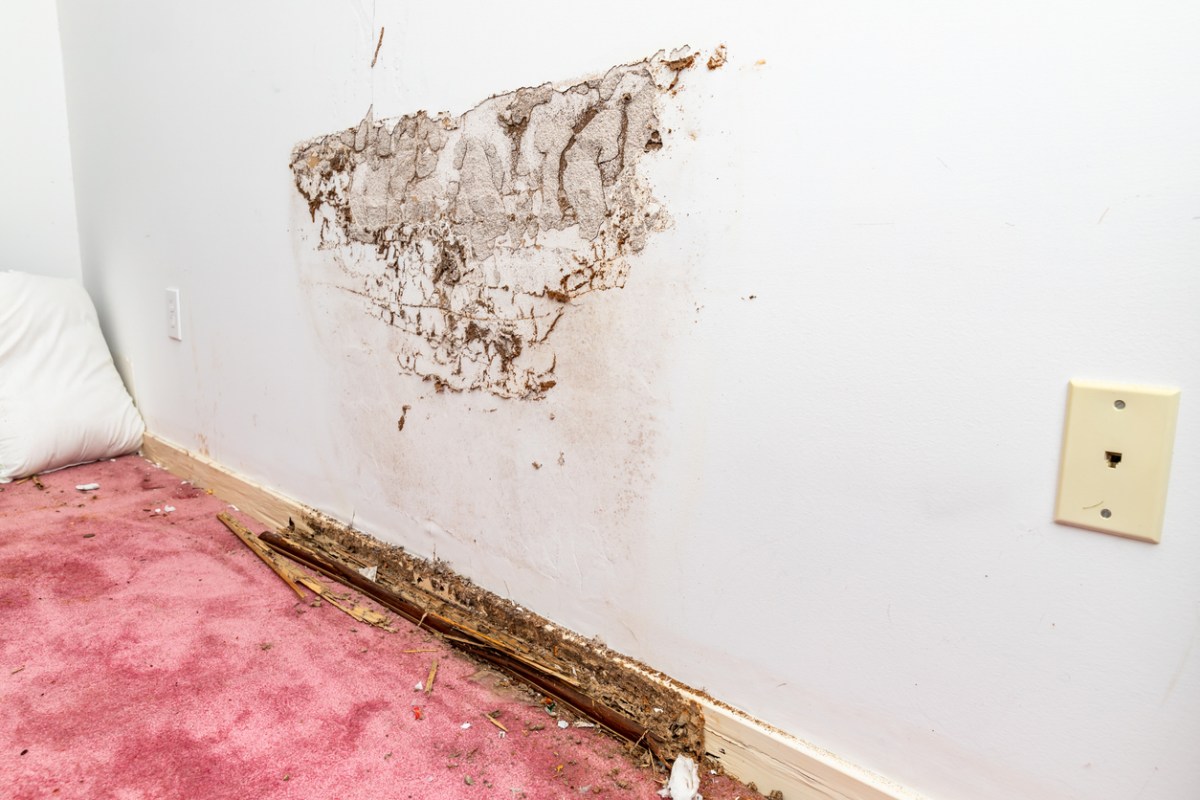
A swollen baseboard, a springy floor, or a mysterious brown stain can trigger the same homeowner thought: “Wonderful. The house has discovered another way to spend my money.” The harder question is whether the culprit is water, termites, or an unpleasant combination of both.
Termite damage and water damage can look surprisingly similar. Both may cause wood to swell, paint to blister, floors to sag, and trim to lose strength. The U.S. Environmental Protection Agency even lists swelling, bending, mildew-like odors, and marks resembling water damage among the possible signs of termite activity.
Fortunately, the two problems usually leave different groups of clues. By examining surface patterns, wood texture, insect evidence, moisture sources, and the location of the damage, you can make a more informed preliminary diagnosis and call the right professional.
Why Identifying the Cause Matters
Water damage begins with moisture from a roof leak, plumbing failure, overflowing appliance, condensation problem, groundwater intrusion, or poor drainage. If materials remain wet, mold and wood-decay fungi may develop. EPA guidance emphasizes that controlling moisture is essential for controlling mold, while U.S. Forest Service research shows that serious wood decay generally requires sustained, elevated moisture.
Termite damage is caused by insects feeding on cellulose in wood, paper, drywall facing, and other plant-based materials. Subterranean termites usually travel between the soil and a building through protected mud tubes. Drywood termites can live entirely inside wood and may leave small piles of hard fecal pellets called frass.
The repair sequence matters. Water damage requires stopping the leak, drying the area, checking for mold or rot, and replacing weakened materials. Termite damage requires controlling the infestation before rebuilding. Replacing a chewed stud without treating the termites is like changing the sheets while the hotel is still full of very tiny, very hungry guests.
Termite Damage vs. Water Damage: 5 Ways to Tell the Difference
1. Compare the Surface Patterns
Water damage often follows gravity or the path of a leak. Look for yellow, tan, or brown rings on ceilings, streaks below windows, discoloration beneath plumbing fixtures, bubbling drywall, peeling paint, or swollen flooring. EPA building guidance identifies staining and discoloration on walls, ceilings, and floors as common signs of moisture problems.
Water marks commonly have soft, irregular borders. A roof leak may produce a spreading ceiling stain, while a plumbing leak may create damage directly below a bathroom, kitchen, or laundry room. Repeated wetting can also cause wood to warp, cup, crack, or separate at glued joints.
Termite damage may create narrow trails, ripples, grooves, or blister-like areas. The paint can remain mostly intact while termites consume the wood or paper immediately underneath it. Wallpaper and painted drywall may develop winding, sunken lines where termites have eaten the paper facing. Mississippi State University Extension identifies sunken trails, dried-mud pinholes, and galleries containing soil as important termite clues.
A broad ceiling stain beneath the roof points more strongly toward water. A thin, wandering line beneath intact paint near a foundation wall points more strongly toward termites. Neither clue is conclusive alone, but the pattern provides a useful starting point.
2. Examine How the Wood Feels and Breaks
Gently probe an already damaged area with a screwdriver or awl, but do not aggressively puncture structural framing, electrical areas, or concealed plumbing. Stop immediately if the floor, ceiling, or wall appears unstable.
Water-damaged wood may feel damp, spongy, stringy, crumbly, or unusually soft. Brown rot can leave dark wood with block-like cracking, while other decay may create a pale or fibrous texture. Particleboard, MDF, laminate flooring, and similar manufactured materials often swell or puff around the edges after absorbing water.
U.S. Forest Service research explains that decay fungi can rapidly weaken wood when free water raises its moisture content into a favorable range. Wood kept dry generally does not continue to decay.
Termite-damaged wood often sounds hollow and contains organized tunnels. When a damaged surface opens, you may find long galleries running with the wood grain. Subterranean termite galleries can contain packed soil or dried mud. The exterior may look normal even when much of the interior has been removed.
Water-related decay usually affects an area more diffusely. Termite feeding more often leaves channels and hollow sections. Advanced damage from either cause can become crumbly, so texture must be considered alongside the remaining clues.
3. Search for Mud Tubes, Wings, Frass, or Live Insects
This is often the clearest distinction. Water does not build tunnels, shed wings, or leave suspicious piles of six-sided droppings.
Mud tubes: Subterranean termites construct earth-colored shelter tubes over foundations, masonry, piers, plumbing penetrations, and other exposed routes. These tubes protect the insects as they travel between the soil and wood. Finding one is a strong reason to arrange a professional termite inspection.
Discarded wings or swarmers: Winged termites may appear near windows, doors, or indoor lights and then shed their wings. Termites have straight antennae, broad waists, and two pairs of equal-length wings. Winged ants generally have bent antennae, narrow waists, and front wings that are longer than the rear wings.
Frass: Drywood termites push hard, uniform pellets through small kick-out holes. These pellets may resemble pepper, sand, or coarse sawdust and frequently collect beneath window frames, trim, attic wood, or furniture. Repeated piles of consistently shaped pellets are a major termite warning sign.
Live termites: Workers are usually pale, soft-bodied, and hidden from light. Photograph any insects you uncover and preserve a few in a sealed container when it is safe. Avoid spraying random chemicals into the opening, as this may scatter activity without eliminating the colony.
4. Trace Moisture, Mold, and Odors
Water damage normally has a moisture story. Examine the roof, attic, gutters, windows, supply lines, drainpipes, bathrooms, appliances, HVAC equipment, crawl space, basement, and exterior grading. A musty odor, visible mold, condensation, standing water, or an elevated moisture-meter reading supports a water-related diagnosis.
EPA guidance lists visible mold, moldy odors, and recurring evidence of water damage as signs that a moisture problem may still be active. Cleaning or repainting the surface will not solve the problem until the source of moisture is corrected.
A moisture meter can help compare a suspicious area with nearby dry material, but it is not a magic truth wand. Metal fasteners, surface finishes, temperature, and meter type may affect readings. Thermal cameras can reveal temperature differences associated with moisture, but they do not directly detect water.
Moisture does not rule out termites. Subterranean termites frequently benefit from leaks, damp crawl spaces, poor drainage, or wood-to-soil contact. Dampwood termites prefer moist wood. A wet sill plate can therefore suffer fungal decay and termite feeding at the same time.
Mold strongly indicates excess moisture, but it does not prove termites are absent. When you find damp wood together with mud, galleries, wings, or frass, assume you may have a two-part problem until qualified inspections show otherwise.
5. Map the Location and Direction of the Damage
Water damage usually radiates from a source. Damage beneath a bathroom, around a chimney, below a window, under an air-conditioning unit, near a water heater, or along a basement wall should prompt a leak or condensation investigation. Because water can travel along pipes, joists, rafters, and drywall, the visible stain may be several feet from the point of entry.
Subterranean termite activity frequently connects to the ground. Inspect foundation walls, slab edges, crawl-space piers, sill plates, expansion joints, utility openings, porch connections, and areas where siding or wood is close to soil. Termites can enter through concealed cracks, so the absence of a visible tube does not guarantee that the building is termite-free.
Drywood termites may appear higher in a structure without any connection to the soil. Frass beneath attic wood, roof framing, fascia, furniture, or upper-story window trim may indicate a localized drywood infestation. Water damage in these locations is more likely to correspond with roof penetrations, failed flashing, window seals, or deteriorated exterior caulking.
Quick Comparison Chart
| Clue | More Typical of Termite Damage | More Typical of Water Damage |
|---|---|---|
| Surface appearance | Winding trails, ripples, blisters, or small mud spots | Brown rings, streaks, tide lines, or broad discoloration |
| Inside the wood | Hollow sections and galleries, sometimes containing soil | Diffuse softness, swelling, rot, fibers, or delamination |
| Debris | Mud tubes, wings, swarmers, or uniform frass pellets | Peeling paint, swollen fibers, mold, or deteriorated material |
| Moisture | May be present, especially with subterranean or dampwood termites | Usually connected to a leak, condensation, flooding, or drainage issue |
| Common locations | Foundation, sill plate, crawl space, soil-adjacent wood, attic, or trim | Below roofs, windows, plumbing, appliances, HVAC systems, or exterior openings |
What to Do When You Find Suspicious Damage
Document the Evidence
Take wide photographs showing the location, followed by close-ups with a ruler or coin for scale. Record whether the damage changes after rainfall, plumbing use, or appliance operation. Save wings, pellets, or insect samples in a sealed bag or container.
Stop Active Water Safely
Shut off the appropriate water supply when you can do so safely. Stay away from wet electrical equipment, sagging ceilings, contaminated floodwater, and visibly unstable framing. FEMA and EPA guidance warns that wet buildings may contain structural, electrical, contamination, and mold hazards.
Arrange the Appropriate Inspections
For suspected termites, contact a licensed pest-management professional with termite experience. For water problems, call the appropriate plumber, roofer, HVAC technician, building inspector, or water-restoration company. If joists, beams, sill plates, roof framing, subflooring, or load-bearing walls appear weakened, consult a qualified contractor or structural engineer.
Do Not Hide the Damage Before Diagnosing It
Fresh paint is not a moisture-control system, and wood filler is not a termite treatment. Covering the surface can make the underlying problem harder to monitor. Correct the source, confirm that the infestation or leak has been controlled, and then complete structural and cosmetic repairs.
Can Termites and Water Damage Occur Together?
Yes. A slow leak may soften wood, increase humidity, and create conditions that favor certain termites. The termites then remove additional material from the inside while fungal decay weakens what remains. The finished surface may show swelling or stains, while the interior contains mud-lined galleries.
This explains why two professionals can provide different but equally accurate diagnoses. A plumber may find a leaking shower pan while a termite inspector finds activity in the damp subfloor or sill plate. Solving only one problem leaves the other free to continue.
Conclusion
The most reliable way to distinguish termite damage from water damage is to combine multiple clues. Water damage usually follows a moisture pathway and produces staining, swelling, mold, delamination, or widespread rot. Termite damage is more likely to include hollow galleries, dried soil, mud tubes, swarmers, discarded wings, or drywood frass.
When floors are sagging, ceilings are bulging, framing is soft, or the evidence points in two directions, skip the heroic DIY detective finale. Stop active water when safe, avoid disturbing suspected termite sites, document the evidence, and bring in the appropriate professionals. Houses can keep secrets for years; you do not have to interrogate the wall cavity alone.
Homeowner Experiences: What These Problems Often Look Like in Real Life
One common homeowner experience begins with a stain that seems harmless. A faint yellow mark appears near a window after a storm, dries, and promptly disappears from the household to-do list. Months later, the casing swells and the paint cracks. When the trim is removed, the wood is dark and soft, but there are no tubes, pellets, wings, or soil-lined galleries. The damage follows failed flashing around the window. The important lesson is that water damage frequently tells a chronological story: it appears after rain, spreads along a predictable route, and worsens with every wetting cycle.
Another scenario begins with a baseboard that looks slightly blistered despite the absence of nearby plumbing. The homeowner presses it, and the painted surface collapses over a hollow channel. Thin galleries and dried soil are visible inside. A mud tube is later discovered behind storage boxes in the garage. In this case, an area that resembled water-damaged paint was actually hiding termite feeding. The surface blister alone was ambiguous; the galleries, soil, and tube provided the decisive evidence.
A third experience involves tiny piles that repeatedly appear beneath a window frame. The material is swept away and blamed on ordinary sawdust, yet another pile forms within daysas though the window has taken up woodworking. Closer inspection shows that the grains are remarkably consistent in size and shape. A pest professional finds small kick-out holes and confirms drywood termite activity. Recurring, uniform pellets differ from the random fibers and flakes produced by swollen or decaying wood.
The most complicated cases involve both problems. Consider a bathroom with a slow toilet-seal leak. The floor becomes slightly springy, and a musty odor develops. A moisture inspection finds wet subflooring, while a termite inspection identifies activity in an adjacent sill plate. The complete repair requires plumbing work, drying, termite control, and carpentry. Treating only the leak would leave the infestation, while treating only the termites would leave the structure wet and vulnerable.
Experienced inspectors also learn to look beyond the most dramatic spot. A ceiling stain may appear several feet from a roof opening because water traveled along a rafter before dripping. Visible termite damage may be far from the insects’ entry point because they moved behind walls, flooring, or insulation. Mapping adjacent rooms, exterior features, plumbing lines, crawl-space conditions, and foundation connections often reveals the larger pattern.
Timing can provide additional evidence. A stain that darkens during rainfall suggests active water entry. A damaged supply line that produces moisture only when a fixture runs points toward plumbing. A mud tube that is rebuilt after being disturbed may indicate active subterranean termites. Fresh wings near an indoor window suggest that swarmers emerged from somewhere nearby.
None of these observations replaces a professional inspection, but they give specialists better information and may shorten the investigation. Instead of saying, “There is something weird by the window,” you can report that the stain expands after rain, the wood is wet rather than hollow, no insect debris is visible, and the exterior seal has separated. Those details turn a vague mystery into a much more manageable repair plan.
Note: This article is intended for general education and cannot confirm structural safety, termite activity, mold conditions, or insurance coverage. Suspected structural failure, active infestation, contaminated water, electrical hazards, or extensive mold should be evaluated by qualified professionals. The guidance synthesizes information from the U.S. Environmental Protection Agency, FEMA, the U.S. Forest Service Forest Products Laboratory, and U.S. university extension programs.