Inflation is one of those economic words that sounds tidy in a textbook and chaotic at the grocery store. On paper, it is the rate at which prices rise over time. In real life, it is the quiet moment when a carton of eggs, a tank of gas, rent, insurance, and your favorite sandwich all seem to have attended the same “how to become more expensive” seminar.
Understanding short-term and long-term inflation trends matters because inflation does not move in one straight line. Some price changes are temporary, driven by energy shocks, food supply issues, shipping problems, seasonal demand, or sudden geopolitical events. Other changes are slower, stickier, and more structural, shaped by housing costs, wages, productivity, demographics, fiscal policy, and expectations about the future.
In the United States, recent inflation data shows why the distinction matters. Short-term inflation can jump quickly when energy prices surge or supply chains wobble. Long-term inflation trends, however, depend on whether those jumps spread into broader prices and become embedded in consumer behavior, business pricing, and wage negotiations. In other words, a one-month spike is annoying. A long-term inflation trend is the economy changing its wardrobe and refusing to change back.
What Are Short-Term Inflation Trends?
Short-term inflation trends describe price movements over a few weeks, months, or quarters. These trends are often measured through month-over-month changes in the Consumer Price Index (CPI), Personal Consumption Expenditures Price Index (PCE), producer prices, commodity prices, and real-time measures such as energy and shipping costs.
Short-term inflation is noisy. It reacts quickly to the latest shock. A storm can damage crops and lift food prices. An oil supply disruption can raise gasoline prices. A surge in travel demand can push up airline fares and hotel rates. A new tariff can raise import costs. A temporary shortage of parts can make vehicles or appliances more expensive. Short-term inflation is the economy’s group chat: fast, emotional, and not always calm.
Key Drivers of Short-Term Inflation
Several factors commonly shape short-term inflation trends:
- Energy prices: Gasoline, electricity, natural gas, and fuel oil can move quickly and affect transportation, production, and household budgets.
- Food prices: Weather, disease outbreaks, transportation costs, and global commodity markets can quickly influence grocery bills.
- Supply-chain disruptions: Delays, port congestion, conflict, or shortages can make goods more expensive.
- Seasonal demand: Travel, back-to-school shopping, holidays, and housing cycles can create temporary price pressure.
- Policy changes: Tariffs, tax changes, subsidies, or regulations can shift prices in the near term.
- Market psychology: If businesses expect costs to rise, some raise prices early to protect margins.
A useful example is energy. When gasoline prices rise sharply, headline inflation can jump even if many other prices are relatively stable. This is why economists often look at both headline inflation and core inflation, which excludes food and energy. Headline inflation tells us what households are feeling right now. Core inflation helps reveal whether price pressure is spreading into the broader economy.
What Are Long-Term Inflation Trends?
Long-term inflation trends describe the direction of prices over years rather than months. These trends are influenced less by one-time shocks and more by deeper forces: monetary policy, productivity growth, labor market conditions, housing supply, government deficits, global trade patterns, technology, demographics, and inflation expectations.
Long-term inflation is slower but more powerful. It determines whether the economy returns to price stability after a shock or drifts into a higher-inflation environment. A temporary rise in gasoline prices may fade. But if workers demand higher wages to keep up, businesses raise prices to cover those wages, and consumers expect everything to keep getting more expensive, inflation can become self-reinforcing.
Why Inflation Expectations Matter
Inflation expectations are one of the most important long-term signals. If households and businesses believe inflation will stay high, they may act in ways that help make it happen. Workers may ask for larger raises. Landlords may increase rents more aggressively. Companies may adjust prices more frequently. Consumers may buy sooner because they expect prices to rise later. Congratulations, inflation has just become a team sport.
Central banks care deeply about expectations because stable expectations make inflation easier to manage. When people trust that inflation will return near the Federal Reserve’s long-run goal, temporary shocks are less likely to become permanent. When that trust weakens, policymakers may need to keep interest rates higher for longer to cool demand and restore confidence.
Inflation Measures: CPI, PCE, Core, Trimmed Mean, and Sticky Prices
To understand inflation trends, it helps to know which thermometer is being used. The economy has several, and yes, they sometimes disagree like relatives at Thanksgiving.
Consumer Price Index (CPI)
The Consumer Price Index, published by the Bureau of Labor Statistics, measures changes in prices paid by urban consumers for a basket of goods and services. It is widely followed because it reflects everyday consumer costs such as food, housing, transportation, medical care, apparel, and recreation.
CPI is especially useful for understanding the public’s lived experience of inflation. If rent, gas, groceries, and insurance are rising, CPI tends to capture that pain clearly. It is also used in cost-of-living adjustments and many contracts.
Personal Consumption Expenditures Price Index (PCE)
The PCE price index, published by the Bureau of Economic Analysis, is the Federal Reserve’s preferred inflation gauge. PCE covers a broader range of spending and adjusts more dynamically when consumers change behavior. For example, if beef becomes expensive and shoppers buy more chicken, PCE is designed to reflect substitution more flexibly than CPI.
Because the Federal Reserve targets inflation over the longer run using PCE, long-term inflation analysis usually pays close attention to PCE and core PCE.
Core Inflation
Core inflation excludes food and energy because those categories are volatile. That does not mean food and energy do not matter. Try telling a commuter that gasoline “doesn’t count” and watch the room become spicy. Core inflation is simply a tool for seeing whether price pressure is broad and persistent.
Trimmed Mean and Median Inflation
Trimmed mean inflation removes the most extreme price increases and decreases each month to reveal the middle of the distribution. Median inflation looks at the price category in the middle of the inflation distribution. These measures can be helpful when a few wild categories, such as gasoline or airline fares, distort the headline number.
Sticky-Price Inflation
Sticky-price inflation tracks categories that change prices slowly, such as certain services. If sticky prices are rising, inflation may be harder to bring down because those prices do not reverse quickly. A flexible price, like gasoline, can fall next week. Rent and insurance usually do not wake up one morning and say, “My bad, let’s go lower.”
Current Short-Term Inflation Trends in the United States
Recent U.S. inflation data shows that short-term price pressure has been influenced by energy, food, shelter, and selected service categories. The CPI rose sharply in the spring of 2026, with energy contributing heavily to the monthly increase. Food prices also moved higher, while shelter remained an important source of pressure.
This pattern is important because it shows a mix of temporary and persistent forces. Energy shocks can reverse if supply conditions improve. Food inflation can ease if production and transportation stabilize. But shelter inflation is typically slower to change, partly because leases, rents, and owners’ equivalent rent respond with delays.
The short-term picture therefore looks uneven. Some categories are moving because of sudden shocks. Others are showing the slow burn of structural pressure. That combination makes inflation analysis tricky. A headline number may scream, while underlying measures whisper, “Please read the footnotes.”
Energy Is the Short-Term Wild Card
Energy prices often dominate short-term inflation trends because they affect both consumers and businesses. Higher gasoline prices immediately hit drivers. Higher diesel and freight costs can flow into goods prices. Higher utility bills reduce household spending power. Even when energy is excluded from core inflation, it can still influence the broader economy indirectly.
For example, a sudden rise in oil prices can lift transportation costs for food, retail, construction materials, and travel. If companies believe the increase is temporary, they may absorb some costs. If they believe it will last, they are more likely to pass costs to customers.
Shelter Remains the Sticky Giant
Shelter is one of the largest components of consumer inflation. It includes rent and owners’ equivalent rent, which estimates what homeowners would pay to rent their own homes. Because housing costs change slowly, shelter can keep inflation elevated even after goods prices cool.
Long leases, limited housing supply, high mortgage rates, construction costs, zoning restrictions, and migration patterns can all affect shelter inflation. This is why inflation can feel stubborn even when prices for some goods stop rising. Your TV may be cheaper, but your rent did not get the memo.
Long-Term Inflation Trends: The Bigger Picture
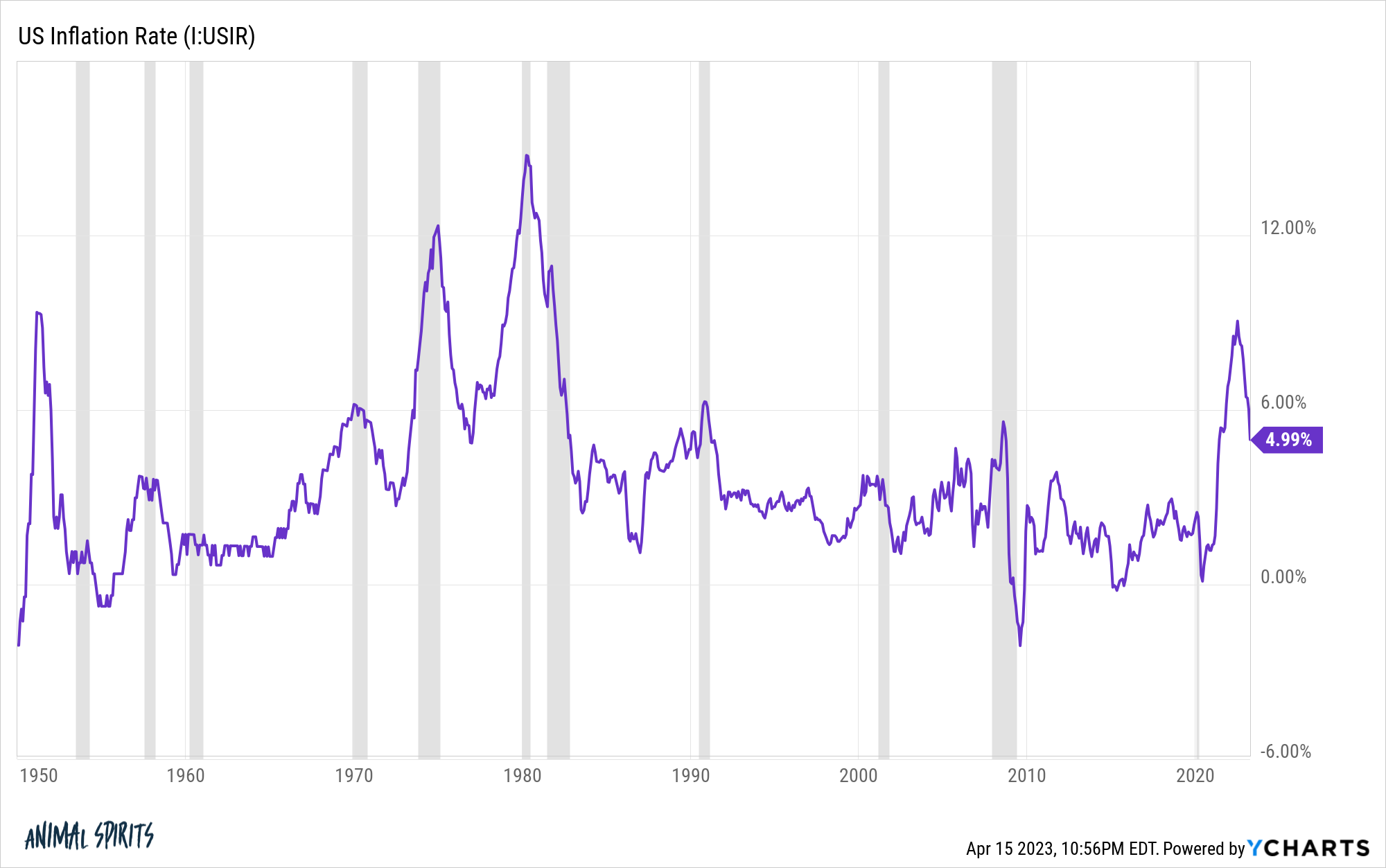
Over the long run, U.S. inflation depends on whether the economy can return to a stable path near the Federal Reserve’s inflation goal. Forecasts from major institutions have generally expected inflation to cool over time, but recent shocks and persistent service inflation have complicated that path.
Long-term inflation trends are shaped by several big forces. Monetary policy is one. Higher interest rates can reduce borrowing, slow demand, cool housing activity, and limit price increases. But monetary policy works with a lag. It is not a microwave; it is more like a slow cooker with a PhD.
Fiscal policy is another force. Large deficits can contribute to demand pressure if government spending adds more purchasing power to an economy already operating near capacity. Trade policy also matters. Tariffs can raise import prices and increase costs for businesses that rely on global supply chains. Labor supply matters too. If the labor market remains tight, wage growth can support consumer spending and increase costs for employers.
Productivity Could Helpor Disappoint
Productivity growth is one of the best long-term inflation reducers. When workers and businesses produce more output per hour, wages can rise without requiring the same level of price increases. Technology, automation, artificial intelligence, better logistics, and improved business processes can all help.
However, productivity benefits do not arrive evenly or instantly. Businesses may invest heavily before the payoff appears. If investment demand rises faster than actual productivity, it can create price pressure in the short run. Over the long term, genuine productivity gains can make the economy less inflation-prone.
Demographics and Globalization Are Changing
For decades, globalization helped hold down goods prices by allowing companies to source products from lower-cost regions. Today, supply chains are being redesigned for resilience, security, and political risk. That may reduce some vulnerabilities but could also make certain goods more expensive.
Demographics also matter. An aging population can affect labor supply, healthcare demand, savings behavior, and government spending. If labor supply grows slowly while demand remains strong, wage and service-price pressure may persist.
Short-Term vs. Long-Term Inflation: The Main Differences
The easiest way to compare short-term and long-term inflation trends is to think of weather versus climate. Short-term inflation is the weather: stormy this month, calmer next month, possibly weird enough to make everyone check the forecast twice. Long-term inflation is the climate: the broader environment that determines what is normal.
Short-Term Inflation Is Reactive
Short-term inflation reacts to immediate shocks. It can rise or fall quickly based on oil prices, food costs, supply disruptions, seasonal spending, and temporary policy changes. These movements can affect household budgets dramatically, but they do not always indicate a permanent change in inflation.
Long-Term Inflation Is Structural
Long-term inflation depends on deeper conditions. These include the credibility of the Federal Reserve, inflation expectations, wage trends, productivity, housing supply, fiscal policy, and the balance between demand and supply. Long-term trends are harder to reverse because they reflect habits, contracts, investment decisions, and expectations.
How Inflation Trends Affect Households
For households, inflation is not an abstract percentage. It is a monthly negotiation with the budget. Short-term inflation can make certain categories suddenly painful. A spike in gasoline prices can affect commuters immediately. A jump in grocery prices can change meal planning. Higher utility bills can force families to cut back elsewhere.
Long-term inflation affects planning. It changes how families think about rent, homeownership, college savings, retirement, insurance, and emergency funds. When people believe prices will keep rising, they may feel pressure to earn more, save differently, or buy sooner rather than later.
Inflation Is Uneven
Inflation does not hit everyone the same way. A household that rents, drives long distances, and spends a large share of income on food will experience inflation differently from a household that owns a home with a fixed mortgage, works remotely, and has more financial cushion.
This is why headline inflation can sometimes feel disconnected from personal experience. The national average may say inflation is moderating, while a family facing rising rent, insurance, groceries, and childcare may reasonably ask, “Moderating where, exactly? In a secret economy behind a velvet rope?”
How Inflation Trends Affect Businesses
Businesses watch inflation because it affects costs, pricing, wages, inventory, borrowing, and customer demand. Short-term inflation can create uncertainty. If input costs jump suddenly, companies must decide whether to raise prices, accept lower margins, delay investment, or renegotiate contracts.
Long-term inflation changes strategy. Businesses may shorten contracts, adjust wages more frequently, invest in automation, diversify suppliers, or change product sizes. In consumer markets, companies often worry about price sensitivity. Raise prices too much, and customers may switch brands, buy less, or decide that a $9 latte is not a personality trait after all.
The Risk of Margin Compression
When costs rise faster than selling prices, profit margins shrink. Small businesses can be especially vulnerable because they often have less bargaining power with suppliers and less room to absorb higher costs. Inflation can also raise financing costs if interest rates remain high, making expansion more expensive.
How Inflation Trends Affect Investors
Investors care about inflation because it influences interest rates, bond yields, stock valuations, corporate earnings, real estate, commodities, and currency values. Short-term inflation surprises can move markets quickly. Long-term inflation changes assumptions about future cash flows and discount rates.
When inflation is above target, investors often expect central banks to keep interest rates higher. Higher rates can make bonds more attractive, pressure growth stocks, and increase borrowing costs for companies. On the other hand, certain assets, such as Treasury Inflation-Protected Securities, commodities, and companies with pricing power, may attract attention during inflationary periods.
What Could Bring Inflation Down?
Several developments could help reduce inflation over time. Energy prices could stabilize or fall. Supply chains could improve. Shelter inflation could cool as new leases reflect slower rent growth. Productivity could rise. Wage growth could settle into a pace consistent with price stability. Consumer demand could moderate under the weight of higher borrowing costs.
Most importantly, inflation expectations could remain anchored. If households and businesses believe inflation will return closer to the Federal Reserve’s goal, price-setting behavior may become less aggressive.
What Could Keep Inflation High?
Inflation could remain elevated if energy shocks persist, tariffs raise costs, housing remains undersupplied, wage growth stays strong without matching productivity gains, or fiscal deficits add demand pressure. Inflation expectations are also critical. If people begin to assume higher inflation is the new normal, that belief can make inflation harder to reduce.
Another risk is that inflation becomes concentrated in services. Goods inflation can decline when supply chains normalize, but service inflation is often tied to wages, rent, insurance, and labor-intensive industries. Those categories tend to move slowly and can keep inflation sticky.
Experience Notes: What Short-Term and Long-Term Inflation Feel Like in Real Life
One of the clearest ways to understand inflation is to stop staring at charts for a moment and look at ordinary routines. Imagine a household that shops every Sunday, fills the car twice a month, pays rent, manages insurance, and occasionally tries to eat out without feeling like the menu is personally attacking them. Short-term inflation shows up first as surprise. The grocery total is $18 higher than expected. Gas jumps between paychecks. A plane ticket that used to be annoying becomes theatrical. The household may not immediately change its entire lifestyle, but it starts making little adjustments: switching brands, buying in bulk, delaying a purchase, or cooking at home more often.
That is short-term inflation at street level. It is noticeable, inconvenient, and often category-specific. People might say, “Gas is crazy right now,” or “Why are berries suddenly priced like jewelry?” The reaction is tactical. Consumers adapt quickly because the price shock is visible. Businesses do the same. A restaurant facing higher food costs may adjust specials, trim portions slightly, change suppliers, or update prices. A delivery company may add a fuel surcharge. These are immediate responses to immediate pressure.
Long-term inflation feels different. It is less like a surprise bill and more like a new baseline. After several years of higher prices, people stop comparing costs to last month and start comparing life to an earlier era that now feels suspiciously affordable. Rent renewals become a major financial event. Insurance premiums rise year after year. Childcare, tuition, maintenance, and medical costs reshape household plans. The question changes from “Why is this expensive today?” to “Can we still afford the version of life we planned?”
Businesses also experience long-term inflation as a strategic problem. A small manufacturer may realize that supplier costs, wages, rent, and financing are all permanently higher than before. Instead of making one price adjustment, the company may redesign products, automate tasks, move to different suppliers, reduce inventory risk, or renegotiate contracts. Long-term inflation pushes businesses to become more disciplined, but it can also make them more cautious. Hiring, expansion, and investment decisions may slow when future costs are difficult to predict.
For workers, inflation has an emotional side. A raise feels good until it meets the grocery aisle, rent notice, and car insurance bill in a dark alley. If wages rise by 4 percent but essential costs rise faster, purchasing power still feels squeezed. That gap explains why inflation can remain politically and socially sensitive even when official data shows improvement. People do not live inside averages. They live inside budgets.
The practical lesson is that households and businesses should separate short-term noise from long-term signals. A temporary gas spike may call for short-term adjustments. Persistent increases in rent, insurance, healthcare, or wages require deeper planning. Tracking both types of inflation helps people make better decisions: when to refinance, whether to lock in contracts, how much emergency savings to hold, and how aggressively to adjust prices or wages.
Inflation is not just an economic statistic. It is a planning environment. Short-term inflation changes this month’s choices. Long-term inflation changes the map.
Conclusion: Reading Inflation Without Losing Your Mind
Short-term and long-term inflation trends tell different stories, and both matter. Short-term inflation reveals immediate pressure from energy, food, supply disruptions, and seasonal demand. Long-term inflation shows whether those pressures are fading, spreading, or becoming part of the economy’s normal rhythm.
The smartest approach is to avoid overreacting to one month of data while also refusing to ignore persistent patterns. A sudden spike in gasoline prices may not define the future. But sticky shelter inflation, rising long-term expectations, strong service-price growth, or repeated upside surprises deserve attention.
For households, the goal is practical resilience: flexible budgets, emergency savings, smart debt decisions, and awareness of which expenses are most exposed to inflation. For businesses, the goal is pricing discipline, cost control, supplier flexibility, and clear communication with customers. For policymakers, the challenge is balancing inflation control with employment and growth.
Inflation may be complicated, but the core idea is simple: prices tell a story. Short-term inflation is the dramatic chapter. Long-term inflation is the plot. To understand the economy, you need to read both.