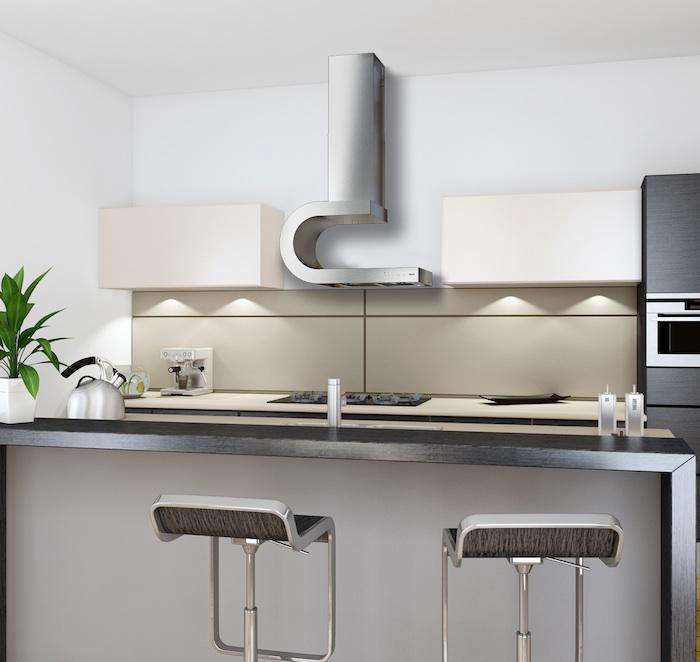
A range hood used to be the kitchen’s necessary wallflower: useful, metallic, and rarely invited into the design conversation. Today, it can be the room’s leading character. Contemporary range hoods are being shaped, wrapped, tiled, plastered, painted, and patinated until they resemble architecture, furniture, or full-scale sculpture.
The transformation makes sense. In an open-plan home, the cooking wall is visible from the sofa, dining table, and sometimes the front door. A plain appliance floating above the range can feel like an afterthought. A thoughtfully designed hood, however, can organize the entire room. It establishes symmetry, reinforces the material palette, frames the backsplash, and quietly removes the smoky evidence of an ambitious stir-fry.
The best contemporary range hoods do not force homeowners to choose between beauty and ventilation. They hide serious mechanical equipment inside expressive forms, proving that practical objects can earn their place in the spotlight.
Why the Range Hood Has Become Kitchen Sculpture
Kitchens have gradually evolved from closed workrooms into social spaces. As walls came down and cooking areas became visible from adjoining rooms, appliances needed to look more intentional. Designers began treating the hood as a focal point rather than a stainless steel interruption.
This movement has produced two seemingly opposite approaches. One makes the hood bold and unmistakable, using dramatic curves, metal finishes, oversize proportions, or saturated color. The other conceals the appliance inside plaster, cabinetry, stone, or architectural millwork so it becomes part of the room itself. Both approaches replace the generic appliance look with something tailored to the home.
A Functional Object With Visual Authority
A sculptural hood naturally commands attention because it occupies valuable visual territory. It sits above the cooking surface, often on the kitchen’s longest sightline, and may extend several feet upward. That placement gives it the same compositional power as a fireplace mantel or a large artwork.
Its prominence also creates responsibility. A hood that is too narrow may appear timid. One that is too bulky can make the cabinets look as though they are cowering in the corners. Successful designs respond to the width of the range, the ceiling height, the backsplash, nearby windows, and the overall scale of the room.
Contemporary Range Hood Shapes That Make a Statement
Soft Curves and Bell-Shaped Profiles
Rounded range hoods soften kitchens dominated by rectangular cabinets, islands, and tile grids. A gentle arch or flared bell shape can introduce movement without becoming excessively ornate. These forms work particularly well in warm contemporary interiors where plaster walls, oak cabinetry, handmade tile, and rounded furniture already establish a relaxed mood.
Curves can be subtle. Even a small radius at the corners may keep a large hood from feeling like a box suspended over dinner. Current kitchen design coverage shows growing interest in custom hoods with restrained curves and mixed-metal detailing instead of rigid, purely industrial forms.
Crisp Geometric Forms
Angular hoods remain a natural fit for minimalist and architectural kitchens. Trapezoids, tapered chimneys, slim rectangles, and sharply folded metal forms echo flat-panel cabinetry and linear lighting. The geometry can be visually quiet when finished to match the wall, or deliberately dramatic when rendered in blackened steel, bronze, or a contrasting color.
A tapered shape is especially useful because it feels substantial over the range without carrying the same visual weight all the way to the ceiling. It is the kitchen equivalent of a well-cut jacket: structured where it matters, less bulky everywhere else.
Cylindrical and Suspended Island Hoods
Island cooking surfaces present a different challenge because the hood can be seen from every direction. Cylindrical extractors, floating glass forms, and slim suspended canopies can look more like pendant lights than ventilation equipment. Their clean silhouettes preserve sightlines, although island hoods generally require careful attention to coverage because cross-drafts and open surroundings make smoke more difficult to capture.
Laboratory research evaluates range hoods using capture efficiencythe portion of cooking contaminants collected and exhausted outsidebecause airflow ratings alone do not fully describe real performance. This is especially relevant for exposed island installations.
The Nearly Invisible Hood
Not every sculpture needs to shout. A built-in insert can disappear inside a shallow shelf, a plaster volume, a cabinet surround, or a full-height architectural wall. The effect is calm, particularly in open-plan homes where the kitchen should relate comfortably to living-room furniture.
This concealed approach supports the broader “invisible kitchen” movement, which favors integrated appliances, continuous materials, and cabinetry that reads more like custom furniture. The mechanical hood remains present, but its visual identity politely leaves the room.
Materials That Turn Ventilation Into Art
Plaster: Quiet, Textural, and Architectural
Plaster is one of the most recognizable materials in contemporary hood design. It can be shaped into seamless curves, tapered forms, or monolithic volumes that appear to grow directly from the wall. Lime plaster, Venetian plaster, tadelakt-inspired finishes, and specialty coatings add subtle movement that flat paint cannot reproduce.
A plaster hood can blend with the wall for a soft, continuous look or contrast with cabinetry through color and texture. It pairs naturally with stone counters, handmade tile, white oak, and unlacquered brass. Remodelista projects have documented both Venetian-plastered hood surrounds and contemporary custom plaster forms, demonstrating how the material can bridge rustic craftsmanship and modern geometry.
The practical detail is important: the decorative shell should surround a properly specified metal liner or hood insert. The finish must also tolerate heat and routine cleaning. Raw texture directly above bubbling tomato sauce may look poetic on installation day and somewhat less poetic after spaghetti night.
Metal: From Industrial to Jewelry-Like
Metal hoods no longer mean only bright stainless steel. Contemporary designs use blackened steel, brushed brass, aged bronze, copper, zinc, powder-coated steel, and mixed-metal straps. Fabricated metal can be folded into precise angles or hammered into softer, handmade surfaces.
Copper and unlacquered brass develop patina, allowing the hood to change gradually rather than remain showroom-perfect. Blackened steel provides contrast against pale oak or white plaster, while powder coating offers nearly unlimited color. A custom hood can match a statement range, repeat cabinet hardware, or introduce an independent accent.
Designers have used copper cladding, brass finishes, bold powder-coated steel, and custom metalwork to turn ventilation into a room-defining feature. The strongest examples coordinate with the kitchen without matching every handle like an overly enthusiastic uniform.
Stone: Monumental and Luxurious
Marble, quartzite, soapstone, and stone-look slabs can transform a hood into a substantial architectural element. Extending the countertop or backsplash material over the hood creates continuity and makes the cooking zone feel carved from one composition.
Real stone is heavy, so the support structure, seams, slab thickness, and access to the ventilation insert must be planned carefully. Thin stone panels or engineered surfaces may produce a similar effect with less structural demand. Recent designer kitchens have used marble on hoods, openings, backsplashes, and window surrounds to create highly cohesive interiors.
Wood: Warmth With Technical Discipline
Wood-clad hoods bring warmth to contemporary kitchens and can repeat cabinet species, island paneling, or ceiling beams. Flat panels create a furniture-like appearance, while fluted, reeded, or slatted treatments add shadow and depth.
Because wood is combustible, the hood assembly must respect the appliance manufacturer’s required clearances and local building regulations. A proper liner protects the decorative enclosure, and the detailing should allow filters and service components to be removed without dismantling the masterpiece. An NKBA-recognized small-kitchen project, for example, used reeded solid oak cladding on a 42-inch hood to reinforce the room’s clean geometry while adding softness.
Tile: Pattern, Color, and Continuity
Tile can make a hood merge with the backsplash or become a deliberate block of pattern. Zellige, glazed ceramic, mosaics, stone tile, and large-format porcelain all create different personalities. Wrapping the hood and backsplash in the same tile minimizes visual breaks, while a contrasting tile turns the hood into an accent.
Tile also offers an approachable way to update an existing hood surround, provided the structure can support the added weight. Designers frequently use angled forms and tiled enclosures to make standard ventilation equipment feel custom.
Performance Comes Before the Pretty Shell
A beautiful hood that leaves smoke drifting through the house is not sculpture. It is expensive ceiling décor with buttons.
Start With Capture, Not Maximum CFM
CFM, or cubic feet per minute, measures how much air a blower can move. It is useful, but a larger number does not automatically guarantee better ventilation. Hood depth, width, mounting height, filter design, burner position, duct resistance, and cooking style all influence performance.
The hood should generally cover at least the width of the cooking surface, and extra coverage can improve capture. Wall-mounted hoods benefit from the wall helping contain the rising plume, while island units are exposed on all sides. HVI guidance emphasizes positioning a hood directly over the range and selecting certified products with verified airflow and sound ratings.
Broan-NuTone advises matching CFM to the cooktop, cooking habits, hood size, and duct design rather than simply purchasing the most powerful blower available. Gas appliances and frequent high-heat frying typically require more ventilation than light cooking on a modest electric or induction surface.
Ductwork Can Make or Break the System
Even a powerful blower struggles against an undersized duct, a long route, several sharp elbows, or a restrictive exterior cap. The best duct path is usually short, smooth, properly sized, and direct to the outdoors. Installation instructions commonly warn against venting into an attic, where grease and moisture can accumulate.
Plan the duct route before finalizing the shape of the decorative enclosure. A pencil-thin chimney may look elegant in a rendering, but not if the required duct resembles a metal python trying to escape through it. Manufacturer specifications should determine the duct diameter, transition pieces, and allowable equivalent length.
Ducted and Recirculating Hoods Are Not Identical
A ducted hood carries captured air outdoors, removing moisture, heat, odors, grease particles, and cooking pollutants. A recirculating unit filters the air and returns it to the room. Recirculating systems may be necessary where exterior ducting is impossible, but filters require regular replacement and do not perform the same function as outdoor exhaust.
The U.S. Environmental Protection Agency recommends using an externally vented range hood whenever possible, turning it on during cooking, cooking on back burners when practical, and leaving the fan running for 10 to 20 minutes afterward. Berkeley Lab research likewise notes that effective kitchen ventilation can reduce exposure to cooking-related pollutants, while performance varies considerably among hood designs.
Noise Determines Whether the Hood Gets Used
A hood only improves the air when somebody turns it on. If normal speed sounds like a small aircraft preparing for departure, household enthusiasm tends to fade. Compare published sound ratings, not just maximum airflow. Larger ducts, efficient blower designs, remote blowers, and fewer duct restrictions can help reduce perceived noise.
Controls should also be reachable, lighting should illuminate the cooking surface without glare, and filters should come out easily. Modern inserts may include variable speeds, LED lighting, washable baffle filters, remote controls, and adjustable airflow settings.
How to Make a Sculptural Hood Belong in the Room
Choose the Visual Hierarchy
Decide what should receive attention first: the hood, the range, the backsplash, the island, or the view. Making all five shout at once creates a kitchen with the conversational manners of a crowded talk show.
If the hood is highly expressive, surrounding cabinetry and tile can remain restrained. When the backsplash features dramatic stone or intricate mosaic, a quieter hood may preserve the material’s impact. Designers frequently adjust hood scale and finish to either contrast with or defer to nearby elements.
Repeat Materials With Restraint
A hood feels integrated when it repeats one or two elements from elsewhere in the kitchen. Brass trim might echo the faucet. Fluted oak may reference the island. Plaster can connect to an adjacent fireplace. Blackened steel may relate to window frames.
Exact matching is not required. In fact, slight variation often creates more depth. A warm bronze hood can live comfortably beside brushed brass hardware, just as natural wood tones can coordinate without coming from the same treeor pretending they attended the same finishing school.
Respect Negative Space
Empty wall area around the hood helps the form read clearly. Crowding it with upper cabinets, shelves, sconces, rails, and decorative accessories can weaken the composition. A few inches of breathing room may create more luxury than another narrow cabinet filled with mugs nobody remembers buying.
Planning a Custom Contemporary Range Hood
- Confirm the cooking appliance. Record its width, fuel type, heat output, burner configuration, and required clearances.
- Choose the ventilation insert. Review certified airflow, sound, lighting, filter type, controls, and service access.
- Design the duct route. Verify its diameter, total length, elbows, termination point, and any local makeup-air requirements.
- Set the hood dimensions. Coordinate width, depth, and mounting height with manufacturer instructions and the way the cooktop will actually be used.
- Develop the decorative enclosure. Select a noncombustible or properly protected structure that can support plaster, tile, metal, wood, or stone.
- Plan maintenance access. Filters, lights, controls, blowers, and electrical connections must remain serviceable.
- Mock up the shape. Use cardboard, painter’s tape, or a simple three-dimensional model to test scale before fabrication.
A full-size mock-up is particularly helpful in rooms with tall ceilings. Drawings can make a hood look elegantly monumental, while the installed version may reveal that it has quietly become a second floor.
Living With a Sculptural Range Hood: Practical Experience After Installation
The first experience many homeowners have with a custom hood is surprisenot at the shape, but at how strongly it changes the room. Before installation, cabinets and countertops may seem like the main design elements. Once a large plaster or metal hood is in place, the entire kitchen suddenly organizes itself around the cooking wall. Pendant lights that previously seemed bold may become supporting actors, and a backsplash that felt busy on a sample board may look perfectly balanced beneath the larger form.
This is why temporary mock-ups are valuable. A cardboard hood may not impress dinner guests, but it reveals whether the proposed design blocks a sightline, competes with a window, or feels top-heavy. Viewing the mock-up from the adjoining living room is just as important as standing at the range. In an open floor plan, the hood belongs to multiple rooms.
The Finish Will Meet Real Cooking
Matte plaster, patinated metal, and natural wood look wonderfully tactile in photographs. Daily cooking introduces a less glamorous design collaborator: airborne grease. The area around the lower edge of the enclosure receives the most exposure, particularly when frying, searing, or cooking on front burners.
Homeowners generally have an easier experience when the decorative finish stops above an accessible metal liner. Smooth, sealed surfaces are simpler to wipe than deeply textured ones. Brass and copper owners should decide whether they enjoy natural patina or prefer a more uniform finish, because constant polishing can turn a beautiful hood into a demanding new hobby.
Filter maintenance matters more than many people expect. Baffle filters that slide out easily are far more likely to be cleaned regularly. If removing a filter requires moving a decorative panel, finding a special screwdriver, and negotiating with three tiny hidden clips, maintenance will eventually be postponed until the hood begins collecting its own geological record.
Quiet Settings Get Used More Often
In everyday life, the most useful fan speed is rarely the dramatic maximum setting demonstrated in a showroom. It is the lower speed that can run during ordinary simmering without interrupting conversation, television, or music. A quiet, effective low setting encourages users to switch the hood on before cooking begins instead of waiting until smoke is already negotiating with the ceiling.
Experienced users also learn to turn the hood on early. Establishing airflow before a pan becomes hot improves the system’s opportunity to catch the rising plume. Leaving it running briefly after cooking helps clear remaining moisture and odors. Using back burners when possible can further improve capture because they sit deeper beneath the canopy.
Lighting Becomes Part of the Cooking Experience
Integrated hood lighting is easy to underestimate during design. In practice, it may become the most frequently used task light in the kitchen. Warm, even illumination makes food easier to monitor and keeps the cooking zone comfortable at night. Poorly positioned lights can reflect harshly from polished stone or stainless steel, while overly cool LEDs may make dinner look as though it is being prepared in a laboratory.
Dimmable or multi-level lighting offers flexibility. Bright light helps with chopping and checking browning; a softer setting can remain on during dinner, allowing the sculptural hood to function almost like an illuminated artwork.
A Good Hood Can Improve the Whole Kitchen Routine
When ventilation is effective, cooking odors disappear sooner, moisture is less likely to linger on nearby surfaces, and grease does not spread as readily across open shelves or pendant lights. This can be particularly noticeable in compact homes where the kitchen shares air with living and sleeping areas.
The biggest lesson is that the decorative shell and mechanical system should be treated as one object from the beginning. A beautiful surround cannot correct weak capture, and a powerful insert cannot overcome badly restricted ductwork. When the proportions, materials, airflow, acoustics, and maintenance access are resolved together, the result feels effortless. That effortless appearance is, of course, usually the product of many drawings, several trades, and at least one conversation about why the duct cannot simply “squeeze a little.”
Conclusion: Let the Hood Earn Its Spotlight
Contemporary range hoods demonstrate how design can elevate an ordinary household necessity. Plaster creates architectural calm, metal brings precision or patina, stone adds monumentality, wood introduces warmth, and tile supplies pattern. The form may curve, taper, float, disappear, or command the room.
Yet the most successful sculptural range hood remains a hardworking appliance. It captures cooking emissions, illuminates the cooktop, operates at a tolerable sound level, and can be cleaned without an advanced engineering degree. Build the design around those requirements, and the hood can become the rare kitchen centerpiece that looks impressive while actively making the room more pleasant to use.