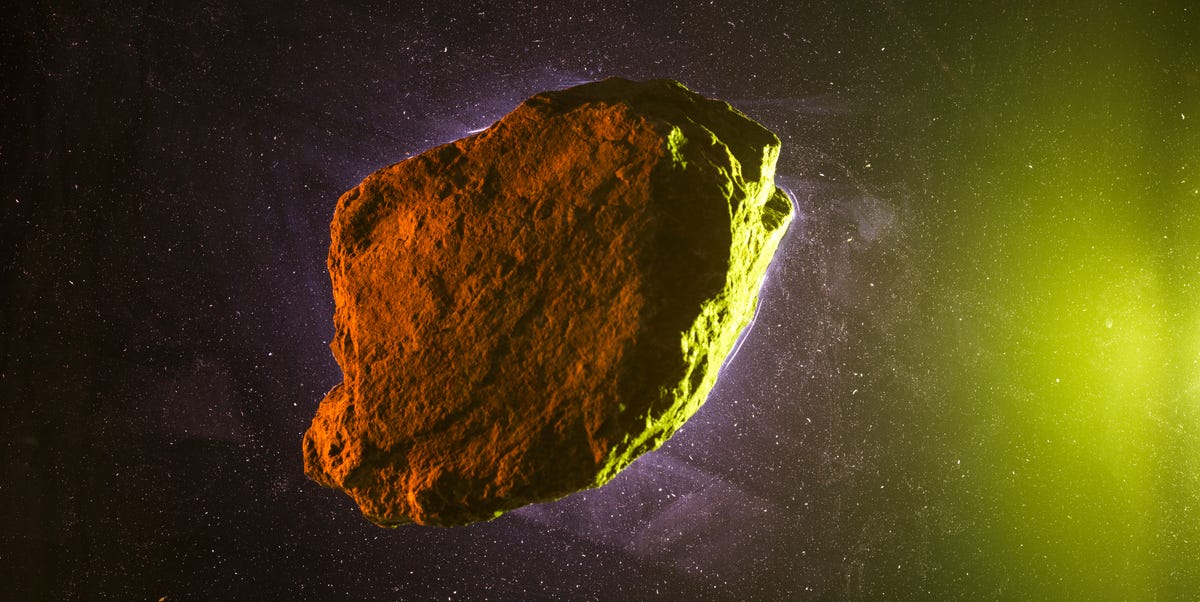
Imagine opening a tiny container of asteroid dust and finding not aliens, not glowing space goo, and sadly not a pocket-sized E.T. asking for Wi-Fi, but something almost as thrilling: chemical ingredients linked to life itself. That is essentially what scientists have been doing with pristine samples from carbon-rich asteroids such as Bennu and Ryugu. These fragments, collected by spacecraft and delivered to Earth with extreme care, are helping researchers investigate one of the biggest questions humans have ever asked: Where did the ingredients for life come from?
The discovery does not mean scientists found living organisms in asteroid matter. No microbes are waving from a space pebble. Instead, researchers identified organic molecules, amino acids, nucleobases, ammonia-rich compounds, salts, and evidence of ancient water-related chemistry. These are the kinds of ingredients that, under the right conditions, can contribute to prebiotic chemistrythe chemistry that may have helped life emerge on early Earth.
In simple terms, asteroids may have acted like cosmic delivery trucks, bringing water and life-friendly molecules to young planets. Earth, about 4.5 billion years ago, was not exactly a luxury resort. It was hot, chaotic, bombarded by debris, and generally having the geological equivalent of a teenage meltdown. Yet somewhere in that early mess, chemistry became biology. Asteroid samples may help explain how the pantry got stocked before life started cooking.
Why Asteroid Matter Matters So Much
Asteroids are often described as time capsules from the early solar system. Unlike Earth rocks, which have been melted, recycled, weathered, buried, and generally put through a planetary blender, many asteroid materials preserve ancient chemical clues. Carbon-rich asteroids are especially valuable because they can contain organic compounds and minerals shaped by water.
That is why missions such as NASA’s OSIRIS-REx and Japan’s Hayabusa2 are so important. OSIRIS-REx collected material from asteroid Bennu and returned it to Earth in 2023. Hayabusa2 brought back samples from asteroid Ryugu in 2020. These missions gave scientists something meteorites rarely can: relatively pristine material that did not fall through Earth’s atmosphere, land in mud, sit in a desert, or get handled by someone named Dave who thought it was “just a weird rock.”
Contamination control is a major reason sample-return missions are so powerful. Meteorites found on Earth can still be scientifically useful, but they may pick up terrestrial chemicals or microbes after landing. Returned asteroid samples are sealed, tracked, and handled with extraordinary caution. That makes the chemical evidence far more reliable when scientists ask whether certain molecules truly came from space.
What Scientists Found in Bennu’s Asteroid Samples
Bennu has quickly become one of the most exciting objects in astrobiology. Analyses of its returned samples revealed a rich mixture of carbon- and nitrogen-bearing compounds, including amino acids and nucleobases. Amino acids are famous because life on Earth uses them to build proteins. Nucleobases are equally important because they are part of DNA and RNA, the molecules that store and transmit genetic information.
Researchers reported that Bennu material contains 14 of the 20 amino acids used by life on Earth to make proteins. Even more striking, scientists detected all five nucleobases used in DNA and RNA: adenine, guanine, cytosine, thymine, and uracil. That does not mean Bennu contained DNA, RNA, cells, or living organisms. It means the chemical letters associated with genetic systems can form or survive in asteroid environments.
The Bennu samples also showed evidence of ammonia-rich chemistry. Ammonia matters because nitrogen is essential for many biological molecules. When ammonia interacts with other compounds, it can participate in reactions that lead toward more complex organic chemistry. Scientists also found minerals associated with salty water, suggesting Bennu’s parent body once had liquid brines. In other words, Bennu may be a broken piece of a much older world where rock, water, salts, and organic chemistry mixed together long before Earth had biology textbooks.
The “Seeds of Life” Idea, Explained Without the Sci-Fi Fog Machine
The phrase “seeds of life” sounds dramatic, and let’s be honest, it has great headline energy. But scientists usually mean something precise: chemical precursors that could help life begin if delivered to a suitable environment. These include amino acids, nucleobases, sugars, phosphorus-bearing compounds, carbon-rich molecules, and water-altered minerals.
Life requires chemistry, but chemistry is not automatically life. Flour, eggs, sugar, and butter are cake ingredients, but they are not a cake until the right process happens. Similarly, amino acids and nucleobases are not organisms. They are ingredients. The big question is whether early Earth received enough of these ingredients from space to influence the origin of life.
Asteroids and comets likely bombarded young Earth during its early history. If some of those objects carried water and organic compounds, they may have enriched Earth’s surface with prebiotic materials. That does not prove life came from space. Instead, it supports a more careful idea: space may have supplied some of the raw materials that Earth’s environment later transformed into living systems.
Ryugu Adds Another Piece to the Puzzle
Asteroid Ryugu, visited by Japan’s Hayabusa2 mission, offers an important comparison. Early analyses showed Ryugu is rich in organic molecules. Scientists detected amino acids and other soluble organic compounds. Researchers also reported uracil, one of the nucleobases used in RNA, along with niacin, a form of vitamin B3. More recent work has strengthened the broader picture that carbon-rich asteroids may contain several important molecular building blocks.
Ryugu is valuable because it gives scientists a second pristine asteroid sample to compare with Bennu. When different asteroids show related kinds of prebiotic chemistry, the discovery becomes harder to dismiss as a one-off cosmic accident. It suggests that life-related chemistry may be widespread in small bodies across the solar system.
The comparison is also useful because Bennu and Ryugu are not identical. Their chemistry, mineral history, and exposure to space conditions differ. Those differences help scientists understand how organic molecules form, change, survive, or disappear over billions of years. In astrobiology, differences are not annoyances; they are clues wearing tiny lab coats.
How Could Life’s Ingredients Form on an Asteroid?
Asteroids are not tiny planets with cozy laboratories inside, but they can host surprisingly interesting chemistry. Many carbon-rich asteroids formed from ancient material containing ice, dust, metals, and organic compounds. In larger parent bodies, radioactive decay may have warmed the interior enough for ice to melt. That liquid water could react with minerals and organic compounds, creating briny environments.
In Bennu’s case, the presence of salt minerals suggests that liquid water once evaporated or chemically changed inside its parent body. That ancient watery environment may have helped concentrate and preserve organic molecules. Think of it as a natural chemistry pot, except the kitchen was floating in the early solar system and the chef was physics.
Some organic compounds may also form in extremely cold environments, such as molecular clouds or the outer protoplanetary disk where the solar system formed. Radiation, ice chemistry, and simple molecules can produce more complex compounds over time. These materials may later become part of asteroids, comets, planets, and moons. That means some life-friendly molecules may be older than Earth itself.
Why the Amino Acid “Handedness” Mystery Is So Fascinating
One of the most intriguing findings from Bennu involves molecular handedness. Many amino acids can exist in left-handed and right-handed forms. Life on Earth overwhelmingly uses left-handed amino acids. Scientists have long wondered why biology chose that direction. Was it random? Was it influenced by light, minerals, space chemistry, or early Earth conditions?
The Bennu samples contained a roughly equal mixture of left- and right-handed amino acids. That is important because it suggests the asteroid’s amino acids were not simply contamination from Earth life, which would tend to show a strong left-handed bias. It also means the preference for left-handed amino acids may have emerged later, after these molecules arrived on Earth or during the early evolution of biological chemistry.
This is the kind of discovery that makes scientists both excited and mildly annoyedin the best possible way. It answers one question while opening three more. Bennu shows that amino acids can exist in space rocks, but it does not yet explain why Earth life became so selective.
What This Discovery Does Not Prove
It is important to keep the excitement honest. Scientists did not discover life on Bennu or Ryugu. They did not find fossils, cells, DNA strands, or alien bacteria planning a quiet retirement in Arizona. The discoveries point to prebiotic chemistry, not biology.
The distinction matters for public understanding. Organic molecules are carbon-based compounds, but “organic” does not always mean “alive.” Gasoline contains organic compounds. So does coffee. One helps cars move; the other helps writers pretend deadlines are negotiable. Neither is alive.
Asteroid samples show that the ingredients associated with life can exist beyond Earth. That supports the idea that the universe may be chemically friendly to life’s emergence. But the leap from chemistry to biology is enormous. Scientists still need to understand how simple molecules became self-replicating systems, how membranes formed, how metabolism began, and how genetic information became stable enough to evolve.
Why These Findings Change the Search for Life Beyond Earth
The discovery of life-related molecules in asteroid matter reshapes how scientists think about habitability. If asteroids can distribute amino acids, nucleobases, sugars, salts, and other useful compounds, then planets and moons across the solar system may have received similar deliveries. Mars, Europa, Enceladus, Ceres, and ancient Earth all become part of a larger chemical story.
This does not mean life is everywhere. It means the starting ingredients may be more common than previously assumed. That is a major shift. A planet does not have to invent every molecule from scratch if space already delivers part of the starter kit.
Future missions will likely focus on places where water, organic molecules, and energy sources overlap. Ocean worlds such as Europa and Enceladus are especially exciting because they may have liquid water beneath icy crusts. If asteroid and comet impacts delivered organic materials to such worlds, and if internal chemistry provides energy, then researchers have more reason to investigate them closely.
The Role of Sample-Return Missions in Modern Science
Remote sensing is powerful, but nothing beats having actual extraterrestrial material in a laboratory. Scientists can use advanced instruments to identify compounds at tiny concentrations, measure isotopes, study mineral structures, and compare results across laboratories. Every grain of asteroid dust can hold a library of information.
Sample-return missions are also investments in future science. NASA and other agencies preserve portions of returned material so future researchers can study them with technologies that do not yet exist. That is exactly what happened with Apollo moon samples, which still produce new discoveries decades later. Bennu and Ryugu samples may do the same for generations.
There is also something deeply human about bringing a piece of the early solar system into a clean lab on Earth. It turns space exploration from a distant photograph into something tangible. A few grams of dark asteroid dust can carry clues about oceans, planets, chemistry, and perhaps the long prelude to life.
Specific Examples That Make the Discovery Easier to Understand
Amino Acids: The Protein Builders
Amino acids are often described as protein building blocks. Proteins do much of the work inside living cells, from structure to signaling to chemical reactions. Finding amino acids in asteroid samples suggests that some of the molecular tools used by life can form outside biology.
Nucleobases: The Genetic Letters
Nucleobases are components of DNA and RNA. Adenine, guanine, cytosine, thymine, and uracil help encode biological information on Earth. Their presence in asteroid matter suggests that parts of the genetic toolkit may be produced through non-biological chemistry.
Ammonia and Salts: The Chemical Environment
Ammonia provides nitrogen, and salts point toward past water activity. Together, they suggest that asteroid parent bodies may have hosted environments where molecules could dissolve, interact, concentrate, and change. That is exactly the kind of chemical setting scientists study when exploring how prebiotic chemistry becomes more complex.
Experience Section: What This Discovery Feels Like From a Human Perspective
There is a special kind of wonder in realizing that a dusty asteroid fragment can make Earth feel both smaller and more meaningful. When people hear that scientists discovered possible “seeds of life” in asteroid matter, the first reaction is often excitement. The second is confusion. The third is usually a dramatic stare into the distance, as if suddenly remembering that we are all standing on a spinning rock with weather.
One powerful experience connected to this topic is the feeling of scale. A sample from Bennu weighs about as much as an ordinary household object, yet it may contain chemical clues from before Earth became Earth. That contrast is almost absurd. You can hold a tiny amount of matter and study a story that stretches back billions of years. It is like receiving a postcard from the early solar system, except the handwriting is written in amino acids, minerals, isotopes, and dust.
For students, writers, science fans, and curious readers, this discovery also changes the way the night sky feels. Asteroids are no longer just “space rocks” drifting between planets. They become archives. They become couriers. They become messy little chemistry vaults that may have helped prepare planets for life. Looking up at the sky after learning this can feel different. The darkness is not empty; it is full of history.
Another experience is intellectual humility. The discovery reminds us that science rarely gives simple answers wrapped in a bow. Instead, it gives better questions. Did asteroids deliver important ingredients to early Earth? Probably. Did those ingredients help life begin? Possibly. Did life itself come from an asteroid? There is no evidence for that. The truth is more interesting than the shortcut. Nature seems to prefer slow mysteries over quick spoilers.
There is also a creative thrill in the detective work. Scientists must protect samples from contamination, test tiny grains with powerful instruments, compare chemical signatures, and separate Earthly noise from extraterrestrial signals. It is part chemistry, part astronomy, part forensic investigation. The asteroid is the witness. The lab is the interrogation room. The evidence is microscopic. The mystery is cosmic.
For everyday readers, the most relatable takeaway may be this: life is not isolated from the universe. The atoms in our bodies were forged in stars, scattered through space, gathered into planets, and arranged through chemistry into living systems. Asteroid discoveries make that connection feel less poetic and more physical. The ingredients of biology may have traveled through space long before biology existed. That does not make life less special. It makes life feel more deeply connected to everything around it.
In a world full of fast headlines and noisy debates, a discovery like this offers a quieter kind of awe. Somewhere inside a dark asteroid, ancient chemistry waited for billions of years. A spacecraft traveled there, touched it, collected a sample, and brought it home. Scientists opened the container and found not an answer to everything, but a set of clues. And sometimes, a clue is more exciting than an answer, because it invites humanity to keep looking.
Conclusion: Asteroid Dust and the Bigger Story of Life
The discovery of possible “seeds of life” in asteroid matter is one of the most meaningful developments in modern astrobiology. Bennu and Ryugu do not prove that life began in space, but they strongly support the idea that life’s chemical ingredients can form beyond Earth and travel through the solar system. Amino acids, nucleobases, ammonia-rich compounds, salts, and water-altered minerals all point toward a universe where prebiotic chemistry may be common.
That possibility changes how we understand our origins. Earth may not have been a closed laboratory. It may have been part of a larger cosmic exchange, receiving materials from asteroids, comets, and ancient solar system debris. The story of life may begin not only in oceans, vents, ponds, or mineral surfaces, but also in cold dust, icy bodies, and ancient fragments drifting through space.
The most exciting part is that this research is still young. Scientists will continue studying Bennu and Ryugu samples for decades. Future missions may bring back material from Mars, comets, moons, or other primitive bodies. Each sample could sharpen the picture of how chemistry becomes biology.
For now, the message is clear: asteroid matter is not just leftover rubble. It is a record of beginnings. Hidden inside those dark grains are clues about water, carbon, nitrogen, ancient brines, and the molecular ingredients that may have helped make life possible. Not bad for a rock that spent most of its existence silently tumbling through space.
Note: This article is written for web publishing in standard American English and synthesizes current scientific findings without inserting source links into the body content.