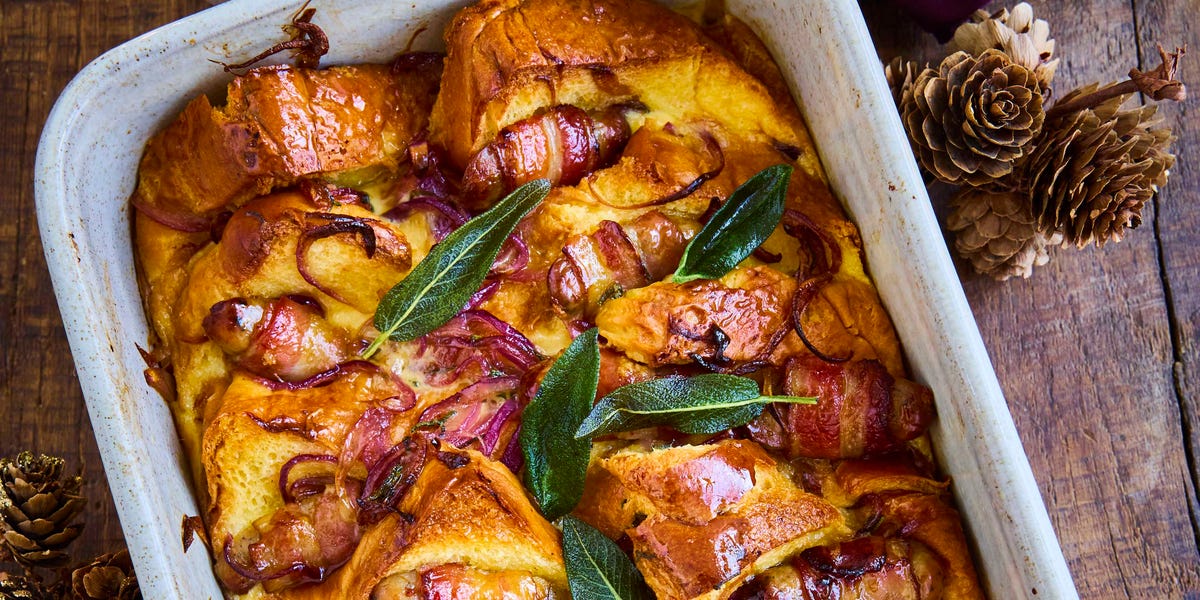
There are recipes that whisper “cozy dinner,” and then there are recipes that kick open the kitchen door wearing a holiday sweater and holding a skillet of bacon. This salty pigs in blankets bread and butter pudding recipe with crispy sage and caramelised onions belongs proudly in the second group. It is rich, savory, golden, crunchy on top, custardy in the middle, and just dramatic enough to make a regular weeknight feel like a small parade.
Think of it as the love child of pigs in a blanket, savory bread pudding, stuffing, and a very fancy brunch casserole. Instead of building a sweet dessert pudding with raisins and vanilla, this version goes full comfort-food mode: buttery bread, browned sausages, crisp bacon, sweet onions, Parmesan, Gruyere, mustard, herbs, and a creamy egg custard that holds everything together like the responsible adult at a family gathering.
The result is a salty, savory bread pudding that works for brunch, holiday leftovers, game day, Christmas breakfast, or dinner with a green salad when you want something hearty but not fussy. The crispy sage gives it a restaurant-style finish, while the caramelized onions bring sweetness that balances the bacon and sausage. In other words, this dish is what happens when “just one more bite” becomes a lifestyle choice.
What Makes This Savory Bread and Butter Pudding So Good?
Traditional bread and butter pudding is usually sweet, soft, and dessert-like. This savory version borrows the same basic ideabread soaked in custard and baked until puffedbut swaps sugar for deeply savory ingredients. The bread becomes creamy inside and crisp around the edges, while the pigs in blankets add smoky, salty richness.
The secret is contrast. You need soft custard and crunchy topping. You need salty bacon and sweet onions. You need creamy cheese and sharp mustard. You need crispy sage leaves that shatter delicately when you bite them. Without contrast, casseroles can become beige naps in a baking dish. With contrast, they become the kind of food people hover around with forks “just straightening the edges.”
Ingredients for Salty Pigs in Blankets Bread and Butter Pudding
Main ingredients
- 10 to 12 pigs in blankets, cooked or partially cooked, cut into bite-size pieces
- 8 cups day-old brioche, challah, sourdough, or soft white bread, cut into 1-inch cubes
- 2 tablespoons unsalted butter, plus more for greasing the baking dish
- 2 large yellow onions, thinly sliced
- 1 teaspoon kosher salt, divided
- 1/2 teaspoon black pepper
- 1 tablespoon Dijon mustard
- 1 teaspoon whole-grain mustard
- 5 large eggs
- 2 cups whole milk
- 1 cup heavy cream
- 1/2 cup low-sodium chicken broth
- 1 cup grated Gruyere cheese
- 1/2 cup grated Parmesan cheese
- 1 tablespoon chopped fresh parsley
- 1 teaspoon chopped fresh thyme
- 1/4 teaspoon ground nutmeg
For the crispy sage topping
- 18 to 24 fresh sage leaves
- 2 tablespoons olive oil or butter
- Pinch of flaky sea salt
- Extra Parmesan for finishing, optional
Best Bread to Use
The best bread for savory bread pudding is sturdy enough to absorb custard without collapsing into paste. Brioche and challah give a richer, softer result. Sourdough adds tang and chew. A country loaf brings rustic texture. Soft white sandwich bread can work beautifully if you want a tender, classic casserole texture.
Day-old bread is ideal because it absorbs custard evenly. If your bread is fresh, spread the cubes on a sheet pan and bake them at 300°F for 10 to 15 minutes, stirring once. You are not making croutons; you are just drying the bread enough so it behaves like a sponge instead of a soggy little quitter.
How to Make Pigs in Blankets Bread and Butter Pudding
Step 1: Prepare the baking dish
Grease a 9-by-13-inch baking dish with butter. Preheat the oven to 350°F. If your pigs in blankets are raw or frozen, cook them according to package directions first, then let them cool slightly before slicing. This helps keep the final pudding from turning greasy or undercooked.
Step 2: Caramelize the onions
Melt 2 tablespoons butter in a large skillet over medium-low heat. Add the sliced onions and a pinch of salt. Cook slowly for 25 to 35 minutes, stirring often, until the onions become soft, golden brown, and sweet. If they begin sticking, add a splash of water and scrape up the browned bits. Those browned bits are flavor confetti.
Do not rush this step. Fast onions are browned onions. Slow onions are caramelized onions. The difference matters. Caramelized onions should taste sweet, buttery, and mellow, not sharp or scorched.
Step 3: Build the custard
In a large bowl, whisk together eggs, whole milk, heavy cream, chicken broth, Dijon mustard, whole-grain mustard, remaining salt, pepper, thyme, parsley, and nutmeg. The mustard sharpens the custard and keeps the dish from tasting too heavy. The broth adds savory depth without making the pudding overly rich.
Step 4: Combine the bread, sausages, onions, and cheese
Add the bread cubes to the bowl with the custard. Fold gently until the bread begins absorbing the liquid. Add the sliced pigs in blankets, caramelized onions, Gruyere, and Parmesan. Toss again, but do not crush the bread. Let the mixture sit for 15 to 20 minutes so the custard can soak in properly.
Step 5: Bake until golden and set
Transfer the mixture to the prepared baking dish. Press it down lightly so the bread is evenly distributed, but leave a few cubes sticking up for crispy edges. Bake uncovered for 45 to 55 minutes, or until the top is golden brown and the center is set. If using a thermometer, the center of a casserole containing meat should reach 165°F.
Step 6: Fry the sage
While the pudding rests, heat olive oil or butter in a small skillet over medium heat. Add the sage leaves in a single layer and cook for about 30 to 60 seconds, just until crisp and dark green. Transfer to a paper towel and sprinkle with flaky salt. Watch closely; sage goes from elegant to “oops” very quickly.
Step 7: Finish and serve
Scatter the crispy sage over the warm bread pudding. Add extra Parmesan if desired. Let the dish rest for 10 minutes before serving so the custard can settle. Serve warm, not molten-hot. This gives the flavors time to relax and prevents guests from doing the silent hot-food mouth dance.
Flavor Tips for the Best Results
Use good sausages because they are the main salty element. Cocktail sausages, breakfast sausage links, bratwurst pieces, or smoked sausages can all work. If you want a more British-inspired version, use bacon-wrapped mini sausages. If you prefer an American party-food twist, use pastry-wrapped cocktail franks and chop them into chunky pieces.
Balance the salt carefully. Bacon, sausage, Parmesan, and prepared mustard can all be salty, so do not over-season the custard at the start. Taste the cooked sausage and cheese before adding extra salt. The goal is bold and savory, not “I just drank the ocean.”
For deeper flavor, add a splash of dry sherry, white wine, or apple cider to the onions during the final few minutes of cooking. For heat, add crushed red pepper flakes. For freshness, serve the pudding with arugula, lemony greens, or a simple apple salad.
Recipe Variations
Cheesy holiday version
Add an extra 1/2 cup Gruyere or sharp cheddar. This makes the pudding richer and more indulgent, perfect for Christmas morning or a brunch table where nobody is pretending to count calories.
Apple and sage version
Add 1 diced tart apple when you combine the bread and custard. Apple pairs beautifully with pork, sage, and onions, adding little bursts of sweetness.
Spicy game-day version
Use spicy sausage, add jalapenos, and swap Gruyere for pepper Jack. Serve with mustard dip on the side. This version is not subtle, but neither is anyone yelling at a football game.
Vegetable-loaded version
Add sauteed mushrooms, spinach, leeks, or roasted butternut squash. Keep the total added vegetables to about 2 cups so the custard ratio still works.
What to Serve With It
This salty pigs in blankets bread and butter pudding is rich, so serve it with something bright. A crisp green salad with lemon vinaigrette is perfect. Roasted Brussels sprouts, green beans, cranberry relish, pickled onions, or a crunchy slaw also work well.
For brunch, pair it with fruit salad, coffee, orange juice, or a spicy Bloody Mary. For dinner, serve it beside a simple soup or a bitter greens salad. For a holiday buffet, place it next to roasted vegetables and watch it disappear faster than the good serving spoon.
Make-Ahead, Storage, and Reheating Tips
You can assemble the pudding up to 12 hours ahead. Cover and refrigerate it before baking. Let it sit at room temperature for about 30 minutes before it goes into the oven so it bakes evenly.
Leftovers should be cooled, covered, and refrigerated within 2 hours. Store them in shallow airtight containers for 3 to 4 days. Reheat individual portions in a 325°F oven or air fryer until hot in the center. The microwave works in emergencies, but the top will lose its crispness. The oven is better if you want to revive those golden edges.
Why This Recipe Works
This dish succeeds because every ingredient has a job. The bread absorbs the custard. The eggs set the structure. The cream adds luxury. The broth keeps the flavor savory. The pigs in blankets bring protein, salt, smoke, and fun. The onions add sweetness. The cheese adds umami. The crispy sage gives aroma and crunch.
Most importantly, it feels familiar without being boring. Everyone knows pigs in blankets. Everyone understands a cozy casserole. But combining them into a savory bread and butter pudding makes the dish feel new, playful, and special enough for a holiday table.
Experience Notes: What It Is Like to Make and Serve This Dish
The first thing you notice while making this recipe is that the kitchen starts smelling wildly unfair. The onions slowly soften in butter, the bacon-wrapped sausages release their smoky aroma, and the sage waits on the counter like a tiny green crown. At some point, someone will wander in and ask, “What are you making?” Try not to look too smug. You are making a casserole with main-character energy.
Caramelizing onions teaches patience in the nicest possible way. At first, nothing exciting happens. The onions look pale and slightly dramatic, as if they regret being sliced. Then they soften. Then they slump. Then the edges turn gold. Finally, they become glossy, sweet, and jammy. This is the moment when you understand why good cooks tell you not to rush onions. They are not being bossy; they are protecting your dinner.
The bread soaking step is also oddly satisfying. Dry cubes that looked plain a minute ago begin drinking up the custard, turning soft but not mushy. This is where texture is decided. If you stir too aggressively, the pudding becomes heavy. If you fold gently and give the bread time, the final bake has that magical contrast: creamy pockets underneath and crisp, buttery corners on top.
Serving it is even better. A spoon breaks through the golden surface with a quiet crunch, then sinks into the custardy middle. You get a piece of sausage, a sweet ribbon of onion, a crisp sage leaf, and a cheesy edge all in one bite. It tastes like stuffing went to finishing school, met pigs in blankets at a holiday party, and decided to become unforgettable.
This recipe is especially useful when hosting because it feels generous. It does not need delicate plating. It does not collapse if guests are ten minutes late. It can sit proudly on a brunch table, a Christmas buffet, or a casual dinner spread. People can take big squares, small spoonfuls, or suspicious “tastes” that somehow require a full plate.
The best personal tip is to keep the crispy sage separate until the last minute. If you scatter it too early, steam softens it. Add it right before serving and it stays brittle, fragrant, and beautiful. Also, save a few extra leaves for the cook. Consider it a chef’s tax. A very reasonable, very crunchy tax.
Another useful experience: this dish is fantastic the next day. The custard firms up, the flavors deepen, and slices reheat beautifully in the oven. A leftover square with a fried egg on top makes a brunch so good it could apologize for a rough morning. Add hot sauce if you want a little spark, or a spoonful of mustardy greens if you want balance.
In the end, salty pigs in blankets bread and butter pudding is the kind of recipe that makes people remember the meal. It is cozy but clever, nostalgic but not predictable, and indulgent without being complicated. It is not trying to be delicate. It is trying to be delicious. And honestly, that is a noble mission.
Conclusion
This salty pigs in blankets bread and butter pudding recipe with crispy sage and caramelised onions turns a beloved appetizer into a full-on comfort dish. With creamy custard, buttery bread, smoky sausage, sweet onions, melted cheese, and crisp sage, it delivers everything people want from a savory casserole: warmth, texture, flavor, and just enough drama to make the table go quiet for the first bite.
Make it for brunch, serve it during the holidays, bring it to a potluck, or bake it when you want dinner to feel like a hug with crispy edges. It is easy to customize, friendly to leftovers, and bold enough to become a signature dish. Not every casserole deserves applause, but this one might at least earn a respectful fork salute.