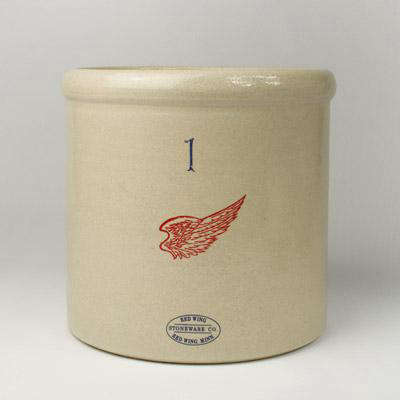
Some antiques whisper. A Red Wing stoneware crock tends to clear its throat, plant itself on the table, and say, “I hauled butter, brine, flour, or pickles before your refrigerator even existed.” That is part of the appeal. These crocks are practical, sturdy, unapologetically Midwestern, and somehow still stylish enough to make modern collectors lose all self-control at flea markets.
If you have ever spotted a cream-colored crock with a cobalt birch leaf or the famous red wing logo and thought, Is this the real deal?, you are in excellent company. Red Wing crocks sit at the crossroads of American pottery history, farm life, folk art, and collecting culture. They are useful objects, yes, but they are also little time capsules baked in clay.
This guide breaks down what makes a Red Wing stoneware crock special, how to identify one, what collectors look for, and why these hefty jars still have a devoted fan club more than a century later.
What Is a Red Wing Stoneware Crock?
A Red Wing stoneware crock is a utilitarian pottery vessel made in Red Wing, Minnesota, by one of several related pottery companies that helped turn the town into a major American stoneware center. In plain English, it is the kind of container your great-grandparents might have trusted with pickles, lard, preserves, flour, sauerkraut, butter, or drinking water.
The word crock usually refers to a cylindrical stoneware jar with straight or slightly rounded sides. Red Wing made crocks in many sizes, from small household examples to large storage pieces that look ready to hold enough pickles to survive a long winter and a family reunion.
Collectors usually use “Red Wing crock” as a catchall phrase, but the history is a bit more layered. Early wares came from companies such as Minnesota Pottery, Red Wing Stoneware Company, and Minnesota Stoneware Company before later consolidation under the Red Wing Union Stoneware Company. That means not every authentic piece literally says “Red Wing” in the way modern shoppers expect. The family tree is a little messy, which, frankly, is half the fun.
The History Behind the Crock
Red Wing’s clay story begins in the 19th century, when the area’s natural clay deposits and river access made it an ideal place for manufacturing. By the late 1800s, Red Wing had become one of the country’s biggest stoneware-producing centers. The town did not just make a few crocks here and there. It made a serious volume of useful pottery for homes, farms, and businesses across the region.
The salt-glaze years
The earliest Red Wing stoneware is closely associated with salt glaze. These pieces are often tan on the outside, glossy from the firing process, and decorated by hand with cobalt blue designs such as leaves, butterflies, flowers, or other folk-art style motifs. Many also have a brown Albany slip glaze on the interior. They can feel rugged, earthy, and slightly unpredictable in the best possible way.
One detail collectors never get tired of repeating is that many early Red Wing salt-glaze pieces were not clearly signed. In other words, you can have a genuine old Red Wing crock that does not shout its identity from across the room. That makes shape, clay color, decoration style, and glaze characteristics especially important.
The zinc-glaze transition
In the mid-1890s, Red Wing and Minnesota stoneware producers began shifting toward white or cream-colored zinc glaze. This cleaner look appealed to buyers and also worked well with stamped decoration and advertising. By around 1900, the white-glaze style had largely taken over.
This is where many collectors meet the classic Red Wing look: cream-colored crock, capacity number, and a stamped decoration such as birch leaves or, later, the famous red wing emblem. If the salt-glaze years were the rough-hewn folk band, the zinc-glaze era was the polished headliner.
The big merger and the wing mark
In 1906, several Red Wing stoneware interests merged under the Red Wing Union Stoneware Company. A few years later, around 1909, the birch leaf decoration gave way to the iconic red wing stamp that most people now associate with Red Wing stoneware.
That wing mark became the visual shorthand for the brand. It also helped turn a practical household object into something instantly recognizable. For collectors, the wing is not just a logo. It is a flashing neon sign that says, “Yes, you are now emotionally attached to a crock.”
How to Identify a Red Wing Stoneware Crock
Identification is where beginners either become collectors or develop a suspicious habit of turning every old jar upside down in antique malls. Here is what to look for.
1. The glaze
Early Red Wing crocks often have tan salt glaze outside with brown Albany slip inside. Later pieces usually have a cream or white zinc glaze. The surface alone can tell you a lot about which production period you are looking at.
2. The decoration
Common Red Wing visual cues include cobalt birch leaves, elephant ear leaves, capacity numbers, ovals, and the later red wing emblem. Hand-drawn cobalt decoration generally points to earlier salt-glaze production, while stamped motifs are more common on later zinc-glaze wares.
3. Marks and ovals
Some crocks carry impressed names, stamped ovals, or identifying marks. Others do not. One term advanced collectors watch for is the Ski Oval, an early oval form found on some Red Wing stoneware. Even among authentic pieces, markings vary a lot depending on date, factory, and form.
4. Size and form
Red Wing made crocks in many sizes, from small pantry pieces to large storage jars of 20 gallons or more. Pay attention to the profile, shoulder shape, rim, handles, and proportion. Collectors learn quickly that shape can be just as telling as a logo.
5. Decoration quality
Sharp decoration matters. A bold leaf, a well-placed wing, or clean advertising stamp can make a piece more desirable than a similar example with weak or blurry decoration. In collecting, details are not details. They are the whole plot.
Why Red Wing Crocks Are So Collectible
Red Wing crocks are loved for more than nostalgia. They sit in a sweet spot where useful design, regional history, and decorative appeal all overlap.
They represent American everyday life
Before plastic bins and stainless-steel everything, stoneware crocks were kitchen workhorses. They held food, water, dairy products, and household staples. Collecting them is a way of holding onto a chapter of ordinary American domestic history that would otherwise be easy to overlook.
They are visually strong
A Red Wing crock has presence. Even a simple undecorated example has weight, texture, and shape. Add cobalt leaves or a crisp red wing, and suddenly it becomes both storage vessel and folk sculpture.
They come in endless variations
Collectors love categories, and Red Wing provides enough subcategories to keep people cheerfully occupied for decades. There are salt-glaze crocks, birch leaf crocks, wing crocks, advertising crocks, water coolers, churns, butter jars, pantry jars, and transition pieces. Once you start learning the differences, you stop seeing “just a crock.” You start seeing eras, factories, and rarity clues.
They still surface in the wild
Unlike ultra-rare museum-only objects, Red Wing stoneware can still be found at estate sales, auctions, antique shops, and family basements. That keeps the hunt alive. It also explains why so many collectors have a story that begins with, “I was not planning to buy a crock that day, but…”
What Affects Value?
If you are hoping for one easy price chart, I regret to inform you that crocks do not believe in simplicity. Value depends on a handful of factors working together.
Condition
This is the big one. Chips, cracks, hairlines, stains, repairs, and replaced parts all affect price. A Red Wing water cooler with the correct original lid and spigot can be dramatically more valuable than the same piece without them. Lids alone can bring surprising money, which is a sentence that sounds ridiculous until you start researching antique stoneware.
Rarity
Not all Red Wing crocks are created equal. Common sizes with plain decoration may be affordable entry pieces. Rare forms, unusual motifs, early front-stamped examples, strong advertising, and scarce variants can climb far higher. Auction results show that special pieces can move from “nice antique” territory into serious collector money.
Decoration
In general, collectors pay more for stronger decoration. Large animals, unusual motifs, merchant names, and beautifully executed leaves often outperform plain utilitarian ware. That does not mean simple crocks are uninteresting. It just means the market tends to reward the pieces that combine function with visual drama.
Size
Bigger can be better, especially when decoration is strong. Larger crocks required more clay, more kiln space, and more labor, which helps explain why size often influences value. That said, small rare forms can also punch above their weight.
Advertising
Advertising stoneware is a favorite corner of the Red Wing world. A crock stamped with a merchant name or town can become desirable for several kinds of collectors at once: Red Wing collectors, advertising collectors, local history buffs, and regional buyers. That overlap can be powerful.
Red Flags and Reproduction Worries
Because Red Wing is popular, buyers should be cautious. Reproductions, hobby pieces, altered examples, and misidentified wares do exist. The safest rule is to slow down and look carefully.
Be skeptical of marks that seem too perfect, decoration that looks wrong for the form, or “rare” pieces with suspiciously fresh surfaces. A good seller should be comfortable discussing condition honestly and providing detailed photos of the base, rim, interior, handles, and decoration.
If you are new to collecting, compare pieces to museum references, collector-society image galleries, and reputable auction archives. Nothing sharpens your eye faster than seeing a lot of real examples. Also, never underestimate the value of boring questions. “Has this been repaired?” may save you from a very expensive lesson.
How to Display and Care for a Red Wing Crock
Good news: Red Wing crocks are tougher than many antiques. Bad news: they are still antiques, and gravity remains undefeated.
Display them on stable surfaces that can handle the weight. Keep them away from places where they can be bumped, rocked, or used as an accidental side table for a houseplant the size of a small tree. If you clean one, use mild methods and avoid anything harsh enough to damage the glaze or erase old surface character.
Collectors are often divided on whether to leave a piece exactly as found or clean it gently for display. A little honest wear is part of the charm. A crock that has lived a real life should not be polished into looking like it just graduated from pottery school yesterday.
Why the Red Wing Stoneware Crock Still Matters
The beauty of a Red Wing crock is that it was never trying to be trendy. It was built to be useful. That is exactly why it continues to feel relevant. In a world full of fast-made décor, a stoneware crock made to survive decades of daily use feels refreshingly serious.
Collectors admire the craftsmanship. Designers love the texture and shape. Historians value the industrial and regional story. Families treasure the ones handed down from grandparents who once used them for pickles, flour, or water. A Red Wing crock is not just a container from the past. It is evidence that practical objects can age into art without even trying.
And perhaps that is the real magic. A crock begins its life as a workhorse and ends up as a conversation piece. Not bad for a jar that used to spend its time minding sauerkraut.
Experiences Collectors and Owners Often Share
Spend enough time around Red Wing stoneware crock owners and you notice something funny: almost nobody talks about them like cold collectibles. They talk about them like characters. One person remembers the exact day they found a birch leaf crock under a table at a county auction, half hidden behind rusty tools and a box of old hinges. Another remembers opening a grandparent’s basement and spotting a cream-colored crock in the corner like a patient old family friend waiting to be noticed again.
That emotional pull makes sense. A Red Wing crock has heft, and not just physical heft. It feels connected to hands, kitchens, porches, farms, stores, and habits that no longer dominate everyday life. People often describe the first time they lift one as a surprise. Photos never prepare you for the weight. You do not casually scoop up a ten-gallon crock with one hand while texting. A crock demands your full attention, which is probably good for the soul.
Collectors also talk about the sound. Set a good old crock carefully on a wood table and it gives off a deep, solid note that modern mass-produced décor simply cannot fake. It sounds dependable. It sounds like it has paid taxes. That may be odd wording for pottery, but Red Wing fans tend to understand immediately.
There is also the thrill of learning to spot the details. At first, every old crock looks more or less like every other old crock. Then suddenly your brain starts noticing glaze differences, shoulder shapes, leaf styles, wing sizes, lug handles, ovals, and the little quirks that separate “nice old jar” from “now wait a minute, this one is interesting.” That moment is dangerous. It is how shelf space disappears.
Some owners actually use their Red Wing crocks in modern homes, though usually with common-sense caution. They hold wooden spoons, umbrellas, dried branches, or rolled blankets. Others keep them empty because the crock itself is the point. It does not need help from decorative filler. A strong Red Wing piece can sit in a room all by itself and still manage to look intentional, grounded, and quietly impressive.
Another common experience is the gradual shift from buying one example to developing a “type.” Maybe you begin with a simple wing crock and then realize you are drawn to advertising pieces. Maybe you fall for salt glaze and spend the next five years squinting at cobalt leaves in every antique shop from Minnesota to Missouri. Maybe you become the person who gets far too excited about original lids. There are worse hobbies.
Family stories add another layer. Many Red Wing crocks survive because someone in the family decided not to throw them out when kitchens modernized. Years later, descendants discover that the plain old crock in the garage is not just old storage. It is a surviving piece of regional craftsmanship. Even when a family piece is not rare, it often becomes priceless in the personal sense. It held food, memories, routine, and the practical rhythm of life.
That is why people stay attached to these objects. A Red Wing stoneware crock is sturdy, useful, and collectible, but it is also emotionally legible. It tells a story without needing a speech. You look at one and understand, almost immediately, that it was made to serve. The fact that it can now serve as history, art, and conversation all at once is just a very satisfying bonus.
Conclusion
The Red Wing stoneware crock earned its reputation the old-fashioned way: by being useful, durable, and well made. Over time, those same qualities turned it into a collectible with real depth. Whether you love the early salt-glaze examples, the crisp zinc-glaze birch leaf pieces, or the famous wing-marked crocks, the appeal is easy to understand. Red Wing crocks carry history in their clay and personality in their decoration.
For beginners, they offer a welcoming entry into American stoneware. For seasoned collectors, they offer endless variations, research paths, and the occasional heart-racing auction moment. For everyone else, they prove that even a storage jar can become a cultural icon if it is made with enough skill and survives long enough to tell the tale.