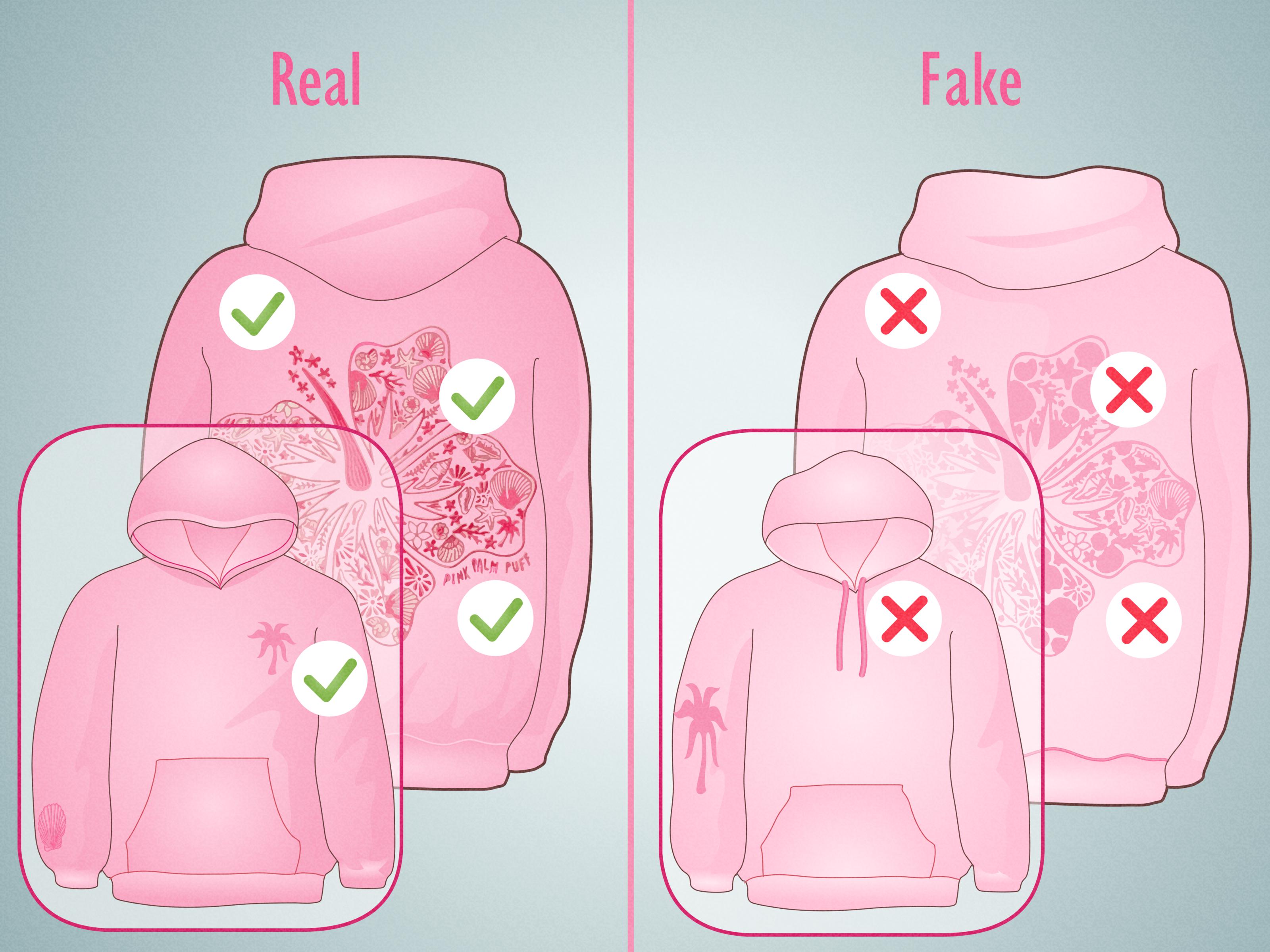
If you have been eyeing a Pink Palm hoodie and wondering whether the listing in front of you is the real thing or a glorified cotton crime scene, you are not alone. Viral hoodies attract copycats the way fries attract seagulls. The more recognizable the color palette, embroidery, puff print, and packaging become, the more likely it is that counterfeit sellers will try to imitate the look without matching the quality.
For this guide, “Pink Palm hoodie” refers to the current Pink Palm Puff hoodie line. That distinction matters because the fastest way to get burned is to shop based on a nickname while counterfeit sellers hide behind vague wording, reposted photos, and sketchy “boutique” websites. The good news is that fake hoodies almost always tell on themselves. Sometimes it is the price. Sometimes it is the stitching. Sometimes it is the tag. And sometimes it is the whole listing screaming, “Please ignore my blurry logo and trust me anyway.”
This article walks through the differences between a real and fake Pink Palm hoodie in plain English, with practical checks you can use before buying and after delivery. If you want the short version, here it is: start with where it is being sold, then inspect the fabric, graphic details, tags, packaging, and construction. Authentic hoodies tend to feel deliberate. Fake ones tend to feel like they were made in a rush by someone who had seen the original for four seconds on a social media ad.
Why Pink Palm Hoodies Get Faked So Often
Popular fashion pieces get copied because hype creates demand, and demand creates opportunity for bad actors. A trendy hoodie is especially easy to imitate at a distance. In a thumbnail image, a fake can look convincing enough to get a click. Up close, though, the shortcuts start showing: off-color fabric, messy embroidery, wrong proportions, thin fleece, stiff printing, odd labels, missing details, or packaging that feels like an afterthought.
Pink Palm hoodies are especially vulnerable to imitation because they are giftable, collectible, and heavily shared online. That combination is counterfeit catnip. Buyers want quick access to sold-out colors and popular drops, so they turn to resale marketplaces, social ads, and unfamiliar websites. That is exactly where many fakes circulate. When emotion enters the chat, logic sometimes leaves the room. One minute you are “just browsing,” and the next minute you are convincing yourself that a brand-new hoodie at a wild discount is a blessing from the universe. Usually, it is not.
Start Here: The Seller Is the First Authenticity Test
The easiest way to avoid a fake Pink Palm hoodie is to buy from the official source. That sounds obvious, but it matters more than people think. If a brand says it has one authorized seller, that should immediately change how you judge every other listing. A hoodie sold through a lookalike website, random marketplace storefront, or social ad should be treated with extra caution from the very beginning.
Fake sellers often rely on urgency tactics. They use countdown timers, “warehouse clearance” language, dramatic markdowns, and suspiciously perfect reviews. They may also copy real product photos, mimic the real brand name in the URL, or use ads that appear polished enough to lower your guard. If the website name looks almost right but not quite right, that is not a cute typo. That is your cue to back away slowly.
Here is a useful rule: if the hoodie is allegedly brand new, currently trending, and somehow selling for a bargain-bin price, assume the burden of proof is on the seller. Real fashion brands do not normally turn premium hoodies into mystery meat. If the deal feels too good to be true, it usually is wearing a fake logo.
What a Real Pink Palm Hoodie Usually Looks Like
A real Pink Palm hoodie should make sense as a complete product. That means the fabric, color, graphics, label information, finishing, and packaging should feel consistent with one another. Authentic pieces are not just about one good-looking chest logo. They are about a whole chain of details lining up.
Current official Pink Palm Puff hoodies show a few patterns worth knowing. The hoodie line is presented as oversized or relaxed, with sizing guidance that tells shoppers to size up for an oversized fit. Official listings also describe the hoodies using cotton-poly blends and emphasize decorative elements such as embroidery or signature puff-print graphics, depending on the design. Product naming is also consistent and specific, not generic. In other words, a real listing tends to look like it belongs to a coordinated product catalog, not like somebody invented a product name in a hurry between shipping labels.
Packaging also matters. A premium hoodie brand that talks up a branded unboxing experience is setting an expectation. That does not mean missing packaging automatically proves a hoodie is fake, especially in resale. Boxes get tossed. Dust bags go missing. Gift packaging gets separated from the garment. But if a seller claims the hoodie is brand new and includes everything, the packaging should feel premium, intentional, and visually aligned with the brand rather than flimsy, generic, or oddly printed.
How to Check a Pink Palm Hoodie Like a Pro
1) Feel the Fabric First
Counterfeiters can get close on color, but fabric is where many fakes fall apart. A real Pink Palm hoodie should feel substantial, soft, and comfortable rather than rough, papery, or strangely slippery. If the hoodie feels thin for the price category, that is a warning sign. If the fleece interior feels cheap, sparse, or uneven, that is another one.
Pay attention to how the fabric hangs. Real premium hoodies usually drape in a clean, intentional way. Fake ones can look flat, stiff, or oddly limp. If you have handled enough sweatshirts, your hands will often notice what your eyes miss. Trust that instinct. A hoodie should not feel like it was made out of disappointment.
2) Inspect the Embroidery, Puff Print, or Graphic Work
This is one of the biggest giveaways. If the hoodie uses embroidery, the stitching should look clean, dense, and symmetrical. Letters and shapes should feel intentional, not shaky or inconsistent. Loose threads, uneven spacing, or awkward outlines are classic counterfeit clues. If the design uses puff print, the raised print should appear crisp and well-placed instead of thick in some spots and flat in others.
Look closely at alignment. Is the palm graphic centered where it should be? Are the words balanced? Does the design sit cleanly on the hoodie without drifting too high, too low, or too far to one side? Authentic brands are fussy about placement. Counterfeiters are often fussy about making the listing go live by lunchtime.
Also inspect the edges of the graphic. Clean edges suggest careful production. Ragged edges, cracking, bubbling, or a plasticky finish are signs of lower-quality printing. If the graphic looks cheap up close, it probably is.
3) Check the Neck Tag and Interior Labels
Tags matter because they combine several things counterfeiters often mess up at once: font, spacing, material, sizing language, country-of-origin details, and construction. A real garment label should feel deliberate and legible. The text should be clear, evenly spaced, and properly aligned. A fake tag often looks slightly off rather than dramatically wrong. The font may be too bold, too thin, too crowded, too faded, or just weirdly printed.
Then move to the care tag. On apparel sold legally in the United States, textile labels should include key information such as fiber content, country of origin, and the identity of the manufacturer or responsible company. If any of that information is missing, strangely formatted, misspelled, or laughably vague, that is a problem. A cheap fake may also use flimsy tag material, sloppy printing, or tags sewn in crooked.
Be careful with QR codes and barcodes. Some buyers assume that if a code exists, the hoodie must be authentic. Not so fast. Counterfeiters can print codes too. A code is only helpful when it appears in the right context, on the right tag material, with the right typography, and alongside other details that make sense.
4) Study the Stitching and Construction
One crooked seam does not always equal counterfeit, but widespread sloppiness should absolutely raise your eyebrows. Check the shoulder seams, side seams, cuffs, hem, hood, and pocket attachment. A real hoodie should have neat, even stitching with consistent tension. Threads should not be skipping, bunching, or wandering off on independent adventures.
The pocket is especially useful. On fake hoodies, kangaroo pockets are sometimes uneven, poorly aligned, or attached with visibly inconsistent stitching. The cuffs and hem can also tell a story. If the ribbing feels cheap, twists easily, or stretches out instantly, the garment may not be authentic.
Look inside the hoodie too. Quality brands usually care about internal finishing because they expect customers to notice the feel of the garment over time. A counterfeit piece may look passable from the front but reveal messy construction the second you turn it inside out.
5) Compare the Color to Official Photos
Color names can sound dreamy online, but actual colors should still be reasonably consistent with official product images. If the hoodie you receive is noticeably duller, harsher, or just plain different, that is a red flag. Some variation from lighting is normal. “This is not remotely the same shade” is not.
Watch for fake listings that use official photos but deliver a hoodie with the wrong tone entirely. Pink can become salmon, blush can turn neon, and soft neutrals can arrive looking like they lost an argument with a highlighter.
6) Don’t Ignore the Packaging
Packaging should support the story, not fight it. If a seller says the hoodie is new with packaging, check whether the box, dust bag, insert cards, and folded presentation feel consistent with a premium brand experience. Poor print quality, wrong logos, odd colors, or thin materials can all be signs that the packaging is fake, too.
That said, use packaging as a supporting clue, not the entire case. Real packaging can go missing in resale. Fake packaging can sometimes be surprisingly convincing. The best approach is to let packaging confirm what the hoodie itself is already telling you.
Real vs Fake Pink Palm Hoodie: Quick Comparison
| Checkpoint | Real Pink Palm Hoodie | Fake Pink Palm Hoodie |
|---|---|---|
| Seller | Official site or a well-documented resale source | Random store, suspicious social ad, lookalike domain, vague marketplace seller |
| Price | Consistent with premium hoodie pricing | Huge markdowns with urgency tactics and “today only” drama |
| Fabric | Soft, substantial, comfortable, premium feel | Thin, rough, stiff, scratchy, or oddly synthetic feel |
| Graphics | Clean embroidery or puff print, balanced placement | Messy stitching, uneven print, awkward spacing, off-center design |
| Tags | Clear fonts, proper alignment, complete label information | Misspellings, flimsy tags, vague info, odd fonts, crooked sewing |
| Construction | Even seams, tidy pocket attachment, solid ribbing | Loose threads, uneven seams, puckering, cheap cuffs and hem |
| Packaging | Premium, intentional, brand-consistent when included | Generic, flimsy, blurry, mismatched, or missing despite “new with full packaging” claims |
Seller Red Flags That Should Make You Pause
Sometimes you do not even need the hoodie in hand to spot a problem. A suspicious listing can reveal plenty before checkout. Watch for stolen product photos, no close-ups of tags or stitching, inconsistent product names, generic descriptions, broken English that does not match the rest of the brand voice, weird domain names, and return policies that are hard to find or impossible to understand.
Also look at payment methods. A reputable seller should not pressure you into wire transfers, cryptocurrency, gift cards, or off-platform payment. If someone says, “Message me and I’ll give you a better deal if you pay directly,” that is not a deal. That is a trap wearing sweatpants.
Shipping can expose a fake too. If a site pretends to be U.S.-based but the tracking data shows unexpected overseas shipping and vague transit updates, take that seriously. That pattern shows up again and again with counterfeit operations.
What to Ask for Before Buying Secondhand
If you are buying resale, ask for detailed photos instead of relying on glamour shots. Request close-ups of the front design, neck tag, care label, cuffs, pocket stitching, inside fleece, packaging, and any proof of purchase. A legitimate seller with a real hoodie is usually able to provide clear photos without acting like you have requested their tax returns.
Ask direct questions too. Was it bought from the official site? Is the original order confirmation available? Has it been washed? Is the box or dust bag included? Are there any flaws? Sellers who dodge simple questions are often telling you more than they realize.
If the platform offers authentication, use it. If the platform attaches an authenticity tag or digital record after inspection, do not remove that tag until you have thoroughly checked the hoodie yourself.
What to Do If You Already Bought One
If the hoodie has already arrived and you suspect it is fake, document everything immediately. Photograph the full garment, tags, graphics, seams, packaging, shipping label, and listing screenshots. Compare the hoodie against current official product photos and descriptions. Save receipts, emails, tracking records, and any messages with the seller.
Then act fast. If you paid by credit card, use the protections available to dispute a charge if the item is not as described. If you bought through a marketplace, open a claim through the platform before the return window closes. If the website itself seems fraudulent, report it through the appropriate consumer channels. Delay is a counterfeit seller’s best friend.
Shopping Experiences That Teach the Difference
A very common experience starts with excitement and ends with side-by-side comparison photos on a kitchen table. Someone sees a Pink Palm hoodie in a social ad at a dramatic discount and tells themselves it is probably from “last season” or a “private clearance.” The photos look polished. The comments look positive. The checkout page looks almost normal. When the hoodie arrives, though, the fabric feels lighter than expected, the tag looks oddly cheap, and the embroidery has that slightly off-center look that your eye cannot stop noticing. The buyer may not know every technical detail of authentication, but they know the hoodie does not feel premium. That gut reaction is often right.
Another experience happens in resale, where the fake is a little smarter. The seller uses real product photos for the main listing and mixes in just enough personal photos to appear legitimate. The hoodie comes folded nicely, maybe even inside packaging that looks convincing from across the room. But once the buyer checks the care label, the print quality is weak, the text spacing is inconsistent, and the country-of-origin details look clumsy. Then they inspect the pocket and find the stitching is uneven on one side. That is the thing about many fakes: they can pass the first glance test and still lose badly on the second glance test.
There is also the well-meaning gift scenario. A parent, sibling, partner, or friend buys a “Pink Palm hoodie” from a marketplace because the real item was sold out or hard to find. The gift is opened, everybody smiles, and then the hoodie starts raising tiny questions. Why does the color look flatter than the one online? Why does the inside fleece feel thin? Why does the print seem heavier and shinier than it should? Nobody wants to be the person who says, “I think this beautiful gift might be a counterfeit,” but these situations happen all the time. A calm inspection helps. Instead of guessing, compare the garment’s details one by one: fabric, label, stitching, graphic placement, packaging, and seller information.
Some buyers also discover the difference only after wearing the hoodie a few times. The fake one pills fast, shrinks oddly, twists after washing, or loses shape in the cuffs and hem. The graphic may crack early or the embroidery may start loosening. That long-term wear test matters because authentic premium hoodies are usually built to hold up better over time. A counterfeit often spends all its energy trying to survive the listing photo and none trying to survive laundry day.
One of the best lessons from all these experiences is that authenticity is rarely about one magic clue. It is the total pattern that matters. A real Pink Palm hoodie should feel coherent. The seller makes sense. The price makes sense. The fabric makes sense. The label makes sense. The design placement makes sense. When several details feel off at once, they usually are. The smartest buyers are not the ones who memorize every stitch count on earth. They are the ones who slow down, compare carefully, ask for proof, and refuse to let hype overrule common sense.
Final Verdict
If you want to tell whether a Pink Palm hoodie is real or fake, start with the source and then let the details build the case. Authentic pieces usually come from a trustworthy sales path and show consistent quality in the fabric, graphics, tags, stitching, and presentation. Fake ones often rely on urgency, low prices, copied photos, sloppy labels, and construction that falls apart under basic inspection.
The best strategy is simple: buy carefully, ask questions, compare details, and do not let a pretty product photo do all the talking. A real hoodie should hold up to scrutiny. A fake one usually starts sweating the second you zoom in.