Online reviews were invented to help us choose hotels, restaurants, electronics, and perhaps a plumber who will not arrive three days late carrying one mysterious wrench. Then one comedy writer looked at the entire concept and asked a much more important question: What rating should we give a barnacle?
That gloriously unnecessary question sits at the heart of a collection of 26 spot-on reviews from Charlie, the creator behind “Welcome to My Meme Page.” Instead of evaluating ordinary consumer products, the reviews judge babies, ducks, shrimp, octopuses, trees, computers, dirt, ghosts, and other subjects that have somehow survived for centuries without a verified star rating.
The result is a strange blend of mock expertise, aggressive personification, philosophical nonsense, and observations that are just accurate enough to feel suspiciously wise. These funny reviews do not merely describe their subjects. They put nature and everyday life on trial, then hand down verdicts with the confidence of a customer who has demanded to speak with the manager of the ocean.
What Makes These 26 Spot-On Reviews So Funny?
The basic format is instantly recognizable. Each subject receives an introduction, a list of strengths and weaknesses, and a final score. Visually and structurally, it resembles the kind of review someone might leave after buying a vacuum cleaner. The difference is that the “product” may be a crocodile, a celestial object, or the general concept of art.
A Familiar Format Applied to Completely Unreviewable Things
Reviews usually promise useful information. Readers expect comments about durability, value, performance, and customer service. Charlie borrows that practical framework and applies it to things that neither requested feedback nor offer a return policy.
A tree cannot respond to complaints about its user interface. A hippo has no technical-support department. The sun is unlikely to issue store credit, although it may burn your receipt. That collision between a serious review format and an absurd subject creates the first layer of humor.
Confident Logic That Falls Apart Beautifully
The reviews often begin with a reasonable observation before taking a sharp turn into elaborate nonsense. Barnacles remain still and allow food to reach them, so the reviewer treats them as strategic masterminds. Ducks become suspicious creatures whose ordinary behavior is presented as evidence in a legal case. Octopuses are judged not by marine biology but by whether humanity should have chosen monkeys instead.
The reasoning is ridiculous, but it follows its own internal rules. That consistency matters. Random words alone rarely create a memorable joke. These reviews establish a bizarre argument, defend it with mock seriousness, and finish with a star rating that makes the entire investigation seem official.
Animals Receive Very Human Performance Reviews
Anthropomorphism is another major ingredient. The animals are assigned motives, personalities, work ethics, moral failures, and career potential. Shrimp are not simply small crustaceans; they are underperforming applicants whose determination cannot compensate for their questionable usefulness. Babies are tiny agents of chaos who display extraordinary bravery while consuming objects no responsible adult would consider food.
We recognize human behavior in these descriptions. The barnacle resembles someone who has perfected remote work. The duck has the confidence of a coworker who contributes little but walks through the office as though it owns the building. The computer is useful, powerful, and almost certainly plotting against us. The animals become funny mirrors for human habits.
The 26 Reviews and the Comedic Ideas Behind Them
The collection ranges from wildlife to household hardware, proving that anything can be reviewed when the critic possesses enough confidence and too much free time.
-
1. Babies
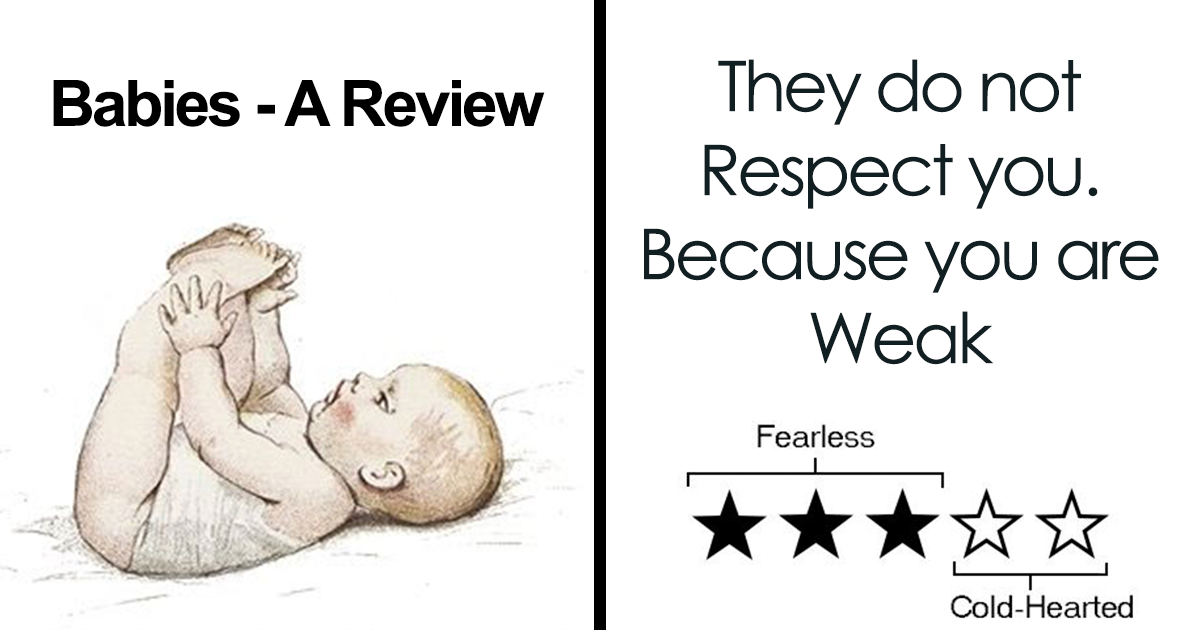
Babies are portrayed as fearless little creatures willing to eat lint, insects, metal, and other forbidden treasures. Their courage earns praise, but their cold-hearted treatment of exhausted adults costs them a perfect score.
-
2. Barnacles
Barnacles receive admiration for developing an unbeatable survival strategy: stay in one place and wait for dinner. The review transforms inactivity from a personal flaw into evidence of evolutionary brilliance.
-
3. Ducks
Ducks are evaluated with the hostility normally reserved for a bad landlord. Their odd diet, noisy behavior, and unearned confidence become evidence that these attractive birds may be getting by largely on charm.
-
4. Crocodiles
Crocodiles demonstrate why the format works so well. They look ancient, powerful, and permanently irritated, making them ideal candidates for a review that mixes fear, reluctant respect, and concern about customer safety.
-
5. Frogs
Frogs arrive with excellent comic equipment: enormous eyes, dramatic jumping, questionable moisture levels, and a tendency to sit silently as though they know who stole your package.
-
6. Scorpions
Scorpions appear designed by someone who kept adding dangerous features after the product was already finished. Claws were apparently insufficient, so a venomous tail was included for customers seeking the premium package.
-
7. Shrimp
The shrimp review praises perseverance but remains deeply unimpressed by the final product. The tiny crustacean is treated like a determined employee who attends every meeting yet never explains what its job actually is.
-
8. Slugs
Slugs are easy targets because they combine extreme slowness with an unsettling commitment to leaving evidence behind. They resemble snails that misplaced both their homes and their sense of urgency.
-
9. Trees
Trees receive a rare burst of sincere appreciation. They provide shade, shelter, materials, and scenery while asking for almost nothing. Compared with the rest of the reviewed population, trees are suspiciously competent.
-
10. The Sun
The sun performs several essential services, but its customer-relations policy needs work. It provides warmth and light while occasionally turning an innocent afternoon outside into a painful lesson about sunscreen.
-
11. Fish
Fish are reviewed as mysterious underwater residents whose abilities seem limited until one remembers that they breathe in water. Unfortunately, their refusal to blink makes every encounter feel like a performance evaluation.
-
12. Squid
Squid offer tentacles, ink, unusual movement, and the general appearance of an escaped science experiment. Any review must balance their impressive design against the suspicion that they are hiding classified information.
-
13. Horses
Horses are fast, elegant, powerful, and somehow frightened by objects that have remained completely still for years. Their review practically writes itself: magnificent transportation with highly unpredictable alarm settings.
-
14. Books
Books represent one of the collection’s departures from wildlife. They contain entire worlds but require readers to sit quietly and imagine everything themselves. Excellent value, although the battery life is suspiciously unlimited.
-
15. Camels
Camels seem purpose-built for difficult environments, yet they look permanently dissatisfied with the assignment. Their storage capacity is impressive, while their reputation for unpleasant interpersonal communication reduces customer confidence.
-
16. Ghosts
Ghosts are difficult to evaluate because they rarely appear during normal business hours. Their commitment to atmosphere is excellent, but their tendency to move furniture instead of communicating directly feels passive-aggressive.
-
17. Locusts
Locusts prove that teamwork is not always inspiring. Individually, they are ordinary insects. Collectively, they become an airborne buffet-removal service that nobody ordered and everyone would like to cancel.
-
18. Hippopotamuses
Hippos combine a rounded, almost friendly appearance with the temperament of a wrecking ball that has developed personal grievances. Their branding department deserves five stars; approaching the actual product is not recommended.
-
19. Houseflies
Houseflies ignore boundaries, reject hygiene, and repeatedly inspect windows without learning how glass works. Their persistence is undeniable, but persistence becomes less admirable when it occurs directly above someone’s lunch.
-
20. Octopuses
Octopuses are intelligent, flexible, excellent at escaping, and equipped with more arms than any creature reasonably needs. The review acknowledges their talents while wondering whether a monkey might have been a less suspicious choice.
-
21. Rats
Rats carry centuries of bad publicity despite being clever, social, and surprisingly capable pets. The joke gains extra energy because readers often rush to defend them, effectively turning the comments into a rat public-relations campaign.
-
22. Computers
Computers receive praise for expanding human knowledge while simultaneously trapping people in glowing boxes. The final argument in their favor is wonderfully practical: whatever their dangers, they do provide Microsoft Excel.
-
23. Dirt
Dirt is everywhere, supports plant life, and remains completely underappreciated until someone tracks it across a clean floor. It may be essential to civilization, but its indoor behavior creates serious brand-management problems.
-
24. Alcohol
Alcohol has inspired celebrations, regrettable messages, terrible dancing, and confident speeches from people who should have remained seated. Any honest review must acknowledge both its popularity and its catastrophic user-error rate.
-
25. Light Switch Covers
Light switch covers perform a humble task so reliably that most people forget they exist. Reviewing them at length elevates an invisible household object into a heroic guardian of walls, wiring, and fingerprints.
-
26. Art
Art closes the collection with a subject that can be beautiful, confusing, moving, expensive, or apparently created when someone dropped a bucket. It is nearly impossible to rate, which naturally makes rating it irresistible.
Why Readers Keep Sharing Funny Animal Reviews
The Jokes Are Easy to Understand but Difficult to Predict
Readers do not need specialist knowledge to enjoy the premise. Everyone has encountered a duck, seen a tree, used a computer, or been personally betrayed by a housefly. The subject is familiar, while the interpretation is unexpected.
That combination makes the jokes highly shareable. A complicated setup would slow the reader down. Here, the title provides nearly everything required: this is a review of shrimp. The reader immediately understands the rules and can concentrate on discovering how dramatically the author will misuse them.
The Star Ratings Deliver a Clean Punchline
The rating at the bottom of each review functions like a final verdict. After several paragraphs of exaggerated reasoning, the stars compress the joke into a simple visual conclusion.
A perfect score for barnacles feels absurd yet strangely defensible. A harsh rating for shrimp feels comically personal. The stars also invite disagreement, which encourages readers to create counterarguments. Suddenly, people are debating whether rats deserve better or whether the sun should regain a point for providing warmth.
The Format Lets the Audience Continue the Joke
A strong meme format does not end with its creator. It gives readers a structure they can imitate. After reading several of these reviews, almost any object begins to look rateable.
A refrigerator might receive four stars for food preservation but lose one for making alarming noises at 2 a.m. Socks could earn points for warmth and lose everything for disappearing in the dryer. A printer would receive no stars, appeal the decision, jam during the appeal, and request magenta ink.
There Is More Craft Here Than the Nonsense Suggests
The casual appearance of these spot-on reviews hides careful comedic writing. Each one needs a recognizable premise, a distinct attitude, escalating observations, and a closing judgment. If every subject were merely described as strange, the concept would become repetitive after three posts.
Instead, the voice changes its argument while preserving its personality. Barnacles inspire admiration. Shrimp provoke disappointment. Trees receive respect. Computers trigger an existential warning followed by praise for spreadsheet software. The tone remains authoritative, but the emotional relationship with each subject changes.
The funniest lines are also specific. “Birds are weird” is an opinion. Treating a duck’s habits as evidence of professional incompetence is a comedic perspective. Specific details make absurd claims feel researched, even when the research department appears to consist of one person staring intensely at a picture of a slug.
Reader Experiences: What Happens After You Read All 26 Reviews
The first stage of reading the collection is simple amusement. A familiar animal appears, the review begins with exaggerated seriousness, and the logic gradually wanders into a field from which it has no intention of returning. The reader laughs, scrolls, and expects the next entry to follow the same route.
Then something interesting happens: the audience begins anticipating the game. Before opening the duck review, readers start inventing complaints about ducks. Before reaching computers, they have already prepared a personal list of grievances involving passwords, updates, and mysteriously missing files. The collection becomes interactive even without buttons or quizzes.
The Group-Chat Experience
These reviews are particularly suited to group chats because each person can claim a favorite and defend it. One reader may identify with the barnacle’s energy-saving lifestyle. Another may object to the unfair treatment of rats. Someone will inevitably announce that octopuses are brilliant and should receive every available star. A fourth participant will ignore the debate and post a photograph of their lunch.
The humor works across different tastes because it is playful rather than cruel. The animals are not being seriously condemned. The insults are aimed at exaggerated fictional personalities, and the review voice is too obviously irrational to be mistaken for scientific judgment.
The Everyday-Life Experience
After enough entries, readers may start mentally reviewing their surroundings. The coffee mug receives five stars for loyalty but loses one for failing to refill itself. The office chair offers acceptable support but squeaks like it is reporting every movement to management. The family cat earns points for appearance and deducts them independently whenever anyone interrupts its nap.
This is one reason the concept remains enjoyable beyond the original posts. It provides a miniature creative exercise. Choose something ordinary, identify its most recognizable qualities, pretend those qualities are intentional design decisions, and judge the subject with unreasonable confidence.
Trying to Write a Review Yourself
Writing one reveals why the originals are more skillful than they initially appear. The easiest attempt usually relies on obvious jokes. A toaster makes toast. A dog barks. A chair is useful for sitting. Those observations need a sharper angle before they become funny.
Suppose the subject is an umbrella. Instead of saying it keeps people dry, imagine it as an unreliable portable roof that reverses direction during emergencies. Praise its ambition, question its structural courage, and deduct two stars because it requires one hand at precisely the moment the user is carrying six grocery bags.
The best mock reviews uncover a contradiction. Horses are powerful but easily startled. Babies appear helpless yet fearlessly investigate dangerous objects. Computers connect humanity while persuading millions of people to spend their days staring into rectangles. A contradiction gives the review somewhere to go.
A Welcome Break From Serious Reviews
Real online reviews can influence purchases, reputations, and livelihoods. That practical importance makes the parody even more satisfying. For a few minutes, the familiar language of ratings and recommendations is freed from responsibility. Nobody will cancel a vacation because a camel received three stars. No barnacle restaurant will lose reservations after a harsh complaint.
The collection turns evaluation into pure play. It invites readers to notice details, invent motives, exaggerate flaws, and participate in a shared joke. By the final review, the world feels temporarily different. Everything has features. Everything has defects. Everything is awaiting judgment from an unqualified critic holding an imaginary clipboard.
Final Verdict on the 26 Spot-On Reviews
Charlie’s reviews succeed because they combine an instantly understandable structure with a distinctive comic voice. They take things we barely notice and examine them with absurd intensity. Babies become warriors. Barnacles become strategic geniuses. Shrimp become disappointing employees. Computers become ominous machines saved by spreadsheet software.
The collection also demonstrates a useful truth about internet humor: an idea does not need to be complicated to be clever. It needs a clear pattern, surprising details, and enough personality to make people want another example.
These 26 funny reviews accomplish all three. They are concise enough to enjoy during a quick break, layered enough to reward a second reading, and open-ended enough to make readers continue the game long after reaching the final star rating.
As for the collection itself? Five stars for originality, observation, and commitment to reviewing subjects that cannot file a complaint.