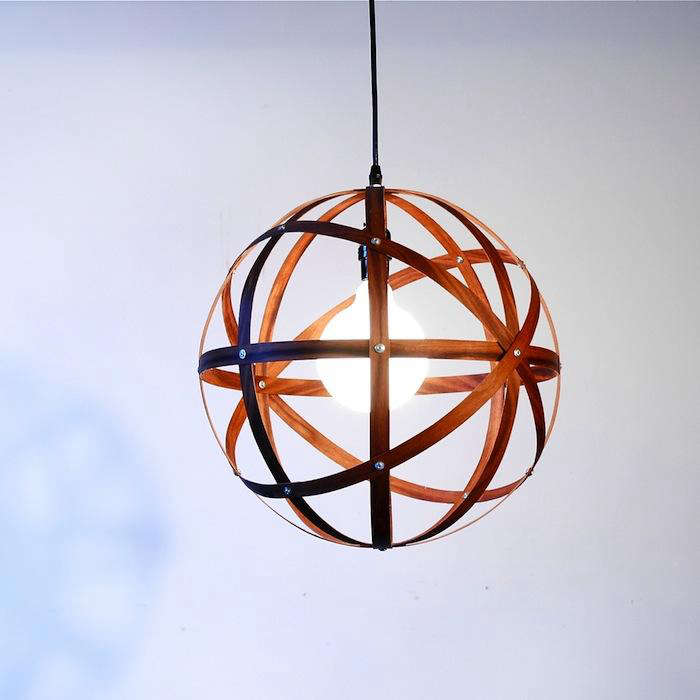
Some pendant lights merely hang from the ceiling. The Meridian Pendant from Propellor Design seems to orbit there. It has the calm confidence of a well-drawn circle, the warmth of natural wood, and just enough sculptural drama to make guests pause mid-sentence and say, “Wait, what is that?” Which, in the world of interior design, is basically applause.
Originally spotlighted under the poetic title “Northern Light,” the Meridian Pendant is a modern wood pendant light created by Vancouver-based Propellor, a studio known for sculptural luminaires and handcrafted lighting. Its design is simple at first glance: curved strips of wood form a spherical, open structure around a central light source. But the longer you look, the more it behaves like a tiny architectural planet. The strips suggest meridian lines, orbital paths, electron movement, and the invisible geometry that makes maps, globes, and good lighting feel surprisingly civilized.
This article explores why the Meridian Pendant still feels fresh, how it works in real interiors, what makes its materials special, and how homeowners, designers, and lighting lovers can use it without turning their dining room into a planetariumunless, of course, that is the goal. No judgment. Planetariums have excellent ambiance.
What Is the Meridian Pendant?
The Meridian Pendant is a round, sculptural pendant light from Propellor Design, also presented today through Propellor Studio’s lighting collection. It is crafted from white birch or black walnut and finished by hand, giving it the tactile warmth that mass-produced metal or plastic fixtures often struggle to imitate. The fixture is available in multiple diameters, including 16, 24, 30, 36, and 42 inches, making it flexible enough for intimate residential corners and large architectural spaces.
Its most recognizable feature is its open globe-like form. Instead of hiding the light source inside a closed shade, the Meridian uses strips of wood to trace a rhythmic, spherical outline. The result is airy rather than bulky. It fills space without feeling heavy, which is a clever tricklike wearing a dramatic coat that somehow does not make you look like you are smuggling a sofa.
A Design Inspired by Motion
The Meridian Pendant’s name is not random. A meridian is a line used to measure position on a globe, and the fixture borrows that sense of mapped movement. The form suggests planets, electrons, orbits, and the quiet order behind natural systems. That scientific inspiration keeps the pendant from feeling merely decorative. It feels designed, not decorated. There is a difference.
Decorative objects often say, “Look at me.” Designed objects say, “Look how everything connects.” The Meridian belongs to the second group. It works because its visual idea, material choice, and lighting function support one another. The open wood ribs create shadow, the rounded profile softens the room, and the natural finish brings warmth to modern spaces that might otherwise feel a bit too cool, crisp, and emotionally unavailable.
Why the Meridian Pendant Still Feels Modern
Trends in lighting can age quickly. One year everyone wants exposed Edison bulbs; the next year those same bulbs are looking like they just opened a microbrewery in 2014. The Meridian Pendant has lasted because it does not depend on a short-lived design gimmick. It uses timeless ingredients: geometry, wood, craft, proportion, and warm light.
Modern interiors often balance two competing desires. People want clean lines, but they also want comfort. They want minimalism, but not the kind that makes a home feel like a very expensive waiting room. The Meridian Pendant helps bridge that gap. Its form is precise, but its material is organic. It feels contemporary without being cold.
Natural Wood in a Contemporary Shape
Wood pendant lighting has a special advantage: it brings texture and warmth to a room before the bulb is even switched on. White birch feels light, clean, and Scandinavian in spirit. Black walnut feels richer, moodier, and more grounded. Both versions allow the Meridian Pendant to adapt to different interior styles, from modern farmhouse and West Coast contemporary to minimalist apartments and boutique hospitality spaces.
The wood strips also create visual movement. Because the pendant is not a solid globe, your eye passes through it. That makes it excellent for rooms where a large pendant is needed but a heavy fixture would block sightlines. Over a dining table, it becomes a centerpiece. In a stairwell, a cluster of Meridians can create a cascading installation. In an entryway, a larger version can greet visitors with a soft “Welcome home” instead of a fluorescent “Please take a number.”
Materials, Finishes, and Custom Possibilities
One reason the Meridian Pendant stands out is its commitment to material honesty. Propellor’s official collection describes the Meridian as crafted in white birch or black walnut and finished with a low-VOC natural oil and wax finish. That matters because lighting is not just about how a fixture looks in a product photo. It is also about how it lives in your home year after year.
Good materials age gracefully. Wood develops character. Oil and wax finishes allow the surface to retain a natural sheen rather than looking sealed under a plastic-like coating. In a world full of disposable décor, the Meridian feels more like an object you choose deliberately and keep for a long time.
Painted Interiors and Metal Leaf Details
The Meridian Pendant can also be customized with painted interiors or exteriors, and certain versions feature metal leaf finishes such as gold, rose gold, copper, or silver leaf. These details change the emotional temperature of the fixture. A gold leaf interior creates a warm glow that feels luxurious without shouting. A painted interior can add a bold accent, such as orange, white, or a custom color matched to the room’s palette.
This flexibility is useful for designers. A birch Meridian with a white or pale interior can disappear gently into a calm, bright room. A blackened walnut version with gold leaf can become the jewelry of the space. And yes, lighting can be jewelry. It hangs, it sparkles, it changes the outfit. The ceiling deserves accessories too.
Where the Meridian Pendant Works Best
The Meridian Pendant is not limited to one room type. Its round form and multiple size options make it adaptable across residential and commercial interiors. Still, like any strong design element, it performs best when matched thoughtfully to scale, ceiling height, and function.
Over a Dining Table
The dining room is perhaps the most natural home for the Meridian. A round pendant above a dining table creates a clear focal point and gives the table a sense of occasion. The 24-inch or 30-inch sizes can work well above smaller tables, while the 36-inch or 42-inch versions may suit larger dining areas. The key is proportion. The pendant should feel generous but not so large that diners begin calculating escape routes.
As a general design guideline, pendants over dining tables are often hung around 30 to 36 inches above the tabletop, depending on ceiling height, fixture size, and sightlines. The Meridian’s open structure helps because it is visually lighter than a solid shade. Conversation can still flow through it, which is important unless your dinner parties involve only soup and silent admiration of furniture.
Above a Kitchen Island
In a kitchen, the Meridian can soften hard surfaces like stone countertops, stainless steel appliances, and flat cabinet fronts. A single large pendant can make a bold statement above a compact island, while two or three smaller Meridians can create rhythm above a longer counter.
For kitchen islands, placement matters. Pendants should provide light without blocking the view across the room or dangling into someone’s chopping zone. A good starting point is roughly 30 to 36 inches above the countertop, adjusted for the pendant size and the height of the people using the kitchen. Tall people deserve good lighting too. They have suffered enough from low-hanging fixtures.
In Stairwells and Entryways
The Meridian Pendant becomes especially dramatic when used in multiples. Propellor’s project examples show Meridian lights cascading in vertical spaces, including stairwells and multi-story interiors. This is where the fixture’s planetary quality really comes alive. Different sizes can be grouped at varied heights, creating movement and depth without relying on excessive ornament.
For an entryway, the pendant’s sculptural silhouette helps set the tone for the rest of the home. It suggests that the space has been considered carefully, not simply filled with whatever fixture was available during a Saturday hardware-store panic run.
Lighting Quality: More Than a Pretty Shape
A beautiful pendant still needs to do the job of lighting. Fortunately, the Meridian’s open structure allows light to spread through the room while the wood ribs shape the glow. The effect depends on bulb choice, dimming controls, ceiling height, and the color of nearby surfaces.
Modern LED bulbs are a practical pairing for decorative fixtures like the Meridian. LEDs use less energy than older incandescent bulbs and last longer, making them a smart choice for a pendant that may be installed in a high ceiling or hard-to-reach location. Nobody wants to climb a ladder every few months just to change a bulb while questioning every design decision they have ever made.
Choose the Right Bulb Temperature
For most residential settings, warm white light is the safest choice. A color temperature around 2700K to 3000K usually works well in dining rooms, living rooms, bedrooms, and cozy kitchens. It supports the warmth of birch or walnut and avoids the harsh blue-white effect that can make dinner look like it is being served in a dentist’s office.
Brightness should also be chosen with care. Because the Meridian is decorative and sculptural, it often works best as part of a layered lighting plan. Combine it with recessed lights, wall sconces, under-cabinet lighting, or lamps depending on the room. The pendant can be the star, but even stars need a supporting cast.
How the Meridian Fits Current Interior Design Trends
Interior design has moved toward warmer minimalism, natural textures, handcrafted details, and lighting that doubles as art. The Meridian Pendant fits neatly into all of those conversations without looking like it is trying too hard. It is not a “trend object” so much as a trend-compatible object.
In contemporary homes, people increasingly want pieces that feel personal, durable, and connected to craft. The Meridian’s small-edition, made-to-order character gives it a different presence from mass-market lighting. It does not feel anonymous. It feels like someone drew it, built it, finished it, and cared whether it looked good once installed.
Biophilic Design and Warm Minimalism
Biophilic design emphasizes natural materials, organic shapes, and a stronger relationship between interiors and the natural world. The Meridian Pendant supports that idea through wood, circular geometry, and warm illumination. It can soften stark modern architecture and make a room feel more human.
Warm minimalism is another useful lens. This style keeps spaces uncluttered but avoids coldness through texture, earthy materials, and subtle detail. The Meridian does exactly that. It is minimal in structure, but not minimal in personality. Think of it as the quiet person at the party who turns out to have the best stories.
Specific Styling Examples
In a white kitchen with flat-panel cabinets, a birch Meridian Pendant can add softness without disrupting the clean palette. Pair it with pale oak stools, matte white walls, and brushed metal hardware for a look that feels calm, practical, and very good at making morning coffee seem intentional.
In a dining room with dark wood flooring and neutral walls, a black walnut Meridian with a gold leaf interior can create an elegant focal point. The gold interior reflects warm light downward, while the walnut exterior connects with furniture, flooring, or architectural millwork.
In a modern cabin or lakeside home, the larger Meridian sizes can feel especially appropriate. The round wood form echoes nature without becoming rustic in the predictable “there must be a plaid blanket nearby” way. It works with stone fireplaces, leather seating, wool rugs, and big windows looking out at trees or water.
For boutique restaurants, hotel lobbies, or creative offices, clusters of Meridians can create a memorable lighting feature. Mixed sizes give the installation energy, while repeated forms maintain visual order. This is useful in commercial design, where lighting must be photogenic, functional, and durable enough to survive real people doing real people things.
Buying and Installation Considerations
Before choosing a Meridian Pendant, measure carefully. Consider ceiling height, table size, room width, and the viewing angles from nearby spaces. A 42-inch pendant can look magnificent in the right room and comically ambitious in the wrong one. Scale is design’s version of grammar: when it is wrong, everyone notices, even if they cannot explain why.
Also consider electrical requirements and local inspection standards. Propellor notes that its fixtures are inspected before shipment and recommends checking with the local Authority Having Jurisdiction for U.S.-bound projects. For homeowners, that means working with a licensed electrician and confirming compatibility before installation. Beautiful lighting is best enjoyed when it is safely wired and not introducing unexpected drama into the ceiling.
Maintenance Tips
Because the Meridian is made of wood, routine care should be gentle. Dust it with a soft cloth or microfiber duster. Avoid harsh cleaners, soaking wet cloths, or aggressive polishing products. The goal is to respect the finish, not challenge it to a duel.
If the pendant is installed in a kitchen, consider placement carefully to reduce exposure to grease and steam. While it can look wonderful near a kitchen island, it should not be treated like a range hood. That job belongs to the range hood, which has fewer artistic ambitions but a much better relationship with cooking fumes.
Is the Meridian Pendant Worth the Attention?
The Meridian Pendant is worth attention because it solves a common design problem elegantly. Many rooms need a central light fixture, but not every room benefits from a chandelier that sparkles aggressively or a pendant that looks like it came from the “safe but forgettable” aisle. The Meridian offers character without chaos.
Its strongest qualities are proportion, material warmth, and sculptural simplicity. It works as a single statement piece or as part of a larger installation. It can feel quiet in birch, dramatic in walnut, playful with a painted interior, or luxurious with metal leaf. That range gives it staying power.
Most importantly, it feels like a light designed by people who understand that illumination is emotional. A fixture is not just a device that stops a room from being dark. It changes mood, pace, attention, and memory. The Meridian Pendant understands that. It glows, but it also composes the room around it.
Extended Experience: Living With a Meridian-Style Pendant
Imagine walking into a dining room at dusk. The table is set, the windows are fading from blue to charcoal, and above the room floats a Meridian Pendant in walnut. It is not blazing. It is not performing lighting gymnastics. It is simply warming the space, catching the eye, and turning an ordinary dinner into something that feels slightly more deliberate. The salad may still be from a plastic container, but the lighting is doing its best to elevate morale.
The experience of living with a pendant like the Meridian is different from living with a standard ceiling fixture. A flush mount often disappears into the ceiling. A basic drum shade does its job politely. The Meridian participates in the room. During the day, it is sculpture. At night, it becomes atmosphere. That two-part personality is what makes sculptural lighting so valuable.
In a home office, a smaller Meridian can soften the seriousness of work. Its circular shape brings balance to straight desks, rectangular screens, and shelves full of books pretending to be organized. In a reading nook, it can make the corner feel intentional, especially when paired with a comfortable chair and a floor lamp for task lighting. In a hallway, it can transform a pass-through space into a moment. Good lighting has a sneaky way of making square footage feel more expensive.
There is also an emotional benefit to natural materials. Wood has variation. It does not look perfectly identical from every angle, and that is part of the charm. A birch Meridian can feel bright and breezy in the morning, while walnut can feel calm and cocooning in the evening. The fixture changes subtly as daylight shifts, which gives it a living quality that glossy synthetic materials often lack.
One practical experience worth mentioning is the importance of dimming. A Meridian Pendant with a compatible dimmer becomes much more versatile. Bright enough for cleaning the table, softer for dinner, lower still for late-night conversation or a quiet glass of tea. Lighting control is not a luxury detail; it is the difference between “beautiful room” and “beautiful room that actually works at 9:47 p.m.”
Another real-world lesson is that sculptural pendants benefit from breathing room. The Meridian should not be crowded by busy ceiling beams, competing fixtures, or too many visual distractions nearby. Give it space, and it rewards you. Place it where its silhouette can be seen from multiple angles. A pendant like this is not only for the person sitting directly underneath it. It contributes to the room’s entire visual rhythm.
For families, the open wood structure can also be a conversation starter. Children may see a globe. Guests may see an atom. Designers may see geometry. Someone’s uncle may say it reminds him of a spaceship, and honestly, he is not wrong. That layered interpretation is part of the appeal. The best design objects invite people to look twice, then make up their own story.
Over time, the Meridian Pendant is the kind of fixture that can become associated with memories: birthday dinners, holiday breakfasts, quiet mornings, housewarming parties, and the occasional dramatic debate about where the serving spoon went. It is present without being pushy. It does not demand that the room revolve around it, even though, visually speaking, it has a pretty strong case for being the sun.
That is the real beauty of Northern Light and the Meridian Pendant from Propellor Design. It is not just a product with a handsome profile. It is a reminder that lighting can be thoughtful, warm, witty, and enduring. In a design world that often chases the next shiny thing, the Meridian remains compelling because it understands an older truth: when form, material, and light move together, a room feels alive.
Conclusion
The Meridian Pendant from Propellor Design earns its place among memorable modern wood pendant lights because it combines sculptural form, natural materials, careful craftsmanship, and practical versatility. Whether installed above a dining table, kitchen island, stairwell, entryway, or hospitality space, it brings warmth and motion without visual clutter. Its birch and walnut options, customizable finishes, and orbital geometry make it both artistic and usablea rare combination in lighting, where some fixtures look stunning until someone asks them to actually illuminate dinner.
For homeowners and designers seeking a statement pendant light that feels modern but not cold, refined but not fussy, the Meridian is a strong contender. It is northern in spirit, warm in glow, and smart enough to make a ceiling feel like part of the design plan rather than the place where lighting decisions go to nap.
Note: This HTML article is written for web publishing, with product facts paraphrased naturally and no source-link elements or citation placeholders embedded in the body content.