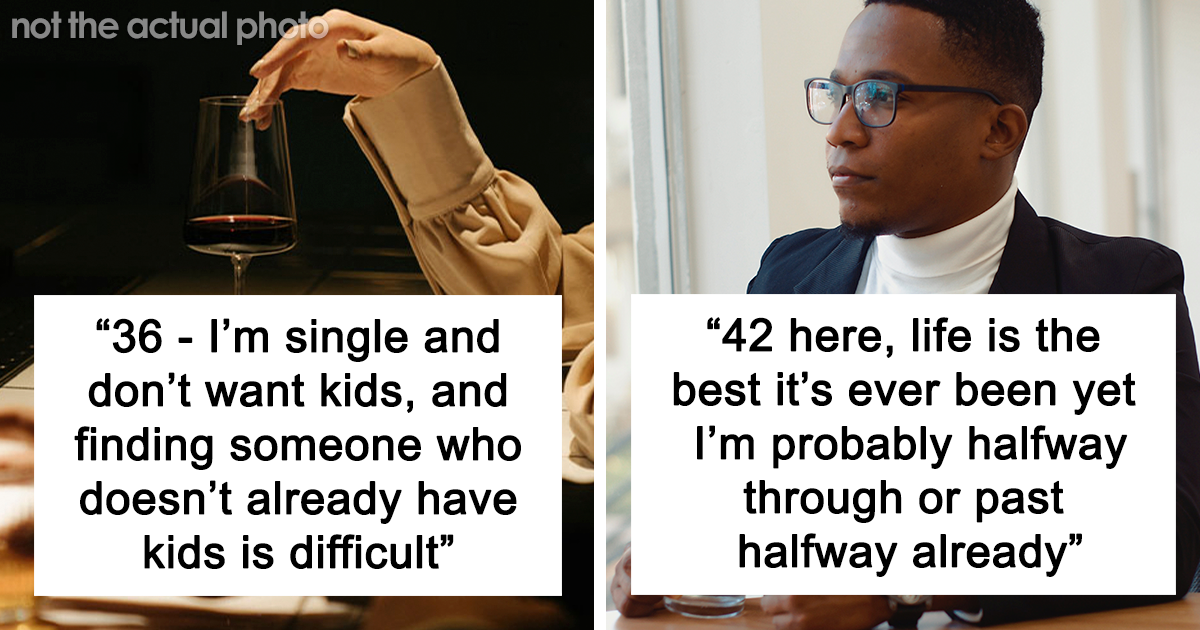
Ever had your mind say, “Let’s do that!” while your knees reply, “Absolutely not, we have a meeting with gravity at 3”? That’s the whole vibe behind Bored Panda’s crowd-sourced confessional where people share the worst parts of their current agefunny, a little bitter, and weirdly comforting.
Because here’s the plot twist: a lot of us don’t feel our chronological age. We feel like a younger version of ourselves who just happens to be trapped in a body that now needs “warming up” like a 1998 desktop computer. And the complaints people shareslower recovery, random aches, sleep chaos, surprise wrinkles, and the sheer audacity of hangoversaren’t just punchlines. They line up with real, well-documented changes that happen as we age… plus a few myths worth retiring.
Why your brain keeps insisting you’re 25
The phrase “my brain still thinks I’m 25” is basically a meme version of a real concept: subjective agethe age you feel, not the age on your driver’s license. Research suggests that many adults feel younger than their actual age, and that this “younger felt age” often tracks with better well-being and health outcomes.
Feeling younger can be a real advantage
When you feel younger, you may be more likely to stay socially engaged, keep trying new things, and maintain healthier habits. That matters because aging well isn’t one magic supplementit’s a long game of movement, sleep, connection, purpose, and taking care of your body like it’s the only one you get (because it is).
But the body still keeps receipts
The catch is that confidence doesn’t always override biology. You can feel 25 and still pull a hamstring picking up a sock “with enthusiasm.” The sweet spot is using that youthful mindset to stay active and curiouswhile adjusting the way you train, recover, and manage stress.
The “worst things” about your current age (and why they happen)
Let’s translate the internet’s greatest hits of aging complaints into real-world explanationswithout killing the jokes. Because comedy is basically emotional ibuprofen.
1) Recovery time: when your body needs a loading screen
One of the most common themes in “current age” confessions is that recovery takes longer: after workouts, after a late night, after sitting “wrong,” after existing. A few reasons this happens:
- Muscle changes over time: Age-related muscle loss (often discussed as sarcopenia) can begin gradually in midlife, especially without resistance training and adequate protein.
- Joint wear-and-tear: Aging changes in cartilage, connective tissue, and the musculoskeletal system can make joints stiffer and more sensitive.
- Less “bounce-back” capacity: Sleep, stress, hydration, and activity levels all influence how quickly you recoverand those often shift as responsibilities pile up.
Translation: You didn’t “get old overnight.” You got busy, slept less, moved differently, and your tissues started asking for a better maintenance plan.
2) Sleep: when you’re tired… and also somehow awake
People love to joke that aging means waking up early for no reason. But sleep really does change across adulthood. Many older adults notice shifts in sleep timing, lighter sleep, and more wake-ups. And here’s a wild detail from research on subjective age: poor sleep can make you feel older. In experimental and observational work, insufficient sleep and sleepiness were linked with feeling older than your actual age.
Translation: If you feel 92 after a bad night, it’s not just drama. It’s data.
3) Eyes: the slow march toward “hold on, let me tilt this under a lamp”
If your current age includes owning multiple pairs of reading glassesone for your face, one for your car, one for the kitchen drawer you’ll forget aboutwelcome to presbyopia. It’s a normal age-related change in near vision that commonly shows up in midlife as the eye’s lens becomes less flexible.
Translation: Your arms didn’t get shorter. Your eyes just stopped cooperating.
4) Ears: “Sorry, what?” becomes your catchphrase
Age-related hearing loss (presbycusis) is common and usually gradual. Many people notice it first in noisy environments: restaurants, family gatherings, anywhere multiple conversations are happening at once. Beyond annoyance, hearing difficulties can increase effort and fatiguebecause your brain is working overtime to fill in missing audio.
5) Skin: why you bruise like a peach and moisturize like it’s a religion
Aging skin tends to get thinner, less elastic, and more fragile. Blood vessels can become more delicate, bruising can happen more easily, and healing can take longer. This is why adults who never cared about lotion suddenly become extremely loyal to their nighttime moisturizer, like it’s a pet they have to feed.
Translation: You don’t need “better luck.” You need sunscreen and a gentler relationship with doorframes.
6) Metabolism myths: “My metabolism died at 30” (it didn’t, exactly)
One of the loudest “worst age” complaints is weight gain that feels unfair. Here’s the nuance: large-scale research using doubly labeled water (a gold-standard method) suggests total energy expenditure is relatively stable from about ages 20 to 60, on average. That means the “metabolism cliff at 30” story is oversimplified.
So why does weight gain feel more common with age? Often it’s a mix of:
- Less daily movement (more sitting, more screen time, more commuting, more caregiving)
- Changes in muscle mass (muscle is metabolically active tissue)
- Sleep debt and stress (which can influence appetite and choices)
- Life patterns (bigger portions, more convenience food, less time)
Translation: Your body didn’t betray you. Your calendar did.
7) Alcohol tolerance and hangovers: the cruelest plot twist
Many adults report that hangovers get worse with ageand biology offers a few explanations. As we get older, changes in body composition and water content can mean the same number of drinks hits harder. Alcohol can also interact with medications and health conditions more often as we age. The outcome? Less “party mode,” more “why does sunlight hate me?”
Translation: Your body is not judging you. It’s just submitting a strongly worded incident report.
8) Social life: fewer friends nearby, more people to schedule around
Another recurring “worst thing” is social friction: friends move, careers scatter people, family responsibilities expand, and making new friends can feel like datingexcept you’re trying to bond over walkable neighborhoods and whether you both hate small talk.
That matters because loneliness and social isolation are associated with higher risks for several health problems. The good news: connection isn’t about having 50 best friends. It’s about consistent contact, shared activities, and feeling seen.
9) Time speed-up: why years feel like months now
People often say time feels faster with age. A common idea in psychology is that novelty and new experiences make time feel “fuller” in hindsight. When life becomes routine, fewer distinct memories are created, and whole months can blur together like a screensaver.
Translation: If you want time to slow down, do something differenton purpose.
10) Ageism: when society decides your birthday is a personality flaw
Not all “worst things” are physical. Many people describe the social side: being treated as less relevant, less capable, or less “current,” especially at work. Research and reporting consistently find that age discrimination can be subtle, persistent, and underreported. And that’s exhaustingbecause you’re not just managing your knees, you’re managing stereotypes.
How to make your current age feel better (without pretending you’re not aging)
Aging isn’t a failure; it’s a normal human process. The goal isn’t to become “ageless.” It’s to feel strong, clear-headed, connected, and capable in the body you have right now. Here are practical moves that line up with the research:
Build strength like it’s your retirement plan
Resistance training supports muscle, joints, balance, and independence. If you’re 65+, official guidance emphasizes combining aerobic, muscle-strengthening, and balance activities weekly. Start small. Stay consistent. Progress slowly.
Protect your sleep like it’s a premium subscription
Sleep affects mood, energy, focus, and even how old you feel. Keep a steady schedule, limit late caffeine, get morning light, and treat sleep like a health habitnot a reward you earn after doing everything else.
Get proactive about senses: eyes and ears
Vision and hearing changes are common, but they’re also addressable. Regular checkups, updated prescriptions, and hearing support can reduce fatigue and improve social connection.
Make novelty a habit
If time feels like it’s accelerating, add small “firsts”: a new walking route, a class, a hobby, a new recipe, a museum trip, volunteering, anything that breaks routine. Your brain likes fresh input.
Stay connected on purpose
Don’t wait for connection to “happen.” Schedule it. Join something recurring. Become a regular somewhere. If loneliness is a health risk, consistency is a health intervention.
Be honest about alcohol
If hangovers are getting worse, it’s not a moral failingit’s feedback. Alternate drinks with water, eat before drinking, and consider lowering your “usual” amount. Your future self will thank you loudly and repeatedly.
Bonus: 500+ words of real-life-style experiences (the “my brain is 25” anthology)
1) The Weekend Warrior Wake-Up Call (Age 34)
“I played pickup basketball like I was auditioning for a highlight reel. Sunday morning I tried to stand up and my legs filed a complaint with HR. My brain was 22, my body was a cautious middle manager whispering, ‘We don’t do sudden lateral movement without a meeting first.’ Now I warm up, stretch, and pretend it was my plan all along.”
2) The Reading Glasses Treasure Hunt (Age 43)
“I bought one pair of readers. Then I bought five more because I kept losing themturns out I wasn’t losing them, I was placing them in ‘safe locations’ that only made sense to a raccoon. My brain thinks I’m still the same person who could read a restaurant menu in candlelight. Now I need overhead LEDs and a small prayer.”
3) The Two-Drink Hangover (Age 38)
“I used to bounce back like nothing happened. Now two drinks and I wake up feeling like I tried to hug a lawnmower. It’s not even the headacheit’s the existential fog. The kind where you stare into the fridge and forget why food exists. I’m not ‘old,’ I’m just apparently very sensitive to consequences now.”
4) The “What Did You Say?” Spiral (Age 55)
“At dinner, everyone’s talking, plates clinking, music playing, and suddenly I’m nodding like a politician because I can’t decode the audio. My brain is still social and fast. My ears are like, ‘Sorry, we’re buffering.’ I finally got my hearing checked and realized I’d been working twice as hard just to keep up. The relief was immediate.”
5) The Mystery Bruise Chronicles (Age 47)
“I found a bruise the color of regret on my arm and had no memory of earning it. I don’t do extreme sports. I do spreadsheets. Yet my body is out here collecting evidence like I moonlight as an action hero. I’ve accepted that I’m now someone who says, ‘Huh. Wonder where that came from,’ at least once a week.”
6) The Sleep Betrayal (Age 41)
“I’m exhausted at 10 p.m., then wide awake at 2 a.m. with my brain hosting a TED Talk called ‘Every Embarrassing Thing You’ve Ever Done.’ I started treating sleep like a routine instead of a crash landingless late scrolling, more consistency, and morning light. I still get weird nights, but now I recover faster and don’t feel 80 by lunch.”
7) The Metabolism Myth Funeral (Age 36)
“I swore my metabolism died at 30. But honestly? My steps died. I used to walk everywhere. Now I sit for work, drive for errands, and reward myself with snacks for surviving emails. I added short walks, lifted twice a week, and stopped eating like I’m still doing college-level cardio. My body didn’t change overnightit changed back slowly, like a respectful negotiation.”
8) The Friendship Scheduling Olympics (Age 49)
“Making plans now takes three weeks and a shared calendar. We used to just show up. Now everyone has kids, parents, jobs, injuries, and that one friend who’s always ‘traveling for work’ (which sounds glamorous but mostly means airport sandwiches). We started doing a standing monthly breakfast. Not fancy. Just consistent. It saved our friendships.”
9) The “Time Is Moving Too Fast” Moment (Age 52)
“I realized I couldn’t remember much about the last six months, and it freaked me out. Not because it was badbecause it was blurry. I started doing one new thing a month: a class, a hike, a museum, a volunteer shift. Suddenly my weeks had shape again. My brain still thinks I’m 25, but now it’s a 25-year-old who makes dental appointments.”
Conclusion: the best part of your age might be the part you’re ignoring
Yes, aging comes with real annoyances: stiffness, slower recovery, changing sleep, shifting senses, and the occasional hangover that feels like a full-time job. But it also comes with benefits people don’t joke about enoughbetter self-knowledge, sharper boundaries, stronger priorities, and (often) more confidence about what matters.
If your brain still thinks you’re 25, you don’t have to argue with it. Just update the operating manual: warm up before you sprint, protect your sleep, lift something heavy on purpose, see your friends regularly, and treat your future self like someone you actually like.