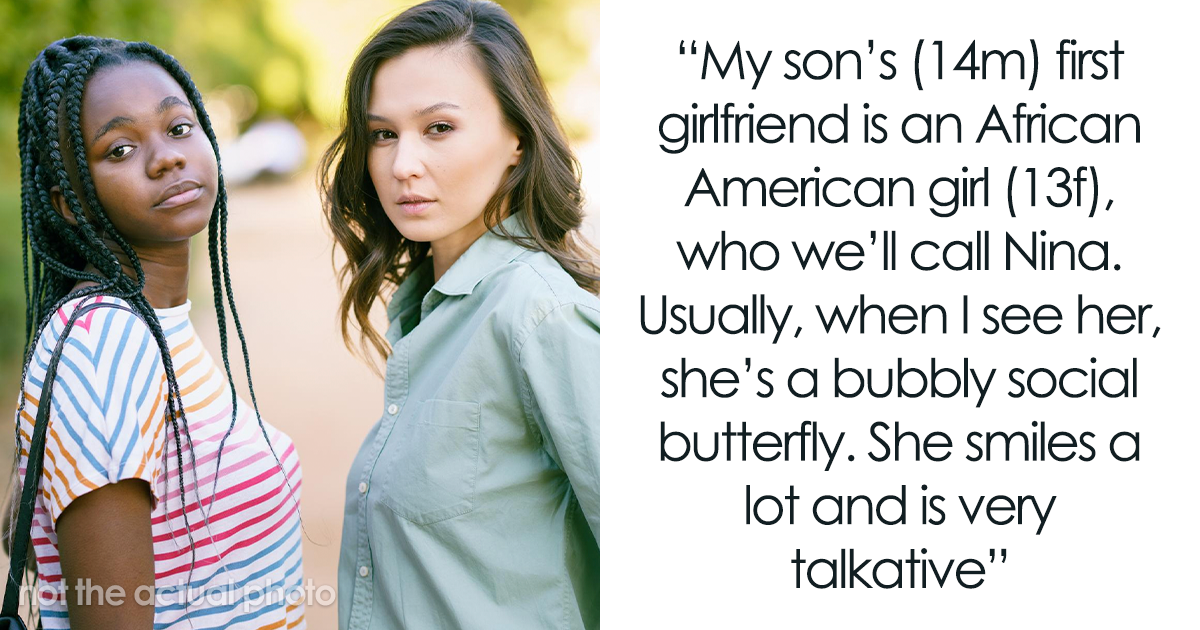
Picture a family moment that should’ve been easy: a girlfriend shows up, looking like herself. A mom sees
someone trying to shrinkand decides, “Not on my watch.” She tells her son’s Black girlfriend she
doesn’t need to change her hair for him. The son… does not respond with the calm emotional maturity of
a golden retriever. He explodes.
If you’ve ever watched a simple boundary turn into a full-blown fireworks show, you already know:
this isn’t really about hair. It’s about control, comfort, identity, and who gets to define “acceptable.”
And because the girlfriend is Black, hair carries cultural and historical weight that a lot of people
were never taughtyet still feel oddly qualified to judge.
Let’s unpack what’s happening, why it hits so hard, and how families and couples can stop treating
someone’s head like a public suggestion box.
The Blowup, in Plain English
The situation usually looks like this (whether it happened in a living room, a group chat, or that
cursed place called “holiday dinner”):
- The son pressures his girlfriend to “fix” her hair to match his comfort level or his family’s expectations.
- The girlfriend feels the pressuremaybe she straightens it, changes styles, or starts second-guessing.
- The mom notices and says something supportive: “You don’t need to change your hair for him.”
- The son hears that as a challenge to his authority, image, or egoand reacts loudly.
The mom’s comment is small but powerful: it shifts the default from “please adjust yourself” to
“you’re already fine.” And if someone’s been benefiting from the old default, that shift can feel like
losing powereven if it’s power they never should’ve had.
Why “Just Change Your Hair” Isn’t Just
Black hair isn’t a trendit’s identity, culture, and care
For many Black women, hair isn’t a casual accessory. It can be a direct expression of identity, a
connection to culture, and a practical reality shaped by texture and maintenance. Protective styles
(like braids, locs, twists, and knots) can help reduce breakage and support hair health. Natural hair
can be a choice rooted in self-acceptance after years of being told that “professional” equals “closer
to Eurocentric.”
So when a boyfriend says, “Could you wear it differently?” it can land like: “Could you be less
yourself?” Even if he thinks he’s asking for a style change, she may be hearing a request for
assimilationespecially if the “preferred” look is straighter, looser, or more aligned with white
beauty standards.
The “professional” myth shows up at home, too
A lot of hair pressure is packaged as “helpful advice.” People say things like:
- “It’s just more polished.”
- “You’ll make a better impression.”
- “My parents are traditional.”
- “It’s not a big dealwhy are you making it one?”
The problem is that these phrases often borrow their logic from the same bias that shows up in
workplaces and schools: the idea that natural Black hair is “unprofessional,” “distracting,” or
“unruly.” When someone brings that logic into a relationship, it turns intimacy into a dress code.
Nobody wants to date HR.
Hair policing is a microaggression with a megaphone
Microaggressions are the small, repeated messages that someone’s identity is “other,” “too much,” or
needs adjusting. Hair is a common target. Comments, jokes, “helpful” corrections, and unsolicited
touching all send the message: “Your body is open for public review.”
Now add romance to the mix. A partner is supposed to be the person who makes you feel safest.
If he becomes another voice saying “not like that,” it can be deeply destabilizingespecially if she’s
already navigating the world’s opinions about her appearance.
What the Mom Got Right (and What to Watch)
The mom’s message“You don’t need to change your hair for him”is a gold-standard sentence for
allyship because it does three things at once:
- Affirms autonomy: Her hair is her choice.
- Affirms belonging: She’s welcome as she is.
- Shifts the responsibility: If anyone needs to adjust, it’s the son (and anyone judging).
But delivery matters. If mom said it in a way that publicly embarrassed the son (“Why are you acting
like a controlling weirdo?”), it might inflame himeven if she’s correct. Support can be firm without
turning into a performance.
A strong approach sounds like:
- To the girlfriend: “You look great. You don’t need to change anything for anyone.”
- To the son privately: “Stop pressuring her. That’s not love; that’s control.”
Still, if the son is exploding, the bigger issue is his behaviornot the mom’s boundary.
Why the Son Might Explode (Without Excusing It)
People don’t usually yell because they’re calm, secure, and emotionally literate. Here are a few
reasons the son might react so intensely:
1) He’s trying to manage other people’s opinions
He may be anxious about how his family or friends perceive his relationship. Instead of confronting
their bias, he tries to “solve” the problem by adjusting his girlfriend. It’s misguided, unfair, and
common. It also teaches her that she has to do emotional labor to protect him from discomfort.
2) He confuses preferences with entitlement
Everyone has preferences. The issue is when a “preference” turns into a rule someone else must obey.
“I like your hair straight” is a thought. “You should wear it straight for me” is control wearing a
friendly hat.
3) He’s carrying internalized bias
If he’s absorbed the message that certain hair equals “better,” he may not recognize that he’s acting
out a racial hierarchy. When mom calls it outeven gentlyhe feels accused. Defensive people often
hear “you did a biased thing” as “you are a bad person,” then try to shout their way out of shame.
4) He’s mad because someone interrupted the pattern
If the girlfriend has been accommodating him, the pattern may have felt normal to him. The mom’s
statement breaks that pattern. Control often looks calm until it gets challenged.
How to Talk About It Without Making It Worse
The goal is not to “win” the argument. The goal is to protect the girlfriend’s dignity, stop the
controlling behavior, and create a relationship culture where respect isn’t conditional.
If you’re the son (or the partner who needs the wake-up call)
- Start with accountability: “I pressured you. That wasn’t okay.”
- Name the impact: “I made you feel like you had to change to be accepted.”
- Commit to a new behavior: “I won’t comment on your hair choices unless you ask.”
- Redirect your fear: If you’re worried about family judgment, address the familynot your girlfriend.
A real apology doesn’t include “but you know how my parents are.” That’s not an apology; that’s an
invoice.
If you’re the girlfriend (or anyone being pressured to change)
- State the boundary clearly: “My hair is not up for negotiation.”
- Ask the core question: “Do you want me, or do you want a version of me that’s easier for you?”
- Watch actions: Promises matter less than patterns. If he keeps pushing, believe what that means.
And yesif you feel safer stepping back from the relationship until respect is consistent, that’s not
“dramatic.” That’s protecting your peace.
If you’re the mom (or the family member trying to support)
- Affirm publicly, correct privately: “You’re welcome here exactly as you are.” Then talk to your son one-on-one.
- Don’t debate her hair as a topic: Keep the focus on respect and autonomy.
- Set a house standard: “No comments about people’s bodies or hair in this home.”
The most powerful support is consistent supportespecially when the girlfriend isn’t in the room.
Quick Guide: What Support Looks Like in Real Life
“Support” isn’t just saying the right thing. It’s doing the right thing when it’s inconvenient.
Here’s what that can look like:
In the moment
- Someone makes a comment about her hair? The partner responds: “We’re not doing that.”
- Someone asks if her hair is “real”? The partner says: “That’s not an appropriate question.”
- Someone suggests she’d look “more presentable” another way? The partner: “She is presentable. Period.”
Behind the scenes
- The partner examines his assumptions about what’s “professional” or “pretty.”
- He learns basic context: natural hair, protective styles, and why hair policing is loaded.
- He sets boundaries with his family instead of asking his girlfriend to shrink.
Long-term
- He celebrates her choices rather than tolerating them.
- He stops seeing her identity as a “complication” he must manage.
- He understands that love should never require erasure.
When This Scenario Points to a Bigger Problem
Sometimes the hair conflict is a symptom of deeper issues:
- Control disguised as care: “I’m just trying to help you fit in.”
- Conditional acceptance: “My family will like you if you tone it down.”
- Racial discomfort: “I’m not racist, I just don’t like that style.”
- Emotional volatility: Exploding instead of discussing.
If the son routinely explodes when challenged, that’s not a “communication style.” That’s a problem.
Healthy relationships don’t require one person to stay quiet so the other person stays calm.
FAQs
Is it okay to have a preference about a partner’s hair?
Having a preference is human. Turning it into pressure is the issue. A safe rule: if your “preference”
makes your partner feel less accepted, it’s not a preference anymoreit’s a demand.
What if the girlfriend sometimes changes her hair anyway?
Changing hair can be fun and empoweringwhen it’s her choice. The red flag is when she changes it
to avoid conflict, to earn approval, or to prevent someone else’s embarrassment.
What if the son says, “My mom shouldn’t interfere”?
Parents shouldn’t micromanage adult relationships, but they can absolutely set standards for respect.
Saying “don’t pressure your partner to change her appearance” isn’t interference; it’s basic decency.
How can families be supportive without being awkward?
Try this: don’t treat hair like a debate topic. Compliment the person, not the compliance. And if you
don’t know what to say, “You look great” is free and has an excellent return on investment.
Conclusion: Hair Isn’t the ProblemEntitlement Is
The mom’s message is simple: love doesn’t demand self-editing. If the son exploded, that reaction
tells you the real storyhe’s more committed to comfort and control than to respect.
A healthy partner doesn’t ask you to become “easier.” They help the world get better at seeing you.
And a healthy family doesn’t require you to trade authenticity for acceptance. If there’s one takeaway,
it’s this: the right relationship makes room for your whole selfedges, roots, coils, and all.
Experiences People Recognize in Situations Like This (Extra)
Many people who’ve lived through similar conflicts describe the same emotional whiplash: one moment
you’re just choosing a hairstyle, and the next you’re navigating someone else’s identity panic. One
common experience is the “quiet request” that isn’t actually quiet. A partner says, “Would you mind
wearing it straight tonight?” but the tone carries consequences: if you say no, you risk a sulk, an
argument, or a weird silence on the drive home. People often describe that as the moment they realized
it wasn’t about styleit was about compliance.
Another familiar experience is being treated like a “project.” Someone offers unsolicited “tips”:
a different product, a different look, a different vibealways pointing toward what makes you appear
more “acceptable” to strangers. Folks describe how exhausting it feels to be loved like a makeover
show: the affection is there, but it’s paired with an ongoing renovation plan. Over time, that can
create a habit of self-editing. You start asking, “What version of me will cause the least trouble?”
instead of, “What do I actually want?”
People also talk about the relief of an unexpected allyoften a mom, aunt, or siblingwho says the
supportive thing out loud. Not performatively. Not dramatically. Just firmly: “You’re fine as you are.”
That sentence can feel like someone opening a window in a stuffy room. It’s validating because it
refuses the idea that acceptance is conditional. And it can be clarifying, too: when support shows up,
you can see the contrast between respect and control in high definition.
On the flip side, many describe the partner’s defensiveness as the most revealing part. Instead of
thinking, “Oh wow, I may have pressured you,” he argues about “boundaries,” “embarrassment,” or “my
mom is disrespecting me.” People who’ve been there often say the escalation was the point where they
stopped focusing on hair and started focusing on safetyemotional safety, specifically. If a person
can’t tolerate being corrected about something as basic as bodily autonomy, what happens when the
stakes are bigger?
Finally, there’s a common experience of rebuilding standards after the dust settles. Some couples do
grow from itwhen the partner genuinely apologizes, learns, and starts redirecting discomfort toward
the people who hold the bias, not toward the person being targeted. Others don’t. In those cases,
people often say they left not because of one argument about hair, but because the argument exposed a
deeper pattern: love that required them to be smaller. And once you’ve seen that pattern clearly,
it’s hard to unsee itno matter how good the apology sounds.