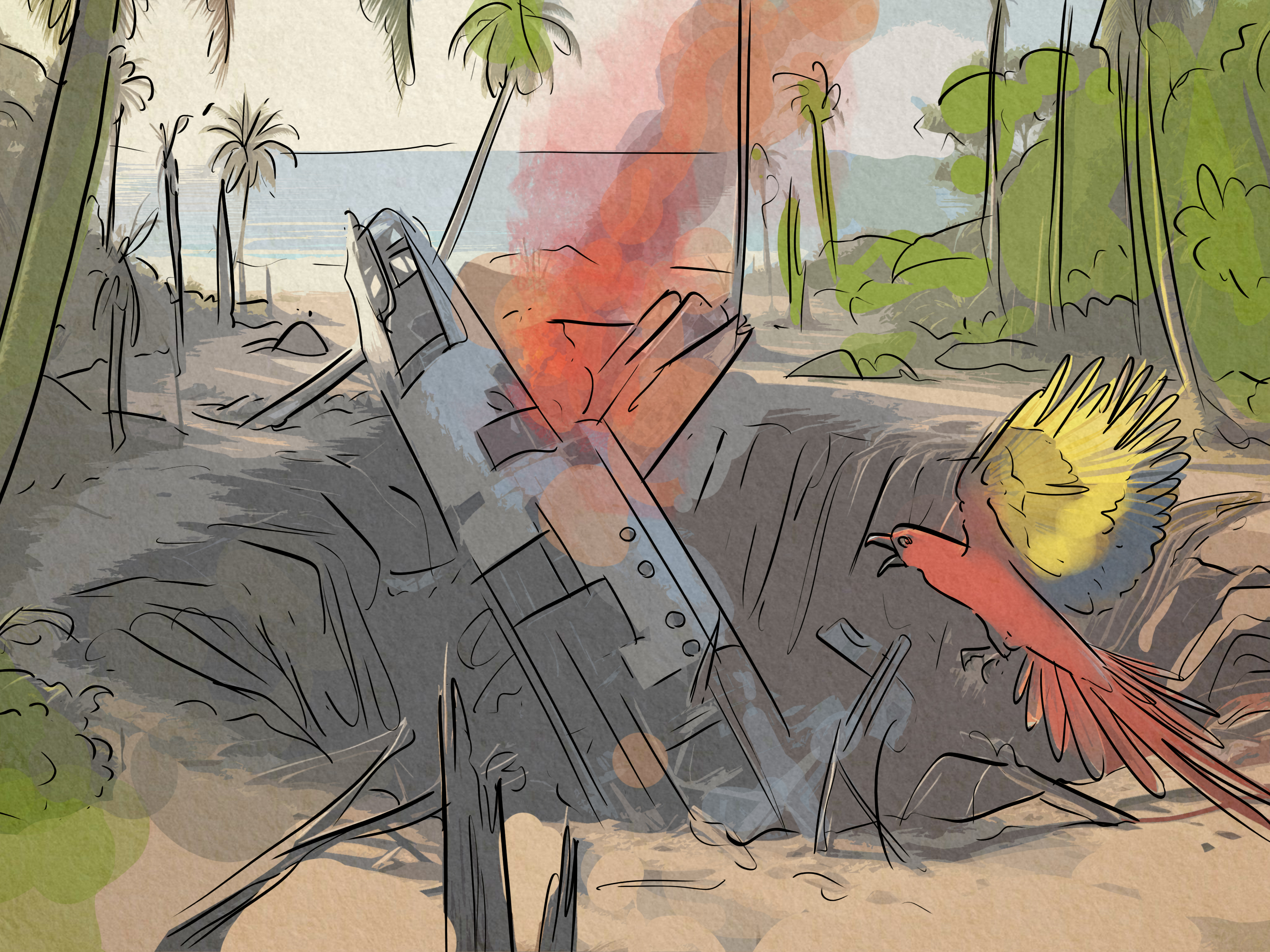
Lord of the Flies is one of those novels that sneaks into a classroom looking like a survival adventure and then quietly rearranges everyone’s understanding of human nature. Written by William Golding and first published in 1954, the book follows a group of British schoolboys stranded on an uninhabited island after a plane crash. At first, the setup sounds almost fun: beaches, fruit, no parents, and the kind of freedom every kid thinks they want for about twelve minutes. Then the rules collapse, fear spreads, leadership turns ugly, and the island becomes less of a vacation destination and more of a moral stress test with palm trees.
The power of Lord of the Flies comes from how Golding uses themes, motifs, and symbols to turn a simple plot into a haunting allegory. The conch shell is not just a shell. Piggy’s glasses are not just eyewear. The beast is not just a monster hiding in the jungle. Each object, repeated image, and character conflict points toward the same uncomfortable question: what happens when civilization disappears and people are left alone with their instincts?
This guide explains the major Lord of the Flies themes, motifs, and symbols in clear language, with specific examples from the novel and practical analysis for students, readers, and anyone who has ever wondered why a book about schoolboys on an island still feels so relevant today.
What Is the Main Meaning of Lord of the Flies?
At its core, Lord of the Flies argues that civilization is fragile. Rules, manners, schools, uniforms, and polite voices help hold society together, but they do not erase darker human impulses. Golding does not suggest that people become violent only because society corrupts them. Instead, the novel explores the disturbing idea that violence, fear, selfishness, and the hunger for power already exist inside people. Civilization merely keeps those forces under controlmost of the time.
The island works like a laboratory. Golding removes adults, laws, institutions, and consequences. Then he watches what happens. Ralph tries to build order. Piggy brings reason. Simon offers compassion. Jack chases power. Roger drifts toward cruelty. The result is a miniature society that begins with meetings and voting but ends in chaos, violence, and smoke.
Major Themes in Lord of the Flies
Civilization vs. Savagery
The most important theme in Lord of the Flies is the conflict between civilization and savagery. Ralph represents the desire for structure, cooperation, rescue, and shared responsibility. He wants shelters built, meetings organized, and the signal fire maintained. In other words, Ralph is the kid who would probably create a chore chart while everyone else is still asking whether coconuts count as dinner.
Jack, on the other hand, represents the pull of instinct, domination, and immediate satisfaction. He begins as the leader of the choirboys, already used to command and hierarchy. As the novel progresses, he becomes obsessed with hunting, face paint, and power. His leadership style is emotional and theatrical. He offers meat, excitement, and protection from fear. Ralph offers responsibility. Unfortunately, responsibility rarely beats barbecue and war paint in a popularity contest.
This theme becomes clearer as the boys gradually abandon rules. The conch loses authority. Meetings become useless. The signal fire is neglected. Hunting becomes more important than rescue. By the end, the boys have almost completely surrendered to savagery, proving how quickly social order can collapse when fear and desire take control.
The Darkness of Human Nature
Golding’s view of human nature is famously bleak. The novel suggests that evil is not an outside force waiting in the jungle. It is internal. The boys fear a beast, but the real beast is within them. This is one reason Simon’s discovery is so important. He realizes that the “beast” is not a physical creature stalking the island. It is the darkness inside the boys themselves.
The title Lord of the Flies refers to the pig’s head that Jack’s hunters place on a stick as an offering to the beast. Surrounded by flies, the grotesque head becomes a symbol of corruption, decay, and inner evil. When Simon confronts it, the scene feels almost supernatural, but the message is psychological: the boys are afraid of themselves and do not know it.
This theme explains why the novel remains powerful. Golding is not merely saying that children can behave badly without supervision. That would be a much shorter book, possibly titled Why You Should Not Leave Twelve-Year-Olds in Charge of Anything. Instead, he is asking whether cruelty and chaos are permanent parts of human nature.
Loss of Innocence
At the beginning of the novel, the boys still belong emotionally to the world of childhood. They talk about grown-ups, rules, games, and rescue. Some are frightened, but many also treat the island like an adventure. Their innocence is partly protected by ignorance. They do not yet understand what they are capable of.
That innocence fades as fear grows and violence becomes normal. The first pig hunt unsettles Jack because killing still feels wrong. Later, killing becomes exciting. The boys chant, dance, and act as a group, losing individual responsibility in the energy of the mob. Simon’s death marks a devastating turning point. Piggy’s death confirms that the old moral world has collapsed.
By the time Ralph weeps at the end of the novel, he is not crying only because he has been rescued. He cries for the “end of innocence,” for the deaths of Simon and Piggy, and for the terrible knowledge that humans are capable of evil even when they begin as children.
Fear and Mob Mentality
Fear drives much of the action in Lord of the Flies. The younger boys fear the beast. The older boys deny it, then exploit it. Jack understands that fear is politically useful. If the boys believe there is a monster, they will want protection. If Jack presents himself as the strong hunter who can protect them, he gains power.
This is where mob mentality becomes dangerous. Alone, many of the boys might hesitate to act violently. In a group, they chant, dance, and surrender to the crowd. The chant “Kill the beast” becomes a ritual that erases individual judgment. Golding shows how people can commit terrible acts when emotion replaces reason and the group gives them permission to stop thinking.
Power, Leadership, and Authority
The novel presents two competing models of leadership. Ralph’s authority is democratic. He is elected, uses the conch to organize meetings, and focuses on the common good. Jack’s authority is authoritarian. He rules through fear, punishment, rewards, and spectacle.
Golding does not make Ralph perfect. He can be indecisive, impatient, and occasionally dismissive of Piggy. But Ralph understands that leadership should serve the group. Jack sees leadership as control. His rise shows how easily people can trade freedom for excitement, security, and strongman confidence.
Important Motifs in Lord of the Flies
Fire
Fire is one of the novel’s most important recurring motifs. At first, the signal fire represents hope, rescue, and connection to civilization. Ralph repeatedly insists that keeping the fire going should be the group’s top priority. The fire is practical, but it is also symbolic: as long as it burns responsibly, the boys still care about returning to the civilized world.
Yet fire also represents destruction. Early in the novel, the boys accidentally let it spread, and one of the younger children disappears. At the end, Jack’s tribe sets the island on fire while hunting Ralph. Ironically, that destructive fire creates the smoke that brings rescue. Golding’s joke here is extremely dark: civilization returns because savagery got a little too enthusiastic with matches.
Hunting
Hunting begins as a practical activity but becomes a ritual of violence. Jack’s obsession with killing pigs reflects his growing distance from civilized behavior. The more he hunts, the less he cares about rules, rescue, or moral restraint. Hunting gives the boys meat, but it also gives them identity, excitement, and a sense of power.
The repeated hunting scenes show how violence can become addictive. What starts as survival turns into performance. Painted faces, chants, and dances transform killing into group entertainment. The boys are not merely feeding themselves; they are feeding the darker side of their nature.
Names and Identity
Names matter throughout the novel. Piggy’s real name is never revealed, which shows how completely the boys reduce him to a nickname based on appearance. This loss of identity makes it easier for others to mock and dismiss him. Meanwhile, Jack’s hunters gradually lose their individuality as they become a tribe.
Face paint also changes identity. When Jack paints his face, he feels freed from shame and responsibility. The mask allows him to behave in ways he might not otherwise dare. Golding suggests that people can become dangerous when they hide behind uniforms, symbols, or group identities that separate them from personal accountability.
Key Symbols in Lord of the Flies
The Conch Shell
The conch shell symbolizes order, democracy, and civilized speech. Ralph and Piggy discover it early, and it becomes the tool used to call meetings. Whoever holds the conch has the right to speak. In the beginning, the boys respect it because they still believe in rules.
As Jack’s power grows, the conch weakens. The boys stop listening. The symbol still exists, but the shared belief behind it disappears. When the conch shatters during Piggy’s death, it marks the final collapse of civilized order. The shell does not fail because it breaks; it breaks because society has already failed.
Piggy’s Glasses
Piggy’s glasses symbolize intelligence, reason, science, and technology. They are used to start the fire, making them essential to rescue and survival. Piggy himself represents rational thought, but he lacks physical strength and social power. His glasses show that intelligence can be incredibly valuable and still be vulnerable when a society stops respecting it.
When Jack steals the glasses, he takes control of fire. Symbolically, savagery captures technology. That is one of the novel’s sharpest warnings: tools are not automatically civilized. In the wrong hands, knowledge can serve domination instead of progress.
The Beast
The beast symbolizes fear and the evil within human beings. The younger boys imagine it as a creature. The older boys try to explain it away or hunt it. Simon understands the truth: the beast is not something they can kill because it is part of them.
This symbol grows more powerful because it changes shape. It is a nightmare, a rumor, a dead parachutist, and finally an excuse for Jack’s authority. The beast becomes whatever the boys need it to be. That is exactly how fear works in real societies: vague, emotional, and dangerously easy to manipulate.
The Lord of the Flies
The pig’s head on a stick is the novel’s most disturbing symbol. It represents corruption, decay, and the inner evil the boys refuse to face. The flies around it emphasize physical rot, while Simon’s encounter with it reveals moral rot. The “Lord of the Flies” seems to speak to Simon, telling him that the beast is not something external.
This moment turns the novel from an adventure story into a psychological and spiritual nightmare. The boys are not fighting a monster. They are becoming one.
The Island
The island begins as a paradise. It has fruit, water, beaches, and natural beauty. In symbolic terms, it resembles an Eden-like world where the boys have a chance to build a fresh society. But instead of creating harmony, they bring conflict, fear, and destruction.
By the end, the island is burning. The change in setting reflects the boys’ moral decline. Nature itself is not evil in the novel; rather, the boys project their disorder onto it. The island becomes a mirror, and what it reflects is not flattering.
Why These Themes and Symbols Still Matter
Lord of the Flies remains relevant because it is not really about being stranded on an island. It is about what people do when pressure rises, leadership fails, fear spreads, and the rules stop feeling real. That can happen in schools, governments, online communities, workplaces, and friend groups. Thankfully, most group projects do not end with a burning island, though some come emotionally close.
The novel asks readers to notice how civilization depends on shared belief. A rule matters only if people agree to respect it. A symbol works only if people honor what it represents. A leader succeeds only if the group values the kind of leadership being offered. Golding’s island falls apart because the boys stop choosing responsibility and start choosing power, fear, and immediate pleasure.
Personal Reading Experiences and Reflections on the Novel
Reading Lord of the Flies for the first time can feel strange because the book does not behave like a typical adventure story. Many readers begin by expecting something like a tropical survival tale: build a shelter, find food, create a rescue plan, maybe invent a coconut-based economy. But the novel slowly shifts from physical survival to moral survival. That shift is what makes it memorable.
One common experience readers have is frustration with the boys. Ralph keeps saying they need to maintain the signal fire, and from the outside, he is obviously right. Readers may want to reach into the book, grab everyone by the shoulders, and say, “Please stop chasing pigs for five minutes and focus on not being stranded forever.” But that frustration is part of Golding’s design. The boys make poor choices not because they lack information, but because emotion, pride, fear, and peer pressure overpower good judgment.
Piggy’s role often becomes more powerful on a second reading. At first, he may seem annoying because the other boys treat him that way. He complains, repeats himself, and struggles physically. But the more carefully one reads, the clearer it becomes that Piggy is often the most sensible person on the island. He understands the importance of names, lists, shelters, and the conch. He knows that rules are not childish; they are what prevent chaos. His tragedy is that being right does not protect him in a society that has stopped valuing reason.
Simon also tends to grow in importance over time. He is quiet, strange, and spiritually sensitive. Unlike Ralph, he does not simply want order. Unlike Piggy, he does not rely only on logic. Simon understands compassion. He helps the younger boys and recognizes truths others cannot face. His discovery about the beast is the moral center of the novel. The saddest part is that the truth arrives before anyone is ready to hear it.
The novel also changes depending on the reader’s age. Younger readers may focus on the adventure, the conflict, and the shocking events. Older readers often notice the political and psychological layers: how fear creates loyalty, how groups excuse cruelty, how symbols lose power, and how quickly people can rewrite morality when belonging is at stake. That is why Lord of the Flies continues to work in classrooms. It gives students a story that is easy to follow but difficult to finish without asking bigger questions.
The most useful way to read the novel is not to ask, “Which character is the good one?” Ralph, Piggy, and Simon all have strengths, but none of them can save the island alone. A better question is, “What kind of society do these boys create, and why does it fail?” That question turns the book into more than a dark school assignment. It becomes a warning about responsibility, leadership, fear, and the daily work required to keep civilization from cracking like the conch.
Conclusion
Lord of the Flies endures because its themes, motifs, and symbols are both simple and terrifying. The conch shell represents order until no one respects order. Piggy’s glasses represent reason until reason is stolen and weaponized. The beast represents fear until fear becomes government policy. The island begins as paradise and ends as a warning flare.
Golding’s novel suggests that civilization is not automatic. It must be chosen, defended, and renewed. The boys lose their innocence not merely because terrible things happen, but because they discover what humans can become when rules, empathy, and accountability disappear. That is why Lord of the Flies still matters. It reminds readers that the real beast is not hiding in the trees. It is much closer, and it gets louder when nobody is willing to hold the conch and speak for what is right.