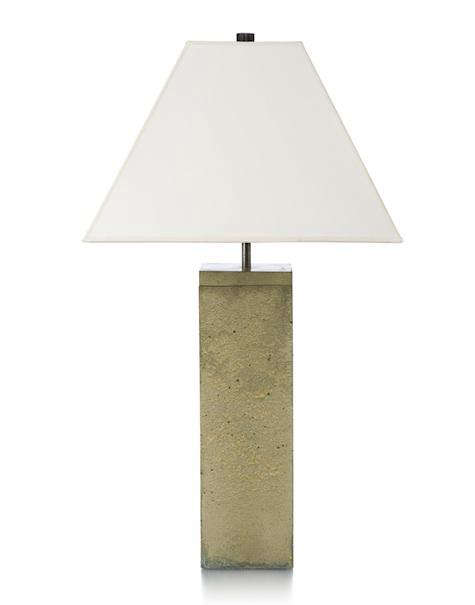
Concrete is not supposed to flirt. It is supposed to hold up bridges, anchor patios, and quietly mind its own business while collecting dust and existential weight. And yet, in the hands of Rough Edges Design, concrete becomes something far more charming: a sculptural lamp material with personality, presence, and just enough attitude to make every other table lamp in the room look a little overdressed.
That is the magic of Lighting: Concrete Lamps by Rough Edges Design. These lamps take one of the most utilitarian materials in modern design and turn it into something poetic. Instead of hiding concrete’s heft, the collection leans into it. Instead of polishing away every quirk, it celebrates texture, subtle variation, and the small imperfections that make handmade objects feel alive. The result is lighting that reads as both industrial and intimate, severe and warm, architectural and deeply livable.
If you have ever looked at a concrete wall and thought, “Beautiful, but I would not want it glowing on my nightstand,” this collection is here to prove you wrong in the most stylish way possible. Rough Edges Design makes the case that concrete is not cold by nature. It only needs the right proportions, the right shape, and the right light source to reveal its softer side. In other words, this is brutalism with good bedside manners.
Why Concrete Works So Well in Decorative Lighting
The appeal of concrete lighting starts with contradiction. Lamps are usually associated with softness: ambient light, fabric shades, cozy corners, and the visual equivalent of a deep exhale. Concrete, meanwhile, is associated with mass, durability, and the kind of stoicism that never says “cozy” first. Put them together, though, and something surprisingly balanced happens.
Concrete gives a lamp a strong visual center of gravity. It makes a light fixture feel grounded, sculptural, and intentional. Even before the bulb is switched on, the object already has authority. It is not background decor. It is a small architecture project sitting on a side table.
That is one reason concrete lamps have remained relevant in modern interiors. They fit beautifully into minimalist rooms because they do not rely on ornament. They make sense in industrial spaces because they share a vocabulary with steel, brick, and exposed structure. They also work in softer interiors because their monochrome character lets warmer materials do the talking. Pair concrete with wood, linen, aged brass, smoked glass, or creamy paper shades, and suddenly the material stops feeling severe and starts feeling sophisticated.
There is also a tactile pleasure to concrete that polished materials rarely offer. Marble is elegant. Lacquer is sleek. Glass is refined. Concrete, on the other hand, has a certain honesty. It looks like what it is. It does not pretend to be lighter, glossier, or more precious than reality. In an age of ultra-slick surfaces, that kind of material sincerity feels refreshing.
Rough Edges Design and the Beauty of Weight
What makes Rough Edges Design stand out is not merely the decision to use concrete. Plenty of brands have experimented with concrete lighting over the years. The difference here is the design language. The lamps feel less like trend pieces and more like small monuments. They have a stack-like, block-like, architectural sensibility that turns lighting into sculpture without becoming fussy or self-important.
The collection’s names alone hint at its personality: forms that suggest fortification, structure, and mass rather than delicacy. That choice matters. A lamp called something airy and whimsical invites one kind of expectation. A lamp that feels like it belongs in the vocabulary of masonry, towers, or built form invites another. Rough Edges Design clearly understands the theatrical potential of naming, but thankfully the pieces do not stop at a clever title. The forms deliver.
There is an especially smart tension in the way these lamps balance roughness and restraint. The concrete bases are substantial, but the silhouettes do not become clumsy. The surfaces are rich in variation, but not visually noisy. Some pieces lean toward stacked geometry, while others allow the material to feel more monolithic and calm. In each case, the point is not decoration for decoration’s sake. The point is to let the material carry the drama.
That is not easy. Concrete can quickly slip into one of two design traps. Trap one is trying too hard to make it refined, which sands away the very character that made it interesting. Trap two is going fully caveman and producing something so rough and heavy that it feels more like a punishment than a lamp. Rough Edges Design avoids both. The lamps are clean enough to feel modern and raw enough to feel memorable.
The Solid Lamp: A Great Example of Material Confidence
Among the most talked-about pieces from the archive is the Solid Lamp, and the name fits. It is an object that does not need clever visual tricks to earn attention. The appeal lies in the confidence of the base, the visible depth and variation in the concrete, and the contrast created by the shade above it. This is an old interior-design lesson delivered with unusual discipline: when the base is strong, everything above it can relax.
That contrast is what makes the design so effective. A heavyweight concrete body paired with a softer shade creates visual balance. The lamp feels grounded without becoming gloomy. It has the gravitas of a sculptural object and the familiarity of a classic table lamp. In other words, it is modern enough for a design enthusiast and practical enough for someone who simply wants a beautiful lamp that works in real life.
Even the supporting details matter. A well-considered lamp is not only about silhouette; it is also about usability. A stable base, a protected underside, dimming flexibility, and thoughtful scale all help turn a sculptural piece into something livable. That combination of utility and character is one reason the collection still feels relevant. A lamp should be art, yes, but it should also illuminate your book without making your side table hate you.
Why These Concrete Lamps Still Feel Current
They fit the ongoing love affair with brutalism
Brutalist and brutalist-inspired interiors continue to influence furniture, decor, and lighting because people remain drawn to raw materials, bold geometry, and visual honesty. Rough Edges Design fits comfortably into that conversation, but without shouting. These lamps nod to brutalism’s love of mass and exposed material, yet they stay domestic enough to live happily beside a sofa, a stack of books, or a ceramic bowl full of keys you swear you will organize later.
They make minimalism feel less sterile
Minimal interiors can be beautiful, but they can also slide into showroom syndrome: polished, quiet, and vaguely terrified of human life. Concrete lamps help fix that. Their texture introduces subtle irregularity, which keeps a room from feeling too perfect. A lamp like this says, “Yes, the room is edited. No, it does not think it is better than you.”
They thrive on contrast
One of the smartest ways to style raw material is to contrast it with softness. Concrete looks richer near boucle upholstery, matte painted walls, walnut tables, warm bulbs, linen drapery, and hand-thrown ceramics. Rough Edges Design benefits from that exact principle. The lamps do not need a room full of industrial references to make sense. In fact, they often look even better in spaces with a little warmth and humanity around them.
How to Style Concrete Lamps Without Making Your Home Feel Like a Parking Garage
Let us begin with the obvious public service announcement: a concrete lamp does not mean you now need a concrete coffee table, a concrete planter, three concrete stools, and a deeply concerning amount of gray. Restraint is your friend.
In the living room
Place a concrete lamp on a wood side table or a cabinet with visible grain. The warmth of the wood gives the lamp a more layered presence. Add a fabric sofa, a textured rug, and maybe one metal accent for a little edge. The lamp becomes the punctuation mark rather than the entire sentence.
In the bedroom
This is where the contrast becomes especially satisfying. A concrete bedside lamp paired with soft bedding, a woven throw, and muted wall color creates a mood that feels quietly luxurious. It is not flashy. It is confident. Also, there is something deeply satisfying about reading beneath a lamp that looks like it could survive an earthquake and still make your room prettier.
In an office or studio
Concrete lighting works beautifully in workspaces because it brings focus. The visual discipline of the material complements desks, shelving, and organized surfaces. It can make even a small workspace feel more intentional and less like a folding table with Wi-Fi.
In an entryway
If you want a first impression that says “design-conscious adult” rather than “person who drops mail in random piles,” a concrete lamp on a console table is a strong move. Pair it with a mirror, a shallow tray, and one natural accent such as branches or a ceramic vessel. The look is architectural, but not severe.
What Design Lovers Can Learn From Rough Edges Design
The larger lesson of this collection is that materials should not be boxed into old assumptions. Concrete does not need to remain in the realm of floors, walls, and countertops. Lighting does not need to be delicate to feel elegant. And modern interiors do not need to choose between softness and structure. The best rooms almost always mix both.
Rough Edges Design also reminds us that craftsmanship matters most when a material has visible character. With concrete, every variation becomes part of the story. Slight marbling, tonal shifts, edge definition, and textural nuance all contribute to the object’s identity. These are not flaws to hide. They are evidence that the piece was made, not merely manufactured into blandness.
That handcrafted quality gives concrete lamps emotional range. They can feel architectural, rustic, artisanal, minimalist, or even quietly luxurious depending on what surrounds them. Few materials can travel across styles that effectively while still maintaining a distinct point of view.
Experience: Living With the Idea of a Concrete Lamp
There is a particular experience that comes with living around a lamp made of concrete, and it is different from living with glass, brass, or ceramic. A glass lamp catches your eye. A brass lamp glows with polish. A concrete lamp changes the mood of a room before it even throws light. It introduces a sense of permanence. It makes a corner feel designed instead of merely filled.
Imagine coming home in the evening after a day that has gone fully off-script. Your inbox has multiplied like rabbits, your coffee betrayed you by 11:00 a.m., and your phone battery has spent the day performing interpretive dance around 3 percent. You walk into a quiet room, switch on a concrete lamp, and the effect is immediate. The light is warm, but the object itself remains calm and grounded. It does not sparkle. It does not perform. It simply anchors the room.
That might sound dramatic for a lamp, but good lighting always has a psychological component. The best fixtures shape not only visibility but emotion. A concrete lamp does this in an unusual way because the base communicates solidity while the light above it communicates softness. Your brain reads both at once: strength and comfort, structure and ease. That pairing is unusually satisfying.
There is also something deeply human about the surface of concrete when it is used well. Up close, it rarely looks flat. It has tiny variations, subtle clouds of tone, and the sort of visual depth that makes you want to reach out and touch it. In a world crowded with high-gloss sameness, that texture feels grounding. It reminds you that beauty does not always come from smoothness. Sometimes it comes from evidence of process.
Over time, a concrete lamp can become the kind of object that quietly organizes a room around itself. Not because it is loud, but because it is stable. A stack of books looks better beside it. A wood tabletop looks richer under it. A fabric shade seems softer because of it. Even a blank wall behind it can feel more intentional, as though the lamp has convinced the space to take itself a little more seriously.
That is probably the most compelling thing about the concrete lamps by Rough Edges Design: they do not beg for attention, yet they hold it. They reward close looking. They make ordinary domestic rituals feel slightly more composed. Morning coffee beside one feels more architectural. Evening reading under one feels more intimate. A hallway console with one suddenly seems like a design decision instead of a place where receipts go to retire.
And perhaps that is the real achievement here. These lamps turn a famously hard material into a source of atmosphere. They prove that heaviness can still feel elegant, that rawness can still feel refined, and that a lamp can be both useful and memorable without resorting to gimmicks. In design, that is a rare trick. In everyday life, it is even rarer. Concrete, apparently, has range.