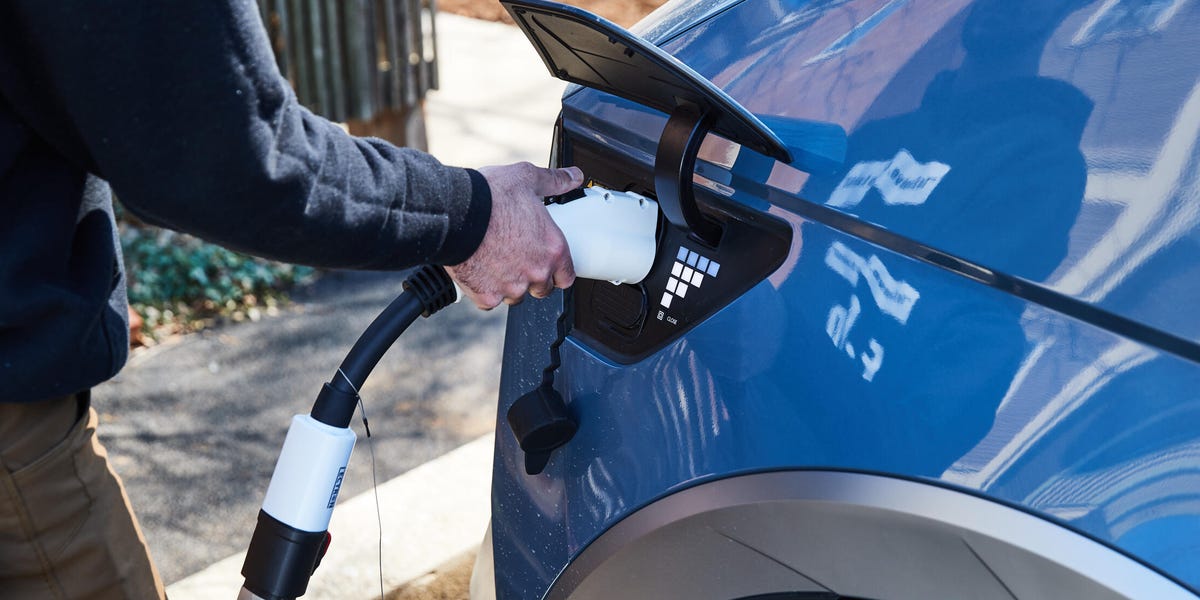
Owning an electric vehicle is wonderfully simple until you arrive at a perfectly good charger with the wrong plug. It is the EV equivalent of bringing a USB-C cable to a device that still lives in the micro-USB era: plenty of electricity, zero cooperation. The Lectron J1772 EV Charging Adapter is designed to solve one common version of that problem by letting a J1772-equipped vehicle use compatible Tesla-style NACS AC charging equipment.
That sentence contains two details worth underlining. First, this is a NACS-to-J1772 adapter, meaning the Tesla-style connector goes into the adapter and the J1772 end goes into the vehicle. Second, it is intended for AC Level 2 charging. It does not turn every Tesla plug into a universal fast-charging wand, and it does not make a Tesla Supercharger work with any random EV. Physics, software permissions, and connector standards remain stubbornly involved.
What Is the Lectron J1772 EV Charging Adapter?
The Lectron adapter is a compact coupler between a compatible Tesla-style NACS AC connector and a vehicle with a J1772 inlet. J1772 has long served many North American EVs and plug-in hybrids, while Tesla developed the slimmer connector called NACS. Because both can carry AC power for Level 2 charging, a properly designed adapter can bridge the physical interface in supported situations.
Adapter Direction Matters
EV adapter names can sound like someone tossed connector labels into a blender. The Lectron product covered here accepts a Tesla-style NACS charging plug and outputs through a J1772 vehicle connector. It is made for a J1772 vehicle using a compatible Tesla AC charger.
It is not the opposite adapter used by a NACS-equipped vehicle at a J1772 station. Check the connector direction, amperage, and charging type before ordering.
Lectron 48-Amp Adapter Specifications
| Feature | Typical 48-Amp Model |
|---|---|
| Charging direction | Tesla/NACS AC charging plug to J1772 vehicle |
| Maximum current | 48 amps |
| Maximum operating voltage | 240 volts AC |
| Maximum theoretical power | 11.52 kW at 48 amps and 240 volts |
| Charging category | AC Level 2 |
| Common charging sources | Tesla Wall Connectors, Destination Chargers, and Mobile Connectors when configured for compatible vehicles |
| Safety certification listed by Lectron | SGS certification to UL 2251 |
| DC fast charging | Not supported |
The 11.52-kW figure is the adapter’s maximum electrical ceiling under ideal conditions, not a guaranteed charging rate. Real power is limited by the weakest link in the chain: the charging station, circuit configuration, adapter rating, vehicle’s onboard AC charger, battery temperature, state of charge, and any current limit selected in the vehicle or charging equipment.
How Fast Can It Charge?
An adapter does not boost charging power. It simply enables a compatible connection. If the Tesla Wall Connector can provide 48 amps and the vehicle can accept 48 amps, the system may approach 11.52 kW. If the car accepts only 32 amps, charging will be limited to about 7.68 kW at 240 volts. A 40-amp vehicle or station tops out around 9.6 kW.
This distinction matters for plug-in hybrids and entry-level EVs. Some vehicles have relatively modest onboard AC chargers, so a 48-amp adapter may spend much of its life carrying far less current. That is not a defect. It is the car politely saying, “Thank you, but I will take only what I can digest.”
Compatible Vehicles and Charging Equipment
Vehicles That May Work
The adapter is intended for electric vehicles and plug-in hybrids equipped with a North American J1772 AC inlet. That includes many J1772-equipped model years from Chevrolet, Ford, Hyundai, Kia, Nissan, Volkswagen, BMW, Mercedes-Benz, Volvo, Polestar, Rivian, Lucid, Toyota, Jeep, and other manufacturers. Vehicles with a CCS1 port also contain the J1772 AC pin arrangement in the upper portion of the inlet, so they can ordinarily accept a J1772 Level 2 connector.
Model year matters because automakers are moving some vehicles to native NACS/J3400 ports. Check the actual charge port, not an aging compatibility list.
Charging Sources That May Work
- Tesla Wall Connectors that permit charging by non-Tesla vehicles
- Tesla Destination Chargers configured for general vehicle access
- Tesla Mobile Connectors connected to an appropriate power source
A physically compatible plug is not always an authorized plug. Newer Tesla Wall Connectors can be configured with access controls. If the owner or site operator restricts the unit to Tesla vehicles or selected vehicles, the adapter cannot negotiate its way around that policy. Before depending on a hotel, rental property, workplace, or private charger, confirm that non-Tesla charging is permitted.
What the Lectron Adapter Cannot Do
The most important limitation is simple: the standard Lectron 48-amp NACS-to-J1772 adapter is not compatible with Tesla Superchargers. Superchargers supply high-power DC charging, while this adapter is designed for AC Level 2 equipment. The connector may look related, but the electrical job is completely different.
It also cannot make an unsupported charging station ignore access controls, payment requirements, faults, or vehicle communication errors. It does not increase the car’s onboard charger rating, convert DC to AC, or guarantee that every generation of Tesla charging hardware will behave identically.
Drivers seeking Tesla Supercharger access for a CCS1 vehicle need an automaker-supported charging arrangement and a compatible NACS-to-CCS DC adapter. Those adapters are larger, rated for much higher voltage and current, and must meet a very different set of requirements. Do not treat AC and DC adapters as interchangeable cousins. They are more like a butter knife and a chainsaw: both cut things, but the comparison should end there.
How to Use the Lectron NACS-to-J1772 Adapter
- Confirm compatibility. Verify that the charging source is AC Level 2, permits non-Tesla vehicles, and is not a Supercharger.
- Inspect the equipment. Look for cracks, damaged pins, moisture contamination, discoloration, melted plastic, or debris.
- Connect the NACS plug to the adapter. Push it in fully until the locking mechanism engages and the connection feels secure.
- Allow the connection to initialize. Lectron recommends waiting about 30 seconds before inserting the J1772 end into the vehicle.
- Plug the J1772 end into the car. Seat it firmly and check the vehicle or charger indicators to confirm charging has started.
- Monitor the first few minutes. Confirm expected power, stable operation, and no unusual heat, odor, buzzing, or repeated faults.
- Disconnect correctly. Stop charging through the vehicle or station when required, release the J1772 latch, remove the adapter from the car, and then detach the NACS connector.
Avoid leaving the adapter hanging under heavy cable tension. Tesla charging cables can be stiff, especially in cold weather, and the combined weight can pull sideways on the vehicle inlet. Position the car close enough that the cable forms a relaxed curve rather than attempting an impression of a suspension bridge.
Build Quality, Safety, and Weather Use
The 48-amp Lectron adapter is known for a substantial, tightly fitting design. Independent hands-on testing and customer reports commonly describe a secure connection and solid locking action, although some users find the unit bulkier or harder to detach than smaller adapters.
Lectron states that the product has been certified by SGS to the UL 2251 standard, which covers plugs, receptacles, and couplers for electric vehicles. Certification is a meaningful purchasing consideration because an adapter may carry high current continuously for hours. A bargain-priced mystery cylinder is not the place to discover your adventurous side.
Stay within the manufacturer’s environmental and electrical limits. Keep connector faces clean, avoid standing water, and stop immediately if you notice excessive heat, odor, deformation, or repeated charging interruptions.
Advantages and Disadvantages
Pros
- Expands Level 2 charging options for J1772-equipped vehicles
- Supports up to 48 amps and 11.52 kW under suitable conditions
- Compact enough to keep in a trunk or charging bag
- Secure locking connection between the NACS plug and adapter
- Useful at homes, hotels, workplaces, and destinations with Tesla AC hardware
- Safety certification provides more reassurance than an unverified adapter
Cons
- Does not work at Tesla Superchargers
- Cannot bypass Tesla Wall Connector access controls
- May feel heavy or bulky compared with simpler adapters
- Actual charging speed may be far below the 48-amp rating
- Compatibility can vary by charger generation, configuration, and vehicle
- Another piece of gear must be stored, inspected, and remembered
48-Amp or 80-Amp Lectron Adapter?
Lectron also offers a higher-rated NACS-to-J1772 adapter capable of carrying up to 80 amps, with a theoretical maximum of 19.2 kW at 240 volts. The larger rating can make sense for vehicles with unusually powerful onboard AC chargers or for buyers who want additional electrical headroom.
For many EVs, the 48-amp model is already sufficient. A car limited to 11 kW, 9.6 kW, 7.7 kW, or less will not charge faster with an 80-amp adapter. Choose based on the vehicle’s AC input, certification, design, warranty, and pricenot the ancient instinct that the bigger number must be better.
Who Should Buy the Lectron J1772 EV Charging Adapter?
This adapter is most valuable for drivers who own a J1772-equipped EV and regularly encounter Tesla Wall Connectors or Destination Chargers. It is especially practical for households switching from a Tesla to a J1772 vehicle while keeping an existing Tesla home charger, families with mixed-brand EVs, travelers who stay at hotels with Tesla destination charging, and employees whose workplace parking has NACS AC equipment.
It is less useful for drivers who already have universal home charging, use native J1772 equipment, own a native-NACS vehicle, or mainly need highway DC fast charging.
Real-World Experience With the Lectron J1772 Adapter
The first impression is that the adapter feels more serious than its simple job suggests. The housing has noticeable weight, the NACS connector seats deeply, and the lock gives a reassuring click. That solidity is welcome when carrying several kilowatts for hours, although the adapter and cable should not hang awkwardly from the car.
At home, the most satisfying use case is converting an existing Tesla Wall Connector for a newly purchased J1772 vehicle. Instead of replacing a functioning charging unit, rewiring the garage, or installing a second EVSE, the owner can attach the adapter and continue using the existing circuit. The process is simple when the Wall Connector is configured to allow all vehicles: connect the NACS handle to the Lectron adapter, pause briefly, plug the J1772 end into the car, and wait for the charging indicators.
The recommended pause before plugging into the vehicle can feel odd, but EV charging equipment communicates before delivering power. If charging does not begin, disconnect, check the Wall Connector’s access settings, wait, and repeat the sequence rather than stabbing the plug into the port like it owes you money.
Hotel charging is where the adapter can earn its place in the trunk. A property may have several Tesla Destination Chargers and no native J1772 unit. With permission from the site and compatible charger settings, a J1772 EV can plug in overnight and leave with a useful charge the next morning. That can turn a travel day from “find a fast charger before breakfast” into “eat pancakes while the car is already full,” which is objectively the more civilized outcome.
Real-world speed depends on the car. A 48-amp onboard charger can use a properly configured 48-amp station, while a plug-in hybrid may draw far less. Check the adapter during early sessions; concentrated heat, repeated faults, or a sharp odor should never be dismissed as “breaking in.”
Cable management is the most common practical annoyance. Some Tesla Destination Charger cables are short or positioned for a Tesla charge-port location. A non-Tesla vehicle may place its inlet on the opposite fender, front corner, or nose. Parking orientation matters, and backing into a space may be necessary. The adapter solves the connector mismatch, not the geometric problem of a six-foot cable trying to reach a port designed by someone with a different parking plan.
Disconnecting can also require a deliberate sequence. Stop the charging session, release the vehicle-side latch, support the adapter with one hand, and remove the connectors without twisting. A tight fit is generally preferable to a loose connection, but forcing the parts at an angle can stress the latch. After use, wipe away dirt with a dry cloth, inspect the pins, and store the adapter in a protective pouch rather than letting it roll around beside wet umbrellas, beach sand, and the mysterious French fry that has lived under the cargo floor since 2023.
The greatest benefit is flexibility, not speed. The adapter adds another category of AC charger to the driver’s map. It does not eliminate route planning or access restrictions, but it can be a valuable backup for travelers and mixed-EV households.
Final Verdict
The Lectron J1772 EV Charging Adapter is a practical bridge between compatible Tesla/NACS AC charging equipment and J1772-equipped electric vehicles. The popular 48-amp version offers enough capacity for many modern EVs, a robust locking design, portable dimensions, and recognized safety certification. Its best use cases are home charger reuse, mixed-brand garages, workplace charging, and overnight destination charging.
Its limits are equally important. It is not a Supercharger adapter, it cannot override station access settings, and it cannot make a vehicle accept more AC power than its onboard charger allows. Buyers who understand those boundaries are likely to see it as a genuinely useful tool rather than a disappointing piece of plastic that failed to perform electrical sorcery.
Note: Connector standards, vehicle ports, charger firmware, product ratings, and network access policies can change. Verify the exact Lectron model, your vehicle’s charging specifications, the station type, and the site owner’s permission before charging.