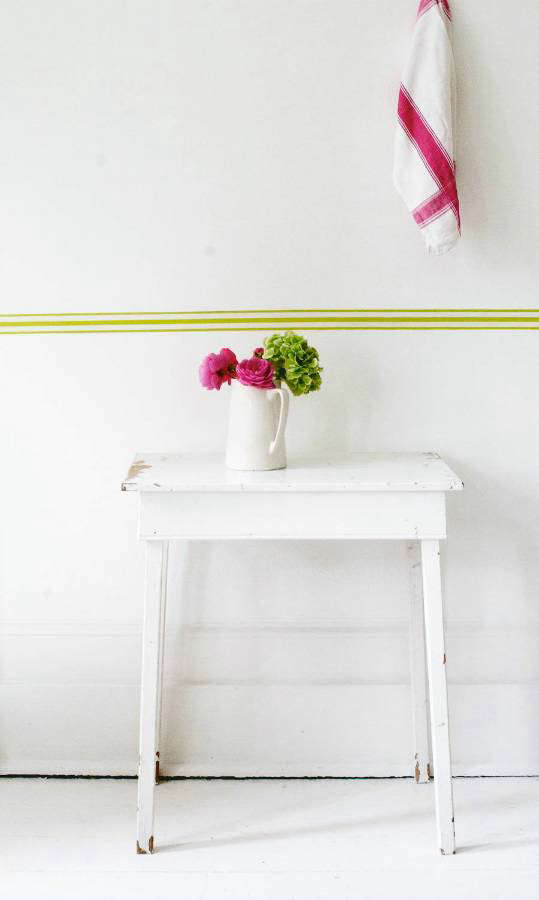
Some decorating ideas arrive carrying a toolbox, a ladder, three estimates, and a suspiciously expensive “quick refresh” plan. Others arrive as a simple strip of color and politely ask, “What if we made this room happier by lunchtime?” That is the charm behind instant color band accents from Jane Cumberbatch: a small design move with the nerve to act like architecture.
Jane Cumberbatch, the British designer and author associated with the Pure Style philosophy, has long championed interiors that feel simple, natural, practical, and lived-in rather than staged for a nervous museum guard. Her world is not about shouting décor. It is about white walls, natural textures, vintage pieces, unfussy rooms, and clever touches that make a home feel personal without making the homeowner file for emotional bankruptcy.
Her color band idea fits perfectly into that philosophy. Instead of repainting an entire room, installing expensive trim, or committing to a wallpaper pattern that might look fabulous on Monday and exhausting by Thursday, a color band offers a narrow, hand-painted accent that can define a shelf, doorway, wall edge, cabinet face, children’s room, kitchen corner, or plain hallway. It is color as punctuation: not a whole speech, just the perfectly placed comma.
What Are Instant Color Band Accents?
Instant color band accents are narrow decorative strips used to add a clean line of color to a surface. Jane Cumberbatch’s version, known as Colour Bands, was introduced as a hand-painted border accent. The original concept was beautifully simple: a roll of painted color, roughly the width of modest trim, applied with paste to create an immediate border, stripe, or visual edge.
The magic is not only in the product itself, but in the design thinking behind it. A color band can make a plain wall feel intentional. It can turn an ordinary shelf into a detail. It can create the illusion of trim where no trim exists. It can frame a doorway, separate two tones, highlight a headboard zone, or bring rhythm to a room that feels a little too quiet.
Think of it as the decorating equivalent of adding a ribbon to a wrapped gift. The box may already be useful, but the ribbon tells everyone you meant to do it.
Why Jane Cumberbatch’s Pure Style Makes the Idea Work
Color bands could easily become gimmicky in the wrong hands. In Jane Cumberbatch’s world, however, they feel grounded. Her Pure Style approach favors timeless rooms, natural materials, clean outlines, affordable ideas, and a relaxed mood. This matters because a small color detail looks best when it supports the room rather than competes with every chair, plate, pillow, and innocent houseplant.
Cumberbatch’s interiors often rely on restraint. White walls are not empty in her rooms; they are breathing space. Linen, wood, enamel, old furniture, painted floors, and simple textiles give the eye places to rest. A color band works in that environment because it adds personality without clutter. It says, “Here is a little wit,” not “Please admire my aggressively themed breakfast nook.”
Why Small Color Accents Have Big Design Power
Color has a strange talent for changing how we read a room. A thin line of blue can make a kitchen feel fresher. A soft green band can calm a bedroom. A warm ochre stripe can give a white hallway the glow it did not know it needed. The band does not need to dominate; in fact, its power often comes from being limited.
Interior designers often use color to create focus, balance, and movement. A band can draw the eye across a wall, emphasize a horizontal line, or connect scattered objects in a room. For example, a duck egg blue band above open kitchen shelving can quietly echo blue-and-white dishes. A marmalade-toned strip near a worktable can warm up pale walls and natural wood. A fennel green border around a pantry door can make the door feel charming instead of forgotten.
This is especially helpful in homes that lean neutral. Neutral rooms can be beautiful, but without contrast they sometimes drift into “very tasteful waiting room” territory. A color band wakes them up without forcing the owner to buy a velvet orange sofa named after a cocktail.
Best Places to Use Color Band Accents
1. Around Doorways
A narrow band around a doorway gives the effect of custom trim. This works particularly well in older homes with simple plaster walls or newer apartments that lack architectural detail. Choose a color that relates to something nearby: a rug, a painted chair, a ceramic bowl, or even the view into the next room.
2. Along Open Shelving
Open shelves are useful, but they can look visually loose. A color band along the back edge, top line, or underside of shelving creates order. In a kitchen, try a soft blue, faded green, warm terracotta, or chalky yellow. The result feels handcrafted, not fussy.
3. In Children’s Rooms
Children’s rooms love color, but parents often fear the moment a beloved “rainbow rocket jungle castle” theme becomes old news. A color band is easier to live with. It can run around the room at picture-rail height, frame a reading corner, or define a bed nook. It adds playfulness without turning bedtime into a carnival with pillows.
4. On Furniture
A plain dresser, old cupboard, bench, or tabletop can gain personality from a single band of color. This is a very Pure Style move: use what you have, improve it with imagination, and avoid replacing perfectly good furniture simply because the internet whispered “new season refresh.”
5. In Entryways and Hallways
Hallways are often neglected because they are not technically rooms. But they are the first handshake of a home. A band of color running along a hallway wall can create movement and make a narrow space feel considered. Try keeping the wall light and using the band as a modest stripe at waist height or just above a row of hooks.
Choosing the Right Color
The best color band does not have to match everything. In fact, matching too perfectly can make a room feel stiff, like it is afraid to exhale. A better strategy is to choose a color that belongs to the room’s wider mood.
For calm rooms, consider dusty blue, sage, clay, cream, soft gray-green, or faded rose. For livelier spaces, try tomato red, marmalade orange, cobalt blue, lemon yellow, or grassy green. For traditional interiors, muted heritage colors work beautifully. For modern rooms, a clean black, deep navy, or sharp white band can define edges with graphic confidence.
Use the color wheel as a guide, but do not let it bully you. Analogous colors, such as blue with blue-green or yellow with ochre, create harmony. Complementary colors, such as blue and orange, create energy. Neutrals with one earthy accent create warmth. The most important test is simple: does the color make the room feel more like itself?
Color Band Accents vs. Accent Walls
Accent walls have had a long and dramatic career. Some are wonderful. Some look like the room lost a bet. A color band offers a subtler alternative. Instead of painting one entire wall a different color, you use a smaller line to create definition. The effect is lighter, more flexible, and often more timeless.
This approach is useful when you want interest but not drama. A single wall of bold color can be powerful, but it can also visually chop up a room. A band can travel across multiple surfaces and connect the room together. It behaves more like trim, molding, or textile edging than a giant declaration.
For renters, commitment-shy decorators, or anyone still emotionally recovering from a previous “statement wall,” color bands are a friendly compromise.
How to Style a Color Band Without Overdoing It
The danger with any small decorative idea is that success tempts repetition. One beautiful band becomes two. Two becomes seven. Suddenly the living room looks like a cheerful barcode. Restraint is the secret.
Start with one place where the room needs definition. Maybe it is the top of a backsplash, the edge of a shelf, or the wall behind a desk. Let the band do its job before adding another. If you repeat the color, do it lightly through small objects: a vase, cushion, book spine, lamp base, or painted stool.
Also consider scale. A narrow band looks crisp on small furniture or shelves. A wider band may work better on a large wall or around a doorway. If your walls are uneven, be careful with perfectly straight stripes. A line can reveal bumps and waves the way a bad friend reveals secrets at dinner.
DIY Ways to Get the Look Today
Even if Jane Cumberbatch’s original Colour Bands are difficult to find now, the idea is easy to adapt. You can create a similar look with painted canvas tape, wallpaper border, peel-and-stick trim, fabric ribbon sealed properly, or carefully painted stripes using painter’s tape.
For a handcrafted effect, paint a long strip of heavy paper or canvas in your chosen color. Slight brush marks can be charming, especially in rustic, cottage, or vintage-inspired spaces. For a cleaner contemporary look, use high-quality painter’s tape and paint the band directly on the wall. Peel slowly, breathe deeply, and resist the urge to check the line every six seconds. Decorating rewards patience, which is annoying but true.
Peel-and-stick wallpaper can also be cut into strips for a removable version. This is especially useful in apartments, dorm rooms, or temporary homes. Always test removability on a hidden area first, because “renter-friendly” should not become “security-deposit-hostile.”
Room-by-Room Ideas Inspired by Jane Cumberbatch
Kitchen
Use a color band above open shelves, around a pantry door, or along the top edge of a simple backsplash. Pair warm white walls with duck egg blue, fennel green, or marmalade orange. Add enamelware, wooden boards, linen towels, and a few useful objects that look good without trying too hard.
Bedroom
Create a low horizontal band behind the bed to suggest a headboard. Soft rose, muted lavender, faded blue, or warm clay can make the space feel restful. Keep bedding simple: cotton sheets, linen throws, and maybe one patterned pillow that behaves itself.
Bathroom
A band of color above tile, around a mirror, or along a shelf can make a small bathroom feel designed. Soft green and blue shades work beautifully with white fixtures. For more drama, try charcoal or deep navy with brass or aged metal details.
Living Room
Frame a bookcase, fireplace wall, or picture rail zone. A color band can connect artwork and furniture without making the room feel overly coordinated. If the room has vintage pieces, choose a slightly muted shade rather than a glossy primary color.
Home Office
A band behind a desk can define the work area without painting the whole wall. Green encourages calm, blue feels focused, and warm yellow brings energy. Add a pinboard, task lamp, and a chair that does not punish your spine for having ambitions.
Why This Idea Still Feels Fresh
The appeal of instant color band accents is not nostalgia. It is practicality. Modern homes need flexible design ideas. People rent, move, work from home, decorate on budgets, inherit furniture, shop vintage, and want personality without waste. A color band answers all of that with surprising elegance.
It is also a reminder that decorating does not always require grand transformation. Sometimes the room does not need a renovation. It needs a line, a color, a small decision made with confidence. Jane Cumberbatch’s genius is in treating simplicity as something rich, not something lacking.
Experience Notes: Living with Instant Color Band Accents
The first time you try a color band, the temptation is to treat it like a tiny project. Do not be fooled. Small projects have a way of exposing every opinion you have ever had about your home. You start by choosing blue and end up asking whether your hallway has a personality disorder. This is normal.
In practice, the best experience begins with observation. Before adding any color, live with the idea for a day. Hold paint cards near the wall in morning light, afternoon light, and evening lamplight. A color that looks like elegant sage at breakfast can become gloomy pond water by dinner. Natural light changes everything, and artificial light loves practical jokes.
One useful method is to tape a paper sample where the band will go. Step away. Walk past it. Ignore it for an hour. If it keeps catching your eye in a pleasant way, you are close. If it shouts “Look at me!” every time you pass, choose a softer shade. A good color band should feel like a detail you are pleased to notice, not a small siren attached to the wall.
Application also teaches humility. Measure twice, mark lightly, and use a level unless you enjoy the handmade charm of accidental downhill skiing. On old walls, perfection is less important than consistency. A slightly imperfect hand-painted edge can look warm and human. A supposedly perfect modern stripe that wobbles unexpectedly can look like it had a stressful morning.
Color bands are especially satisfying in spaces that already have simple materials. In a kitchen with white walls and wooden shelves, a green or blue band can make everyday objects look curated. Suddenly the chipped pitcher, the stack of plates, and the jar of spoons appear to have joined a charming domestic orchestra. In a bedroom, a muted band behind the bed can make plain linens feel intentional. In an entryway, a stripe near hooks or a bench can turn a drop zone into a designed moment, even if the shoes underneath remain committed to chaos.
The greatest lesson is that small design moves build confidence. After one successful band, you may see other possibilities: a painted edge on a stool, a strip around a mirror, a border inside a cupboard, a line of color on a plain storage box. This is where Jane Cumberbatch’s influence feels most useful. The goal is not to buy more things. The goal is to see more potential in what already exists.
That is why instant color band accents remain such a smart decorating idea. They are affordable, adaptable, personal, and forgiving. They let you experiment with color without surrendering the entire room. They make plain spaces feel loved. And best of all, they prove that sometimes the quickest way to change a home is not to fill it up, but to add one thoughtful line and let the room breathe around it.
Conclusion
Instant color band accents from Jane Cumberbatch are proof that decorating does not need to be loud, expensive, or complicated to be memorable. A narrow line of color can frame a doorway, revive furniture, organize shelves, brighten a hallway, or bring charm to a quiet corner. Rooted in the Pure Style love of simplicity, natural materials, thrift, and timeless living, the idea feels both practical and poetic.
Whether you use a painted strip, removable wallpaper, fabric tape, or a carefully brushed DIY border, the principle remains the same: small color, big effect. It is decorating with confidence, but not ego. And in a world full of oversized trends, that modest little band may be the most stylish rebel in the room.