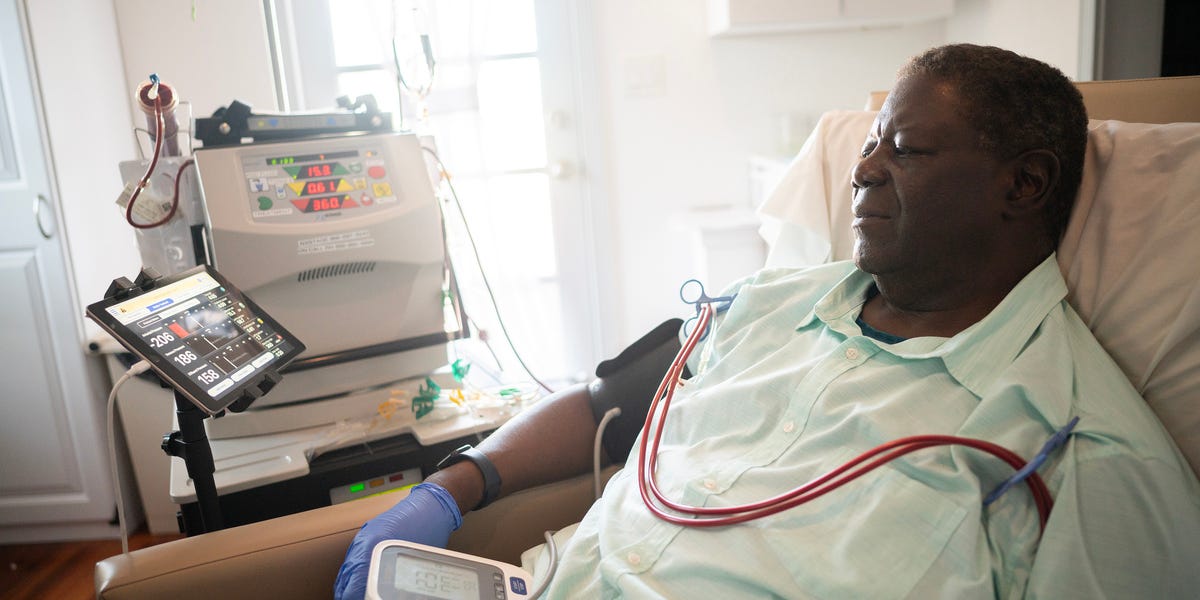
Dialysis has saved millions of lives, but let’s be honest: no one dreams of spending several hours at a clinic, three times a week, while a machine does the job their kidneys used to do quietly and without asking for snacks. For people living with kidney failure, dialysis is not just a treatment. It is a calendar, a commute, a diet plan, a fluid limit, a medical routine, and sometimes a full-time emotional side quest.
The good news is that the future of dialysis technology is finally picking up speed. For decades, dialysis care improved steadily but cautiously. Today, innovation is coming from many directions at once: smaller home hemodialysis systems, smarter peritoneal dialysis machines, remote monitoring tools, artificial intelligence, high-volume hemodiafiltration, sorbent-based dialysate regeneration, wearable artificial kidney concepts, and implantable bioartificial kidney research.
None of these advances magically replaces the need for nephrologists, nurses, technicians, dietitians, social workers, caregivers, or common sense. Technology still has to prove that it is safe, effective, affordable, and usable in real life. But the horizon looks brighter than it has in years. The next chapter of dialysis may be less about “keeping people alive” and more about helping them live with greater freedom, dignity, and control.
Why Dialysis Technology Needs a Big Upgrade
Dialysis does an essential job: it removes waste products, excess fluid, and certain toxins from the blood when the kidneys can no longer manage these tasks well enough. The two major forms are hemodialysis, which filters blood through an external machine, and peritoneal dialysis, which uses the lining of the abdomen as a natural filter.
Traditional in-center hemodialysis is effective, but it is also demanding. Many patients travel to a dialysis center three times per week for treatments that often last around four hours. Add transportation, waiting, recovery fatigue, and life’s usual chaos, and a “four-hour treatment” can quietly eat an entire day. Dialysis is lifesaving, but it can be a stubborn roommate.
That is why innovation matters. Better dialysis technology is not only about shinier machines. It is about fewer complications, more flexible schedules, better toxin clearance, improved quality of life, cleaner data, stronger infection prevention, and treatment options that fit patients instead of forcing patients to fit the machine.
The Rise of Home Dialysis Technology
One of the most important trends in kidney care is the movement toward home dialysis. Home hemodialysis and peritoneal dialysis can give patients more flexibility, privacy, and independence. Instead of organizing life around a clinic chair, some patients can organize treatment around work, family, sleep, school, travel, or simply the sacred human right to sit on their own couch.
Home Hemodialysis Systems Are Getting Smarter
Modern home hemodialysis systems are being designed to simplify setup, automate steps, reduce training burdens, and transmit treatment data to care teams. Some newer platforms include integrated water purification, on-demand dialysate production, touchscreen guidance, and wireless data transfer. The goal is to make home hemodialysis less intimidating for patients and caregivers.
This does not mean home hemodialysis is easy for everyone. Patients still need training, a safe home environment, reliable support, and confidence handling needles, alarms, supplies, and troubleshooting. But the technology is moving in the right direction: fewer moving parts, clearer instructions, better connectivity, and a user experience that feels less like operating a submarine.
Peritoneal Dialysis Is Becoming More Connected
Peritoneal dialysis has long been a home-friendly option because it can be performed manually during the day or automatically overnight with a cycler. The future of peritoneal dialysis technology is likely to focus on smarter cyclers, cloud-connected monitoring, better fluid management, and more personalized prescriptions.
Remote patient monitoring can help care teams see whether treatments are being completed, whether drain volumes look unusual, or whether patterns suggest a problem before it becomes an emergency. That matters because early intervention can prevent complications, reduce hospital visits, and give patients more confidence at home.
Remote Monitoring: Dialysis Data Finally Learns to Travel
Dialysis produces a huge amount of useful information: blood pressure, weight, ultrafiltration volume, treatment time, alarms, lab trends, access issues, symptoms, and adherence patterns. Historically, some of that data lived in paper logs, machine printouts, or patient memory. And patient memory, while heroic, is not always thrilled to recall last Tuesday’s drain volume.
Connected dialysis platforms can send treatment data securely to clinicians. This allows the care team to spot trends, adjust prescriptions, check missed treatments, and respond faster to warning signs. For home patients, remote monitoring can reduce the feeling of being medically alone. For clinicians, it can create a fuller picture than a rushed clinic visit ever could.
The next wave will likely combine dialysis machine data with wearable sensors, electronic health records, lab results, and patient-reported symptoms. A patient’s care plan could become more dynamic, with treatment adjustments based on real-world patterns rather than snapshots taken weeks apart.
Artificial Intelligence in Dialysis: Helpful Assistant, Not Robot Nephrologist
Artificial intelligence is already reshaping many areas of health care, and dialysis is no exception. In kidney care, AI may help predict hospitalization risk, detect access problems, flag unstable blood pressure patterns, identify patients at higher infection risk, personalize fluid removal, and support earlier intervention.
For example, an AI-supported system could notice that a patient’s blood pressure drops during the last hour of treatment whenever ultrafiltration exceeds a certain threshold. Instead of waiting for repeated symptoms, the system could alert clinicians to review the prescription. That is not science fiction. It is the kind of pattern recognition computers are built for, assuming they are trained responsibly and monitored by humans who know kidneys from keychains.
Still, AI in dialysis must be handled carefully. Algorithms can reflect biased data, miss social realities, or generate false alarms. The best use of AI is not replacing clinicians; it is helping them see patterns sooner, reduce administrative burden, and make safer decisions with better information.
High-Volume Hemodiafiltration: A New Standard Coming to U.S. Clinics?
Hemodiafiltration combines two filtering methods: diffusion, which is the main mechanism used in conventional hemodialysis, and convection, which can help remove larger middle molecules. High-volume hemodiafiltration has been used in many parts of Europe, Latin America, and Asia, and it is now gaining attention in the United States as newer systems receive regulatory clearance and move toward broader commercialization.
Why does this matter? Standard hemodialysis is excellent at removing many small waste products, but people with kidney failure accumulate a complex mix of toxins. Middle molecules and inflammatory substances may contribute to symptoms and long-term complications. Hemodiafiltration aims to provide a more efficient and potentially more physiologic form of clearance.
For patients, the promise is not “dialysis becomes a spa day.” Let’s not get carried away. The promise is better treatment quality, potentially improved tolerability, and continued progress toward dialysis that more closely mimics natural kidney function.
Wearable Artificial Kidneys: The Dream of Continuous Dialysis
The wearable artificial kidney is one of the most exciting ideas in dialysis innovation. Instead of receiving intermittent treatment for several hours at a time, a wearable device could theoretically provide slower, more continuous blood filtration while allowing patients to move around. Think less “appointment with a machine” and more “kidney support that comes along for the ride.”
Wearable dialysis concepts often rely on miniaturized pumps, compact filters, biosensors, battery systems, and sorbent technology that regenerates dialysate. Sorbents are materials that bind or remove unwanted substances, allowing a small volume of fluid to be reused. This is crucial because no one wants to wear a dialysis device that requires dragging a bathtub of dialysate behind them like a very medical wagon.
However, wearable artificial kidneys still face major hurdles. Devices must be safe, durable, comfortable, easy to clean, resistant to leaks and clotting, and able to manage fluid removal accurately. They must also satisfy regulators, clinicians, payers, and patients. As of now, wearable and implantable artificial kidney devices are not commercially available for routine patient use in the United States. The promise is real, but the finish line is not here yet.
Implantable Bioartificial Kidneys: Beyond Dialysis Machines
The implantable bioartificial kidney represents an even bigger leap. Instead of filtering blood through an external machine, researchers are working on surgically implanted devices that combine artificial filtration with living kidney cells. The goal is to provide continuous kidney support without external tubing, pumps, or standard dialysis sessions.
One major research effort is focused on a small implantable device with two main components: a hemofilter to process blood and a bioreactor containing kidney cells to help handle filtrate. If successful, this type of device could reduce dependence on dialysis and help address the shortage of transplantable kidneys.
That said, implantable artificial kidneys are extremely complex. They must avoid clotting, infection, immune rejection, mechanical failure, and cell viability problems. They must work continuously inside the body, which is a hostile environment for anything that is not supposed to be there. The human body is basically a bouncer with a PhD in immunology.
The research is promising, but patients should be cautious about hype. The future may include implantable kidney technology, but it will require rigorous trials, long-term safety data, manufacturing scale-up, and realistic access plans.
Better Vascular Access: The Unsung Hero of Dialysis Innovation
When people talk about dialysis technology, they often focus on machines. But vascular access deserves its own spotlight. For hemodialysis, blood must leave and return to the body safely and repeatedly. Access problems can lead to infections, clotting, procedures, missed treatments, and hospitalizations.
Future dialysis care will likely include improved access monitoring, better imaging, smarter sensors, and earlier detection of stenosis or flow problems. Some tools may identify changes before the access fails. Others may help reduce catheter dependence, which is important because catheters are linked with higher infection risk.
Infection prevention will remain a major priority. Dialysis patients are medically vulnerable, and repeated access to the bloodstream creates risk. Better antimicrobial materials, improved catheter care protocols, staff training, environmental cleaning, and patient education all belong in the innovation conversation. Sometimes the future is not a robot; sometimes it is better hand hygiene and a checklist that people actually use.
Personalized Dialysis Prescriptions
Dialysis has traditionally relied on standardized schedules, but patients are not standardized. One person may still make urine. Another may struggle with fluid overload. One may have severe blood pressure drops during treatment. Another may tolerate longer or more frequent sessions well. The future of dialysis technology will be more personalized.
Digital tools can help clinicians adjust treatment frequency, duration, dialysate composition, fluid removal goals, and monitoring strategies based on individual data. Instead of asking, “Did the patient complete dialysis?” future systems may ask, “Was this the right dialysis for this patient this week?”
This shift could also improve patient engagement. When people understand their own data, they may feel more in control. A dashboard showing trends in blood pressure, weight, treatment completion, symptoms, and lab values can turn dialysis from a mysterious medical ritual into something more understandable.
Greener Dialysis: The Environmental Side of Innovation
Dialysis uses large amounts of water, energy, plastic, packaging, and transportation. As health care systems focus more on sustainability, dialysis technology will need to become greener. This may include machines that use less water, dialysate regeneration systems, improved supply chains, recyclable materials, energy-efficient equipment, and more home-based options that reduce travel.
Sustainability is not just a public relations sparkle sticker. It affects cost, resilience, and access. In emergencies, natural disasters, or supply disruptions, dialysis systems that require fewer resources may help protect patients. A future dialysis system should be clinically excellent and environmentally smarter. Kidneys are already masters of recycling; dialysis should take notes.
What Patients Should Watch for Next
Patients and families should keep an eye on several developments: more user-friendly home hemodialysis machines, expanded use of connected peritoneal dialysis cyclers, broader adoption of high-volume hemodiafiltration, AI-supported treatment planning, improved access surveillance, wearable artificial kidney trials, and implantable bioartificial kidney research.
However, patients should also ask practical questions. Is the technology approved for my setting? What training is required? Who monitors the data? What happens if the device alarms at 2 a.m.? Is it covered by insurance? Can my home support it? What are the risks? What does my nephrologist recommend for my specific condition?
The future of dialysis technology is exciting, but the best treatment is still the one that is safe, accessible, sustainable, and matched to the patient’s life.
Experience Section: What the Future of Dialysis Technology Could Feel Like
To understand why dialysis innovation matters, imagine the experience of a patient named Marcus. He is 48, works in logistics, helps care for his father, and has kidney failure caused by diabetes and high blood pressure. His current in-center dialysis schedule is Monday, Wednesday, and Friday afternoons. By the time he travels to the clinic, completes treatment, gets home, and recovers from the washed-out feeling that many patients call “dialysis fatigue,” half the week feels rented out to kidney failure.
Now imagine Marcus in a more advanced dialysis future. His care team offers him a home hemodialysis system with guided setup, remote monitoring, and automatic treatment data transmission. At first, he is nervous. He wonders whether he will remember every step, whether his partner will feel overwhelmed, and whether the machine will beep at him in a tone that sounds personally disappointed. Training helps. The interface walks him through the process. His nurse can review treatment data remotely. His nephrologist can adjust settings based on real trends instead of waiting for the next clinic visit.
His life does not become perfect. Dialysis is still dialysis. Supplies take up space. Needles are still not anyone’s favorite hobby. But Marcus gains flexibility. Some weeks, he can dialyze in the evening. Some mornings, he feels less rushed. He can attend his niece’s school event without negotiating with an appointment schedule that has the personality of a parking meter.
Now consider another patient, Elena, who uses automated peritoneal dialysis overnight. Her future cycler is quieter, easier to connect, and linked to her clinic. One morning, her care team notices unusual drain patterns and calls before she develops serious symptoms. A small problem stays small. That is the kind of innovation that may never make a flashy headline, but it changes lives.
For dialysis nurses and technicians, innovation could also reduce repetitive tasks and improve safety. Instead of manually chasing incomplete logs or reacting to preventable crashes, they could use dashboards that highlight the patients most in need of attention. Technology would not replace their judgment. It would give their judgment better lighting.
For caregivers, future dialysis technology could reduce fear. A spouse helping with home treatment may feel more confident if the machine provides clear instructions, built-in safety checks, and direct communication with the clinic. A daughter caring for a parent may appreciate remote monitoring because it offers reassurance without turning her into a full-time medical detective.
The emotional experience matters as much as the technical one. Dialysis innovation is not only about membranes, pumps, sensors, and software. It is about giving patients fewer days dominated by treatment, fewer emergencies, more confidence, and more ordinary moments. Breakfast without rushing. Work without constant rescheduling. Travel without logistical gymnastics. Sleep that is not interrupted by worry. The future of dialysis technology should be measured not only by lab values, but also by how much life it gives back.
Conclusion: The Future of Dialysis Is More Human
The future of dialysis technology is not one single invention. It is a collection of advances that point in the same direction: smaller machines, smarter monitoring, more home-based care, better filtration, safer access, greener systems, and eventually wearable or implantable solutions that may transform kidney replacement therapy.
Progress will not happen overnight. New devices must prove themselves in clinical trials, earn regulatory clearance, gain physician trust, secure coverage, and work in messy real-world conditions. But the momentum is real. Dialysis is moving from a rigid, clinic-centered model toward a more flexible, data-informed, patient-centered future.
For people living with kidney failure, that future cannot arrive soon enough. Innovation should not simply make dialysis more impressive. It should make life bigger than the treatment.
Note: This article is for general educational purposes only and should not replace medical advice from a nephrologist or qualified kidney care team.