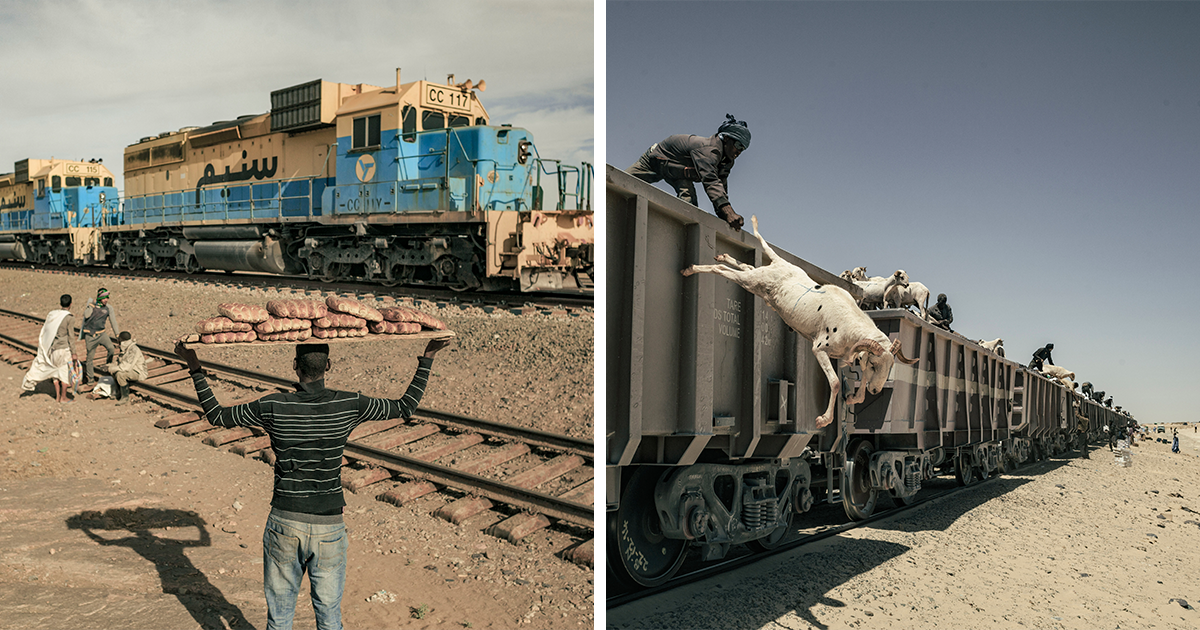
Some trips give you postcards. The Mauritanian iron ore train gives you iron dust in your socks, Sahara wind in your teeth, and a very serious new appreciation for goggles. This is not a polished luxury rail fantasy with linen napkins, mood lighting, and a conductor who says things like “champagne service is now open.” This is a working freight train in Mauritania, built to move ore across the desert, not pamper travelers with cute little chocolate mints on pillows.
And that is exactly why the ride has become legendary.
For weeks, I followed the rhythm of the Mauritania train route between the mining north and the Atlantic coast, watching how this giant machine stitched together remote communities, traders, workers, shepherds, and the kind of travelers who hear “dangerous freight ride across the Sahara” and somehow translate it into “sounds relaxing.” What makes the Mauritanian iron ore train unforgettable is not just the scale of it, though the scale is absurd in the best possible way. It is the feeling that you are crossing a landscape so stripped down, so elemental, that every small comfort suddenly becomes a luxury and every ordinary moment becomes cinematic.
If you are searching for what it is really like to ride the Mauritanian iron ore train, this is the honest version: it is uncomfortable, dirty, loud, and occasionally ridiculous. It is also mesmerizing. The journey from the mining region near Zouérat toward Nouadhibou turns the Sahara into a slow-moving theater of black ore, copper light, cold night air, and human endurance. Somewhere between the clanking steel, the drifting sand, and the stars above the wagons, the experience stops feeling like transportation and starts feeling like an argument with modern life itself.
Why The Mauritanian Iron Ore Train Feels So Different From Any Other Train Ride
A freight train first, a bucket-list legend second
The first thing to understand is that the Mauritanian iron ore train is not a tourist product. It is a freight artery. Its main job is hauling iron ore across the Sahara, not helping visitors collect dramatic selfies. That industrial purpose shapes everything about the ride. The train is long, exposed, grimy, and practical. The wagons are built for cargo. The landscape is built for humility. Nothing about it whispers convenience.
That harshness is also the source of the train’s strange appeal. In an era when so much travel has been filtered, optimized, geotagged, monetized, and squeezed into a neat little “Top 10 Things To Do” list, the Mauritania iron ore train still feels stubbornly real. It asks a basic question: are you here for the story, or are you here for the comfort? You do not get both.
Dust is not a side effect. Dust is the co-star.
Riding this Sahara freight train means accepting black dust as a temporary personality trait. It settles on your clothes, camera, backpack, scarf, and soul. By the time the sun rises, you look less like a travel writer and more like you lost a bar fight in a charcoal warehouse. The dust is so constant that it changes the way you think about photography. Composition matters, sure, but so does whether your lens is still capable of showing the world as anything other than a smoky smudge.
Still, the visual rewards are huge. The contrast is almost rude: black iron ore against pale sand, hard metal against soft dawn light, motion against stillness. Even the ugliest corners of the train become photogenic once the Sahara starts performing. And the Sahara always performs.
The real story is the people, not just the machine
It would be easy to turn the Mauritanian train ride into a macho survival tale. That would miss the point. The train matters because people use it. Traders haul goods. Families move between towns. Workers ride because that is the route available. Locals understand this railway as part of ordinary life, even when outsiders treat it like the final level of adventure travel. Spend enough time around the line and you stop seeing only spectacle. You start seeing dependence, routine, patience, humor, and improvisation.
That is when the ride gets interesting. Not when the wagon jolts. Not when the desert looks dramatic. Those things happen. The deeper story is how this iron ore train in Mauritania functions as both a brutal industrial system and a human corridor. It is part freight, part folklore, part necessity.
Here Are 25 Photos I Took On The Mauritanian Iron Ore Train
Since I cannot throw actual iron dust through your screen, these 25 photo notes do the next best thing. Think of them as the captions beneath the grit.
What A Month Around The Mauritania Railway Actually Teaches You
The internet loves to market the Mauritanian iron ore train as pure danger, pure adrenaline, pure bragging rights. That is lazy storytelling. The better lesson is that the train is a moving lesson in scale. Scale of distance. Scale of industry. Scale of patience. Scale of how small your personal comfort zone really is when stripped of Wi-Fi, foam mattresses, and the illusion that travel must always feel easy to be worthwhile.
It also teaches you something about attention. On a normal trip, you burn through impressions fast. New hotel, new café, new landmark, new post, next thing. On the Mauritania train ride, the world slows down enough to reveal texture. A change in light matters. A shared cup of tea matters. A scarf knot matters. A patch of shade matters. A stranger’s joke matters. When life is reduced to essentials, details stop being decorative and start becoming the whole story.
That is why the Mauritanian iron ore train keeps showing up in travel photography, long-form features, and whispered “you will not believe this place” conversations. It is not simply because it is hard. Plenty of things are hard and boring. This is hard and visually rich. Hard and culturally revealing. Hard and weirdly poetic. The train drags iron across the Sahara, yes, but it also drags your senses out of autopilot.
And maybe that is the secret. The freight train does not offer romance in the polished sense. It offers something rougher and more durable: perspective. After enough nights around the railway, even small comforts glow with fresh importance. Clean water. Warm food. A mattress that does not move. Clothing that is not the color of ore. You come away dirtier, more tired, and oddly more grateful.
Extended Field Notes: Another From A Month On The Train
What stayed with me most was not a single dramatic incident. It was the repetition. The waiting. The boarding. The settling into motion. The way each ride began with uncertainty and ended with the same stunned feeling that an entire desert night had somehow passed beneath us. The Mauritanian iron ore train is famous because it sounds extreme, but living around it for a month reveals something quieter. The ride is less about conquering discomfort and more about learning how people normalize it.
At first, I looked at the train the way outsiders usually do: as a monster of steel, distance, and legend. Then I started noticing the choreography around it. People knew where to stand. They knew when to move. They knew how to wrap a scarf properly, how to secure a bag, how to sit in a way that made the jolts bearable. Nothing was romanticized. Nobody was composing a heroic speech about resilience. They were just getting on with it, which made the whole thing even more impressive.
One evening I watched the last light slide across the ore until the wagon looked dusted with embers. Nobody around me reacted like this was some once-in-a-lifetime sunset. They had seen beauty show up in practical places before. That corrected something in me. Travelers often arrive desperate to label a place “authentic,” which is usually a fancy way of admitting we expect other people’s ordinary lives to feel magical to us. The truth is simpler. The train is not trying to be iconic. It is just doing its job. The icon status is our invention.
The nights were the strangest part. Noise would rise, then flatten into rhythm. The cold would creep in, silent and rude. Someone would cough. Someone would laugh. Someone would adjust a blanket. Above us, the stars looked almost offensive in their clarity, like the sky was showing off because it knew there would be no city lights to interrupt. You could feel both exposed and oddly protected at the same time, as if the wagon were too small to be safe and too vast to be lonely.
Morning always arrived with the same brutal honesty. There is no graceful wake-up on a cargo train in the Sahara. You do not stretch and smile like a toothpaste commercial. You blink. You spit dust. You assess which body parts still belong to you. And then, almost immediately, the scenery wins you back. The dunes soften. The horizon opens. The world looks rinsed in pale gold. You remember why people keep talking about this route between Zouérat and Nouadhibou as if it were less a railway and more a rite of passage.
By the end of the month, the infamous Mauritanian iron ore train no longer felt infamous to me. It felt revealing. It exposed the fantasy habits many travelers carry into remote places. It stripped away the expectation that every extraordinary journey must also be neat, friendly, and photogenic on demand. Sometimes the great travel experience is not comfortable, not elegant, and not especially interested in impressing you. Sometimes it is simply real. And real, as it turns out, can be unforgettable.
Conclusion
If the Mauritanian iron ore train has become one of the most talked-about rail journeys in Africa, it is because it delivers the one thing algorithm-friendly travel often cannot: genuine friction. You feel the route. You feel the weather. You feel the industrial weight of Mauritania’s economy and the human stories moving alongside it. This is not a pretty little sightseeing loop. It is a Sahara crossing on a working freight line, and that is exactly what gives it power.
For photographers, it offers stunning contrasts and unforgettable light. For travelers, it offers perspective. For anyone tired of sterile, over-curated travel content, it offers proof that the world still contains journeys that do not care whether they fit neatly into a content calendar. The Mauritania iron ore train is dirty, difficult, and deeply memorable. In other words, it is the sort of adventure that survives the internet because it is larger than the internet.