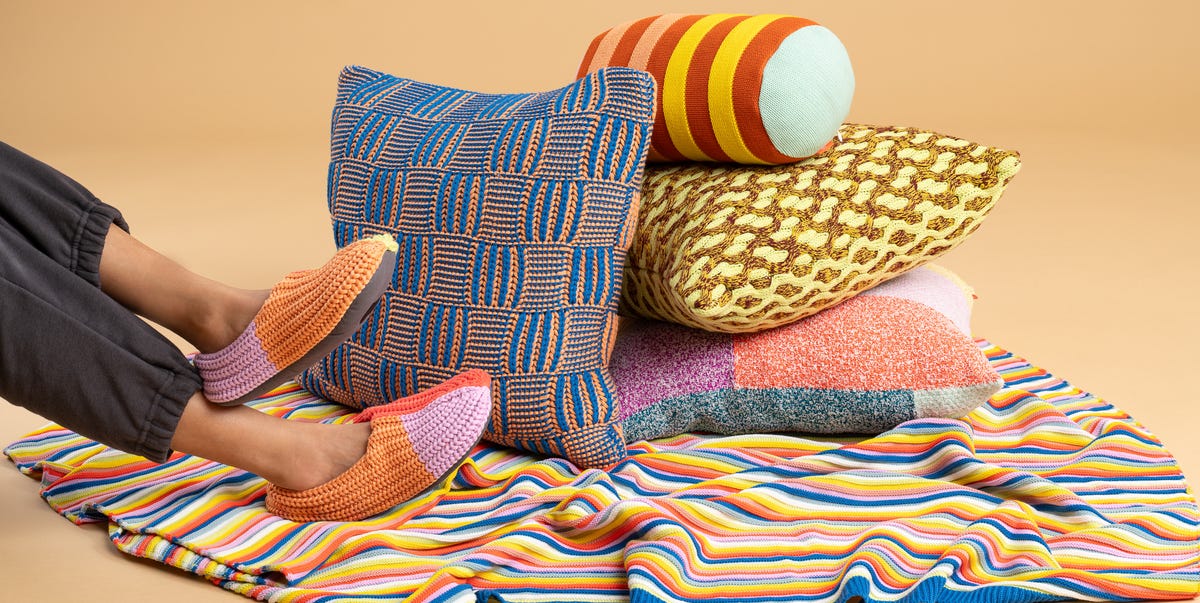
Some fashion brands begin with a mood board. Some begin with a celebrity muse, a runway fantasy, or a designer whispering dramatically at a bolt of silk. Verloop began with something far less glamorous and much more interesting: leftover yarn. Not sad leftover yarn, either. Bright, odd, highly usable yarn that was too good to waste and too stubborn to fit neatly into ordinary production plans.
That is the magic behind Verloop, the colorful knitwear and lifestyle brand founded by Ella Lim. The brand turns dead stock yarn, also called deadstock or surplus yarn, into cheerful accessories and home goods: hats, gloves, scarves, slippers, pillows, throws, placemats, coasters, bottle covers, bags, dog sweaters, and other knitted objects that look like they escaped from a very stylish color party.
At the center of the story is a deceptively simple idea: what if the leftovers were not treated as a problem, but as the starting point? In a fashion industry famous for overproduction, Verloop flips the script. Instead of designing a product first and ordering new material later, the team looks at what yarn already exists and asks, “What can this become?” That question is where the fun starts.
What Is Dead Stock Yarn?
Dead stock yarn is leftover textile material from manufacturing. In knitwear production, factories often order more yarn than a project technically requires. This extra amount acts as insurance against mistakes, sampling, color matching, machine adjustments, and plain old human unpredictability. After the order is finished, the unused yarn may sit in storage, waiting for a second life that may never arrive.
In many factories, those leftovers become clutter. In worse cases, they become waste. Verloop saw the material differently. The brand’s philosophy is basically: if the yarn is already here, already spun, already dyed, and already capable of becoming something useful, why send it to a landfill wearing a tiny yarn frown?
Dead Stock Yarn vs. Recycled Yarn
Dead stock yarn is not always the same as recycled yarn. Recycled yarn is usually made by breaking down existing fibers and spinning them into new yarn. Dead stock yarn, on the other hand, is unused surplus material. It has not been worn, shredded, or remade. It is simply extra. That makes it valuable because the environmental cost of producing it has already happened. Giving it a useful life helps avoid wasting those resources.
Verloop also uses recycled yarn in some products, but its original identity is strongly tied to repurposing deadstock material. The result is a design process that feels part sustainability lab, part color experiment, and part treasure hunt.
The Origin Story: From Factory Leftovers to Feel-Good Knits
Verloop was founded by Ella Lim in 2012 after she returned from a career in marketing and product design in New York City to her family’s textile manufacturing world in Asia. Her family’s knitting factory in the Philippines had been producing knit goods for years, and like many manufacturers, it had accumulated leftover yarn from completed orders.
Instead of seeing the stockroom as a storage headache, Lim saw creative raw material. The family factory already had skilled workers, knitting knowledge, machinery, and a deep understanding of how yarn behaves. What it needed was a new design approach: one flexible enough to work with limited colors, odd quantities, and surprise combinations.
The name “Verloop” comes from a Dutch word meaning “process,” which is wonderfully appropriate. Knitting itself is built from loops. Sustainability is a process. Design is a process. Figuring out what to do with five boxes of electric blue yarn and half a cone of peach is also a process, though possibly one best handled with coffee.
How Verloop Designs With What Already Exists
Most traditional fashion production begins with a fixed vision. A designer picks exact colors, orders exact yarns, and manufactures exact quantities. Verloop works in reverse. The available yarn comes first. The design follows.
This reverse-engineered method changes everything. It means the team cannot simply say, “Let’s make 10,000 identical scarves in this exact shade of tomato red.” If there is only enough tomato red for a stripe, a patch, or a pom-pom, that is what the material allows. The limitation becomes the design language.
1. Color Comes From Constraint
Verloop’s knits are famous for bold color blocking, stripes, checks, grids, patchwork, and playful contrasts. These patterns are not just decorative choices. They are smart solutions to the deadstock puzzle. When yarn comes in limited quantities, frequent color changes allow smaller amounts to be used meaningfully.
That is why Verloop products often look lively rather than minimal. A glove might combine several related shades. A throw might look like a soft geometric painting. A slipper might have enough color personality to make your other slippers feel emotionally underdressed.
2. Simple Shapes Make Room for Wild Color
Verloop often uses clean, functional forms: beanies, scarves, gloves, slippers, pillows, throws, placemats, and other everyday pieces. The shapes are approachable, but the colors do the dancing. This balance matters. If both the silhouette and the palette were screaming, the result might feel chaotic. Instead, Verloop lets familiar objects become color-forward without losing usefulness.
3. Dutch Design Meets Filipino Resourcefulness
Verloop’s look has often been linked to Dutch design, especially its love of simple patterns, playful color, and graphic clarity. Think checks, stripes, grids, and optical contrasts. But the brand’s spirit is also rooted in Filipino craft traditions and resourcefulness. Making something beautiful out of what is available is not just a sustainability strategy; it is a cultural habit of ingenuity.
The result is a hybrid visual language: modern, bright, practical, and a little mischievous. It is not beige minimalism whispering from a white room. It is a knit pillow saying, “Yes, I am orange and cobalt. Please adjust accordingly.”
Why the Family-Owned Factory Matters
One of Verloop’s biggest advantages is that design and production happen closely together. The brand’s products are made in a family-owned factory in the Philippines, where the team can experiment directly with materials, machines, and techniques.
This setup helps reduce the distance between idea and execution. If a designer wants to test a new stripe rhythm, mix multiple yarns, or adjust a stitch structure, the production team can respond quickly. That kind of collaboration is especially valuable when working with dead stock yarn because every batch is different. The yarn tells the designers what is possible, and the factory team helps translate that possibility into a finished product.
Skilled Craft Turns Leftovers Into Design
Deadstock alone does not make a good product. A box of leftover yarn is just a box of leftover yarn until someone understands tension, gauge, stitch behavior, color balance, finishing, and durability. Verloop’s factory team brings decades of knitwear experience to the process. That expertise is what allows the brand to make products that feel intentional rather than improvised.
There is a difference between “we used leftovers” and “we designed beautifully with available materials.” Verloop lives in the second category.
From Gloves to Home Decor: The Product Evolution
Verloop’s early products included cold-weather accessories such as gloves, scarves, hats, and balaclavas. That made sense because the family factory had experience producing knit gloves. One standout idea was the “Pair and Spare” glove concept: three gloves in related but not identical patterns, giving customers an extra glove and a playful mix-and-match effect.
Over time, the brand expanded beyond wearable accessories. Slippers became a hit, and customer interest pushed Verloop further into the home category. Today, the product range includes pillows, throws, quilts, rugs, placemats, coasters, bottle covers, bags, socks, and even dog sweaters. In other words, Verloop did not stop at warming hands. It decided the couch, the coffee table, the reusable water bottle, and the family dog deserved a little knitwear charisma too.
Why Home Goods Make Sense for Dead Stock Yarn
Home decor is a clever category for deadstock design. Throws, pillows, placemats, and coasters can welcome bold pattern in a way that feels joyful rather than risky. A neon-striped sweater may scare some shoppers. A neon-striped pillow? Suddenly everyone is an interior designer.
Home goods also allow the brand to use a wider variety of yarn weights, colors, and textures. A small amount of yarn might not be enough for a sweater, but it could become part of a coaster set, a pillow panel, a pom accent, or a patchwork throw.
Verloop’s Sustainability Strategy: More Than a Cute Tagline
Verloop’s motto, “More color, less waste,” works because it is specific. The brand is not claiming to solve every environmental problem in fashion. Instead, it focuses on a clear, practical intervention: use surplus yarn that already exists and turn it into desirable products.
That matters because textile waste remains a major issue. The U.S. Environmental Protection Agency estimated that 17 million tons of textiles were generated in municipal solid waste in 2018. That same year, 11.3 million tons of textiles went to landfills, while the overall textile recycling rate was only 14.7 percent.
Against that backdrop, deadstock design is not a perfect solution, but it is a useful one. It keeps usable material in circulation longer. It reduces the need for virgin inputs in specific products. It also challenges designers to think beyond the old model of endless newness.
Seamless Knitting and Minimal Trimming
Verloop’s sustainability thinking also shows up in construction. Some ribbed slippers are seamlessly knit, which means less material is cut away after knitting. Pom details can be made with deadstock yarn using machinery that shapes them with minimal trimming. These choices may sound small, but in manufacturing, small savings repeated across many units can matter.
The larger point is that sustainability is not one heroic gesture. It is a series of decisions: use existing yarn, design around limited quantities, reduce cut waste, collaborate closely with production, and keep experimenting.
The Design Challenge: Limited Yarn, Unlimited Personality
Working with dead stock yarn is not as easy as sprinkling eco-friendly fairy dust over a scarf. Deadstock creates real design constraints. Colors may not be available again. Quantities may be unpredictable. Fiber content can vary. A shade that appears in one season may disappear forever once the batch is used.
For some brands, that uncertainty would be a nightmare. For Verloop, it becomes the personality of the product. Limited material encourages limited runs, unexpected combinations, and designs that feel fresh because they are shaped by what is actually available.
The Beauty of Not Being Too Perfect
Modern shoppers are increasingly tired of sameness. When every product looks algorithmically optimized, something handmade, small-batch, or material-led feels refreshing. Verloop’s pieces have that energy. They are polished, but not sterile. Playful, but not childish. Sustainable, but not dressed in a burlap sack and guilt-tripping you at brunch.
The brand shows that responsible design can be fun. It does not have to be gray, severe, or accompanied by a lecture long enough to qualify for college credit.
Why Color Is Central to Verloop’s Identity
Color is not an afterthought for Verloop. It is the brand’s emotional engine. The products often combine brights, pastels, neutrals, and unexpected contrasts in ways that feel optimistic. That matters because sustainable fashion has sometimes been marketed as worthy but plain. Verloop proves that eco-conscious design can have a sense of humor, a strong personality, and a willingness to wear orange with blue just because it can.
The color strategy also helps deadstock yarn shine. Instead of hiding the fact that materials are mixed, Verloop celebrates it. Stripes, blocks, and patchwork announce the resourceful process rather than disguising it. The result feels honest: this is a product made from many parts, and that is exactly why it is interesting.
What Other Brands Can Learn From Verloop
Verloop offers a useful case study for designers, retailers, and consumers interested in circular fashion. The lesson is not simply “use leftovers.” The deeper lesson is: design systems must change if materials are going to be used more responsibly.
Lesson One: Start With the Material
When brands start with available material, they reduce dependency on new production. This requires flexibility, creativity, and a willingness to accept variation. It also encourages more thoughtful quantities because the material supply naturally sets boundaries.
Lesson Two: Make Sustainability Visually Desirable
Verloop does not hide behind vague green language. It makes products people want to touch, wear, gift, and live with. That matters because sustainable products must compete on design, not just virtue. A shopper may admire your ethics, but they still want the pillow to look good on the sofa.
Lesson Three: Keep Production Knowledge Close
Because Verloop works closely with its factory team, the brand can solve design problems in real time. This kind of production intimacy is hard to fake. It allows creative ideas to be tested, adjusted, and improved with practical manufacturing feedback.
How to Shop Verloop-Style Knits Thoughtfully
If you are drawn to colorful deadstock knits, shop with a few smart habits. First, expect variation. Limited materials mean some colors or patterns may not return. If you love a piece, waiting six months for the exact same version may lead to heartbreak, or worse, a very boring substitute.
Second, think in terms of long-term use. A good knit accessory or home item should not be an impulse novelty that disappears into a closet. Choose colors that genuinely make you happy and shapes you will use often. A bright throw that gets used every evening is more sustainable than a “responsible” purchase that never leaves the shelf.
Third, care matters. Knits can last longer when they are cleaned properly, stored carefully, and kept away from unnecessary rough treatment. Sustainability does not end at checkout. It continues every time you decide not to treat your slippers like outdoor hiking boots.
Experience Notes: Living With Colorful Dead Stock Knits
There is something oddly satisfying about using a product made from dead stock yarn. It feels less like buying a brand-new object and more like adopting a material that narrowly avoided a very dull fate. A Verloop-style knit has a story built into it before it ever lands on your couch, your hands, or your dog’s surprisingly judgmental torso.
The first experience most people notice is color. Deadstock knits do not behave like timid basics. They can change the mood of a room faster than a fresh coat of paint and with far less commitment. A striped throw on a neutral sofa can make the whole space feel warmer. A checkerboard pillow can wake up a tired chair. A pair of bright slippers can make a regular Tuesday morning feel slightly less like a loading screen.
The second experience is texture. Knits invite touch. They soften hard spaces and make useful objects feel friendly. A woven placemat may protect the table, but a colorful knit placemat adds personality to the table. A bottle cover may sound unnecessary until it turns a plain reusable bottle into something cheerful enough for a dinner party. This is where Verloop’s design approach works so well: the products are practical, but they also create small moments of delight.
Another experience is the pleasure of imperfection. In mass production, consistency is king. With deadstock design, limitation creates character. You may find color combinations you would never have chosen from a standard catalog, yet they somehow work. That surprise is part of the charm. It reminds you that good design does not always come from total control. Sometimes it comes from responding intelligently to what is already there.
For gift-giving, deadstock knits are especially appealing because they feel thoughtful without being overly serious. A pair of patterned gloves or cozy house socks says, “I wanted to give you something useful,” while the color says, “I also remembered that life is short and beige is not mandatory.” Home goods such as throws, pillows, and coasters can work for people who love design but do not want another decorative object with no job.
In everyday use, the biggest lesson is that sustainability feels more natural when it is attached to pleasure. People keep items they enjoy. They repair, store, and reuse things that make them feel good. Verloop’s strength is that it does not ask customers to choose between conscience and joy. It bundles them together in a knit object that is colorful, tactile, useful, and just weird enough to be memorable.
That may be the future of better consumer goods: not guilt disguised as design, but design that makes better choices easier. When a leftover yarn becomes a striped scarf, a patchwork throw, or a pair of slippers, the result is more than waste reduction. It is a reminder that creativity often begins with limits. Give a designer unlimited options and they may freeze. Give them five yarn colors, three partial cones, and a factory team that knows what it is doing, and suddenly the world has a pillow with main-character energy.
Conclusion: Verloop Turns Leftovers Into a Design Language
Verloop creates colorful knits using dead stock yarn by treating surplus material as an opportunity rather than a compromise. The brand starts with what already exists, designs around limited quantities, collaborates closely with skilled knitwear makers, and turns constraint into a joyful visual identity.
Its products are bright, practical, and refreshingly human. They show that sustainability does not have to look serious to be meaningful. Sometimes it looks like a striped slipper, a checkerboard pillow, a patchwork throw, or a tiny knit outfit for a dog who definitely knows they look fabulous.
In a world overflowing with textile waste, Verloop offers a simple but powerful reminder: leftover materials are not the end of the story. In the right hands, they are the beginning of something colorful.