Bathroom mirrors work harder than almost any other design element in the room. They help you shave, style your hair, check your teeth for spinach, bounce light into dark corners, andwhen chosen wellmake the whole bathroom look like it had a glow-up without the drama of a full remodel. If your current mirror is a builder-grade rectangle glued to the wall, a tired medicine cabinet from another decade, or a frameless slab that looks as excited as a DMV waiting room, the good news is simple: updating a bathroom mirror is one of the fastest ways to refresh the space.
You do not always need to rip out tile, replace the vanity, or start talking to contractors in phrases like “scope creep.” A smart bathroom mirror update can be as easy as adding a frame, changing the shape, installing better lighting, painting surrounding trim, or replacing the mirror with something more stylish and functional. The trick is choosing the right update for your bathroom size, wall condition, vanity width, lighting needs, and budget.
This guide explains how to update bathroom mirrors with practical design ideas, DIY-friendly methods, and real-world tips that make the process smoother. Whether you want a modern bathroom mirror, a framed vanity mirror, a budget bathroom makeover, or a more custom look, here is how to turn that reflective rectangle into a design feature worth staring atin a totally normal, home-improvement way.
Why Updating a Bathroom Mirror Makes Such a Big Difference
A bathroom mirror sits at eye level, which means it gets noticed immediately. Unlike flooring or cabinet hardware, it dominates the visual center of the vanity wall. That is why a dated mirror can make an otherwise clean bathroom feel unfinished, while a fresh one can make basic tile and an ordinary vanity look intentional.
Mirrors also affect how the room feels. A large mirror can make a small bathroom look bigger by reflecting light and expanding the visual field. A round mirror can soften a room full of sharp tile lines and square cabinetry. A black metal frame can add contrast to an all-white bathroom. A warm wood frame can bring texture to a space that feels cold or sterile. A backlit mirror can make a morning routine feel less like a squinting contest.
Before choosing a mirror update, ask what problem you are trying to solve. Is the room too plain? Too dark? Too small-looking? Too dated? Too cluttered? Your answer will point you toward the right upgrade.
Start With a Quick Mirror Assessment
Before you grab a pry bar or start adding random mirrors to your online cart at midnight, take a few measurements and inspect what you already have.
Measure the Vanity and Wall Space
For a balanced look, the mirror should usually be narrower than the vanity but wide enough to feel useful. A mirror that is too small may look like it wandered in from a hallway. A mirror that is too wide can crowd sconces, outlets, tile edges, or nearby walls. Measure the vanity width, the available height from backsplash to light fixture, and the distance between wall features.
Check How the Existing Mirror Is Mounted
Some bathroom mirrors hang from brackets or clips. Others are glued directly to the wall with mirror adhesive. Clip-mounted mirrors are usually easier to remove or frame. Glued mirrors require more patience because pulling too aggressively can damage drywall or break the glass. If the mirror is large, heavy, cracked, or installed over delicate tile, consider hiring a professional.
Look for Edge Damage or Desilvering
Desilvering appears as dark spots, black edges, or cloudy patches where the reflective backing has deteriorated. Bathrooms are humid, so older mirrors often show wear around the edges first. If the glass is in good shape, framing may be enough. If the mirror is cloudy, chipped, or peeling at the edges, replacement is usually the better long-term choice.
Option 1: Add a Frame to an Existing Bathroom Mirror
Adding a frame is one of the best ways to update a plain bathroom mirror without removing it. This is especially useful for large builder-grade mirrors that are functional but visually dull. A frame gives the mirror a finished look, hides rough edges, and can tie the vanity area to the rest of your bathroom design.
DIY Wood Frame
A DIY wood frame can be built with trim boards, lattice strips, or molding. Choose moisture-resistant materials when possible, and seal all sides before installation. Bathrooms are not exactly gentle environments; steam has a way of finding unfinished wood like it has a personal grudge.
For a simple frame, cut four pieces of trim to fit around the mirror, miter the corners if you want a polished look, paint or stain the pieces, and attach them with mirror-safe adhesive. Avoid regular construction adhesive unless the product label says it is safe for mirrors. Some adhesives can damage the mirror backing.
Peel-and-Stick or Mirror Frame Kits
If cutting trim sounds about as fun as assembling furniture with missing instructions, a mirror frame kit may be easier. These kits are designed to fit over existing mirrors and often come with prefinished pieces. They are more expensive than raw trim but can save time, reduce measuring mistakes, and create a clean, professional look.
Best Frame Finishes for Bathrooms
Popular bathroom mirror frame finishes include matte black, brushed nickel, brass, natural wood, white painted trim, and warm walnut tones. Choose a finish that connects with something already in the room, such as faucets, cabinet pulls, towel bars, light fixtures, or vanity color. Matching every metal is not required, but the combination should look deliberate rather than accidental.
Option 2: Replace the Mirror With a New Shape
Changing the shape of a bathroom mirror can transform the room instantly. Rectangular mirrors are classic and practical, but they are not the only option. Round, oval, arched, pill-shaped, octagonal, and asymmetrical mirrors can add personality without requiring a major renovation.
Round Mirrors
A round bathroom mirror softens hard lines and works especially well above single vanities. It pairs beautifully with modern, farmhouse, Scandinavian, coastal, and transitional bathrooms. A round mirror also creates a focal point without feeling heavy.
Oval and Pill-Shaped Mirrors
Oval and pill-shaped mirrors offer a vertical effect, making the wall feel taller. They are great for narrow bathrooms, powder rooms, and vanities where a round mirror feels too wide. A pill mirror with a thin metal frame can make a basic bathroom feel more custom.
Arched Mirrors
An arched mirror adds architectural interest, especially in bathrooms with plain drywall or simple tile. It gives a softer, more elevated look without being overly trendy. If your bathroom feels boxy, an arch can be the curve it desperately needs.
Double Mirrors for Double Vanities
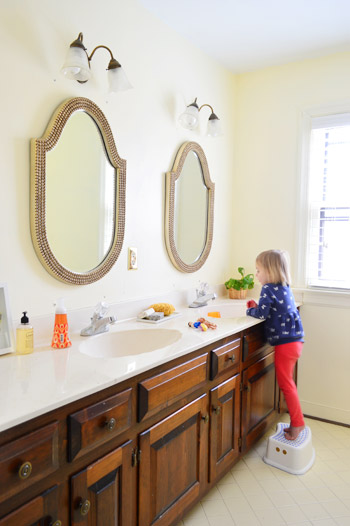
For a double vanity, you can either use one long mirror or two separate mirrors. One large mirror maximizes reflection and can make the room feel bigger. Two mirrors create a more tailored, designer look and leave space between them for a sconce, artwork, or decorative tile feature.
Option 3: Upgrade to a Framed Bathroom Mirror
If the current mirror is damaged or the wrong size, replacing it with a framed bathroom mirror may be the smartest update. A framed mirror looks finished, protects edges, and gives you an opportunity to introduce color, texture, or contrast.
Black-framed mirrors remain popular because they add crisp definition. Brass and gold frames warm up cool tile and white vanities. Chrome and nickel frames coordinate well with classic fixtures. Wood frames add natural character but should be properly sealed or chosen in a bathroom-friendly finish.
When shopping, look beyond style. Check the mirror’s weight, hanging system, moisture resistance, glass quality, and size. A beautiful mirror that cannot be securely mounted is not a bathroom upgrade; it is a future crash with a receipt.
Option 4: Install a Lighted or Backlit Mirror
A lighted bathroom mirror can improve both style and function. Integrated LED mirrors are especially useful in bathrooms with weak overhead lighting or shadows around the vanity. Some include dimming, color temperature settings, anti-fog features, and touch controls.
Backlit mirrors create a soft halo effect, giving the bathroom a spa-like mood. Front-lit mirrors are often better for grooming because they direct light toward the face. If you apply makeup, shave, or style hair in the bathroom, lighting quality matters as much as mirror size.
However, electrical work is not the place to improvise. If a mirror needs hardwiring, hire a qualified electrician unless you have the proper experience and local code knowledge. Battery-powered or plug-in options may be easier, but cords should be handled neatly and safely.
Option 5: Pair the Mirror Update With Better Vanity Lighting
Sometimes the mirror is not the only problem. Bad lighting can make even a stylish mirror look flat. If the room has one harsh overhead fixture, shadows may fall under your eyes and chin, which is not exactly the confidence boost anyone requested before breakfast.
For the best vanity lighting, consider sconces on both sides of the mirror or a well-placed fixture above it. Side lighting generally reduces shadows better than a single overhead light. If you are replacing a mirror, check whether the new size leaves room for existing fixtures or whether the lighting should move.
A mirror and light fixture should work together. A tall arched mirror may need sconces. A wide rectangular mirror may pair well with a horizontal vanity light. A backlit mirror may reduce the need for decorative fixtures, but it should still provide enough practical illumination.
Option 6: Use a Medicine Cabinet Mirror for Storage
If your bathroom is short on storage, a mirrored medicine cabinet can be a smart update. Modern medicine cabinets are much more attractive than the clunky versions many people remember. Today’s options include recessed cabinets, framed fronts, soft-close doors, built-in lighting, and sleek metal finishes.
A recessed medicine cabinet creates a cleaner look but requires cutting into the wall and checking for plumbing, wiring, and studs. A surface-mounted cabinet is easier to install and still adds valuable storage. This is especially helpful in small bathrooms where every toothbrush, serum, razor, and mysterious tiny bottle seems to need real estate.
Option 7: Refresh the Area Around the Mirror
Updating a bathroom mirror does not always mean touching the mirror itself. Sometimes the wall around it needs help. A fresh backdrop can make the mirror look newer and more intentional.
Paint the Wall
A new paint color behind the mirror can dramatically change the vanity area. Soft whites, warm greiges, muted blues, sage greens, and charcoal accents are all popular choices. Use bathroom-friendly paint with good moisture resistance, especially in bathrooms with showers.
Add Peel-and-Stick Wallpaper
Peel-and-stick wallpaper can turn the mirror wall into a statement. Choose moisture-resistant wallpaper and use it in bathrooms with proper ventilation. A powder room is usually a safer place for wallpaper than a bathroom where long, steamy showers happen daily.
Install a Backsplash
A small backsplash behind the vanity can make a mirror update feel complete. Tile, stone, beadboard, shiplap, or waterproof wall panels can add texture and protect the wall from splashes. Just make sure the mirror height and backsplash height work together before installation.
How To Remove an Old Bathroom Mirror Safely
If you decide to replace the mirror, removal is the step that deserves the most caution. Mirrors are heavy, fragile, and not forgiving when rushed.
Start by protecting the countertop and floor with thick towels, cardboard, or a drop cloth. Wear gloves and eye protection. If the mirror has clips, support the glass while loosening the top clips first. Large mirrors should always be handled with a helper.
If the mirror is glued to the wall, do not simply yank it forward. Use painter’s tape across the mirror surface to reduce the risk of glass scattering if it cracks. Apply gentle heat to soften adhesive, then work slowly with shims or wire where appropriate. Expect some drywall repair afterward. If the mirror is very large, installed over tile, or already cracked, calling a pro is the smarter move.
Bathroom Mirror Update Ideas by Budget
Under $50
Clean the mirror edges, repaint the wall, replace mirror clips with more attractive hardware, add a simple peel-and-stick frame effect, or update nearby decor. Even a new vanity light bulb color temperature can improve how the mirror area feels.
$50 to $150
Build a DIY wood frame, install a small decorative mirror in a powder room, add a shelf below the mirror, or paint the vanity to coordinate with the new mirror style. This range is ideal for weekend bathroom updates.
$150 to $400
Replace the mirror with a high-quality framed, round, arched, or oval option. You can also consider a mirror frame kit for a large existing mirror. Many stylish vanity mirrors fall into this range depending on size and materials.
$400 and Up
Consider a large LED mirror, custom framing, a recessed medicine cabinet, designer mirrors, or a full vanity wall upgrade with tile and lighting. This is where the mirror becomes part of a bigger bathroom design plan.
Common Mistakes To Avoid
The first mistake is choosing a mirror that is too small. A tiny mirror above a large vanity can make the entire wall feel awkward. The second mistake is ignoring lighting. A gorgeous mirror under terrible lighting is like wearing a tuxedo to mow the lawn: technically impressive, but not working with the situation.
Another common problem is selecting materials that cannot handle moisture. Unsealed wood, cheap backing, and low-quality finishes may not last in a humid bathroom. Always choose materials suited for damp spaces.
Finally, do not forget installation weight. Mirrors can be surprisingly heavy. Use proper anchors, mount into studs when possible, and follow manufacturer instructions. A mirror should reflect your face, not your emergency repair bill.
Real-World Experiences: What Actually Works When Updating Bathroom Mirrors
One of the most useful lessons from real bathroom mirror updates is that the mirror rarely acts alone. Homeowners often start with the mirror because it looks dated, but once it changes, everything around it suddenly becomes more noticeable. The faucet finish, wall color, vanity hardware, towel ring, and light fixture all join the conversation. Sometimes politely. Sometimes loudly.
For example, replacing a frameless rectangular mirror with a round black-framed mirror can instantly modernize a small bathroom. But if the old chrome light fixture remains above it, the room may feel halfway updated. The solution does not always require replacing everything. A black mirror can still work with chrome if you repeat black elsewhere, such as in cabinet knobs, towel hooks, a picture frame, or a soap dispenser. Small repeats make mixed finishes feel intentional.
Another experience many DIYers discover is that framing an existing mirror is easier in theory than in the actual land of crooked walls and not-quite-square corners. Before cutting trim, it helps to measure the mirror in several places. Walls shift, houses settle, and builders occasionally install mirrors with the kind of precision normally associated with throwing toast onto a plate. Dry-fitting frame pieces before painting or gluing can prevent a lot of frustration.
Mirror clips are another sneaky detail. Many large builder mirrors are held by plastic clips that stick out from the glass. If you are adding a flat frame, those clips may block the trim from sitting flush. Some people replace bulky clips with flatter metal clips, while others notch the back of the frame pieces to fit over them. The best method depends on how the mirror is mounted and how much support it needs. Never remove clips unless you are sure the mirror is also properly supported by adhesive or another secure mounting system.
Lighting is another area where real-life experience matters. A mirror can look perfect during the day and disappointing at night if the bulbs are too yellow, too blue, or too dim. Many people find that soft white to neutral lighting works well for daily grooming, while dimmable fixtures add flexibility. If you install a backlit mirror, check whether it is bright enough for tasks or mainly decorative. Some backlit mirrors create beautiful ambiance but still need additional vanity lighting.
Small bathrooms benefit from mirrors more than almost any other update. In a powder room, a bold mirror can become the main design statement. In a narrow bathroom, a taller mirror can draw the eye upward. In a dark bathroom, a larger mirror placed opposite or near a light source can make the space feel brighter. The goal is not simply to buy a “nice” mirror; it is to choose one that solves a specific room problem.
Another practical tip: do not throw away the old mirror until the new one is successfully installed. Measurements, hardware, and wall conditions can surprise you. If the new mirror arrives damaged or the anchors do not line up as expected, having the old mirror available can save a few awkward days of brushing your hair in the reflection of a microwave door.
Finally, the best bathroom mirror updates feel connected to the home, not just to a trend. A brass arched mirror may look beautiful online, but if the rest of your bathroom is cool-toned and minimal, a thin chrome or matte black frame may fit better. A rustic wood frame can warm up a plain bathroom, but it should be sealed well and balanced with clean details so the room does not drift into “cabin gift shop” territory.
The most successful updates usually share three qualities: the mirror is properly scaled, the finish relates to the room, and the installation is secure. Get those right, and even a modest mirror upgrade can make the bathroom feel cleaner, brighter, and more expensive than it actually was. That is the sweet spot of DIY: when the result looks like a design decision, not a weekend panic project.
Conclusion: Give Your Bathroom Mirror the Promotion It Deserves
Updating a bathroom mirror is one of the simplest ways to refresh a bathroom without committing to a full remodel. You can frame an existing mirror, replace it with a modern shape, add lighting, choose a medicine cabinet for storage, or refresh the wall around it with paint, wallpaper, or tile. The best choice depends on your mirror’s condition, your budget, and the look you want to create.
For a quick update, add a frame or change the wall color. For a stronger transformation, replace the mirror with a framed, round, arched, or LED option. For small bathrooms, use mirrors to reflect light and make the space feel larger. For busy bathrooms, consider storage and lighting as much as style.
A bathroom mirror may seem like a small detail, but it has a big design voice. Choose well, install carefully, and your bathroom can look brighter, fresher, and more polishedwithout requiring a renovation budget that makes your wallet hide under the sink.
Note: This article is for general home improvement guidance. Always follow product instructions, use proper safety gear, and consult a qualified professional for electrical work, large mirror removal, or uncertain wall conditions.