Moving is already a full-contact sport. You pack boxes, lose the tape, find the tape in the freezer for some reason, and then realize one more grown-up chore is waiting for you: telling the IRS where you went. It is not the most glamorous item on your moving checklist, but it is one of the smartest. If the IRS has your old address, important tax notices, refund checks, and other correspondence can end up taking the scenic route without you.
The good news is that updating your IRS address is not especially complicated. The better news is that you have more than one way to do it. Whether you are an individual taxpayer, a married couple, a business owner, or someone who moved right in the middle of tax season because life enjoys irony, there is a clear path forward. This guide explains how to tell the IRS about a change of address, when to use Form 8822, when Form 8822-B makes more sense, and which mistakes can turn a simple update into a surprisingly annoying delay.
Why Your IRS Address Matters More Than You Think
The IRS uses your address to send more than just the occasional bland-looking envelope that makes your heart rate do a little hop. Your address is tied to refund checks, identity verification mail, account notices, requests for information, and deadlines that can affect penalties or interest. If that mail goes to your old apartment, your old office, or your cousin’s house from three summers ago, you may miss something important without realizing it.
That is why an IRS address change is not just clerical housekeeping. It is a practical way to protect your tax account. If you are expecting a paper refund, waiting on correspondence, dealing with an amended return, or running a business with an EIN, keeping your address current is one of those tiny tasks that prevents larger headaches later.
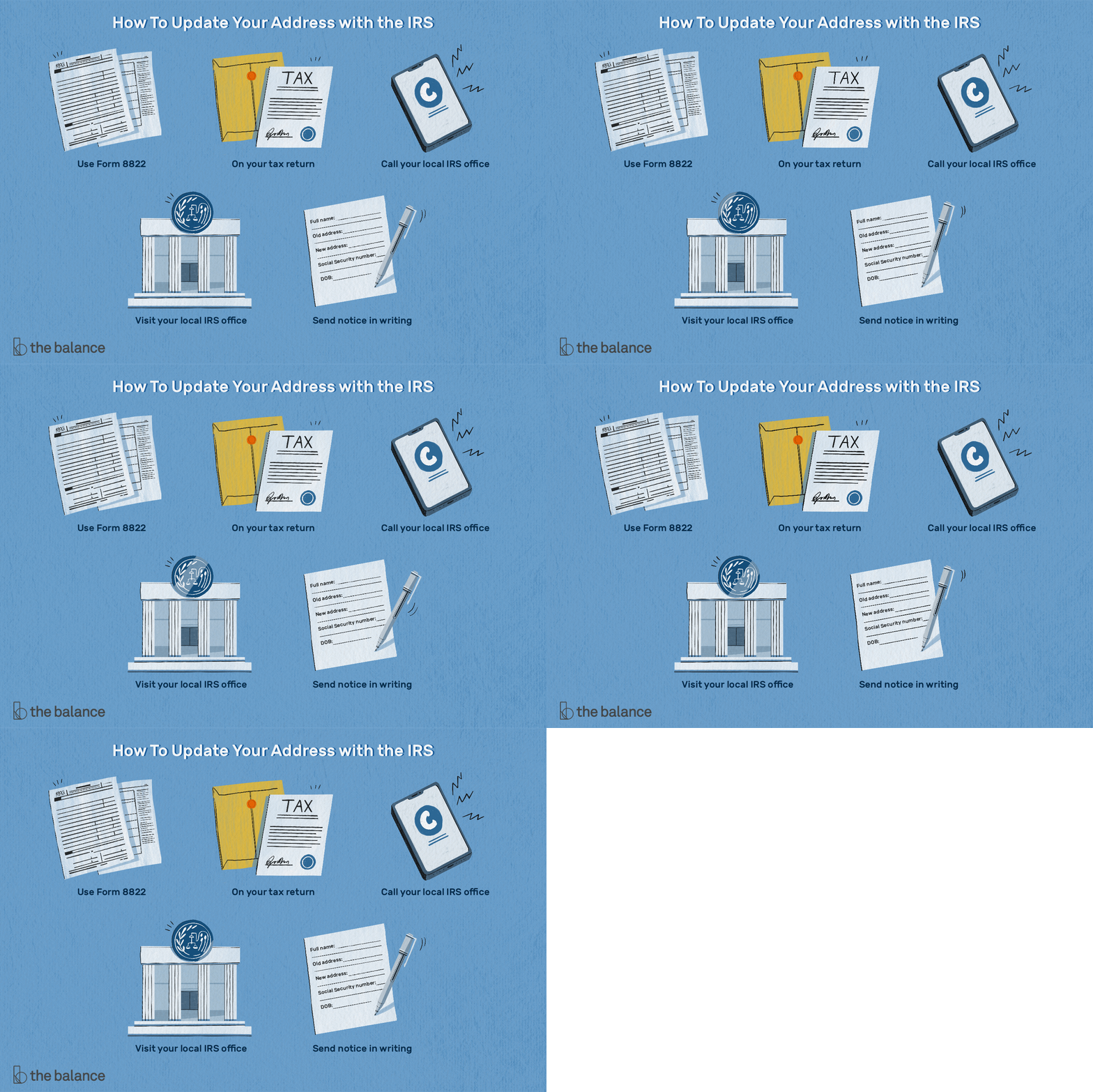
The Main Ways To Update Your Address With the IRS
The IRS gives taxpayers several ways to report a new address. The best option depends on your timing and situation.
1. Use Your New Address When You File Your Tax Return
If you moved before filing your next tax return, the simplest method is often the easiest one: put your new address directly on the return. Once the return is processed, the IRS generally updates its records. This works well when your move happened before filing season wrapped up and you are not racing against the clock for a notice, refund, or other urgent mail.
Still, this method is best when the move is already settled. If you are living out of suitcases, bouncing between temporary addresses, or waiting to close on your new home, do not rush to put down an address that may change again in two weeks. The IRS likes certainty. So does your mail carrier.
2. File Form 8822 for an Individual Address Change
For most individuals, Form 8822 is the go-to solution. This form is specifically designed to notify the IRS that your home mailing address has changed. It is also used for certain other taxpayer situations tied to individual, gift, estate, or generation-skipping transfer tax returns. In plain English, this is the form most people use when they move and want the IRS to stop writing to their old place.
Form 8822 is especially useful if you already filed your return and then moved afterward. It is also the better route when you do not want to wait until next year’s filing season to make the update official.
3. Send a Signed Written Statement
You are not limited to a formal IRS address change form. The IRS also accepts a signed written statement that includes your full name, old address, new address, and your Social Security number, ITIN, or EIN, depending on the taxpayer. If you filed jointly and still live together, both spouses should include their information and signatures.
This option can be useful if you prefer a simple letter over a form, but it still needs to be complete, signed, and sent to the correct IRS address. A vague note that says, “Hey, I moved, thanks!” is not going to win any paperwork awards.
4. Notify the IRS by Phone or In Person
The IRS also allows oral notification in certain cases, which means you can report an address change by phone or in person after verifying your identity. This can be practical if you need to act quickly, but you should be ready with your old address, new address, and identifying information. Think of it as a tax-themed security checkpoint.
Even when you update by phone, it is smart to keep notes for your own records. Write down the date, time, who you spoke with if available, and what was updated. Future you will appreciate this very much.
How To Fill Out Form 8822 Without Creating New Problems
If you are using Form 8822, take a few extra minutes to complete it carefully. Most IRS paperwork is less about mystery and more about precision. Tiny omissions can create outsized delays.
What To Include
- Your full legal name
- Your Social Security number or ITIN
- Your old address
- Your new address
- Your signature
- Your spouse’s signature too, if your last return was a joint return and you still share the same residence
If you filed jointly but now live at different addresses, each taxpayer should notify the IRS separately. That is one of the most commonly missed details. Couples who used to share a mailbox but no longer share a roof should not assume one address update covers both people.
Special Situations To Watch
If your children filed their own tax returns and your move affects their mailing address too, a separate Form 8822 is generally needed for each child. If a representative is signing for the taxpayer, a copy of the power of attorney should be attached. And if you changed your name because of marriage, divorce, or another life event, make sure your Social Security records match your tax records. That name mismatch can slow down processing and refunds even when the address change itself is correct.
Also, do not attach Form 8822 to your tax return unless specific circumstances call for coordinating mailings. In most cases, it is filed separately. This is a “send the right paper to the right place” situation, not a “staple everything together and hope for the best” situation.
Where To Mail It
Form 8822 has filing addresses in its instructions, and the correct mailing location depends on the type of change and the address history involved. That means this is not the moment for guesswork. Use the address listed on the form instructions that matches your situation. Sending it to the wrong IRS office can delay the update, which defeats the entire purpose of updating your address in the first place.
When You Need Form 8822-B Instead
If the address change involves a business, Form 8822-B is usually the correct tool. This form is used to report a business mailing address change, business location change, or a change in the business’s responsible party. If you have an EIN and something important about the business address or control structure has changed, this form matters.
This distinction trips people up all the time. A freelancer working from home may assume one form does it all. Not quite. If you are updating your personal home mailing address, that is generally Form 8822 territory. If you are updating business records tied to an EIN, that is Form 8822-B territory. If both changed, you may need both forms. Paperwork loves company.
The 60-Day Rule for Responsible Party Changes
Businesses and other entities with an EIN should pay special attention to responsible party changes. If the responsible party changes, the IRS expects that update within 60 days. That is not a “get around to it eventually” deadline. It is a real one. If your business has new ownership, new control, or a new person responsible for the entity, filing promptly helps make sure IRS correspondence goes to the right person instead of vanishing into administrative fog.
Will the Post Office Handle It for You?
Here is the trap: many people assume that filing a change of address with the United States Postal Service automatically solves the IRS problem. It might help a little, but it is not enough. USPS forwarding does not guarantee that government checks will be forwarded, and relying on mail forwarding alone is a risky plan if you are expecting a refund or important notice.
So yes, notify the post office. But also notify the IRS directly. Think of USPS as the helpful neighbor and the IRS as the person who still wants to hear it from you personally.
How Long Does an IRS Address Change Take?
In many cases, an IRS change of address request takes about four to six weeks to process. That timeline matters. If you moved yesterday and expect a paper notice next week, update the IRS as soon as possible and keep an eye on your old mailbox situation if you can. This is particularly important during tax season, after filing an amended return, or when you are dealing with any issue that may generate mailed follow-up from the IRS.
The timing is also a reminder not to procrastinate. Changing your address with the IRS is one of those tasks that feels easy to postpone because it looks small. Then six weeks pass, and your important letter is sitting in a mailbox you no longer own. Suddenly the small task has become a starring character in a much worse story.
Common Mistakes That Can Slow Down the Process
Most address-change issues do not come from the move itself. They come from tiny, fixable mistakes. Here are the big ones to avoid:
- Using Form 8822 when the change is really business-related and requires Form 8822-B
- Forgetting a spouse’s signature on a joint address change
- Leaving out your SSN, ITIN, or EIN on a written statement
- Mailing the form to the wrong address
- Assuming USPS forwarding is enough
- Ignoring a name change that should also be updated with Social Security records
- Waiting until a refund check or IRS notice is already on the way
Another common mistake is assuming that because your tax software knows your new address, the IRS automatically knows everything too. Tax software is helpful, but it is not magical. The IRS updates records based on the methods it recognizes, not on your hopeful energy.
What if You Already Filed With the Wrong Address?
Take a breath. This is annoying, but it is not usually catastrophic. If the return has not yet been accepted and you can still correct it before resubmitting, update the address there. If the return has already been filed and accepted, use one of the IRS-approved address update methods instead of panicking.
The practical move is to act quickly. File Form 8822, send a signed statement, or contact the IRS directly. The goal is to get your current address into the IRS system before any important mail is generated. If you are expecting a paper refund or know the IRS may contact you, speed matters.
Smart Tips for a Smoother Address Change
- Pick your most stable mailing address. If your living situation is temporary, use an address where you can reliably receive mail.
- Keep copies. Save a copy of your form or written statement and note when you mailed it.
- Update your tax preparer too. If a professional handles your returns, they should not be the last person to hear you moved.
- Think beyond the IRS. Update your employer, state tax agency, banks, and any place that may issue tax forms.
- Use direct deposit when possible. It reduces the drama of paper checks wandering around the postal system.
- Do not mix personal and business updates carelessly. If both addresses changed, handle both correctly and separately.
Real-World Experiences and Lessons From Address Change Headaches
The most useful tax advice often comes from patterns people repeat. Not because taxpayers enjoy paperwork, but because the same moving mistakes show up again and again. One common experience is the person who moves right after filing and assumes everything will sort itself out. Then a refund is delayed, a notice is mailed, or identity verification paperwork goes to the old place. Suddenly that “I’ll do it later” plan looks much less charming. The lesson here is simple: if you move after filing, tell the IRS directly instead of relying on timing and luck.
Another frequent situation involves married couples who filed jointly and then separate residences later. One spouse updates an address and assumes the other spouse is covered. Not always. If both people now live at different addresses, each should notify the IRS separately. This matters more than many people realize because tax notices can be highly specific, deadlines can be personal, and one taxpayer’s new mailbox does not automatically become the official mailbox for the other.
Then there is the small-business owner experience, which usually comes with extra confusion. A person moves homes, updates their driver’s license, updates the business website, updates vendor invoices, and still forgets that the IRS may have both a personal mailing address and a business address tied to an EIN. This is how owners end up updating one record but not the other. The result is classic bureaucratic chaos: personal mail goes to the new house, business notices go to the old office, and everyone wonders why government correspondence behaves like it is in a long-distance relationship.
People who use a tax professional sometimes have their own version of this problem. They assume that because their accountant has the new address, the IRS must have it too. Sometimes the preparer includes the new address on a future return, which helps, but if the move happened after filing or if urgent correspondence is already in motion, waiting may not be good enough. The key lesson is that your preparer, your postal forward, and the IRS are three separate systems. Sometimes they cooperate. Sometimes they absolutely do not.
Another real-world pattern shows up with temporary moves. Think students, military families, traveling workers, caregivers, or people staying with relatives while a home sale closes. In these cases, the smartest move is often to choose the most reliable mailing address rather than the most technically romantic one. The IRS needs a dependable place to send mail, not a perfect Pinterest version of your life. If that means using a stable address where someone trustworthy can receive mail for you, that can be far better than using a short-term address that changes again next month.
The biggest shared lesson from all these experiences is that an IRS address update is boring only until it becomes urgent. Once you miss a notice, wait extra weeks for a check, or discover that the wrong address is still on file, the task suddenly feels very exciting in the worst possible way. The fix is wonderfully unglamorous: act early, use the correct form, include complete information, and keep records. Tax administration may never be thrilling, but it does reward people who are boring in exactly the right way.
Conclusion
If you are wondering how to tell the IRS about a change of address, the answer is reassuringly straightforward: update your address on your next return if timing works, file Form 8822 for personal changes, use Form 8822-B for business-related changes, send a signed written statement, or notify the IRS directly by phone or in person. The best method depends on when you moved, what kind of taxpayer you are, and whether you are trying to prevent a notice or refund from landing at the wrong doorstep.
The smartest move is to handle it sooner rather than later. A correct IRS mailing address helps protect your refund, your deadlines, your records, and your peace of mind. In other words, it is the kind of paperwork that feels tiny now and very important later. Which is basically the IRS in a nutshell.