Kabaddi looks simple from the sideline: one brave player runs into enemy territory, chants “kabaddi, kabaddi,” tags opponents, and tries to escape while seven defenders suddenly turn into human seat belts. But once you understand the rhythm, rules, and tactics, kabaddi becomes one of the most exciting team sports on the planet.
This guide breaks down how to play kabaddi in 12 steps, including basic rules, scoring, raiding, defending, court setup, beginner strategy, safety tips, and real playing experience. Whether you are preparing for school sports day, joining a local club, or simply trying to understand why everyone is yelling “kabaddi” with the seriousness of a tax audit, this beginner-friendly guide will help you play with confidence.
What Is Kabaddi?
Kabaddi is a fast, physical team sport that combines tag, wrestling, breath control, strategy, and lightning-fast decision-making. Two teams take turns sending one player, called a raider, into the opponent’s half. The raider tries to touch defenders and return safely to their own side. The defenders, also called antis, try to stop the raider before they escape.
The twist? During a raid, the raider must chant “kabaddi” continuously to show they are completing the raid in one breath. This is why kabaddi is not just about strength. It also rewards timing, balance, stamina, teamwork, and the ability to stay calm while several people are trying to tackle you. Casual stuff.
Basic Kabaddi Rules for Beginners
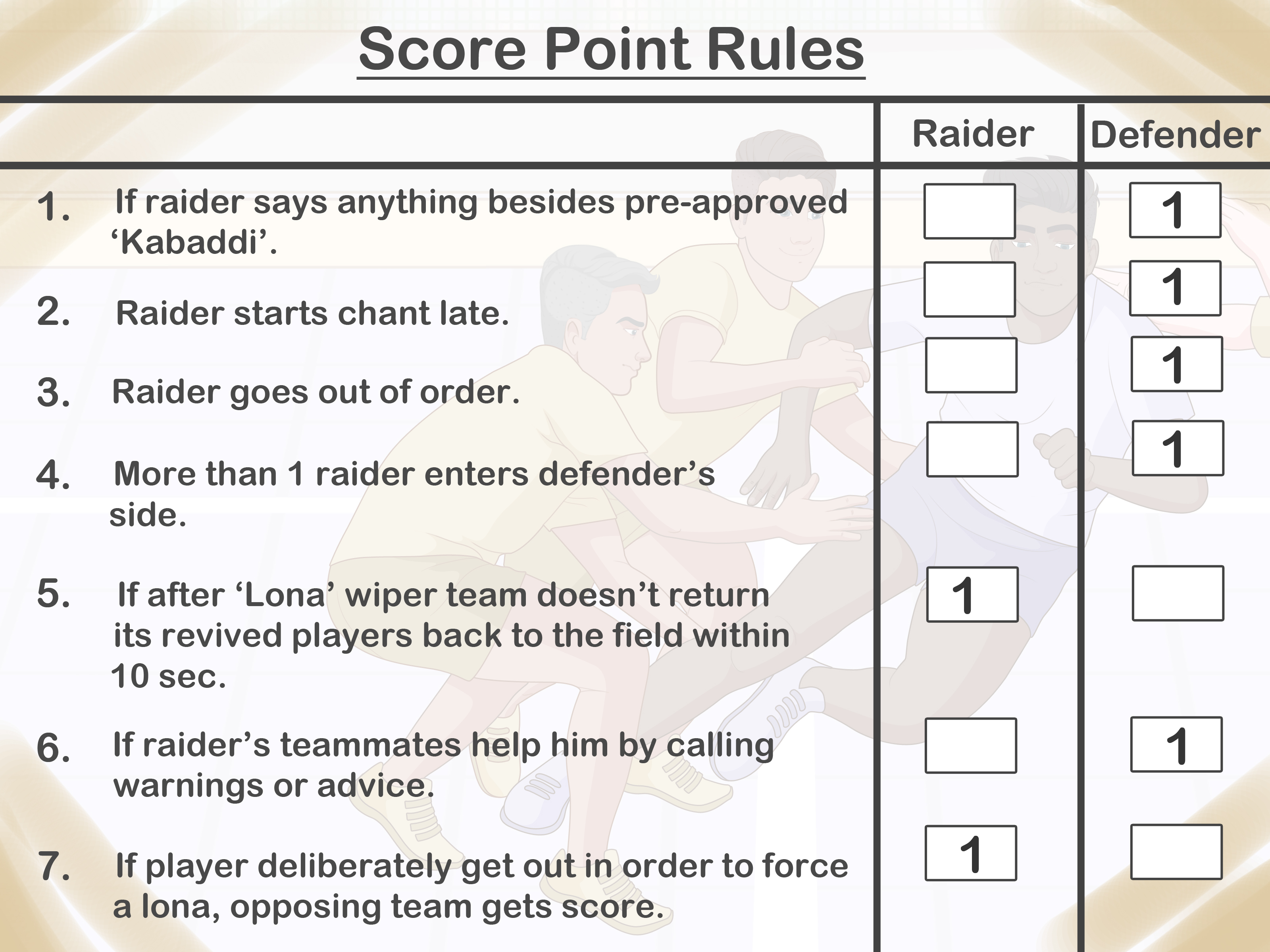
Standard kabaddi is usually played by two teams of seven players on the court. Teams alternate between attacking and defending. A match commonly has two halves, and each raid has a short time limit, often 30 seconds in modern competitive formats. Points are scored through successful tags, tackles, bonus-line plays, super tackles, and all-outs.
Players who are tagged or tackled are temporarily out, but they can be revived when their team scores later. This revival system gives kabaddi its thrilling back-and-forth momentum. One smart raid can rescue teammates, swing the score, and make the opposing coach stare into the distance like a disappointed movie villain.
How to Play Kabaddi: 12 Steps
Step 1: Understand the Objective of the Game
The main objective in kabaddi is to score more points than the opposing team. When your team attacks, your raider enters the opponent’s half, touches one or more defenders, and returns safely across the midline. If the raider succeeds, your team earns points for each defender touched.
When your team defends, your goal is to stop the raider from returning. A successful tackle earns your team a point. In simple terms, raiders hunt for touches, defenders hunt for tackles, and everyone hunts for oxygen.
Step 2: Learn the Kabaddi Court Layout
A kabaddi court is rectangular and divided into two equal halves by a center line. Each team occupies one half. Important lines include the midline, baulk line, bonus line, boundary lines, and lobby areas.
The midline separates the two teams. The baulk line is important because the raider generally must cross it to make the raid valid unless they have already touched a defender. The bonus line allows a raider to earn an extra point under specific conditions, usually when enough defenders are active on the mat. Boundary lines matter because stepping out can get a player ruled out.
Step 3: Form Two Teams of Seven Players
A standard kabaddi team has seven players on the court, with substitutes available depending on the competition. The seven players need a mix of raiding ability, defensive strength, speed, communication, and discipline.
Not everyone needs to be a superstar raider. Some players are better as corner defenders, some are reliable covers, and some are all-rounders. A strong kabaddi team works like a good kitchen crew: one person cannot cook the entire meal, serve the table, and wash the dishes without chaos.
Step 4: Start the Match With a Toss
Most kabaddi matches begin with a coin toss. The winning team may choose whether to raid first or select a side of the court, depending on the tournament rules. After halftime, teams switch sides.
Starting with a raid can help a confident team set the tone early. Starting on defense can also be useful if your team has strong tacklers and wants to pressure the opponent from the first whistle. Either way, kabaddi rewards focus from the very first play.
Step 5: Send One Raider Into the Opponent’s Half
On your team’s turn, one player becomes the raider and enters the opponent’s half. The raider must chant “kabaddi, kabaddi” clearly and continuously. The chant is not just for drama, although it definitely adds drama. It proves the raid is being completed in one breath.
The raider’s job is to cross into enemy territory, look for a scoring chance, touch one or more defenders, and get back across the midline. Good raiders do not rush blindly. They study defender positions, test reactions, use footwork, and strike when the defense loses shape.
Step 6: Cross the Baulk Line or Make a Legal Touch
In many formats, the raider must cross the baulk line for the raid to be valid unless they touch a defender before returning. This rule prevents raiders from simply stepping in, waving hello, and running back like they forgot why they came.
Beginners should practice crossing the baulk line under control. Do not sprint too deep without a plan. Once you cross, keep your knees bent, stay balanced, and keep enough distance from defenders so you can retreat quickly if they charge.
Step 7: Score Touch Points as a Raider
A raider scores a touch point for each defender they legally touch before returning safely to their own half. Touches can be made with the hand, foot, or other legal body contact, depending on the rules being used.
Common raiding moves include hand touches, toe touches, running hand touches, kicks, and sudden direction changes. Beginners should start with simple hand touches and safe retreats before trying acrobatic moves. A flying kick looks heroic only when it works. When it does not, it looks like a person arguing with gravity.
Step 8: Defend by Blocking, Chaining, and Tackling
When your team is defending, your job is to stop the raider from getting back across the midline. Defenders can use coordinated tackles, ankle holds, thigh holds, waist holds, blocks, dashes, and chain formations.
Teamwork is everything. One defender rushing alone can create an easy escape for the raider. Strong defenses move together, communicate constantly, and wait for the right moment. Corners often target the legs, covers support from the sides, and the whole unit collapses only when the raider is vulnerable.
Step 9: Understand Bonus Points
A raider may be able to score a bonus point by crossing the bonus line correctly when the required number of defenders are on the court. The exact condition depends on the rule set, but in popular modern kabaddi, the bonus line is active only when the defending side has enough players.
The bonus point is useful because it can be earned without touching a defender. However, it is risky. A raider who goes too deep for the bonus may give defenders the perfect chance to tackle. For beginners, the bonus line should be treated like hot sauce: useful, exciting, but dangerous when used carelessly.
Step 10: Revive Players by Scoring Points
Kabaddi has a revival system. When your team scores through a touch point or tackle point, one of your out players can usually return to the court. This keeps the match dynamic and strategic.
For example, if your raider tags two defenders and returns safely, your team may score two points and revive two players. If your defense tackles the opposing raider, your team earns a point and can bring back one teammate. This is why every point matters. A single tackle can rebuild your defense and change the match completely.
Step 11: Know Special Scoring Situations
Several special scoring situations make kabaddi more strategic. A super raid usually refers to a raid that earns three or more points. A super tackle often happens when a team with three or fewer defenders successfully tackles the raider, earning extra reward under common competitive rules.
An all-out occurs when every player on one team is put out. The opposing team receives extra points, and all players are revived so the game can continue. All-outs are huge momentum swings. They are the kabaddi version of knocking over the entire chessboard, except it is legal and everyone is sweating.
Step 12: Practice Strategy, Fitness, and Safe Technique
To become good at kabaddi, you need more than a basic understanding of the rules. Practice raiding footwork, defensive coordination, quick reactions, breath control, strength, flexibility, and safe tackling technique.
Beginners should warm up properly, learn how to fall safely, avoid grabbing hair or clothing, and never use reckless tackles. Kabaddi is physical, but it should be played with control. The best players are not simply aggressive; they are smart, patient, and technically sound.
Essential Kabaddi Skills Every Beginner Should Learn
Raiding Skills
Good raiders need speed, balance, timing, and confidence. Beginners should practice moving forward and backward quickly without crossing their feet. They should also learn basic touch techniques such as hand touches, toe touches, and side steps.
A smart raider watches defender spacing. If a corner defender is too far forward, the raider may attempt a quick toe touch. If the defense is too flat, a running hand touch may work. If defenders are waiting patiently, the raider may simply complete a safe empty raid rather than forcing a low-percentage move.
Defensive Skills
Defenders need discipline more than anything. A beginner defender often makes the mistake of lunging too soon. Skilled raiders love that. The moment a defender overcommits, the raider slips away and scores.
Important defensive skills include ankle holds, blocks, chain tackles, dashes, and covers. The best defensive teams communicate clearly. They call out positions, warn each other when the raider changes direction, and tackle together instead of turning the raid into seven separate personal dramas.
Breath Control and the Kabaddi Chant
The continuous kabaddi chant is one of the sport’s signature features. It helps officials confirm that the raider is not taking another breath during the raid. For players, it also builds rhythm and mental focus.
Beginners can practice by jogging lightly while chanting, then increasing speed and adding direction changes. The goal is not to shout like a stadium announcer. The goal is a steady, audible chant that lasts through movement, pressure, and contact.
Common Beginner Mistakes in Kabaddi
One common mistake is raiding too deep without a plan. New players often get excited, cross the baulk line, chase a defender, and suddenly realize the entire defense has closed the door behind them. A good raid should always include an escape route.
Another mistake is defending alone. Kabaddi tackles are most effective when timed as a group. If one defender grabs the raider but teammates do not support quickly, the raider may drag them across the midline and score.
Beginners also forget court awareness. Stepping out of bounds, ignoring the lobby rules, or losing track of the midline can give away easy points. In kabaddi, the lines are not decoration. They are silent referees waiting to ruin your afternoon.
Simple Kabaddi Training Drills
1. Shadow Raiding Drill
Practice entering the opponent’s half, crossing the baulk line, changing direction, and retreating without defenders. This builds footwork and confidence.
2. Touch-and-Retreat Drill
Place a cone or teammate as a target. Move in, touch, and retreat quickly. Focus on balance, not just speed.
3. Defensive Chain Drill
Two or three defenders hold a loose chain formation and move together. This teaches spacing and coordinated defense.
4. Ankle Hold Practice
Practice safe ankle holds at low speed first. The defender should learn timing and grip while the raider learns how to escape safely.
5. Breath Control Runs
Jog short distances while chanting “kabaddi.” Gradually add side steps, turns, and bursts of speed.
How to Play Kabaddi Safely
Kabaddi is a contact sport, so safety matters. Always warm up before playing. Stretch the hips, hamstrings, shoulders, ankles, and wrists. Use a clean, flat playing surface with enough space around the court.
Players should keep nails trimmed, avoid jewelry, and wear comfortable athletic clothing. Tackles should be controlled and legal. Do not pull hair, twist joints, grab clothing, or tackle above the neck. If you are playing casually, agree on the rules before starting so nobody invents a “my cousin said this is legal” rule halfway through the match.
Beginner Strategy: How to Think Like a Kabaddi Player
Great kabaddi is not random chaos. It is organized chaos wearing sports shoes. Raiders should identify weaker defenders, attack gaps, and avoid predictable movement. Defenders should maintain shape, avoid unnecessary contact, and pressure the raider without panicking.
Score awareness also matters. If your team is leading, safe raids may be smarter than risky super raids. If your team is behind, you may need more aggressive attempts. When only a few defenders remain, both sides must adjust. Raiders may chase bonus points, while defenders look for super tackle opportunities.
Experience Section: What Playing Kabaddi Feels Like in Real Life
The first time you play kabaddi, you may think the rules are easy. Then you step onto the court, chant “kabaddi,” cross the line, and realize seven defenders are staring at you like you just walked into the wrong family reunion. That is when the sport becomes real.
As a beginner, the biggest surprise is how fast everything happens. From the sideline, a raid looks like one player moving around for a few seconds. On the court, those seconds feel packed with decisions. Should you go for the toe touch? Is the corner defender baiting you? Can you reach the baulk line and still escape? Why is your chant suddenly sounding like a broken lawn mower?
One useful experience for new players is learning to slow the game down mentally. You do not need to score on every raid. In fact, forcing a raid is one of the easiest ways to get tackled. Sometimes the smartest play is to cross the baulk line, test the defense, and return safely. This may not make the highlight reel, but it keeps your team stable and prevents free points for the opponent.
Defending also feels different than it looks. Many beginners think defense means grabbing the raider as soon as possible. In reality, patience is powerful. If you rush too early, a good raider will touch you and escape before your teammates can react. A better approach is to move as a unit, close space gradually, and tackle only when the raider is off balance or too deep.
Communication becomes your best friend. Simple calls such as “left,” “hold,” “wait,” or “chain” can prevent confusion. A quiet defense is usually a nervous defense. A talking defense feels connected, and connected defenders are much harder to beat.
Fitness is another eye-opener. Kabaddi uses short bursts of power, quick changes of direction, core strength, grip strength, and controlled breathing. You may play only a few raids and still feel like your lungs have filed a complaint. The good news is that regular practice improves stamina quickly. Drills that combine chanting, sprinting, and footwork are especially helpful.
Beginners should also learn humility early. You will miss tackles. You will step out. You may celebrate a touch and then realize you forgot to return across the midline. That is normal. Kabaddi rewards repetition. Every mistake teaches timing, spacing, and awareness.
The best part of learning kabaddi is the team energy. A successful tackle feels like a group achievement. A clever raid can lift everyone’s mood. Even casual games become intense because every raid has a clear winner and loser. There is no hiding in kabaddi. When it is your turn to raid, everyone watches. When it is your turn to defend, your teammates depend on you.
After a few sessions, the sport starts to make sense. You begin seeing patterns: which defenders lunge too early, which raiders favor one side, when to retreat, and when to attack. That is when kabaddi becomes addictive. It is not just a physical contest; it is a fast tactical conversation between two teams, except the punctuation marks are tackles.
If you are new, start with friendly games, learn the rules, and focus on safe technique. Do not worry about looking spectacular. Good kabaddi begins with balance, awareness, and teamwork. The fancy moves can come later, preferably after your knees and pride have signed the permission slip.
Conclusion
Learning how to play kabaddi starts with understanding the basics: one raider attacks, seven defenders respond, and points are won through smart touches, strong tackles, bonus plays, revivals, and teamwork. But the heart of kabaddi is bigger than the rulebook. It is a sport of courage, timing, breath control, discipline, and trust.
For beginners, the best path is simple: master the court lines, practice safe raiding, defend as a unit, communicate clearly, and build fitness gradually. You do not need to become a professional overnight. Start with the 12 steps in this guide, play with control, and enjoy the beautiful madness of a sport where one breath can decide everything.
Note: This article is written for general educational and publishing purposes. Local leagues, schools, and tournaments may use slightly different kabaddi rules, so players should always confirm the rule set before competitive play.