Ordering groceries through Instacart feels almost magical. You tap a few buttons, continue wearing your questionable weekend sweatpants, and later someone appears with avocados, cereal, laundry detergent, and the emergency chocolate you definitely purchased for “baking.”
Behind that convenience is an Instacart shopper who may drive to the store, locate dozens of products, communicate about replacements, wait in the checkout line, load the order, drive to your address, and carry everything to your door. That raises an important question: How much should you tip an Instacart worker?
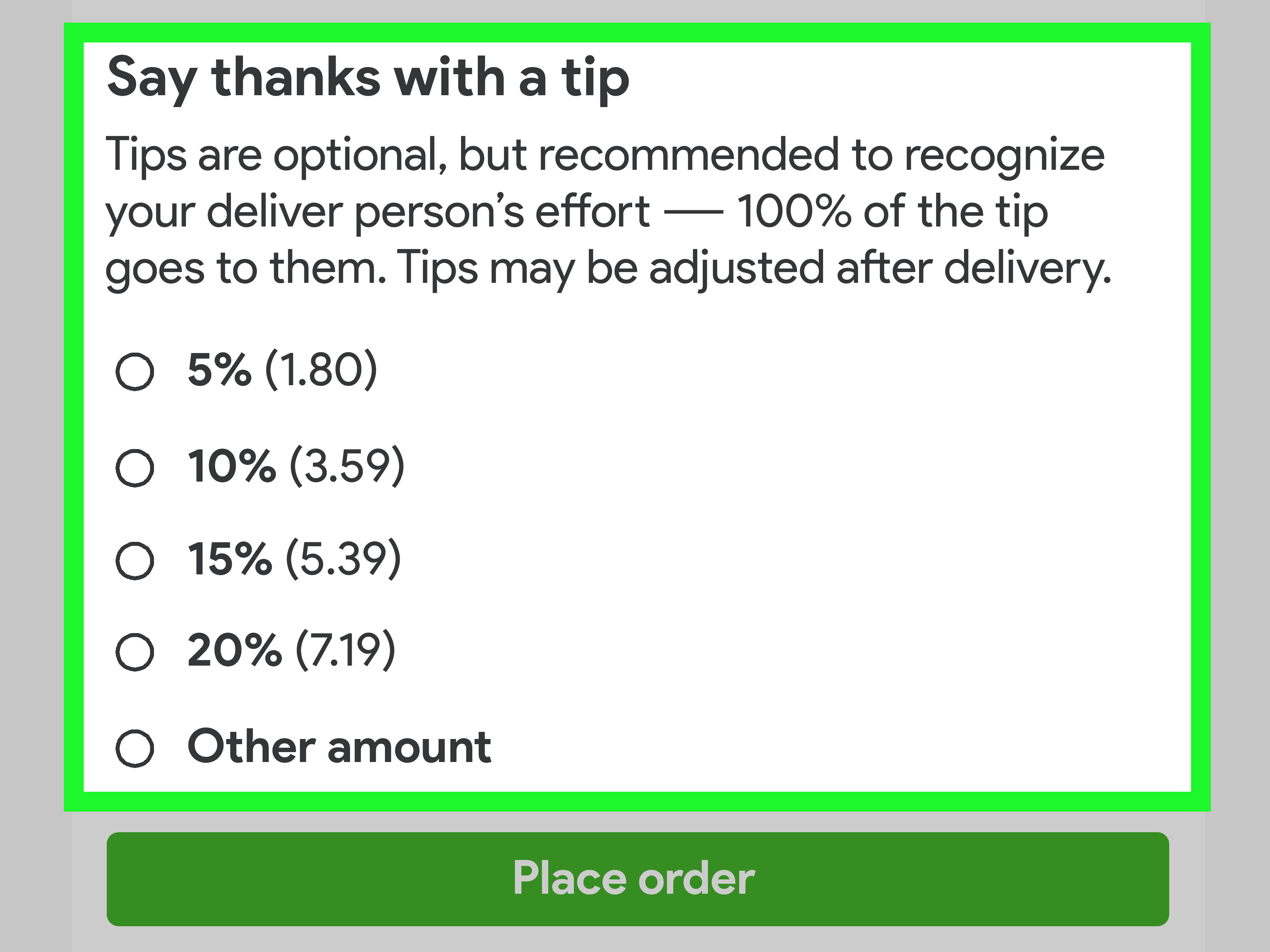
For most routine orders, a tip of 10% to 20% is reasonable, with 15% serving as a dependable middle ground. A practical minimum is usually $5, even for a small order, because a five-item shopping list can still require driving, parking, checkout, and delivery. Consider tipping 20% or more when an order is large, heavy, complicated, distant, or completed during unpleasant weather.
These figures are etiquette recommendations rather than mandatory Instacart charges. Instacart describes tips as optional, but the company also recognizes them as an important part of shopper earnings. Broader grocery-delivery etiquette guidance commonly recommends approximately 10% to 20%, depending on the work involved.
Quick Instacart Tipping Guide
| Order Type | Suggested Tip | Example |
|---|---|---|
| Very small, simple order | $5 minimum | Five common items from a nearby store |
| Standard grocery order | 10%–15% | $100 order: $10–$15 |
| Large or time-consuming order | 15%–20% | $200 order: $30–$40 |
| Heavy warehouse-club order | 20% or more | Water, pet food, soda, and bulk products |
| Long-distance delivery | Add $5–$15 | Store is several miles from your home |
| Bad weather or difficult access | Add $5–$10 or more | Snow, heavy rain, stairs, or limited parking |
| Exceptional service | Increase the original tip | Excellent replacements and careful communication |
A percentage is a useful starting point, but it should not be the only factor. A $30 order containing two 40-pound bags of water-softener salt may be harder than a $150 order containing lightweight snacks. The receipt knows the price; it does not know how many stairs your shopper had to climb.
How Instacart Tipping Works
Tips Are Separate From Instacart Fees
Customers may see delivery fees, service fees, priority charges, alcohol-related fees, or other costs at checkout. Those charges are not substitutes for a shopper tip. Instacart states that shopper tips are separate from its platform fees and that 100% of the tip goes to the shopper or shoppers fulfilling the order.
This distinction matters because it is easy to look at a checkout screen full of charges and assume the worker is receiving most of that money. The service fee helps support the platform; the tip directly rewards the person handling the order.
Some Orders May Involve More Than One Shopper
In certain fulfillment arrangements, one person may shop the order while another delivers it. According to Instacart, when two shoppers fulfill an order, the customer’s tip is divided evenly between them.
You do not need to calculate separate amounts in that situation. Simply choose a tip that fairly reflects the total service.
You Can Adjust a Tip After Delivery
Instacart currently allows customers to reduce a tip for up to two hours after delivery and increase it for up to 14 days. This gives you time to reward exceptional work or address a legitimate service problem.
The word “legitimate” is doing important work here. Reducing a tip because eggs arrived broken is different from advertising a generous tip to attract a shopper and removing it afterward despite acceptable service. That practice, commonly called tip baiting, is the delivery-app equivalent of promising someone pizza for helping you move and then handing them one cold breadstick.
Shoppers Consider Expected Earnings
Full-service Instacart shoppers generally select the batches they want to complete. Available information can include expected earnings, shopping requirements, mileage, and other order details. A fair upfront tip may therefore make a demanding order more attractive to experienced shoppers, although it cannot guarantee immediate acceptance or perfect service.
Why 15% Is a Useful Starting Point
A 15% tip recognizes that an Instacart shopper performs more than a standard doorstep drop-off. A full-service shopper may complete several separate tasks:
- Drive to the requested store
- Navigate aisles and locate specific products
- Evaluate produce, meat, dairy, and expiration dates
- Message the customer about unavailable items
- Wait for replacement decisions
- Check out and organize the groceries
- Load and transport the order
- Find the address and follow delivery instructions
- Carry the groceries to the requested location
Instacart says its batch pay considers factors such as estimated shopping time, quantity, item weight, and driving distance. Tips and promotional earnings are added separately. The company also describes full-service shoppers as contractors, while IRS guidance notes that self-employed gig workers may be responsible for business expenses and self-employment taxes.
In other words, the shopper’s gross earnings are not necessarily the same as take-home pay. Gas, maintenance, insurance, phone use, taxes, and vehicle wear do not disappear simply because the groceries arrived in cheerful reusable bags. Independent testing of Instacart shopping has likewise found that driving costs and unpaid time can significantly affect net earnings.
When You Should Tip More
The Order Contains Many Items
A 50-item order usually requires substantially more searching, scanning, decision-making, and cart management than a 10-item order. It may also involve multiple out-of-stock products and a checkout line long enough for the shopper to reconsider every life decision since middle school.
For a routine order containing 30 to 50 products, consider tipping at least 15%. For an especially large order, 20% may be more appropriate.
You Ordered Heavy Products
Cases of bottled water, bulk beverages, large bags of pet food, cat litter, soil, and warehouse-club products add physical labor. Heavy items also take more time to load, arrange safely in a vehicle, unload, and carry.
For a heavy order, do not rely exclusively on a low percentage. If a $45 order includes three cases of water and a 35-pound bag of dog food, a $4.50 tip may technically equal 10%, but it does not adequately reflect the effort. A flat tip of $10 to $15 would be more considerate, with more added for stairs or long walking distances.
Your Home Is Far From the Store
Distance affects both time and vehicle costs. Consider adding approximately $5 to $15 when the delivery requires a substantial drive, especially if the shopper must travel far from busy retail areas and may have difficulty finding another order nearby.
Do not assume the store displayed in the app is the store directly around the corner. The order may be assigned to another participating location because of product availability, staffing, or the way the batch was created.
The Weather Is Unpleasant or Dangerous
Rain, extreme heat, snow, ice, and high winds can make shopping and delivery slower and riskier. Instacart may suggest a different default tip during bad weather, but customers should still review the amount themselves rather than treating the automated suggestion as sacred grocery law.
Adding $5 to $10 is a reasonable gesture for difficult conditions. During severe weather, the kindest choice may be postponing a nonessential order altogether.
Your Delivery Instructions Require Extra Work
A house with convenient driveway access is different from an apartment on the fourth floor with no elevator, restricted parking, a malfunctioning call box, and hallways apparently designed by a maze enthusiast.
Increase the tip when your shopper must:
- Climb multiple flights of stairs
- Carry groceries a long distance from the parking area
- Pay or search extensively for parking
- Navigate a gated community or complex building
- Make several trips between the vehicle and your door
- Wait for you to provide access or identification
The Shopper Handled Difficult Replacements Well
Out-of-stock products transform a simple list into a miniature negotiation. A thoughtful shopper may compare prices, sizes, ingredients, dietary requirements, and photographs while trying not to block the cereal aisle.
If the shopper found sensible alternatives, communicated clearly, respected your preferences, and protected frozen or fragile products, consider increasing the original tip after delivery.
When a Flat Tip Works Better Than a Percentage
Percentage tipping makes sense when the order’s cost roughly corresponds to its complexity. However, grocery prices can distort that relationship.
Consider these examples:
- A $25 pharmacy order: Three items may still require a long drive and 30 minutes of total work. Tip $5 to $8 rather than $2.50.
- A $40 heavy order: Multiple beverage cases justify approximately $10 to $15 despite the modest total.
- A $250 specialty-food order: Ten expensive but easy-to-find products may not require a full $50 tip, although distance and service still matter.
- A $120 standard order: A 15% tip equals $18, which is a reasonable starting point.
A useful rule is to calculate 10% to 20%, compare that result with the actual workload, and then use whichever amount feels more appropriate. Never let a low order total produce a comically low tip.
Specific Instacart Tipping Examples
Example 1: A Small Weeknight Order
You order eight common products totaling $38 from a supermarket two miles away. There are no heavy items, the weather is clear, and you live in a house with easy parking.
Reasonable tip: $5 to $7.
Example 2: A Typical Family Grocery Order
Your cart contains 35 items totaling $140. The shopper communicates about several replacements and delivers everything in good condition.
Reasonable tip: $21 at 15%, or approximately $25 for especially attentive service.
Example 3: A Large Costco Delivery
You order $260 worth of bulk products, including beverages, paper goods, pet food, and frozen items. The shopper makes several trips to your porch.
Reasonable tip: $40 to $55, depending on distance and access.
Example 4: An Apartment Delivery in Heavy Rain
Your $85 order contains 22 items. Parking is limited, and the shopper must carry everything through the rain and up three flights of stairs.
Reasonable tip: $18 to $25.
Example 5: A Long-Distance but Low-Cost Order
You order $30 worth of specialty ingredients from a store nine miles away.
Reasonable tip: $10 to $15. A simple 10% calculation would produce only $3, which does not reflect the drive.
Should You Tip in Cash or Through the App?
Tipping through the app is generally the simplest option. The shopper can see expected earnings when evaluating available work, and the payment is documented electronically. Instacart states that shoppers receive 100% of customer tips.
Cash tips are also welcome, but leaving the entire tip in cash can make your order initially appear less attractive because the shopper cannot know that cash is waiting at the door. A sensible approach is to place a reasonable tip in the app and add cash after delivery for exceptional service.
For contactless delivery, put cash in a clearly labeled envelope and mention it in the delivery instructions. Do not hide it under the doormat and assume your shopper has been trained by the grocery-delivery detective academy.
What If the Service Is Poor?
You are not expected to reward truly careless or inappropriate service at the same level as excellent work. However, distinguish between problems controlled by the shopper and problems controlled by the store or platform.
A shopper usually cannot control:
- Products being out of stock
- Long checkout lines
- Store inventory errors
- Traffic accidents or road closures
- App outages and technical problems
- Retailer pricing and most platform fees
A shopper may be responsible for:
- Ignoring clear replacement instructions
- Choosing obviously damaged produce
- Leaving groceries at the wrong address
- Handling fragile products carelessly
- Failing to follow reasonable delivery instructions
- Communicating disrespectfully
When there is a serious service issue, report it accurately through Instacart and adjust the tip proportionately. Avoid reducing a tip to zero for a minor mistake after the shopper completed an hour of otherwise satisfactory work. Instacart says that when a customer removes an entire tip without reporting an order issue, the platform may cover up to $10 of the removed amount for the shopper.
Instacart Etiquette Beyond the Tip
A generous tip is valuable, but good customer behavior can also save the shopper time and frustration.
Choose Replacements Before Shopping Begins
Select preferred alternatives or mark products as “do not replace.” Instacart allows customers to enter replacement choices and item instructions before the shopper begins.
Respond to Messages Promptly
Keep your phone nearby while the order is being shopped. A shopper standing beside an empty yogurt shelf cannot pause the laws of time while waiting 18 minutes for a response.
Provide Accurate Delivery Instructions
Include gate codes, building numbers, parking directions, apartment details, and any unusual entrance information. Turn on exterior lights for evening deliveries and make sure the path is safe.
Control Pets
Even a friendly dog can create uncertainty when someone is carrying groceries. Keep pets inside or securely separated from the delivery area.
Do Not Add a Large Number of Items at the Last Minute
One forgotten carton of milk is understandable. Turning a 12-item order into a 35-item order after shopping begins changes the workload without giving the shopper an informed opportunity to evaluate it. Add to the tip when your changes require meaningful extra work.
Frequently Asked Questions
Is $5 a Good Instacart Tip?
Five dollars is generally a reasonable minimum for a small, nearby, uncomplicated order. It may be insufficient for a large grocery list, a long drive, heavy merchandise, difficult parking, or an apartment delivery.
Is 10% Enough for Instacart?
Ten percent can be acceptable for an ordinary order with easy access and no unusual demands. For larger, more complicated, or especially well-executed orders, 15% to 20% is more appropriate.
Should I Tip 20% on Instacart?
A 20% tip is generous and appropriate when the shopper performs the full shopping-and-delivery service, particularly for large orders or excellent work. Etiquette guidance for grocery delivery frequently places the standard range between 10% and 20%.
Do Instacart Shoppers See the Tip Before Accepting?
Shoppers can generally view expected batch earnings when deciding whether to accept available work, and those earnings can include the customer’s upfront tip. That is one reason placing at least a reasonable amount in the app is more effective than promising an invisible cash tip.
Does the Instacart Service Fee Go to the Shopper?
No. Instacart explicitly states that shopper tips are separate from service and delivery fees. The tip is the portion identified as going directly to the shopper.
Should I Tip for Instacart Pickup?
Pickup arrangements vary by retailer. In some locations, an in-store shopper or store employee prepares the order and brings it to your vehicle. Tipping may not always be available or customary, but a gratuity is considerate when the platform permits it and an employee provides substantial personal assistance.
Conclusion: Tip According to Work, Not Just the Receipt
For most Instacart deliveries, start with a tip of 15%. Use $5 as a practical minimum for small orders, consider 10% for straightforward service, and move toward 20% or more when the order is large, heavy, distant, complicated, or completed under difficult conditions.
The fairest approach is to consider the shopper’s time, physical effort, driving distance, communication, and care. A grocery-delivery tip is not merely a bonus for moving bags from one location to another. It recognizes the person who navigated crowded aisles, found a respectable avocado, discussed three varieties of oat milk, and carried your household supplies to the door while you remained gloriously uninvolved.
Bonus: Experience-Based Lessons About Instacart Tipping
The following composite experiences reflect common situations reported by customers, delivery workers, consumer writers, and people who have tested app-based shopping. They are not presented as the personal experiences of one individual.
The “Small Order” That Was Not Actually Small
A customer ordered six products totaling approximately $35 and initially assumed a 10% tip would be enough. Three dollars and fifty cents sounded mathematically respectable until the complete job was considered. The shopper still had to drive to the supermarket, park, find the products, wait at checkout, drive to the customer, and complete the delivery.
The order may have contained only six products, but it was not six minutes of work. The customer changed the tip to $7 after recognizing that percentages can undervalue low-cost orders. The lesson is simple: use a minimum tip that accounts for the basic trip, even when the receipt is small.
The Disappearing Strawberry Problem
Another common experience begins with an ordinary grocery list and quickly becomes a replacement marathon. The store is out of the requested strawberries, the preferred bread, the correct yogurt flavor, and apparently every normal-sized package of chicken breasts.
A careful shopper sends photographs, suggests alternatives, checks prices, and waits for responses. By the time the order is complete, the shopper has performed the produce-section version of international diplomacy.
In this situation, the customer may have started with a 12% tip but increased it after delivery. That adjustment recognizes judgment and communicationnot merely the number of bags arriving at the door.
The Warehouse-Club Reality Check
Warehouse-club orders often look deceptively simple in the app. The list may contain only 12 products, but those products can include two cases of water, a giant package of paper towels, bulk beverages, pet food, and enough canned tomatoes to open a small Italian restaurant.
Customers who have watched a shopper make four trips between the vehicle and the porch often realize that item count alone is a poor measure of effort. A percentage calculated on a discounted or relatively inexpensive bulk order may need to be increased substantially.
The experience-based lesson is to review the cart physically, not merely financially. Ask what the order would feel like to lift, load, transport, and carry.
The Apartment Maze
Customers sometimes enter an apartment number but forget that a stranger has no idea which driveway, gate, tower, elevator, or hallway leads to it. The shopper arrives, circles the complex, discovers that guest parking is full, and then learns that the elevator requires a resident key.
A customer who provides a gate code, a clear building description, and permission to leave the order in an accessible location can save considerable time. When access remains difficult, the tip should reflect that inconvenience.
The broader lesson is that etiquette includes information. A generous tip does not make confusing instructions less confusing, just as a detailed map does not pay for carrying three cases of sparkling water upstairs. Good customers provide both clarity and fair compensation.
The Cash-Tip Misunderstanding
Some customers prefer tipping in cash and enter little or no tip in the app. Their intention may be generous, but the shopper evaluating the order cannot see the future envelope waiting by the door. The batch may appear to offer low expected earnings and remain unclaimed longer than anticipated.
Customers who learn how batch selection works often change their strategy. They place a reasonable tip in the app and add cash after delivery when the work is exceptional. This gives the shopper useful information before accepting the order while preserving the personal gesture of a cash bonus.
The Weather Lesson
A final recurring experience involves ordering during heavy rain or snow. From inside the home, the delivery may seem routine. Outside, the shopper is dealing with slippery carts, wet bags, poor visibility, slower traffic, and the exciting possibility that a paper grocery bag will dissolve at precisely the wrong moment.
Customers who account for those conditions often add $5, $10, or more to the normal tip. Others postpone nonessential orders until travel is safer. Both choices communicate something important: convenience should not make the worker’s difficulty invisible.
Note: Tipping is optional under Instacart’s platform rules. The amounts in this guide are practical U.S. etiquette recommendations, not mandatory fees, and customers should consider their budget, local norms, order complexity, and service quality.