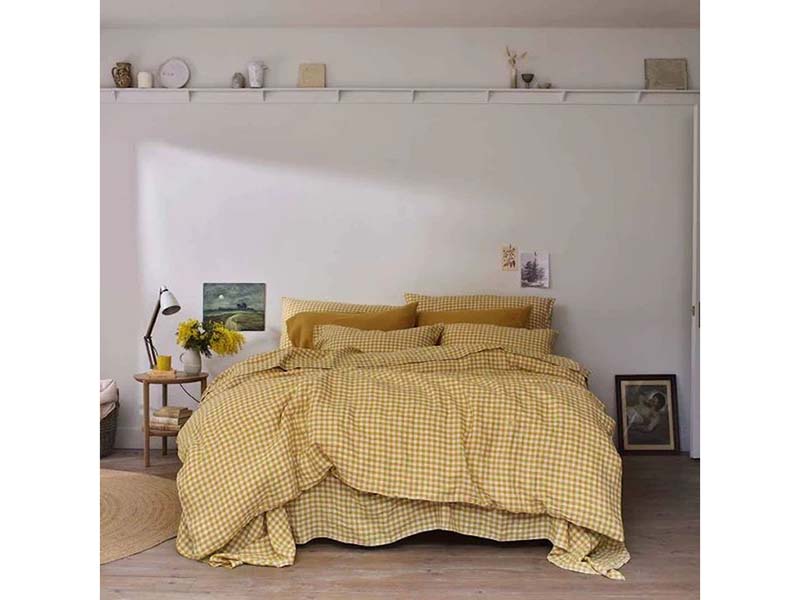
A bedroom can be practical, polished, romantic, and cheerful without looking like it swallowed an entire decorating catalog. The <strot with a warm yellow-and-white check, relaxed linen texture, and enough nostalgic charm to make an ordinary Tuesday morning feel suspiciously like a weekend in the countryside.
Originally presented by Piglet in Bed as a coordinated bedding set made in Portugal from European flax linen, the bundle brings together the main pieces needed to dress a bed. Its sunny honey color softens the graphic gingham pattern, while the natural wrinkles of linen keep everything from appearing overly staged. The overall effect is cozy rather than cutesy, traditional without being stuffy, and colorful without demanding sunglasses.
This guide explores what was included in the bundle, how the materials perform, who will appreciate it most, how to style it, and what living with gingham linen bedding may actually feel like after the carefully arranged product photos have left the building.
What Is the Honey Gingham Linen Bundle?
The Honey Gingham Linen Bundle was designed as a coordinated bedding package rather than a single duvet cover or sheet set. Product descriptions listed a duvet cover, a pair of pillowcases, and either a fitted sheet or a flat sheet as the standard configuration. Additional sheets and pillowcases could be added to create a more complete setup.
The original version was described as being made from 100% European flax linen, pre-washed for softness, and produced in Portugal. It also featured coconut-shell buttons on the duvet cover and OEKO-TEX-certified textile components. Exact configurations, names, prices, and availability may change, so shoppers should confirm the current product page before ordering. attern With Personality
Gingham is one of those patterns that has collected several personalities over the years. It can look like a picnic cloth, a farmhouse curtain, a tailored shirt, or a modern design statement depending on its scale, color, and surroundings.
In this bundle, the honey-yellow shade makes the pattern feel warm and mellow. It is less intense than lemon yellow and less earthy than mustard. Against white checks, it creates a bright but approachable look that works particularly well with cream walls, pale woods, woven baskets, painted furniture, and natural textiles.
Gingham bedding is also remarkably flexible. Design publications continue to feature checked bedding in cottage-inspired, coastal, vintage, and contemporary rooms, showing that the pattern does not need a farmhouse address to earn its keep. Linen Makes Sense for Bedding
The visual appeal may attract the first click, but the linen construction is what gives the bundle its everyday usefulness. Linen is made from fibers found in the stalk of the flax plant. Those fibers create a fabric known for strength, moisture management, breathability, and a recognizable textured hand.
Breathable Comfort for Warm Sleepers
Linen allows air to circulate and can move moisture away from the body, which makes it appealing to people who become warm during the night. It does not create refrigeration under the duvetyour bed will not suddenly develop an air-conditioning unitbut it generally feels less heat-trapping than many densely woven or synthetic materials.
Heavier linen can also offer insulation when temperatures drop. This combination helps explain why linen bedding is often promoted as a year-round option rather than something that must be packed away as soon as summer ends. Independent bedding guidance likewise identifies linen as a breathable material that dries relatively quickly and can remain comfortable across changing seasons. exture That Changes Over Time
Brand-new linen may feel more substantial and less silky than sateen cotton. That is part of its character. With use and appropriate washing, the fibers tend to relax, producing a softer, more pliable surface.
Pre-washing gives the Honey Gingham Linen Bundle a head start. It should arrive with a more relaxed feel than untreated linen, although shoppers who expect the immediate smoothness of luxury cotton sateen may still notice the difference. Linen is not trying to impersonate silk. It has its own slightly rumpled, breezy personality and seems quite confident about it.
Natural Wrinkles Are Part of the Look
Linen wrinkles easily, but that is usually considered a feature in casual bedding. The creases catch the light, soften the gingham grid, and prevent the bed from looking rigid.
People who enjoy a relaxed European, cottagecore, or modern-rustic bedroom may love this lived-in finish. Anyone who wants hotel sheets pulled tight enough to bounce a coin may need to adjust expectationsor develop an unusually committed relationship with an iron.
Understanding the OEKO-TEX Certification
OEKO-TEX STANDARD 100 is a textile-safety certification based on laboratory testing for potentially harmful substances. Testing can cover the fabric as well as components such as threads, buttons, and other accessories. Bedding falls within the category of textiles intended for direct skin contact, which is subject to requirements appropriate for that use. certification does not automatically mean that a product is organic, carbon-neutral, or environmentally perfect. It addresses chemical safety testing rather than every possible sustainability issue. Still, it offers useful third-party information for shoppers who want more than a vague promise that a textile is “clean,” “natural,” or “good-vibes adjacent.”
What Makes the Honey Color So Versatile?
Yellow bedding can sound intimidating because people often imagine the brightest crayon in the box. Honey is easier to work with. Its golden undertone gives it enough warmth to coordinate with wood, terracotta, brown, cream, olive, and other natural shades.
The color can function almost like a warm neutral when surrounded by quiet materials. It contributes more personality than beige but remains softer than a saturated primary yellow. Design guidance for yellow bedrooms commonly pairs golden or buttery tones with white, blue, green, charcoal, and natural brown to create either cheerful contrast or a calmer tonal scheme. ors That Pair Well With Honey Gingham
- Warm white and ivory: Keep the room bright while allowing the pattern to lead.
- Botanical green: Create a garden-inspired palette that feels fresh rather than overly sweet.
- Dusty blue: Add cool contrast and a relaxed country or coastal influence.
- Terracotta and clay: Emphasize the earthy side of the honey color.
- Deep berry: Introduce richer contrast for fall and winter.
- Natural wood: Reinforce the warmth without adding another competing color.
How to Style the Honey Gingham Linen Bundle
Option One: The Full Gingham Bed
Use the matching duvet cover, sheet, and pillowcases for maximum pattern. This approach creates a confident, enveloping look and works especially well when the rest of the bedroom is simple.
Keep the walls neutral, choose an uncomplicated headboard, and limit decorative pillows. When the bed is already wearing checks from head to toe, seven additional throw cushions may turn charming into competitive square dancing.
Option Two: Let the Duvet Be the Star
Pair the gingham duvet cover with solid white, ivory, honey, or pale green sheets. This is the easiest styling strategy for people who like pattern but want visual breathing room.
A solid sheet at the top of the bed creates a clean break, while matching gingham pillowcases repeat the main pattern without overwhelming the room. Designers often recommend letting one prominent pattern lead and supporting it with solids, subtle textures, and varied scales. ion Three: Mix Gingham With Florals
Checks and florals are natural partners because one is geometric and the other is organic. Select a floral pillow or quilt containing a small amount of honey yellow so the combination looks intentional.
Scale matters. If the gingham check is medium or large, choose a smaller floral print. Two equally bold patterns may argue for attention, and your bedroom should not feel like it is hosting a design debate at 2 a.m.
Option Four: Add Texture Instead of More Pattern
Layer the bundle with a cream wool blanket, a cotton waffle throw, a quilted coverlet, or a chunky woven cushion. Texture adds dimension while preserving the gingham as the visual focal point.
This approach is particularly effective in minimalist rooms. The color prevents the room from feeling sterile, while the extra texture creates depth without introducing unnecessary clutter.
Seasonal Styling Ideas
Spring
Combine honey gingham with soft green, white ceramics, fresh branches, and lightweight cotton blankets. The yellow checks bring energy to the room without requiring a complete seasonal makeover.
Summer
Keep the bed simple. Use the linen sheet, duvet cover, and one lightweight throw at the foot. Add pale blue or chalky white accessories for a breezy palette. Linen’s airflow and moisture-handling characteristics are especially useful during warmer weather.
Fall
Introduce rust, warm clay, cinnamon, or dark olive. Honey yellow transitions naturally into an autumn palette, so there is no need to exile it to the back of the closet when the first pumpkin appears.
Winter
Layer the bed with a wool blanket, quilt, or heavier duvet insert. Deep berry, forest green, and dark wood make the gingham feel richer and more cocooning. The checks remain cheerful, which is helpful when daylight seems to have taken a part-time job.
Who Is This Bedding Best For?
The Honey Gingham Linen Bundle is a strong match for shoppers who enjoy expressive bedding, natural fibers, and relaxed interiors. It may be especially appealing to hot sleepers, cottagecore fans, vintage-design enthusiasts, and anyone trying to warm up a plain white bedroom.
It also makes sense for someone building a coordinated room from scratch. Buying a bundle reduces the work of locating separate pieces with compatible colors and measurements.
It May Not Be Ideal If You:
- Prefer completely smooth, crisp, wrinkle-free bedding.
- Dislike the initial texture of linen.
- Want a silent background rather than a noticeable pattern.
- Need the lowest-priced sheet option available.
- Frequently use high heat when washing and drying bedding.
How to Care for Honey Gingham Linen Bedding
Always begin with the care label attached to the product. Manufacturer instructions should take priority because dyes, finishes, trims, and construction methods can affect the recommended routine.
General linen-care guidance favors cool or lukewarm water, a gentle machine cycle, and mild detergent. Avoid overfilling the washer, which prevents the fabric from moving freely. Strong bleach, aggressive stain treatments, and excessive detergent can weaken fibers or affect color.
Line drying is gentle, but low-temperature tumble drying may be convenient when permitted by the care label. Remove the bedding while it is slightly damp to reduce deep creases, then place it on the bed or allow it to finish drying naturally. High heat should be used cautiously because it can accelerate shrinkage, fading, and fiber wear. ractical Washing Routine
- Close the duvet cover and separate it from items with hooks or rough zippers.
- Wash similar colors together using a gentle detergent.
- Select a cool or warm gentle cycle according to the care label.
- Do not pack the machine tightly.
- Air dry or tumble dry on low when permitted.
- Store the bedding only after it is completely dry.
Fabric softener is usually unnecessary. It can leave a coating on fibers, while linen naturally becomes more flexible through regular use and laundering. Freshly washed linen may feel slightly firm when dry, then soften quickly once it warms against the body.
Is a Linen Bedding Bundle Worth the Investment?
A coordinated linen bundle typically costs more than an entry-level cotton or microfiber set. The decision therefore depends on more than appearance.
Consider how often the bedding will be used, whether linen’s texture suits your preferences, and whether the set can work with items you already own. A distinctive pattern may provide better long-term value when it eliminates the urge to repeatedly redecorate the room. On the other hand, buying premium linen simply because it looks charming online is risky when you strongly prefer smooth sateen in real life.
Before purchasing, check the mattress depth, duvet dimensions, pillow size, return policy, and exact contents of the selected configuration. “Bundle” is a friendly word, but it does not always mean every item visible in the photograph is included.
Living With Honey Gingham Linen: A Realistic Experience
The first noticeable change is visual. Honey gingham makes the bed look finished even when the styling effort consists of shaking out the duvet and placing the pillows somewhere near the headboard. The checks create enough structure to disguise minor imperfections, while the linen wrinkles communicate relaxed sophisticationor at least provide an excellent alibi for not ironing.
During the first few nights, the fabric may feel more textured than conventional cotton sheets. It is not necessarily rough, particularly because the bundle is pre-washed, but the sensation is distinct. Linen feels dry, substantial, and slightly crisp rather than slick. After several washes, the surface generally becomes more relaxed. The duvet begins to drape more naturally, and the pillowcases lose some of their early stiffness.
Warm nights are where the material earns its reputation. The bedding does not cling heavily, and small movements allow air to pass through the fabric. A suitable duvet insert still matters enormously; pairing a breathable linen cover with an extremely heavy insert in July is like wearing sandals with a winter coat and blaming the sandals.
The honey color also behaves differently throughout the day. Morning light emphasizes its sunny yellow side, while lamps and late-afternoon light bring out the warmer golden tones. In a north-facing room, it can counteract cool gray light. In an already warm room with orange wood and cream walls, adding white or muted blue accessories prevents the palette from becoming too golden.
Pattern mixing requires a little restraint. A striped rug may work, especially when its lines are broad and subtle. Tiny checks beside tiny florals can become busy, however. The easiest approach is to let the bedding carry the pattern and use solid curtains, a plain rug, and textured cushions. Once that foundation feels balanced, one floral or striped accent can be introduced.
Maintenance is straightforward but not invisible. Linen comes out of the washer looking dramatically wrinkled, particularly if it remains bundled in the machine. Promptly shaking out each piece before drying makes a noticeable difference. Removing the fabric from a low-heat dryer before it becomes bone-dry also helps preserve a softer hand.
Fitting a linen duvet cover over an insert remains the usual mild wrestling match. Corner ties, when included, help keep the insert from migrating into one lumpy province during the night. Coconut-shell buttons add a small natural detail, although they should be fastened before washing to reduce snagging and unnecessary stress.
The most pleasant long-term quality is that the bedding does not need to look perfect to look attractive. A slightly untucked sheet, casually folded duvet, or creased pillowcase suits the material. That makes the bundle practical for real bedrooms occupied by real people, not only rooms where nobody is apparently allowed to sit down.
After the novelty of the pattern settles, honey gingham becomes surprisingly adaptable. In spring it feels fresh with green; in summer it looks light with white and blue; in fall it fits naturally beside rust and brown; and in winter it becomes cozy under a dark wool blanket. That seasonal range may be the strongest argument for choosing this color over a more intense yellow.
The overall experience is best described as cheerful comfort with a relaxed finish. It will not satisfy everyone. Dedicated minimalists may find the pattern too visible, and devotees of perfectly smooth sheets may never make peace with linen’s wrinkles. For shoppers who enjoy natural texture and a bedroom with some personality, however, the Honey Gingham Linen Bundle offers a combination that feels both playful and grown-up.
Final Verdict
The Honey Gingham Linen Bundle succeeds because its major elements balance one another. The gingham pattern is lively, but the honey color is mellow. The coordinated set feels polished, but the linen texture keeps it casual. Its nostalgic influence is obvious, yet it can sit comfortably beside contemporary furniture, simple lighting, and modern artwork.
Its best qualities are the breathable flax-linen construction, warm and flexible color palette, coordinated format, and ability to improve visually as the material relaxes. The main compromises are cost, natural wrinkling, and a texture that differs from smooth cotton.
For a bedroom that needs warmth, pattern, and a little good humor, this bundle offers more than a fresh set of sheets. It creates an entire moodsomewhere between sunny country cottage and modern home, with no actual chicken coop required.
Editorial note: Product availability, bundle contents, dimensions, and prices can change. Confirm current specifications and care instructions with the retailer before purchasing. This independent article synthesizes documented product information and established guidance from textile-certification, bedding, laundry, sleep, and interior-design resources. ode>