Every office has someone who knows everything. Who ate the last donut. Who booked the conference room and never showed up. Who said they were “circling back” but actually opened a browser tab titled “cute raccoon wearing pajamas.” Usually, that person works in HR, management, or accounting. But in one unforgettable viral office moment, the suspected surveillance officer turned out to be much smaller, furrier, and dramatically better at hiding in the ceiling.
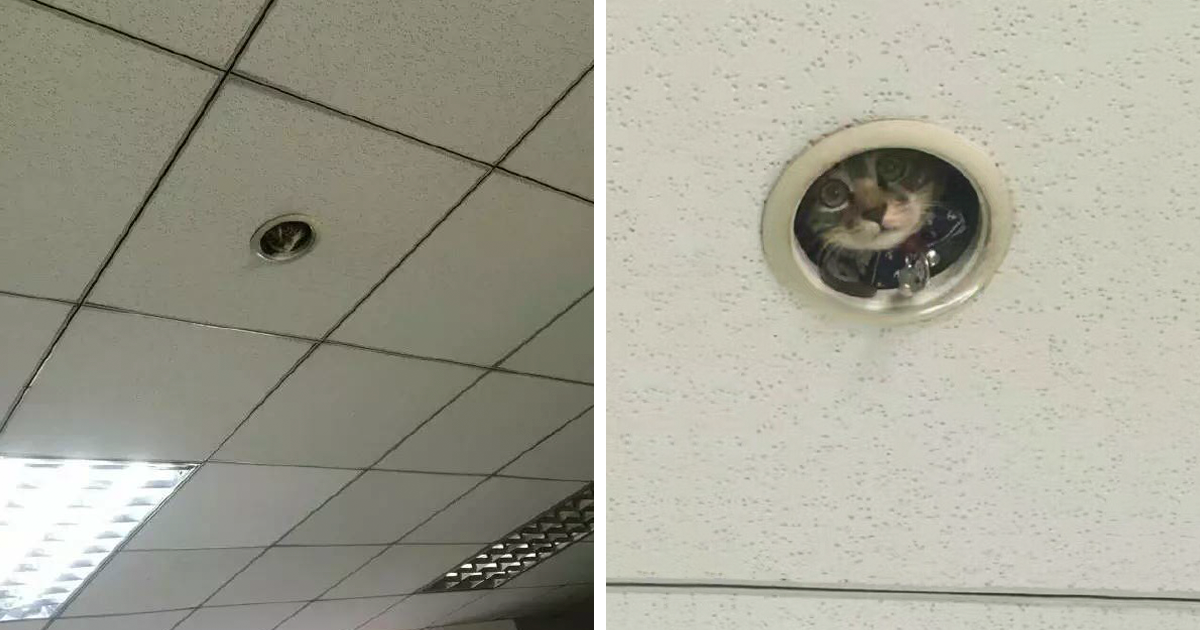
The hilarious moment office workers realize they’re being spied on by a cat became internet gold because it mixed three things people never get tired of: workplace awkwardness, animal comedy, and the deeply unsettling feeling that a cat knows too much. The scene was simple. Office workers noticed a tiny feline face peering down from a gap in the ceiling, looking less like a lost animal and more like a highly committed quality-control inspector. No clipboard. No badge. Just eyes, whiskers, and the unmistakable energy of someone documenting your productivity for upper management.
The images spread widely online after being shared from Japan, where a worker reportedly received photos from a colleague. The cat appeared to be tucked near a ceiling opening, staring down into the office with the calm confidence of a creature who had absolutely read the employee handbook and rejected it. Soon, social media users were joking that companies had discovered the cutest new form of surveillance: not security cameras, not productivity software, but ceiling cats.
Why This “Surveillance Cat” Moment Went Viral
Viral animal stories usually work because they turn ordinary life into something delightfully ridiculous. A cat sitting in a window is cute. A cat watching office workers from above like a tiny undercover agent? That is comedy with whiskers.
What made this office cat moment especially funny was the setting. Offices are supposed to be controlled environments: fluorescent lights, coffee machines, polite emails, and meetings that could have been a sentence. Then suddenly, a cat appears from the ceiling. The workplace becomes less “quarterly planning session” and more “spy thriller directed by someone with a laser pointer.”
The angle of the cat’s stare made everything better. Cats already have a reputation for judging humans from bookshelves, windowsills, and laundry baskets. Place one in a ceiling panel, and the joke practically writes itself. Employees could no longer be sure whether they were being monitored for efficiency, snack theft, or insufficient admiration of cats.
The Internet’s Favorite Office Manager Has Four Paws
Part of the charm came from how naturally the cat seemed to fit the role of workplace supervisor. Cats are famous for silently observing, appearing without warning, and making people feel guilty for reasons they cannot identify. That is also, coincidentally, half of middle management.
Online commenters quickly turned the cat into a character. Some imagined it as a new security camera. Others called it a “ceiling cat,” a playful nod to an old internet meme about cats watching from above. The idea was irresistible: somewhere in the building, a cat had promoted itself to Chief Monitoring Officer and was now auditing everyone’s behavior from a premium overhead location.
Unlike an actual office surveillance system, this one came with built-in morale benefits. It is hard to stay annoyed about being watched when the watcher has toe beans and probably no understanding of spreadsheets. A human manager peeking through the ceiling would be a serious HR issue. A cat doing it becomes a team-building event.
Why Cats Love Watching Humans
As hilarious as the moment looked, the cat’s behavior makes sense when viewed through feline instincts. Cats are natural observers. In the wild and at home, they use high places to survey their surroundings, monitor movement, and decide whether something is interesting, threatening, edible, or nap-adjacent.
Animal behavior experts often explain that elevated spaces help cats feel secure. A high perch gives them a better view of the room and reduces the chance of being startled. That is why cats love shelves, cabinets, refrigerators, cat trees, and the one spot you specifically told them not to climb. To a cat, height is not mischief. It is architecture with emotional support.
Staring is also a normal part of cat communication. A cat may stare because it is curious, alert, hungry, playful, cautious, or simply fascinated by the strange rituals of humans. From a cat’s point of view, office workers are probably confusing creatures. They sit in chairs for hours, tap plastic rectangles, speak into glowing rectangles, then celebrate when a printer works. Of course a cat would investigate.
The Feline Stare: Judgment or Curiosity?
When people say a cat is “judging” them, they are usually joking, but the feeling is real. A cat’s steady gaze can seem intense because cats communicate heavily through body language. Eyes, ears, tail position, posture, and whiskers all matter. Relaxed eyes and soft blinking may suggest comfort. Wide, fixed attention may signal curiosity or excitement. A tense body, pinned ears, growling, or a lashing tail may mean the cat is frightened or overstimulated.
In the office cat case, the humor came from the expression: focused, calm, and suspiciously official. The cat did not look panicked in the widely shared photos. It looked like it had discovered several policy violations and was waiting for the right time to reveal them.
Was the Cat Actually Spying?
Probably not in the corporate sense, unless the company’s security budget included tuna. The cat was most likely exploring, hiding, or using the ceiling area as an unexpected lookout. Cats are flexible, curious, and famously good at squeezing into spaces that appear to be designed by puzzle-makers with emotional problems.
Still, the “spying” joke works because cats do seem to notice everything. They know when you open a treat bag from three rooms away. They know which laptop key will cause maximum disruption. They know when you are trying to sleep, eat, pack a suitcase, or use the bathroom in peace. Privacy is not a concept cats oppose. It is a concept they simply refuse to recognize.
So while the office cat probably was not collecting performance data, it was absolutely observing. And in the court of internet opinion, that is close enough.
Office Pets and Workplace Morale
The viral ceiling cat also touched on a broader truth: animals can change the mood of a workplace instantly. Many employees associate pets with stress relief, comfort, and social connection. A dog wandering through an office can turn a gloomy afternoon into a parade. A cat claiming a keyboard can delay a report while somehow improving everyone’s emotional stability.
Research and workplace wellness discussions often suggest that pets in professional environments may help reduce stress, increase positive social interaction, and make offices feel more human. Of course, every workplace needs rules. Allergies, safety, cleanliness, leases, noise, and animal welfare all matter. A pet-friendly office works best when it is planned, not when a cat emerges from the ceiling like a furry compliance audit.
But even unplanned animal encounters can create shared laughter. The workers in this story did not just find a cat. They found a story they could tell forever. “Remember the day the ceiling had eyes?” is much better small talk than “remember the budget meeting?”
The Safety Side: Cute Does Not Mean Ignore It
As funny as the images were, there is one serious point worth making: if a cat is found inside a ceiling, wall, vent, basement, crawl space, or any unusual building area, people should make sure the animal is safe. Cats can become trapped, disoriented, injured, overheated, or unable to access food and water. The right response is not to scare the cat or grab it suddenly, but to contact building management, a local animal rescue, or a veterinarian if needed.
Curiosity may be a cat’s brand, but safety should be the humans’ job. A relaxed office cat on a supervised shelf is adorable. A cat stuck in a ceiling space needs help, not just memes. The best ending to any viral cat story is not only laughter, but also a healthy animal with a safe exit route and maybe a well-earned snack.
Why Cats Choose the Weirdest Places
Ask any cat owner where their cat sleeps, and the answer will rarely be “in the expensive bed I bought.” Cats choose cardboard boxes, laundry piles, backpacks, sinks, closet shelves, printer trays, and occasionally the exact document you need to sign. Their location choices may look random, but they often serve a purpose.
Small spaces feel secure. High spots offer control. Warm surfaces provide comfort. Hidden corners allow cats to observe without being touched. In other words, the ceiling cat was not being weird by cat standards. It was simply combining several premium feline features: height, concealment, mystery, and an excellent view of human nonsense.
To a cat, an office ceiling gap might look like a luxury observation deck. To humans, it looks like a haunted security camera with whiskers. Both interpretations are correct.
How the Moment Became Meme Material
The images quickly inspired jokes and edits because the visual was instantly adaptable. A cat face peeking from a ceiling can be placed into almost any situation: a movie scene, a famous painting, a spaceship, a political debate, a horror poster, or the background of an employee performance review. The cat’s expression was neutral enough to fit everywhere and dramatic enough to improve everything.
This is what the internet does best. It takes a small absurd moment and turns it into a shared language. Suddenly, “being watched by a cat” becomes a joke people can apply to their own lives. Working from home? Your cat is watching. Eating shredded cheese at midnight? Your cat is watching. Pretending to be busy while scrolling through cat memes? Your cat is definitely watching, and frankly, may approve.
What Office Workers Can Learn From the Ceiling Cat
At first glance, the story is just a funny animal moment. But like many viral pet stories, it also says something about work culture. People love moments that interrupt routine. Offices can become repetitive, stressful, and overly serious. A cat appearing in the ceiling breaks the script. It reminds everyone that life is unpredictable, absurd, and occasionally covered in fur.
The ceiling cat also teaches a productivity lesson no software platform can match: people bond over laughter. One unexpected animal visitor can do more for office morale than a dozen motivational posters about teamwork. Nobody wants another poster that says “Synergy.” Everybody wants to know why there is a cat in the ceiling.
A Better Kind of Workplace Surprise
Most office surprises are bad. The Wi-Fi is down. The meeting has been moved earlier. Someone microwaved fish. A cat in the ceiling, however, is a premium workplace surprise. It creates curiosity instead of dread. It turns coworkers into detectives. It makes people look up from their screens and share the same ridiculous question: “Is that a cat?”
That moment of shared disbelief is powerful. For a few minutes, titles and tasks disappear. Everyone is just a person looking at a ceiling cat and wondering whether the building has been run by felines all along.
Experience Section: When a Cat Becomes the Unofficial Office Boss
Anyone who has lived or worked around cats knows that they do not need a formal job title to take charge. They simply arrive, sit somewhere important, and begin supervising. In a home office, this usually starts with the keyboard. You are typing an email, trying to sound professional, and suddenly your cat steps across the keys, adding “jjjjjjjjjjjjjj” to a message intended for a client. The cat then sits down, looks at you, and acts as if the document has improved.
The ceiling cat story feels so relatable because cats already behave like tiny inspectors. They inspect grocery bags. They inspect shoes. They inspect guests. They inspect boxes with the seriousness of customs officers at an international border. If a cat could wear reading glasses and hold a clipboard, it absolutely would.
Imagine an ordinary office morning. People are answering emails, refilling coffee, whispering about who forgot to mute their microphone on yesterday’s call. Then someone notices movement above the ceiling panel. At first, everyone freezes. Maybe it is a loose wire. Maybe it is a shadow. Maybe the building is haunted by the ghost of unfinished reports. Then two eyes appear. A nose follows. Whiskers fan out like tiny surveillance antennas. Suddenly the entire office is no longer working. It is investigating.
The reactions would be priceless. One person would immediately start filming. Another would say, “Don’t scare it,” while standing on a chair and doing the exact body language of someone scaring it. Someone from IT would claim they always suspected the ceiling had a vulnerability. A manager would try to restore order but fail because the cat has already become the most important employee in the building.
That is the magic of animal interruptions. They reveal the softer side of people. The quiet coworker becomes the cat whisperer. The strict supervisor starts speaking in baby talk. The person who never attends optional events suddenly volunteers to buy cat food. For a brief moment, the office becomes a community instead of a calendar invite.
Cats also have perfect comic timing. They appear exactly when humans are trying to be serious. During a budget meeting, a cat will knock over a pen. During a video call, a cat will show its tail to the camera like it is presenting quarterly results. During a deadline, a cat will sit on the only stack of papers that matters. It is not sabotage. It is performance art.
The office workers in the viral ceiling cat moment probably did what most of us would do: laugh, take photos, share them, and spend the rest of the day making jokes about being monitored. But the memory likely stuck because it was so wonderfully strange. Workdays blur together. Spreadsheets blur together. Emails definitely blur together. But the day a cat stared down from the ceiling? That becomes office legend.
And maybe that is why the story still feels fresh. The cat represents the kind of surprise people secretly want in their daily routine: harmless, hilarious, and just mysterious enough to make everyone look twice. It is a reminder that even in the most ordinary places, comedy can drop in from above. Sometimes it arrives as a joke. Sometimes it arrives as a meme. And sometimes it arrives as a cat who has apparently been promoted to Director of Watching You Work.
Conclusion
The hilarious moment office workers realize they’re being spied on by a cat remains funny because it captures a perfect collision between everyday office life and feline absurdity. A cat peering from the ceiling is cute, strange, slightly suspicious, and impossible not to share. It taps into everything people love about cats: their curiosity, their stealth, their love of high places, and their talent for making humans feel like supporting characters in a much larger cat-centered drama.
Whether the cat was exploring, hiding, supervising, or silently judging everyone’s lunch choices, one thing is clear: it became the most memorable coworker in the building. No onboarding required. No résumé necessary. Just one dramatic ceiling appearance and the internet had a new favorite office spy.
Note: This article is based on real viral reporting about the office ceiling cat moment, combined with widely accepted feline behavior and workplace wellness insights. Source links are intentionally not included to keep the HTML clean for publishing.