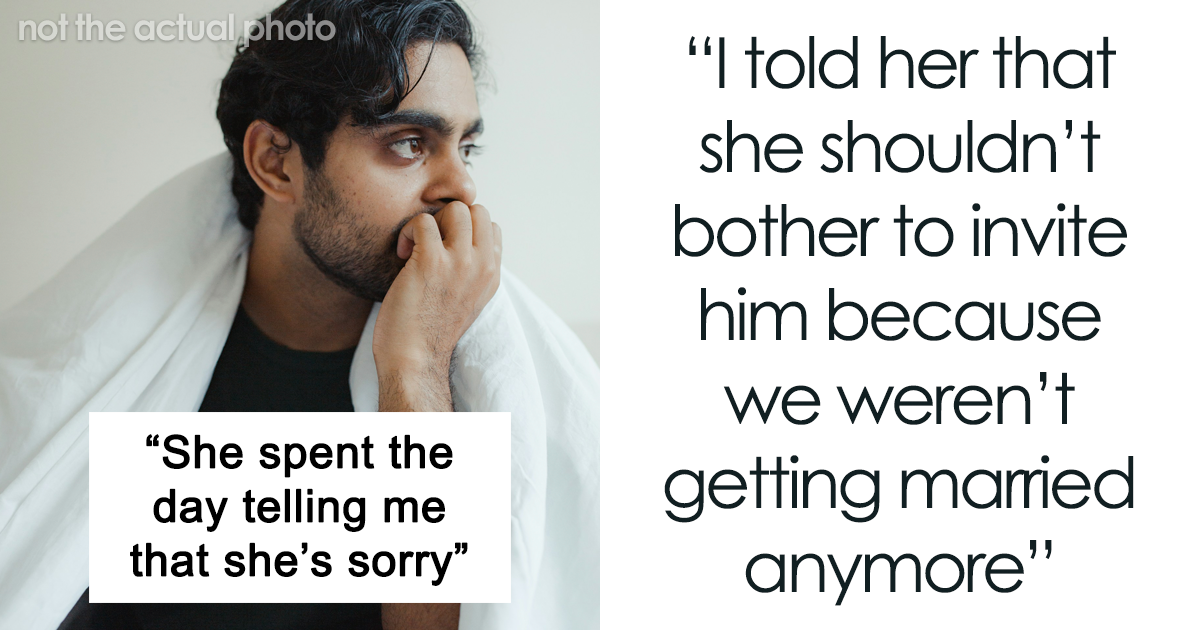
Weddings are supposed to be about love, commitment, cake, and one uncle confidently dancing off-beat like he invented rhythm. They are not usually designed as emotional courtroom exhibits where one partner parades the other in front of an ex to prove a point. Yet that is exactly the kind of messy relationship drama that recently captured attention online: a groom-to-be called off his wedding after his fiancée revealed why she wanted her ex-boyfriend on the guest list.
At first glance, inviting an ex to a wedding might sound like a modern, mature, “we are all adults here” decision. And sometimes it can be. Former partners can become genuine friends. Some exes remain connected through shared children, mutual friend groups, or long-standing family ties. But in this case, the reason behind the invitation changed everything. The bride-to-be reportedly wanted her ex there so he could see that she had “done better” and landed someone superior. In other words, the wedding was being quietly drafted into a revenge campaign. Romantic? Not exactly. Emotionally complicated? Very.
This story raises a bigger question than whether an ex should be invited to a wedding. It asks something deeper: what happens when one partner realizes the other is still emotionally negotiating with the past right before walking into a lifelong future?
The Story: Why the Ex Invitation Became a Deal Breaker
According to the viral relationship-advice post, the groom was shocked when his fiancée insisted on inviting her ex-boyfriend to their wedding. This was not an ex who had gracefully faded into the background like an old Facebook status. He had allegedly treated her poorly, put her down, and made her feel as though she could never do better than him.
Naturally, the groom wondered why someone who had caused that kind of pain deserved a seat at one of the most intimate celebrations of their lives. When he asked, her explanation did not calm the situation. She said she wanted him to see that she was happy and that she had found someone better. That answer landed like a champagne flute dropped onto marble.
To the groom, the issue was no longer just the guest list. It was the motive. His wedding day was not being treated as a shared milestone between two people choosing each other. It was becoming a stage for his fiancée to prove something to an ex. That shift made him feel less like a future husband and more like a trophy with a boutonniere.
In a moment that even he reportedly found surprising, he told her she should not bother inviting the ex because the wedding was off. His fiancée later apologized and tried to take back the idea, but for him, the damage had already revealed something important: she might not have been as emotionally free from the past as he believed.
Can You Invite an Ex to a Wedding?
The short answer is yes, but only under very specific conditions. Wedding etiquette is not carved into stone tablets, no matter how seriously some relatives treat seating charts. Modern weddings are personal, flexible, and shaped by real relationships. If an ex is truly a platonic friend, if both future spouses are comfortable, and if there are no unresolved romantic feelings or hidden motives, inviting an ex may be perfectly fine.
For example, an ex might be appropriate on the guest list if the relationship ended many years ago, both people have moved on, everyone involved is friendly, and the future spouse has no concerns. Another reasonable situation is co-parenting. If former partners share children and have built a respectful family dynamic, excluding one parent from major life events may create more tension than inclusion.
But the emotional temperature matters. If the invitation is meant to make someone jealous, prove a point, reopen an old wound, or create a dramatic “look at me now” moment, that is no longer wedding etiquette. That is emotional theater, and the reception hall is not Broadway.
Why the Groom’s Reaction Made Sense
Some people may think calling off the wedding was extreme. After all, the ex had not actually attended yet. No RSVP had been returned. No awkward chicken-or-fish dinner had been served. But marriage decisions are not only about what has happened; they are about what a moment reveals.
The groom’s concern was not simply, “I do not like this guest.” It was, “Why does this person matter so much on our wedding day?” That distinction is crucial. Weddings are symbolic. Every choice carries meaning, from who walks down the aisle to who gives speeches to who receives an invitation. When someone from a painful past relationship becomes important enough to influence the guest list, a future spouse is allowed to ask why.
His fiancée’s reasoning suggested that part of her still wanted validation from her ex. She wanted him to witness her happiness, perhaps regret losing her, and recognize that she had upgraded. That may be understandable on a human level. Many people fantasize about proving wrong someone who hurt them. But turning a wedding into that proof places unfair emotional weight on the new partner.
The Difference Between Closure and Performance
Closure is quiet. Performance wants an audience. That may be the heart of this entire situation.
Healthy closure means a person has processed the pain, accepted the past, and no longer needs the ex’s reaction to feel whole. Performance, on the other hand, says, “I need them to see me winning.” That desire may feel powerful, but it also keeps the ex emotionally relevant. The person may be gone from the relationship, but they are still renting space in the mind, and apparently the wedding venue too.
Wanting an ex to know you are doing well is normal. Building a whole wedding invitation around that desire is another matter. A wedding should not be a revenge postcard with centerpieces. It should be a commitment ceremony between two people who are emotionally facing forward.
Red Flags Hidden in the Guest List
Guest lists can reveal more than people expect. They show priorities, boundaries, loyalties, and sometimes unresolved emotional business. In this case, the ex invitation raised several red flags.
1. The ex was still emotionally important
The bride-to-be did not appear to want the ex there because he was a close family friend, co-parent, coworker, or part of a shared social circle. She wanted him there because of what he represented. That means his opinion still had emotional power.
2. The groom felt objectified
Her explanation made the groom feel like proof of success rather than a partner. No one wants to discover they are being used as a human “before and after” photo.
3. The wedding became about someone outside the relationship
A wedding can include many people, but emotionally it should center the couple. If an ex becomes a major theme before the vows, something is off.
4. Boundaries were unclear
Healthy couples can disagree about guests, but they need to understand each other’s comfort levels. If one partner dismisses the other’s discomfort as insecurity, the conversation becomes even more damaging.
What Healthy Wedding Boundaries Look Like
Boundaries are not ultimatums dressed in fancy shoes. They are clear statements about what makes a relationship feel safe and respectful. In wedding planning, boundaries are especially important because stress levels are high, money is involved, families have opinions, and even the napkin color can suddenly feel like a moral crisis.
A healthy boundary might sound like: “I understand you have history with this person, but I am not comfortable inviting someone who hurt you and whose presence is tied to proving something.” That is not controlling. It does not say, “You can never speak to this person again.” It says, “Our wedding should not include a guest whose purpose is emotional revenge.”
The best couples discuss these issues before they explode. They ask questions such as: Why do you want this person there? What role do they currently play in your life? Would you still want them invited if they never reacted? How would you feel if I invited an ex for the same reason?
That last question is especially useful. Many wedding conflicts become clearer when both partners imagine the roles reversed. If the answer is “I would hate that,” then congratulations, the empathy machine is working.
Was Calling Off the Wedding Too Much?
Calling off a wedding is painful, expensive, embarrassing, and emotionally exhausting. It is not something anyone should do casually. But postponing or canceling a wedding can be wiser than entering a marriage with serious doubts. A wedding is one day. A marriage is the lease agreement your heart signs with another person, hopefully with better communication than most apartment contracts.
The groom may have reacted quickly, but his decision reflected a deeper concern: he no longer felt secure in the emotional foundation of the relationship. If he believed his fiancée was still trying to win a psychological contest with her ex, then moving forward without addressing that concern would have been risky.
A more moderate option could have been postponement and couples counseling. That would give both partners time to understand what the invitation really meant, whether unresolved trauma was involved, and whether trust could be rebuilt. But the groom was also allowed to decide that the revelation changed how he saw the relationship.
What the Fiancée May Have Been Feeling
It is easy to paint the fiancée as the villain, but real emotions are rarely that tidy. Her desire to invite the ex may have come from old hurt. When someone spends a relationship being belittled, dismissed, or told they are not enough, the urge to prove them wrong can linger for years. That does not make her choice healthy, but it does make it human.
She may have wanted a symbolic victory. She may have imagined her ex sitting there, realizing he had lost someone wonderful. She may have wanted the satisfaction of being seen as happy, loved, and chosen. Many people understand that fantasy. The problem is that her future husband should not have had to become part of it.
Healing from a harmful relationship means learning that the ex’s opinion no longer gets a vote. The ultimate win is not making them jealous. It is not caring whether they are jealous at all.
How Couples Should Handle Exes Before Marriage
Before marriage, couples should have honest conversations about past relationships. That does not mean sharing every ancient romantic detail like a historian with a candlelit diary. It means discussing what matters now: current contact, unresolved emotions, friendships with exes, boundaries, and expectations.
If an ex is still in the picture, both partners should know why. Is there co-parenting? A shared business? A close friend group? A family connection? Or is the ex still around because someone has not fully let go?
Transparency is not about interrogation. It is about trust. A partner should not have to discover important emotional dynamics through surprise guest-list debates six weeks before the wedding.
Practical Advice for Similar Situations
Talk before making a decision
If your partner wants to invite an ex, do not start with accusations. Start with curiosity. Ask why the invitation matters. Listen carefully not only to the answer, but to the emotional charge behind it.
Separate friendship from validation
An ex who is genuinely a friend will be discussed calmly. An ex being invited for validation will usually come with phrases like “I want them to see,” “I want to prove,” or “I want them to regret.” Those are very different situations.
Agree on mutual rules
Both partners should have the same standards. If one person can invite an ex, the other should theoretically be able to do the same under similar circumstances. If that idea causes instant discomfort, the rule needs more discussion.
Consider counseling before canceling
If the relationship is otherwise strong, professional premarital counseling can help. A neutral third party can separate insecurity from legitimate concern and help both partners communicate without turning the conversation into a courtroom drama starring two sleep-deprived people with wedding deposits on the line.
Experiences and Lessons Related to This Topic
Many couples discover during wedding planning that the ceremony is not the real test. The real test is decision-making under pressure. Who gets invited? Who pays? How much family influence is too much? What traditions matter? What boundaries cannot be crossed? These questions often reveal the relationship’s operating system.
In situations involving exes, one common experience is the difference between “I am fine with it in theory” and “I am fine with it when it affects me.” Someone may believe they are open-minded until their partner casually says, “I was thinking of inviting my ex.” Suddenly, the room gets quiet enough to hear a seating chart cry.
A useful lesson is that discomfort does not automatically equal jealousy. Sometimes discomfort is information. If a partner wants to invite an ex who is now a harmless friend, the discomfort may come from insecurity that can be discussed and soothed. But if the ex is being invited to trigger regret, jealousy, or comparison, the discomfort points to a real boundary issue.
Another experience many couples share is realizing that unresolved past pain can disguise itself as confidence. Saying “I want my ex to see how well I’m doing” may sound empowered, but it can also reveal that the ex still has emotional influence. True confidence does not require a witness. It simply exists, drinks water, pays bills, and does not need front-row validation at the wedding.
There is also the experience of feeling used. In this story, the groom’s hurt likely came from realizing his fiancée’s invitation was not about friendship. It was about comparison. No partner wants to be chosen as evidence in an old argument. Being loved should feel personal, not like being entered into a competition you never signed up for.
For couples facing similar drama, the best approach is to pause the wedding-planning machine and talk honestly. Do not hide behind etiquette. Do not ask friends to vote like it is a reality show finale. Sit down and ask: What are we really dealing with here? Is this about friendship, closure, revenge, insecurity, or fear? The answer matters more than the invitation itself.
Finally, this story reminds people that calling off or postponing a wedding is not always failure. Sometimes it is the painful but responsible choice. It is better to face an uncomfortable truth before marriage than to spend years pretending a red flag was just festive décor. Love is not proven by ignoring your instincts. Love is strengthened when both people can tell the truth, respect boundaries, and choose each other without needing applause from the past.
Conclusion
The viral story of a guy telling his fiancée the wedding is off after she explained why she wanted to invite her ex is not just internet drama. It is a sharp reminder that weddings magnify whatever already exists in a relationship. Trust becomes more visible. Boundaries become more important. Unresolved feelings become harder to hide behind floral arrangements.
Inviting an ex to a wedding is not automatically wrong. In some cases, it can be mature, respectful, and completely harmless. But motivation matters. If the goal is friendship, inclusion, or family harmony, the conversation may be workable. If the goal is revenge, jealousy, or validation, the couple has a deeper issue to address before anyone walks down the aisle.
A wedding should celebrate the relationship in front of the couple, not settle emotional debts with someone behind them. The past may shape people, but it should not be handed a formal invitation to the future.
SEO Tags
Note: This article is an original, rewritten analysis based on publicly discussed relationship-advice scenarios and widely accepted wedding-etiquette principles, prepared for web publication without copied source text.