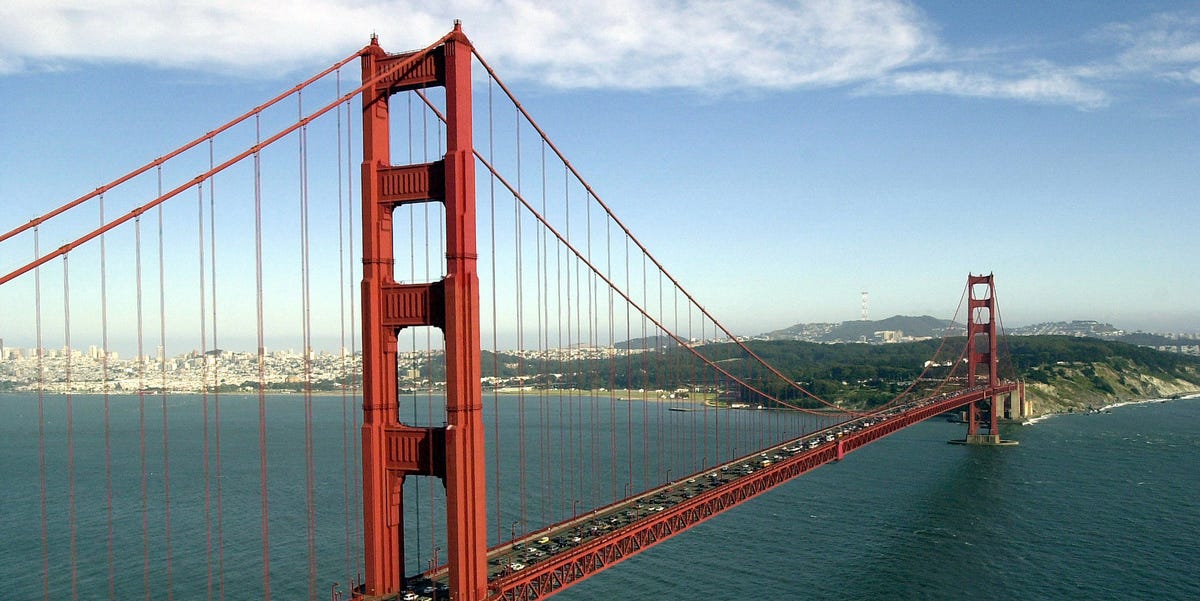
The Golden Gate Bridge has always been dramatic. It wears International Orange like a movie star, disappears into fog like a magician, and poses for more vacation photos than most celebrities. But in 2020, San Francisco’s most famous landmark added a new talent to its résumé: screaming into the wind.
Residents heard it. Cyclists heard it. Tourists heard it. Videos spread across social media showing the bridge producing an eerie, high-pitched hum that sounded somewhere between a giant harmonica, a haunted flute, and a tea kettle with unresolved emotional issues. The internet immediately did what the internet does best: panic, joke, and ask, “Is the bridge okay?”
The good news is that the Golden Gate Bridge is not haunted, angry, or auditioning for a horror movie soundtrack. The screeching sound comes from wind moving through newly installed railing slats on the west side of the bridge. Those slats were added as part of a wind retrofit project designed to make the bridge safer and more aerodynamic during extreme wind events. In other words, the sound is annoying, but it is connected to a serious engineering upgrade.
So why exactly does the Golden Gate Bridge make that screeching sound? The answer involves wind, metal, vibration, bridge safety, and a little accidental musical instrument science. Let’s walk across the mystery carefullypreferably while holding onto our hats.
The Short Answer: The Bridge Is “Singing” in the Wind
The Golden Gate Bridge screeching sound is caused by sustained high winds passing through the bridge’s new west-side railing. The railing contains thin vertical slats designed to let more air flow through the structure. When strong wind hits those slats at certain speeds and angles, the airflow creates tiny repeating vibrations. Those vibrations can turn into audible tones.
This is why people often describe the sound as the bridge “singing.” Technically, it is not singing in the human sense. There are no lyrics, no bridge choir, and thankfully no surprise jazz solo. But physically, the process is similar to how wind instruments produce sound: moving air interacts with a shape, pressure changes repeat, and sound waves travel outward.
The Golden Gate Bridge District has explained that the sounds occur during high wind events when wind passes through the new, more aerodynamic railing. Engineers later confirmed that the noise is generated by the interaction between the wind and the slats, especially under very specific wind speeds and directions.
Why Was the Railing Changed in the First Place?
To understand the noise, it helps to understand the project behind it. The bridge did not suddenly decide to change its look for fun. The new railing was part of a major wind retrofit project. Its purpose was to improve the bridge’s aerodynamic performance and preserve structural integrity during powerful winds.
The Golden Gate Bridge spans one of the windiest and most exposed locations in the Bay Area. Wind pours through the Golden Gate Strait, where the Pacific Ocean meets San Francisco Bay. On calm days, the bridge is postcard-perfect. On stormy days, the area can feel like nature turned on a leaf blower and forgot where the off switch is.
The bridge also had to accommodate additional safety-related infrastructure, including the suicide deterrent net system. That system adds wind resistance, so engineers needed to make other parts of the bridge more wind-friendly. The solution included replacing older west sidewalk railing with slimmer vertical slats that allow more air to pass through.
From a structural standpoint, that makes sense. A railing that lets wind pass through more easily reduces wind load on the bridge. From an acoustic standpoint, however, the slimmer slats created an unexpected side effect: under the right conditions, the bridge became a massive wind-powered instrument.
The Science Behind the Screech: Vortex Shedding
The main scientific idea behind the Golden Gate Bridge noise is called vortex shedding. It sounds like something a dragon does after lunch, but it is actually a common fluid dynamics phenomenon.
When air flows around an object, it does not always move smoothly. Behind the object, swirling pockets of air can form and peel away in an alternating pattern. These repeating swirls are called vortices. If the airflow is steady enough and the object’s shape encourages the pattern, those vortices can create vibrations.
Now imagine wind passing over thousands of thin metal slats. If the wind speed and direction line up just right, the repeated airflow patterns can cause the slatsor the air between themto vibrate at certain frequencies. When those vibrations become strong enough, people hear them as a tone.
This is not unique to the Golden Gate Bridge. Similar wind-induced sounds can happen with railings, wires, towers, buildings, and even car roof racks. Anyone who has heard a strap whistle on the highway has experienced a tiny, less famous version of the same idea. The Golden Gate Bridge simply does it on a much larger stage, with better lighting and more tourists.
When Did People First Notice the Sound?
The bridge’s new voice became widely noticed in the spring and early summer of 2020, soon after new railing sections were installed. During windy conditions, Bay Area residents began reporting an unusual hum or screech that could be heard from neighborhoods near the bridge.
Some described it as eerie. Others called it musical. A few compared it to a giant kazoo, which is both hilarious and surprisingly accurate. News outlets covered the story, social media users posted videos, and the bridge became one of the few landmarks in the world to generate headlines not just for how it looks, but for how loudly it complains during bad weather.
The timing also made the sound feel even stranger. In 2020, many cities were quieter than usual because of pandemic restrictions. With less traffic and fewer crowds, unusual environmental sounds stood out more sharply. So when the Golden Gate Bridge started producing an otherworldly tone, people noticed quickly.
How Loud Is the Golden Gate Bridge Screeching Sound?
The sound can vary a lot depending on wind conditions. Sometimes it is a lower hum. Sometimes it is a sharper, higher-pitched tone. Engineers found that different sounds occur under different wind speeds and angles.
According to the bridge’s official analysis, one lower-frequency tone can occur when wind passes more directly across the railing at speeds around 22 miles per hour or higher. A higher-frequency tone can occur when wind hits at a slight angle at speeds around 27 miles per hour or higher. In stronger wind events, the sound may carry far beyond the bridge itself.
That explains why some residents heard it clearly even when they were not standing on the bridge. Low-frequency sound, in particular, can travel long distances. It may not always sound painfully loud at the source, but it can become noticeable across neighborhoods depending on weather, background noise, and geography.
For people who enjoy strange engineering phenomena, the sound is fascinating. For people trying to sleep, work, or enjoy a peaceful evening, it can be less charming. A landmark making ghost-flute noises during high winds is fun for about ten seconds. After that, it becomes a customer service issue with a very large orange bridge.
Is the Sound Dangerous?
The sound itself is not a sign that the Golden Gate Bridge is failing. That is the most important point. The screeching does not mean the bridge is cracking, collapsing, or preparing to launch into the bay like a startled cat.
In fact, the railing that caused the sound was installed to improve the bridge’s performance in high winds. The retrofit was designed to help protect the structure during extreme sustained wind events. The sound is an acoustic side effect of an aerodynamic improvement.
That said, “not dangerous” does not mean “not annoying.” Noise can affect quality of life, especially when it is loud, persistent, or unpredictable. The bridge district took the complaints seriously and worked with bridge aerodynamics and acoustics experts to study the problem.
What Did Engineers Do to Investigate the Noise?
Engineers did not simply stand on the sidewalk, listen, and shrug. They used sound measurements, acoustic analysis, and wind tunnel testing to understand the source of the noise.
First, experts measured the sound during real high-wind events. Then they recreated the railing conditions in controlled wind tunnel tests. By adjusting wind speed and direction, they could reproduce the tones and identify which airflow patterns caused the problem.
This kind of testing matters because bridges are not simple objects. A change that reduces noise must not compromise wind performance, maintenance access, historic appearance, or structural safety. With a landmark like the Golden Gate Bridge, even a small design modification has to be studied carefully. You cannot just slap duct tape on a global icon and call it engineering.
The Proposed Fix: Tiny Clips With a Big Job
After testing multiple solutions, the bridge district selected thin U-shaped clips with rubber sleeves. These clips are designed to attach to the edges of the vertical railing slats. Their job is to slightly disrupt airflow and dampen vibration.
The idea is elegant: instead of removing the railing or redesigning the whole bridge, engineers can modify the slat edges so wind does not create the same strong repeating vibration patterns. The rubber sleeve helps reduce vibration, while the clip changes how air moves around the slats.
The plan involves clips for about 12,000 vertical slats. They are meant to be painted International Orange so they blend into the bridge’s famous appearance. That matters because the Golden Gate Bridge is not just infrastructure; it is an architectural and cultural landmark. Any fix has to be functional without making the bridge look like it was repaired by someone with a garage full of random hardware.
Testing showed that the clips could reduce the wind-induced sounds by about 75 percent compared with railing without the solution installed. The official analysis also suggested that many remaining sounds would be faint or inaudible in nearby residential areas, except during rare combinations of wind speed and direction.
Why Not Make the Bridge Completely Silent?
In a perfect world, engineers would press one button and the bridge would go back to being quiet, majestic, and photogenic. Real-world engineering is less magical.
The challenge is that the railing has several jobs. It must help air move through the structure, support bridge safety goals, preserve the bridge’s historic look, and remain durable in a harsh marine environment. Any noise-reduction fix must avoid undoing the aerodynamic benefits of the retrofit.
That is why the chosen solution focuses on reducing airflow vibration rather than blocking wind entirely. Blocking too much wind could increase wind loads, which is exactly what the retrofit was meant to avoid. The goal is not to silence the bridge at any cost; the goal is to reduce the sound while keeping the bridge safe and stable.
Why the Golden Gate Bridge Is So Sensitive to Wind
The Golden Gate Bridge is a suspension bridge, which means its roadway is supported by cables suspended between towers. Suspension bridges are beautiful, efficient, and flexible, but wind behavior is always a major engineering concern.
History has taught bridge engineers to respect wind. The most famous cautionary example is the Tacoma Narrows Bridge, which collapsed in 1940 after wind-driven oscillations caused dramatic movement. Modern bridge design has advanced enormously since then, but the lesson remains: wind is not background scenery. It is a structural force.
The Golden Gate Bridge was originally designed in the 1930s and has gone through decades of maintenance, seismic upgrades, and safety improvements. As conditions, standards, and added systems change, engineers must continue updating the bridge. The wind retrofit is part of that long tradition of keeping an old masterpiece ready for modern demands.
Why People Reacted So Strongly to the Sound
Part of the reaction came from surprise. People expect bridges to rumble from traffic, creak slightly, or echo with foghorns. They do not expect them to suddenly sound like a science-fiction emergency alarm.
The Golden Gate Bridge also occupies a special place in public imagination. It is not just a way to get from San Francisco to Marin County. It is a symbol of the Bay Area, a backdrop for films, a marvel of engineering, and a bucket-list destination. When such a beloved structure begins making an unsettling sound, people naturally pay attention.
There is also something psychologically powerful about unexplained noise. A strange sound in the distance invites stories. Is it the foghorn? The cables? The wind? The world’s largest clarinet? Once people learned the actual cause, the mystery became less alarming, but the sound remained memorable.
Is It a Screech, a Hum, a Whistle, or a Song?
Yes. Depending on where you stand and what the wind is doing, the Golden Gate Bridge sound may be described as a screech, hum, whistle, howl, drone, or song. These words are not scientifically identical, but they capture how different people experience the sound.
A person standing near the bridge during a sharp high-frequency event might call it a screech. Someone farther away may hear a lower hum. A journalist might call it “singing” because that is more delightful than writing “aeroacoustic railing vibration event,” which sounds like a rejected college textbook title.
The important point is that the sound is wind-induced. It is not the bridge’s foghorn system, not traffic noise, and not cables snapping. It is the result of air moving across the new railing geometry.
What Visitors Should Know
If you plan to visit the Golden Gate Bridge, the sound is not something you are guaranteed to hear. It depends heavily on weather. On calm days, the bridge may sound like any other busy landmark: footsteps, bicycles, traffic, camera shutters, and someone asking where to park.
On windy days, especially when strong wind hits the west railing at the right angle, you may hear the famous hum or screech. It can be surprising, but it is not a reason to avoid the bridge. In fact, for engineering fans, it may add an unexpected layer to the visit. You are not just looking at a bridge; you are hearing a live demonstration of fluid dynamics.
Still, visitors should dress for wind, follow posted safety rules, stay aware of cyclists and pedestrians, and remember that San Francisco weather enjoys practical jokes. A sunny view from your hotel can turn into fog, gusts, and goosebumps by the time you reach the bridge.
What the Golden Gate Bridge Noise Teaches Us About Engineering
The screeching sound is a perfect example of how engineering choices can have unexpected side effects. The railing redesign solved one problemwind loadbut introduced another: audible wind tones.
That does not mean the project was careless. It means real infrastructure exists in a complex world. Wind speed, direction, material shape, public comfort, historic preservation, climate concerns, and safety systems all interact. Change one part of the system, and another part may respond in a way nobody loves.
The important thing is how engineers respond. In this case, the bridge district investigated the problem, tested solutions, and developed a targeted fix. That is how public infrastructure should work: observe, measure, explain, improve.
Extra Experiences and Observations: What It Feels Like to Hear the Bridge “Sing”
Imagine walking toward the Golden Gate Bridge on a windy afternoon. The fog is not fully committed yet, the bay is gray-blue, and the towers rise ahead like giant orange tuning forks. At first, everything feels normal. Cars roll by. Cyclists ring bells. Tourists angle their phones with the seriousness of professional photographers covering a royal wedding.
Then the sound arrives.
It does not always begin like a dramatic movie cue. Sometimes it creeps in as a distant hum, the kind of noise you notice only after your brain asks, “Wait, has that been happening the whole time?” Other times, it cuts through the air with a sharper tone, high and strange enough to make people pause mid-step. Heads turn. Eyebrows rise. Someone says, “What is that?” and suddenly everyone becomes an amateur bridge acoustics researcher.
The experience is odd because the Golden Gate Bridge is so familiar visually. Most people have seen it in photos long before they visit. They expect the towers, the cables, the fog, the sweeping view of the bay, and the cold wind that somehow finds every gap in a jacket. They do not expect the bridge to have a voice.
For some visitors, the sound makes the bridge feel more alive. It becomes less like a static monument and more like a gigantic machine interacting with the weather in real time. You can see the wind in the movement of jackets and flags, but you can also hear it translated through metal. The bridge turns invisible air into sound, like a physics lesson performed at stadium scale.
For nearby residents, the experience can be very different. A strange hum during one dramatic storm may be interesting. A repeated high-pitched tone during windy conditions can become irritating fast. Noise is personal. What one tourist hears as “spooky and cool,” someone living nearby may hear as “please make the giant orange whistle stop.” That difference matters, and it explains why the bridge district had to treat the issue as more than a viral curiosity.
The sound also changes how people talk about the bridge. Before the noise reports, most casual conversations about the Golden Gate Bridge focused on its beauty, history, engineering, fog, traffic, and photography. After the sound appeared, the bridge gained a new identity as a landmark with an accidental soundtrack. The story spread because it was easy to understand and hard to ignore: famous bridge gets new railing, wind blows, bridge screams. That is basically headline gold.
There is a useful lesson here for anyone who loves cities, architecture, or design. Public structures are experienced with more than the eyes. A bridge can be beautiful and still noisy. A safety improvement can be necessary and still require adjustment. A design can work structurally while creating an acoustic surprise. The built environment is full of trade-offs, and the Golden Gate Bridge simply made one of those trade-offs loud enough for the whole Bay Area to hear.
If you ever hear the bridge on a windy day, the best reaction may be a mix of curiosity and patience. Listen for a moment. Notice how the tone shifts with the gusts. Think about the slats, the airflow, the vibration, and the engineers trying to tame the sound without weakening the bridge’s wind performance. Then take your photo, zip your jacket, and appreciate the fact that one of America’s most iconic landmarks is still teaching people new things nearly a century after it opened.
Conclusion: The Bridge Is Not BrokenIt Is Aerodynamic, Loud, and Very San Francisco
The Golden Gate Bridge screeching sound is not a mystery monster, a structural failure, or a secret foghorn conspiracy. It is the result of high winds moving through newly installed west-side railing slats that were added as part of a wind retrofit project. Under certain wind speeds and angles, airflow creates vibrations that turn into audible tones.
The retrofit was designed to make the bridge safer and more resilient, especially as infrastructure must handle severe weather, added safety systems, and long-term maintenance needs. The noise was an unintended side effect, but not an ignored one. Engineers studied the problem, identified the acoustic mechanism, and developed a clip-and-rubber-sleeve solution intended to reduce the sound while preserving the bridge’s structural and architectural integrity.
In a strange way, the Golden Gate Bridge’s “song” reminds us why great infrastructure is never truly finished. It must be maintained, adapted, tested, and improved. Sometimes, it also hums dramatically across the bay like it has just discovered experimental music. Annoying? Sometimes. Fascinating? Absolutely.