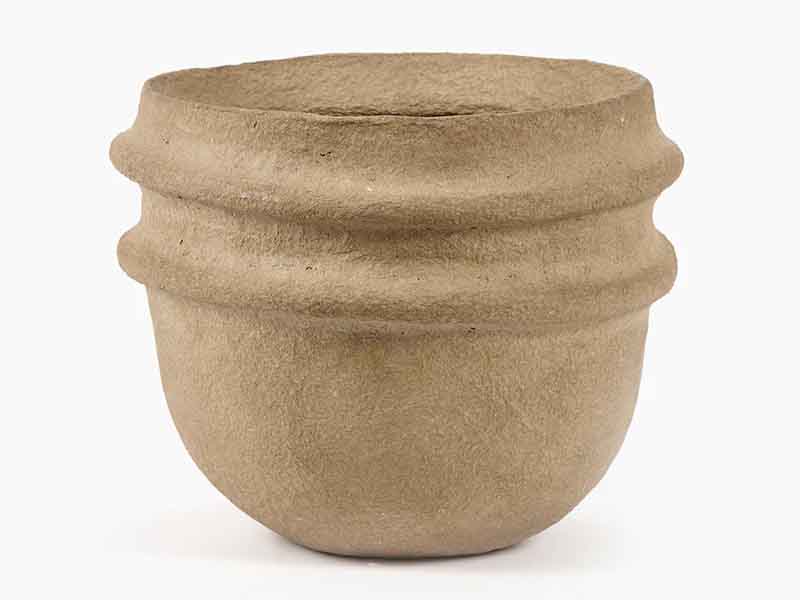
The Flower Pot Brown Paper Mache Earth is what happens when a planter decides it would rather be a sculpture. Designed by Marie Michielssen for Belgian design brand Serax, this generously sized decorative pot combines an earthy brown finish, an intentionally irregular surface, and the surprisingly expressive qualities of papier-mâché.
At first glance, it looks ancient, weighty, and perhaps recently excavated from a very stylish archaeological site. In reality, it is a contemporary home accessory made from layers of paper pulp and glue. Its rounded profile and raw texture give it the presence of handmade pottery without copying ceramic design too literally.
This is not an ordinary container for dropping in a plant and forgetting about it. Papier-mâché requires thoughtful handling, especially around water. Used correctly, however, the Serax Earth flower pot can become a dramatic focal point for a living room, entryway, bedroom, studio, or office.
What Is the Flower Pot Brown Paper Mache Earth?
The Flower Pot Brown Paper Mache Earth belongs to the Earth interior accessories collection by Marie Michielssen. The series includes pots, flower pots, bowls, trays, lamps, and vases made in natural colors such as brown, beige, and off-white.
The collection celebrates material texture rather than polished perfection. Each piece has subtle irregularities because much of its character is created through hands-on production. Instead of hiding small variations, the design treats them as part of the finished object. No two examples are expected to look as though they marched out of a machine wearing identical uniforms.
Key Product Specifications
| Designer | Marie Michielssen |
|---|---|
| Brand | Serax |
| Collection | Earth interior accessories |
| Material | Paper mâché |
| Color | Natural brown |
| Overall size | Approximately 30 cm wide by 28 cm high |
| Inner diameter | Approximately 24 cm |
| Weight | Approximately 3.5 kg |
| Recommended use | Indoor decorative planter or sculptural container |
In American measurements, the flower pot is roughly 11.8 inches wide and 11 inches tall, with an inner opening of about 9.4 inches. It weighs close to 7.7 pounds before a nursery pot or plant is added. That gives it enough visual and physical weight to feel substantial rather than flimsy.
Why Papier-Mâché Makes This Planter Different
Most decorative planters are ceramic, terracotta, metal, plastic, concrete, or woven fiber. Papier-mâché is less common, which is exactly why this piece attracts attention. Paper pulp can be shaped gradually, allowing the maker to build soft curves, imperfect edges, and a surface that records the production process.
Serax describes papier-mâché as a strong and versatile natural material made from paper pulp and glue. It is built up layer by layer, producing a form that feels both architectural and handmade. The result is sculptural but not fussy, artistic but not desperate to announce, “Please notice that I am art.”
A Surface That Rewards a Closer Look
The natural brown color highlights every ridge, indentation, and variation in the material. In bright daylight, the raised areas catch the light while deeper marks create gentle shadows. Under warm evening lighting, the same pot looks darker and more dramatic.
This shifting appearance is one of the design’s strongest qualities. A smooth plastic planter generally looks the same from breakfast until bedtime. The Earth flower pot changes subtly as the light moves through the room.
Handmade Irregularity Is Part of the Design
Buyers should not expect a flawless geometric cylinder. Handmade finishing may create small differences in shape, texture, or color. These are not necessarily defects. They support the organic character of the Earth collection and make each piece feel personal.
Anyone seeking a perfectly symmetrical, glass-smooth planter may find this design too rustic. Anyone who likes tactile surfaces, natural tones, primitive shapes, or objects that reveal the touch of the maker will probably consider those same irregularities the main attraction.
Marie Michielssen’s Design Philosophy
Marie Michielssen is known for combining apparent opposites: geometric and organic, masculine and feminine, controlled and intuitive. Her interior accessories often begin with materials she can model directly by hand. The Earth collection is an especially clear expression of that tactile approach.
Rather than developing every form on a computer, Michielssen frequently sketches by hand and creates physical cardboard models to study proportions. Her work favors circles, rectangles, squares, ovals, and other recognizable shapes, but those forms are softened by human handling.
The Flower Pot Brown Paper Mache Earth reflects that balance. Its broad round body is simple enough to understand immediately, yet the uneven surface prevents it from feeling sterile. It is disciplined design wearing muddy boots.
A Focus on Longevity, Not Disposable Decoration
Michielssen has also spoken about creating objects that people will keep rather than replace whenever a new trend arrives. The subdued brown color and uncomplicated silhouette support that goal. The pot fits current organic-modern interiors, but it is not dependent on a loud seasonal pattern or novelty shape.
Its appeal comes from proportion, texture, and material. Those qualities tend to age more gracefully than decorations built around a short-lived social-media trend involving neon squiggles and inexplicable foam blobs.
Is It a Functional Flower Pot?
Yes, but it should function as a decorative cachepot, not as a conventional waterproof planting container. The plant should remain inside a separate nursery pot or watertight liner.
Although the papier-mâché receives a protective coating, it remains sensitive to water. Soil should not be poured directly into the Earth flower pot, and water should never be allowed to collect inside it. Repeated moisture exposure can stain, soften, swell, or permanently damage the paper-based material.
The Safest Setup for a Live Plant
- Select a plastic or glazed nursery pot that fits comfortably inside the 24 cm opening.
- Place a waterproof saucer or liner beneath the inner pot.
- Remove the nursery pot before watering whenever possible.
- Let excess water drain completely in a sink, bathtub, or outdoor area.
- Dry the outside and bottom of the nursery pot before returning it to the papier-mâché container.
- Check periodically for trapped condensation or unnoticed leaks.
This extra routine takes a few minutes, but it is much cheaper than discovering that your designer planter has developed a soggy bottom. Plants may enjoy moisture; paper-based sculpture is less enthusiastic.
Artificial Plants and Dried Arrangements
Artificial plants, dried branches, sculptural twigs, and preserved foliage are easier options because they eliminate routine watering. A tall bundle of dried grasses can emphasize the pot’s earthy appearance, while dark branches create a more graphic, gallery-like arrangement.
The pot also works empty. Its shape and texture provide enough visual interest for it to stand alone as an art object, particularly when displayed on a low pedestal, console, bench, or wide shelf.
Best Plants for the Serax Earth Flower Pot
The opening is suitable for a medium indoor nursery pot, but the best plant depends on the available light and the visual effect you want.
For a Soft, Organic Look
Trailing or gently arching plants create a relaxed contrast with the pot’s solid shape. Pothos, heartleaf philodendron, and certain ferns can spill over the rim and soften its heavy profile. Their fresh green leaves also stand out beautifully against the natural brown surface.
For a Sculptural Look
A snake plant, ZZ plant, or compact rubber plant provides stronger vertical lines. These choices make the arrangement feel more architectural and work particularly well in minimalist living rooms or offices.
For a Dramatic Statement
A young monstera or another broad-leaf plant can create a bold focal point, provided its nursery pot fits and the foliage does not make the entire arrangement unstable. Remember that the decorative pot already weighs several pounds, but a top-heavy plant can still become adventurous when bumped by a pet, child, vacuum cleaner, or overly enthusiastic houseguest.
How to Style a Brown Paper Mache Planter
The earthy brown finish is versatile because it behaves almost like a neutral. It works with warm wood, pale stone, black metal, linen, wool, leather, and natural woven materials.
Organic Modern Interiors
Place the pot beside a cream sofa, light oak cabinet, or travertine table. Add a plant with simple foliage and leave some empty space around the arrangement. The uncluttered setting allows the handmade texture to do the talking.
Minimalist Rooms
Use the flower pot as the only decorative object on a low bench or pedestal. Its irregular surface prevents a minimalist room from becoming cold, while its restrained color keeps the space calm.
Rustic and Mediterranean Spaces
Pair it with limewashed walls, antique wood, linen curtains, stone floors, and hand-thrown ceramics. The pot’s raw finish fits naturally into rooms that favor age, patina, and imperfection.
Eclectic Interiors
Follow Michielssen’s own love of contrast by combining the planter with vintage furniture, contemporary lighting, colorful artwork, or polished metal. The brown pot can act as a visual anchor when other pieces are more expressive.
Entryways and Hallways
On a console table or low plinth, the planter creates a memorable first impression without requiring a riot of accessories. Keep it away from wet umbrellas, open doors during storms, and any entryway zone where muddy shoes behave like unsupervised toddlers.
Care and Maintenance
Proper care is straightforward as long as the pot is treated as a decorative indoor object rather than weatherproof garden equipment.
Dusting
Use a soft, dry microfiber cloth, clean paintbrush, or gentle duster. The irregular texture can hold dust in small depressions, so lightly brushing the surface is often more effective than wiping it aggressively.
Cleaning Marks
For a small surface mark, use a barely damp cloth and apply minimal pressure. Dry the area immediately. Avoid soaking, scrubbing, household sprays, abrasive cleaners, and anything that promises to remove every stain known to humanity in six seconds.
Managing Moisture
Never pour water directly into the planter. Do not leave a wet nursery pot, damp saucer, or leaking liner inside it. The safest routine is to remove the plant for watering and return it only after the inner container has drained and dried externally.
Choosing the Right Location
Keep the pot indoors and away from bathrooms, outdoor patios, humid sunrooms, kitchen splash zones, and frequently opened windows during wet weather. Avoid placing it directly beside a humidifier.
Moving the Pot
Lift it from the lower body with two hands rather than pulling on the rim. Remove the plant first if the combined arrangement feels heavy. Sliding the pot across a rough surface may damage its base or scratch the furniture beneath it, so a discreet felt pad can be useful.
What to Consider Before Buying
It Is a Decorative Design Object
The price reflects the designer name, specialized material, scale, finishing, and sculptural identity. Shoppers seeking only a cheap container for potting soil will find more practical alternatives. This piece is intended for someone who wants a planter and an art object in the same purchase.
It Requires a Water-Safe Inner Pot
The need for a separate liner is not optional. Buyers who enjoy watering plants directly in place may find the routine inconvenient. Those accustomed to using decorative cachepots will find the setup familiar.
Its Texture Will Vary
Online photographs show the general design, not the exact arrangement of every ridge and indentation. Variation is part of the product’s handmade appeal, but perfectionists should understand what they are ordering.
Measure the Intended Space
A diameter of approximately 30 cm gives the flower pot real presence. Measure shelves, tables, pedestals, and plant stands before ordering. Also confirm that the inner nursery pot will fit through the opening rather than merely matching the exterior width.
Availability Can Be Limited
Designer home accessories may move in and out of stock, and prices can differ among retailers and regions. Check the seller’s return policy, shipping charges, and damage-reporting procedure before purchasing.
Experiences With the Flower Pot Brown Paper Mache Earth
Living with a decorative object like the Flower Pot Brown Paper Mache Earth is different from living with an ordinary plant pot. The first noticeable quality is its scale. At nearly a foot wide, it does not disappear quietly into a crowded shelf. It asks for breathing room and looks best when nearby objects are deliberately limited.
The brown surface is especially effective in rooms dominated by pale walls and smooth furniture. From several feet away, the pot reads as a simple dark organic form. Up close, the texture becomes the main event. Small ridges, shallow dents, and changes in tone reveal how the material was built and shaped. That visual transitionfrom simple silhouette to detailed surfaceis what makes the piece continue to feel interesting after the initial novelty fades.
Choosing a plant can take more experimentation than expected. A plant with tiny, busy leaves may compete with the pot’s texture. Broad leaves or clear upright forms usually create a more balanced composition. A snake plant makes the arrangement crisp and architectural, while a trailing philodendron gives it a softer personality. Dried branches are the lowest-maintenance choice and can make the planter look more like a gallery object than gardening equipment.
The watering routine is the only part that demands discipline. A plastic nursery pot may fit perfectly, but it still needs to be lifted out before watering. Carrying it to the sink, waiting for drainage, wiping the base, and returning it safely is not difficult. It simply requires more attention than pouring water into whatever container happens to be nearby. The habit becomes automatic after a few weeks, much like remembering that a favorite wooden table does not appreciate steaming coffee mugs without coasters.
Dust also behaves differently on a rough surface. A flat cloth may skim across the raised areas without reaching the smaller recesses. A clean, soft brush works better and turns maintenance into a quick monthly ritual. Vigorous cleaning is unnecessary and potentially harmful.
Placement affects the experience more than expected. In a dark corner, the brown pot can lose some of its detail. Near indirect daylight, the surface becomes richer and more dimensional. Side lighting is particularly flattering because it creates tiny shadows across the uneven paper structure. Direct exposure to moisture or harsh outdoor conditions, however, should be avoided.
The planter also has enough visual character to remain useful when no plant is available. During a plant change or seasonal rest, it can hold dry branches, rolled textiles, or nothing at all. Empty, it resembles a contemporary vessel or small sculpture rather than an unfinished flower pot waiting for employment.
Perhaps the most satisfying part of the experience is that the piece does not look factory-perfect. Its character comes from controlled irregularity. In a home filled with screens, straight lines, and mass-produced surfaces, that roughness can feel surprisingly calming. It introduces evidence of hands, material, and time without making the room feel themed or overly rustic.
The practical verdict is simple: this is not the right planter for careless watering, outdoor exposure, or anyone who expects paper mâché to perform like glazed ceramic. It is an excellent choice for a design-conscious plant owner who appreciates tactile materials and is willing to use a waterproof inner container. Treat it carefully, and it becomes one of those rare accessories that can quietly reorganize an entire corner of a room.
Final Verdict
The Flower Pot Brown Paper Mache Earth succeeds because it does not try to disguise its material. Its uneven surface, broad shape, and natural brown color transform humble paper pulp into a substantial interior object.
Marie Michielssen’s design works equally well as a planter, vessel, or standalone sculpture. It is particularly suited to organic-modern, minimalist, rustic, Mediterranean, and eclectic rooms. The main limitation is water sensitivity, making a waterproof nursery pot or liner essential.
For buyers who value perfect symmetry and carefree outdoor durability, ceramic or resin will be more practical. For those who want texture, craftsmanship, and a planter with genuine artistic presence, the Serax Earth flower pot is far more memorable than another anonymous pot from aisle seven.