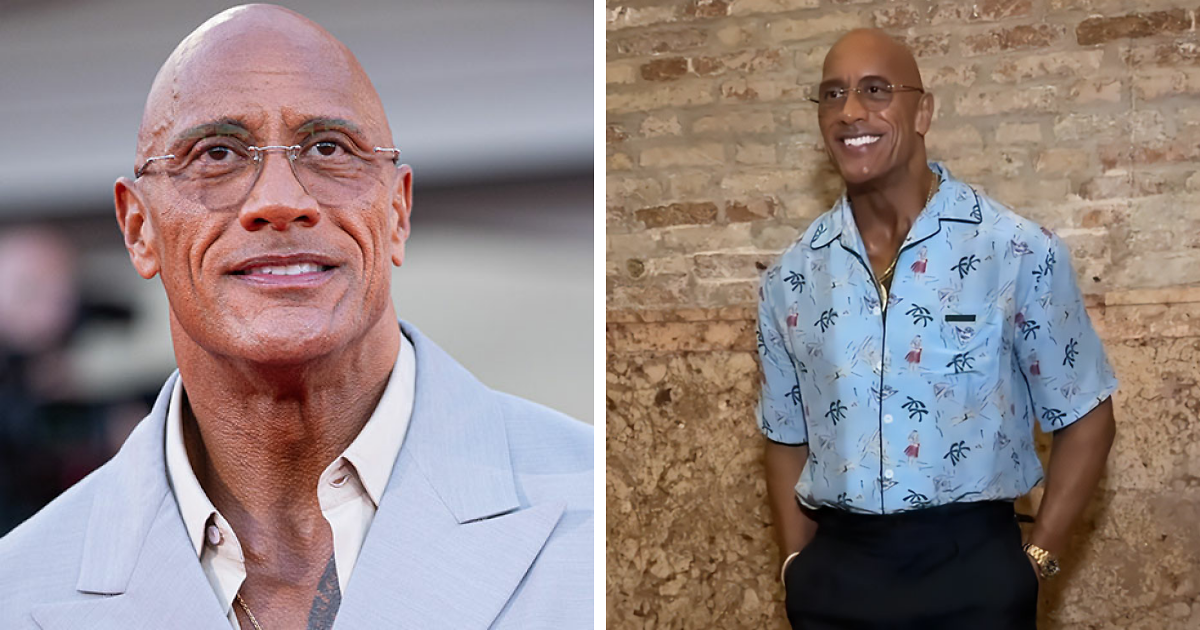
If you ever want to watch the internet speed-run a full medical residency, all you need is one red carpet photo. Case in point: Dwayne “The Rock” Johnson stepped out looking noticeably leaner than his usual human-mountain self, and within minutes the timeline went from “new suit!” to “someone check his vitals!”
The twist? While some people spiraled into worst-case scenarios, a loud chunk of fans did something refreshing: they defended him. Not with blind celebrity worship, eithermore like a collective, “Hey, maybe we don’t diagnose strangers from a JPEG?” kind of energy.
What Sparked the “Is The Rock Okay?” Panic
The uproar took off after Johnson appeared in public during a high-profile stretch tied to The Smashing Machine, his sports drama where he plays real-life MMA legend Mark Kerr. At the Venice Film Festival, he showed up looking slimmer and more understated than the version of Johnson many people keep bookmarked in their heads: peak biceps, vein map, and a T-shirt that’s basically a consent form for cotton.
This time, he looked… streamlined. Not “disappearing,” but noticeably less bulked up than fans expect from a guy who has spent decades making gravity look optional. Put a fitted suit on a man famous for filling door frames, and even a modest shift in physique reads as headline-worthy.
The Internet Did What It Does Best: Assume the Wildest Thing
Once the “slimmer” photos hit social media, reactions split into familiar camps: the worried, the jokey, the conspiracy-curious, and the “I saw one TikTok so I’m basically a specialist.” Speculation ranged from illness to extreme dieting to weight-loss drugs to “maybe he’s prepping for a role” (the most boring theory, and therefore the most likely).
Some comments were genuinely concernedespecially because celebrity health surprises have trained audiences to be jumpy. Others were less kind, turning a human body into a public group project with bonus sarcasm. There were even nicknames floating around (the internet will name anything, including your metabolism).
Why “Health Concern” Posts Spread Faster Than the Actual Truth
Health speculation spreads because it feels like caring, even when it’s actually guessing. Add a celebrity, a dramatic before-and-after, and a platform designed to reward panic, and you get a perfect storm: people posting “I hope he’s okay” right next to people posting “I’m sure it’s this very specific condition I just learned about five minutes ago.”
Fans Defend Dwayne Johnson: “Can We Let a 53-Year-Old Man… Age?”
The pushback came quickly. Fans pointed out a few obvious truths that somehow need repeating in 2026: (1) bodies change, (2) cameras lie, (3) lighting is basically witchcraft, and (4) it’s possible to be leaner without being unwell.
A lot of supporters also highlighted something the “he must be sick” crowd tends to forget: Johnson is in his 50s, not frozen in time like a superhero action figure sealed in plastic. Muscle maintenance changes with age, schedules, stress, injuries, andyou knowlife.
The Most Reasonable Take Fans Kept Repeating
The best defense wasn’t “How dare you!” It was: “You don’t know.” Fans asked for basic respect, urged people not to jump to conclusions, and reminded everyone that Johnson has been open about his work ethic, his roles, and the realities of grinding through physically demanding projects.
The Context Everyone Needed: Movie Transformations Are Literally Part of the Job
Here’s the part that makes the whole “shocking slim look” moment less mysterious: Johnson’s recent career choices have involved serious physical shifts for roles. For The Smashing Machine, he didn’t just “hit the gym.” Reports around the film emphasized that he built a very specific kind of mass to resemble Mark Kerr’s athletic build and movementmore functional, explosive muscle, not just “big.”
He also used extensive makeup and prosthetics to become Kerrbecause when you’re playing a real person, you’re not just adding pounds; you’re building a believable silhouette, face, and presence. That’s a different mission than maintaining a long-term, signature “Rock” physique.
Why He Looked Leaner Later
Actors don’t stay in “bulk mode” forever, especially when the schedule shifts. After bulking for one project, it’s common to lean out for comfort, mobility, health markers, or the next role. Johnson himself discussed slimming down for another part and joked about feeling better not carrying extra weight, including being able to tuck in shirts againclassic relatable pain, just at a much higher tax bracket.
Translation: it wasn’t necessarily a mystery health scare. It was likely a combination of role demands, timing, and a body doing what bodies do when you stop forcing them to be a permanent action poster.
The Bigger Issue: Why We Treat Celebrity Bodies Like Public Property
Under all the memes and concern posts is a weird cultural habit: we act like famous people owe us consistency. Same face, same muscles, same “brand,” forever. But bodies aren’t branding assets. They’re biology.
Even well-meaning comments can turn into pressure. When millions of people treat your weight like a trending topic, it’s not exactly motivational. It’s invasive. And it encourages fans to think they’re entitled to explanations that may be private, medical, or simply not anyone’s business.
Why People Bring Up Past Tragedies
Some commenters referenced prior moments when public speculation about a celebrity’s appearance ended up connected to serious illness. That history explains the sensitivitybut it doesn’t justify turning every “leaner” photo into a diagnostic frenzy. The lesson isn’t “assume the worst.” It’s “don’t be cruel, and don’t pretend you know.”
What We Actually Know About Johnson’s “Slim” Look
What’s public is pretty straightforward: Johnson has been in a career phase where he’s chasing more challenging, dramatic material, including projects tied to prestige studios and directors. He has talked openly about wanting to expand beyond being typecast as the guy who solves every plot problem by shoulder-pressing it.
He’s also described the emotional work behind The Smashing Machineincluding revisiting painful memories to access the character’s darker moments. That level of performance focus often goes hand-in-hand with a more flexible, role-specific approach to training, diet, and recovery.
Why Fans Defending Him Matters (Even If You Don’t Stan Anyone)
This isn’t really about protecting a celebrity from mean comments. Dwayne Johnson will be fine. It’s about protecting the conversation from becoming a public pile-on that reinforces toxic ideas: that thinner automatically means sick, that aging is failure, or that anyone owes the internet a health report.
When fans pushed back, they weren’t just defending Johnson. They were defending basic decencyand pushing the culture one inch away from “body commentary as entertainment.”
How to React Like a Normal Person When a Celebrity Looks Different
1) Start with context, not conclusions
Is the person promoting a new role? Shooting a film? Training for something? That context answers 80% of questions without you ever needing to type, “Is he okay???”
2) Don’t turn “concern” into rumor fuel
If your post invites a comment section to list illnesses like it’s a menu, it’s not concern anymore. It’s a guessing game.
3) If you truly care, choose respectful language
You can say someone looks different without treating it like a crisis. “He looks leaner than usual” is an observation. “He must be sick” is a claim.
Conclusion: The Rock Didn’t ShrinkOur Patience Did
Dwayne Johnson’s “slim” look wasn’t a scandal so much as a Rorschach test for how we handle bodies in public. Some people panicked. Some people joked. And many fans defended him with a surprisingly grounded message: let the man change, let him age, and maybe stop treating every photo as a medical bulletin.
The funniest part is that Johnson’s whole brand has always been about discipline and transformationhe just applied it to something more nuanced than “bigger is better.” And honestly? That might be the healthiest plot twist of all.
Experiences Related to the “Slim Look” Freakout (The Part That Hits Close to Home)
You don’t have to be a world-famous action star to recognize the social weirdness that showed up in this story. Most people have lived some version of itjust without the trending hashtag and the zoomed-in screenshots. Someone changes a little, and suddenly everyone becomes an unpaid commentator in a reality show they didn’t sign up for.
One common experience: the “concern sandwich.” It starts with a compliment (“You look great!”), adds a suspicious middle layer (“Have you been eating?”), and ends with a disguised judgment (“Just don’t lose too much.”). People say it like they’re being supportive, but it often lands like a tiny alarm bell that your body is now under review. Johnson’s moment went global, but the dynamic is familiar in offices, families, gyms, and group chats everywhere.
Another relatable scenario is the “photo shock.” You see a picture of yourself under brutal lightingmaybe after a busy month where you slept weird, ate on the run, and skipped a few workouts. Friends react to the photo, not your reality. They don’t know you’ve been training differently, dealing with stress, rehabbing an injury, or simply aging like a human. They just see “difference” and assume “problem.” That’s basically what happened with Johnson, only multiplied by millions.
People who’ve intentionally changed their physiquewhether by cutting weight, building muscle, or recovering from burnout often describe the same emotional whiplash: you feel healthier, but the outside world acts like you’re fragile. It’s especially common when someone moves away from an “impressive” look (very muscular, very thin, very curated) into a more sustainable one. The compliments can fade, and the questions increase. The message becomes: “We preferred the version of you that matched our expectations.”
Then there’s the fitness side of the experience: anyone who has gone through a bulk-and-cut cycle knows how dramatic it can look on camera. A few pounds of glycogen and water weight can make muscles pop; losing that can make you look “smaller” overnight, even if your strength hasn’t changed much at all. Add travel, dehydration, long days, and formalwear that hangs differently, and suddenly you’re starring in your own “Before/After” slideshowwhether you wanted to or not.
Finally, there’s the lesson many fandoms learn the hard way: defending someone doesn’t mean pretending they never change. It means choosing kindness over speculation. In everyday life, that can look like swapping “Are you sick?” for “How’ve you been?” It can look like giving people room to evolve without narrating their bodies as if they’re a plot twist. Fans defending Johnson modeled that kind of maturitycalling for empathy, patience, and a reality check about how weird it is to crowdsource health opinions from strangers on the internet.
If this story sticks with people, hopefully it’s for the right reason: it’s a reminder that bodies are not public property, and “concern” should never be an excuse to turn someone’s appearance into entertainment. Whether you’re The Rock or just someone trying to live your life, it’s nicer when the world lets you be a personnot a headline.