Note: This article discusses a widely reported mural campaign connected to Iryna Zarutska. Because public reporting describes some contributions as pledges, offers, or reported support, the article uses careful language and avoids presenting every claim as a fully verified completed transfer.
A Tragedy Becomes a National Mural Campaign
The story of Iryna Zarutska has moved from a Charlotte light rail car to walls across American cities, and from local grief to national argument. Zarutska, a 23-year-old Ukrainian refugee, was killed in Charlotte, North Carolina, in August 2025. Her death quickly became a symbol for multiple conversations happening at once: public safety, criminal justice, mental health systems, political messaging, immigration, and the way the internet turns human loss into a public cause before most people have even finished reading the first headline.
Then came the murals. Intercom co-founder Eoghan McCabe publicly offered $500,000 in grants to artists willing to paint Zarutska’s face in prominent U.S. city locations. Elon Musk later pledged or contributed $1 million toward the effort, according to multiple reports. Andrew Tate was also reported to have pledged support, with several outlets and social posts describing him as matching Musk’s $1 million commitment. In internet language, the story practically arrived wearing a neon sign: big names, big money, big murals, big argument.
But the headline alone does not capture the deeper issue. This is not simply a story about Elon Musk, Andrew Tate, and million-dollar mural funding. It is also about who gets to shape public memory, what happens when grief becomes a campaign, and whether a wall painting can honor a victim without turning her into a political billboard.
Who Was Iryna Zarutska?
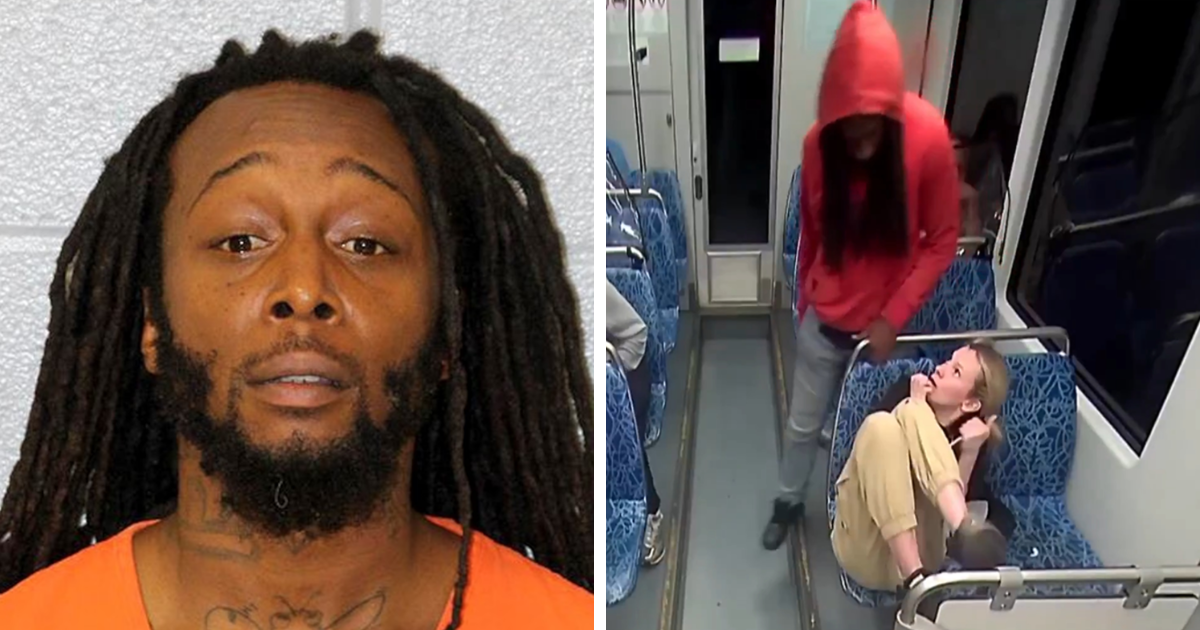
Iryna Zarutska was a young Ukrainian woman who came to the United States after fleeing war. Reports described her as someone trying to build a safer life, a phrase that now feels painfully heavy. Her death on Charlotte’s Lynx Blue Line shocked the city and drew national attention after authorities identified Decarlos Brown Jr. as the suspect. He was charged at the state level with first-degree murder and later faced a federal charge connected to violence on a mass transportation system resulting in death.
For Charlotte residents, the case was not an abstract national debate. It raised immediate questions about transit security, repeat offenders, mental health intervention, and whether ordinary commuters could feel safe using public transportation. For many Ukrainians and Ukrainian Americans, Zarutska’s story carried another layer: a young woman who escaped a war zone only to lose her life in the country where she hoped to begin again.
That emotional contrast helps explain why the story traveled so quickly. It was tragic, simple to understand, and painfully symbolic. Social media does not always handle complexity well, but it handles symbols with frightening efficiency. Within days, Iryna Zarutska was no longer only a victim in a Charlotte criminal case. She was becoming a national image.
How Elon Musk, Andrew Tate, and Eoghan McCabe Entered the Story
The mural campaign appears to have gained major momentum when Eoghan McCabe offered grants for artists to paint Zarutska in visible public spaces. The idea was direct: keep her face and story in front of the public. The campaign’s supporters argued that murals could prevent the case from fading into the endless scroll of yesterday’s news. In an era when attention spans are shorter than a microwave beep, that argument has obvious appeal.
Elon Musk’s reported $1 million support made the campaign far larger and louder. Musk is not just a donor in the public imagination; he is a media ecosystem with shoes. When he touches a story, it tends to multiply across platforms. Andrew Tate’s reported matching pledge added even more controversy because of his polarizing public image and the strong reactions he provokes online.
Supporters framed the money as a powerful act of remembrance. Critics saw it differently, arguing that wealthy public figures were using Zarutska’s image to push a political message about crime, policing, and urban life. Both reactions can exist at the same time. A mural can be sincere art to one person and strategic messaging to another. Public walls, unlike private diaries, do not belong to only one interpretation.
Why Murals Became the Chosen Medium
Murals have always been more than decoration. They are public memory painted at building scale. A mural says: look here, remember this, talk about this. Unlike a social post, it cannot be muted with one thumb swipe. Unlike a press conference, it does not disappear after the cameras leave. It sits in the neighborhood, absorbing weather, arguments, selfies, graffiti, and local opinion.
That is why the Iryna Zarutska mural campaign became so powerful and so controversial. Supporters viewed the murals as a way to humanize a victim whose name might otherwise be reduced to a crime statistic. A face on a wall can make people pause. It can invite empathy. It can say, “This person mattered.”
Yet murals also change the relationship between a private tragedy and public space. When an outside-funded mural appears in a neighborhood, residents may ask: Who chose this image? Who approved this message? Is this memorial for us, or is it aimed at a national audience watching from their phones? That tension followed several Zarutska murals, including projects reported in New York, Miami, Los Angeles, Washington, D.C., Providence, and other cities.
The Supporters’ View: Memory, Safety, and Visibility
People who support the mural campaign often make three core arguments. First, they say Zarutska deserves to be remembered as a person, not merely as a headline. Second, they believe the case exposes serious failures in public safety and criminal justice systems. Third, they see public art as a peaceful way to keep pressure on leaders and institutions.
From this view, the murals are not about celebrity donors. They are about refusing to let a young woman’s death vanish into the news cycle. Supporters often point out that public memorials have long played a role in American civic life. Streets, parks, statues, plaques, and murals all tell communities what they have chosen to remember. If a city can paint sports legends, musicians, and political heroes, supporters ask, why not a young refugee whose death stirred national concern?
There is also a practical media logic at work. A mural photographs well. It travels on Instagram, X, TikTok, Facebook, and local news. That makes it unusually effective in modern advocacy. A traditional charity fundraiser may raise money quietly. A mural raises visibility loudly. In the attention economy, visibility is a kind of currency, and these murals are designed to spend it.
The Critics’ View: Politicization and Public Space
Critics do not necessarily object to remembering Zarutska. Many objections focus on how she is being remembered, who is funding it, and what message the murals appear to serve. Some community members and cultural commentators have argued that the campaign risks turning Zarutska’s face into a political symbol rather than honoring the fullness of her life.
This concern became especially visible in places where murals were criticized, vandalized, challenged, or removed. In Providence, Rhode Island, local officials and residents objected to a mural connected to the campaign, with debate centering on whether the artwork unified the community or imported a national political battle into a local neighborhood. In Brooklyn and Manhattan, murals drew both praise and backlash, proving once again that a wall can become a comments section made of brick.
The criticism also reflects a broader question: Should memorial art be community-led, donor-led, or victim-family-led? There is no easy answer. A well-funded campaign can move quickly and reach many cities, but speed is not the same as consent. A neighborhood may respect a victim and still feel uneasy about becoming the stage for a message shaped elsewhere.
Public Art in the Age of Viral Grief
The Iryna Zarutska murals show how grief now moves through America. It begins with a real person and a real tragedy. Then come video clips, official statements, donor announcements, political reactions, hashtags, counterarguments, and finally public art that becomes news in its own right. By the time the mural is finished, the original person can be surrounded by so many interpretations that the human story risks getting crowded out.
That does not mean the murals are wrong. It means they carry responsibility. Public art about a victim should invite remembrance before it invites argument. It should preserve dignity before it scores points. It should be careful with symbolism because symbols can travel faster than truth and hit harder than context.
For artists, the challenge is enormous. They must paint not only a face but a moral boundary. Too soft, and the mural may feel vague. Too forceful, and it may feel like propaganda. Too political, and it can divide the people walking past it every day. Too apolitical, and supporters may say it fails to confront the systems they believe caused the tragedy. That is a tough canvas, even before the first bucket of paint is opened.
What This Story Says About Elon Musk and Andrew Tate
Elon Musk and Andrew Tate are not quiet public figures. They are magnets for attention, admiration, criticism, and endless online debate. Their names in the same headline guarantee traffic, which is exactly why publishers should handle the story carefully. The phrase “Elon Musk, Andrew Tate donate $1M each” is powerful SEO fuel, but responsible writing must distinguish between verified donations, public pledges, reported contributions, and social media claims.
Musk’s involvement fits his broader pattern of using public platforms to amplify causes, arguments, and cultural flashpoints. Tate’s reported support, meanwhile, intensified controversy because many people see him as a divisive influencer whose presence changes the tone of almost any campaign he enters. Together, their association with the murals made the story bigger than art. It became a test of whether a memorial can remain focused on the victim when the donors are famous enough to become the headline.
That is the strange math of modern fame: a donation can help fund a mural, but the donor’s reputation may also repaint the meaning of the mural in the public mind.
Examples of the Mural Debate Across U.S. Cities
In Brooklyn, a large mural of Zarutska drew attention because of its scale, location, and reported ties to Musk-backed funding. Some residents praised it as a moving tribute. Others questioned whether it was a local memorial or a national political message dropped into the neighborhood.
In Providence, controversy became sharper when a mural connected to the campaign drew objections from city leaders and community members. The artist defended the work as an effort to humanize Zarutska and respond to the politicization surrounding her death. Critics argued that the funding and messaging made the project divisive. The result was a public dispute over art, speech, grief, and local values.
In other cities, murals connected to the campaign were described as part of a wider effort to keep Zarutska’s story visible. Some were received quietly. Others became flashpoints. That difference matters. Public art does not land the same way everywhere. A message that feels healing in one community can feel intrusive in another.
Experience-Based Reflection: What We Can Learn From This Moment
Anyone who has watched a local tragedy become a national debate knows the uncomfortable feeling: the story starts with sorrow, then suddenly everyone is arguing over what the sorrow means. It is like attending a memorial service where half the room brought flowers and the other half brought microphones. The Iryna Zarutska mural campaign sits exactly in that uneasy space.
From an audience perspective, the first experience is emotional. You see a young woman’s face, learn that she fled war, and feel the shock of what happened. That reaction is human. People want to do something with grief. They donate, post, attend vigils, write essays, create art, or simply say her name. Murals answer that instinct by making memory visible.
But the second experience is more complicated. After the first emotional wave, people begin asking questions. Who funded this? Why here? What message is being attached to her image? Is this helping her family, supporting public safety, or mainly feeding a political narrative? Those questions are not disrespectful. In fact, they are necessary when private loss enters public space.
For writers, publishers, artists, and readers, this story offers a lesson in careful attention. Do not reduce Zarutska to a slogan. Do not reduce the murals to a culture-war prop. Do not reduce every supporter to a propagandist or every critic to someone who lacks compassion. Real life is rarely that tidy. If it were, comment sections would be peaceful gardens instead of raccoon festivals.
The best way to approach the topic is to keep the human being at the center. Iryna Zarutska was not only a victim, not only a refugee, not only a symbol in a debate about crime, and not only a face on a wall. She was a person with a life before the headline. Any mural, article, donation, or public statement that forgets that has missed the point, even if the paint job is technically perfect.
There is also a lesson for donors with enormous platforms. Money can amplify memory, but it can also amplify suspicion. When polarizing figures fund public memorials, the public will naturally examine motive, message, and impact. That scrutiny is not surprising; it is the price of entering civic space with celebrity-sized influence. A million dollars can buy many walls, but it cannot buy universal agreement.
For communities, the experience is equally delicate. A mural can become a place of reflection, a landmark, a controversy, or all three before lunch. Local voices matter because they live with the artwork after the viral audience moves on. Good public art should listen to the neighborhood, not just broadcast at it.
In the end, the Iryna Zarutska mural campaign is not only about whether Elon Musk and Andrew Tate gave or pledged large sums. It is about how America remembers, argues, grieves, and paints its arguments onto buildings. That is why the story continues to attract attention. The murals are not just images. They are mirrors, and what people see in them often reveals as much about the viewer as it does about the wall.
Conclusion
The reported $1 million commitments connected to Elon Musk and Andrew Tate made the Iryna Zarutska mural campaign impossible to ignore. But the deeper story is not celebrity generosity alone. It is the tension between remembrance and messaging, between public safety concerns and political exploitation, between honoring a victim and turning her into a national symbol.
At their best, the murals can keep Zarutska’s humanity visible and encourage serious conversations about safety, justice, and compassion. At their worst, they risk flattening a young woman’s life into a talking point. The difference depends on how artists, donors, publishers, and communities handle the memory entrusted to them.