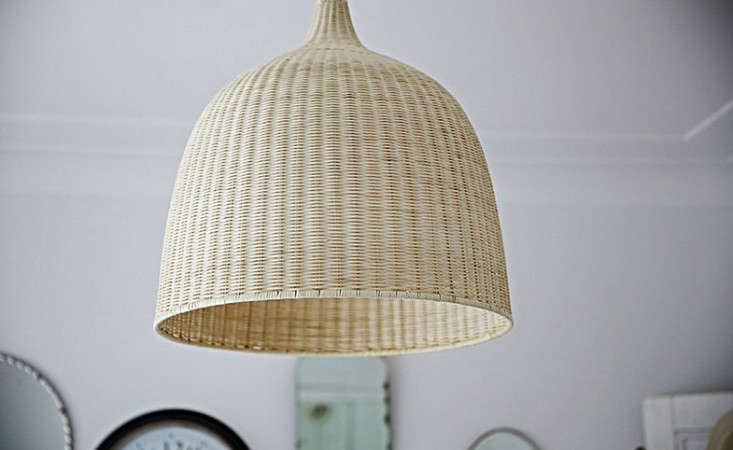
Natural fiber pendant lights have a talent for making a room feel as though summer has quietly moved in and unpacked its linen shirts. Woven rattan, bamboo, raffia, abaca, and wicker introduce warmth without adding visual heaviness. They soften polished kitchens, loosen up formal dining rooms, and give plain bedrooms a relaxed focal pointno seashell garland required.
These fixtures are not limited to coastal or bohemian interiors. Designers increasingly use rattan lighting in modern, Scandinavian-inspired, traditional, and biophilic spaces because the material brings texture while remaining visually light. Rattan itself comes from climbing palms and is valued for its strength and flexibility, qualities that allow artisans to form everything from crisp geometric cages to loose, flower-like shades.
Our design-sleuthing mission uncovered six natural fiber pendant lights with distinct personalities. Some are oversized scene-stealers, some are compact enough for tight corners, and one looks like a tropical flower caught in the middle of opening. Here is how each design works, where it belongs, and what to consider before your ceiling starts auditioning for a vacation home.
Why Natural Fiber Pendant Lights Feel So Summery
Summer interiors usually rely on three things: lighter colors, tactile materials, and an easy relationship with natural light. Woven pendant lighting delivers all three. Its tan, honey, wheat, or pale brown tones blend naturally with white paint, light oak, stone, linen, and cotton. The weave also creates changing patterns as daylight and electric light pass through it.
An open weave allows more illumination to escape sideways, producing decorative shadows on nearby walls and ceilings. A tighter weave creates a more concentrated pool of light below. Models with glass or fabric diffusers reduce glare and provide a smoother ambient glow. That difference matters: a pendant can be a sculptural accent, a practical task light, or both, but not every basket-shaped shade performs the same job. Retailers specializing in woven lighting consistently distinguish between airy open structures and filtered designs intended to create a softer atmosphere.
Six Summery Natural Fiber Pendant Lights Worth Investigating
1. Ambledon Rattan Round Pendant from Pottery Barn
The Ambledon Rattan Round Pendant is the relaxed overachiever of the group. Its approximately 30-inch round form has enough presence to anchor a breakfast table, dining nook, or medium-size entry without looking dense. The natural rattan construction and adjustable beige chain keep the entire composition tonal, which is useful in rooms where black electrical cords or shiny metal hardware would feel too abrupt.
This is an especially strong choice for a room with white walls, pale cabinetry, or visible wood grain. The rounded shape balances rectangular islands and dining tables, while the substantial diameter gives the ceiling a clear focal point. Pottery Barn describes the fixture as being made with rapidly renewable natural rattan, adding material interest without pretending that sustainability can be judged from appearance alone.
Best for: Dining nooks, breakfast rooms, coastal kitchens, covered-looking indoor spaces, and rooms needing one large but visually lightweight fixture.
2. Kalani Woven Rattan Pendant Light from Lulu and Georgia
The Kalani Pendant proves that woven lighting does not have to resemble an upside-down picnic basket. Its wide, sculptural silhouette curves and dips with a sense of movement, giving it a more contemporary identity. At roughly 42 inches in diameter, it is intentionally oversized and works best where the ceiling and furniture can handle a dramatic gesture.
Stained rattan forms the main shade, while a metal canopy, cloth cord, and glass element add polished structure. The fixture is dimmable, uses a standard E26 socket, and can be installed on a sloped ceiling. Its generous width makes it particularly effective above a large round dining table or in a living room where a conventional chandelier would feel too formal. It is the lighting equivalent of an enormous sun hatdramatic, breezy, and not interested in apologizing for taking up space.
Best for: Vaulted rooms, large dining areas, open-plan living spaces, and interiors that mix organic materials with modern furniture.
3. Harwich Woven Rattan Dome Pendant from Crate & Barrel
Designed by Jake Arnold, the Harwich pendant takes a more tailored approach to rattan. The medium version measures about 21 inches across and combines a clean woven dome with burnished brass accents. A frosted glass diffuser hides the bulbs and softens the illumination, so the fixture provides more controlled ambient light than many completely open woven shades.
That diffuser is the practical hero. You still get the texture and warmth of a rattan pendant light, but you do not have to stare directly at bright bulbs while eating dinner. The design can be installed alone over a round table or repeated over a long island. Adjustable rods and compatibility with sloped ceilings also make it easier to fit into real architecture rather than the suspiciously perfect architecture seen in catalogs.
Best for: Dining tables, kitchen islands, transitional interiors, and homeowners who love woven texture but prefer softly diffused light.
4. Louisa Rattan Pendant from West Elm
Not every natural fiber light needs to dominate the room. The Louisa Rattan Pendant has a compact 12-inch profile, making it suitable for smaller kitchens, narrow counters, bedside installations, or rows of multiple fixtures. Its modest diameter also allows the texture to function as an accent rather than the entire design story.
Use one over a small sink or reading corner, two over a petite island, or three across a longer counter. The repeated rhythm can make a basic kitchen feel thoughtfully planned while preserving clear sight lines. Because the shade is compact, it also pairs well with stronger architectural details such as patterned tile, painted cabinetry, or exposed beams.
Best for: Apartments, compact islands, bedside lighting, breakfast bars, and grouped pendant arrangements.
5. Natural Raffia Fan Petal Pendant from World Market
This pendant abandons the conventional dome and turns natural fiber into something closer to botanical sculpture. Raffia panels spread outward like tropical petals, supported by an abaca-rope-wrapped metal frame. The shade measures approximately 17 inches across, so it is expressive without requiring ballroom-size square footage.
Raffia creates a softer, feathery texture than rattan or bamboo. That makes this fixture especially effective in bedrooms, reading corners, or dining areas where atmosphere matters more than intense task lighting. The petal arrangement diffuses the light and produces an organic silhouette even when the bulb is off. Natural variations are part of the design, so buyers expecting machine-perfect symmetry may need to make peace with a little handcrafted personality.
Best for: Bedrooms, feminine interiors, tropical-modern spaces, creative dining rooms, and rooms needing an artful focal point.
6. Nassa Woven Bamboo Pendant from CB2
The Nassa Pendant introduces bamboo and coco twigs to the natural lighting mix. Inspired by a traditional fishing basket, it uses a double-frame construction and split-cane weaving to form an open, airy body. The structure allows substantial light to pass through, making the pendant feel larger than its visual weight suggests.
This is the most architectural option in the group. The repeated lines and cage-like volume work well with modern black accents, concrete, stone, walnut, or streamlined furniture. It is available in natural and black bamboo variations, so the design can read as breezy and coastal or dark and graphic. The fixture uses a standard E26 bulb, has an adjustable cloth cord, and is UL listed; the current product information also describes it as bathroom-safe.
Best for: Modern dining rooms, bathrooms where the rating and local code permit, loft-style interiors, and spaces that need decorative shadow patterns.
How to Choose the Right Woven Pendant Light
Match the Weave to the Lighting Job
Begin with function rather than falling immediately in love with a photograph. An open bamboo or rattan cage creates decorative ambient light but may expose the bulb and cast noticeable shadows. That effect is beautiful in a dining room, hallway, or living space. It can be less helpful over a food-preparation area where even illumination matters.
For a kitchen island, consider a woven shade with a diffuser or an open bottom that directs light toward the counter. In bedrooms and dining rooms, filtered light is often more flattering. Nobody has ever complained that dinner looked too softly illuminated, whereas one aggressively exposed bulb can make a bowl of pasta feel like it is being questioned by airport security.
Get the Scale Right
A pendant that looks pleasantly substantial online can appear surprisingly small once suspended over a six-foot island. Measure the table or counter before ordering, then mark the proposed diameter with painter’s tape or a cardboard template.
A useful starting point is to keep the pendant narrower than the surface below it and preserve clearance near the edges. Lowe’s recommends subtracting about 12 inches from the width of a table or countertop to estimate a maximum fixture diameter. Pendants commonly hang approximately 30 to 36 inches above a dining table or counter, although ceiling height, sight lines, fixture shape, and the height of household members should influence the final position.
Before installation, perform the highly technical “tallest person carrying groceries” test. If the pendant blocks conversation, catches raised arms, or seems eager to meet someone’s forehead, raise it.
Choose a Bulb That Flatters the Fiber
Natural materials generally look best under warm light. A color temperature around 2700K creates a golden, relaxed appearance, while 3000K feels slightly cleaner and may suit kitchens with white surfaces. Higher color temperatures can make tan fibers appear gray or washed out.
Compare bulbs by lumens for brightness rather than assuming that wattage describes light output. A dimmable LED provides flexibility for meal preparation, entertaining, and late-night snacking performed with the stealth of a raccoon. ENERGY STAR guidance explains that lower Kelvin values produce warmer, yellower light, while higher values appear cooler and bluer.
Check the Electrical and Location Rating
“Natural” does not automatically mean “outdoor.” Many rattan, bamboo, raffia, and jute pendants are dry-location fixtures intended only for indoor rooms. A bathroom, covered porch, or humid sunroom may require a damp-rated or wet-rated product.
Review the product’s UL or ETL listing, maximum bulb specification, ceiling compatibility, and installation requirements. Hardwired fixtures should be installed according to local electrical codes, preferably by a qualified professional. Never assume a woven shade can be placed around any high-heat bulb simply because it looks charming on social media.
Use Contrast to Avoid Theme-Park Decorating
A room filled with rattan chairs, woven baskets, jute rugs, bamboo blinds, and three raffia lamps may begin to resemble a natural-fiber trade convention. The most sophisticated approach is contrast.
Pair a woven pendant with smooth plaster, polished stone, glossy tile, painted cabinetry, dark metal, or clean-lined furniture. Architectural Digest’s lighting guidance emphasizes layering ambient, task, and accent sources rather than asking one decorative fixture to illuminate an entire room. A pendant should participate in the lighting plan, not carry it on its woven shoulders.
Care and Maintenance
Dust is the main enemy of woven lighting because it settles into every tiny intersection. Turn off the fixture, allow the bulb to cool, and use a soft dry cloth, microfiber duster, or low-suction vacuum attachment. Support delicate raffia panels with one hand while cleaning so they do not bend.
Avoid soaking natural fibers or applying harsh household cleaners, furniture polish, or abrasive products. Several manufacturers recommend simple dry dusting or, where specifically allowed, wiping with a lightly damp cloth. Natural color variation, small irregularities, and subtle changes over time are normal. That individuality is part of the appeal; the lamp was never trying to impersonate injection-molded plastic.
Experience Notes: What Natural Fiber Pendants Are Like to Live With
The first real-world surprise is usually scale. Homeowners often worry that a large woven pendant will overwhelm the room, only to discover that its open structure makes it appear much lighter than an equally wide metal fixture. A 36- or 42-inch rattan shade can occupy substantial physical space while still allowing views through it. This is why oversized woven lighting often succeeds above dining tables: it defines the zone without creating a visual ceiling barricade.
The second surprise arrives after dark. During the day, the pendant reads mainly as texture. At night, the weave becomes part of the illumination. Open designs can project stripes, diamonds, or irregular shadows across the ceiling. Some people find this magical; others discover that their previously calm room now resembles a very tasteful planetarium. Testing several bulb shapes and brightness levels can dramatically change the effect. A frosted bulb usually creates gentler shadows than a clear one, while a dimmer lets the fixture shift from functional lighting to quiet atmosphere.
Placement also becomes more personal after installation. Standard height recommendations are useful, but they cannot account for every sight line. A pendant centered perfectly over a table may still block the view between the kitchen and living room. Raising it by two or three inches can solve the problem without making it feel disconnected from the furniture. Conversely, hanging a dining pendant slightly lower can make an open room feel intimate, especially at night.
Another common experience is that natural fiber changes how surrounding materials look. Honey-colored rattan can warm cool white paint, soften gray cabinetry, and make inexpensive wood furniture appear more intentional. Black bamboo creates the opposite effect: it sharpens pale rooms and introduces graphic structure. The fixture therefore influences more than lighting; it alters the perceived color temperature and visual balance of the entire space.
Cleaning frequency depends heavily on the weave. Wide bamboo ribs are relatively easy to dust. Tightly woven rattan collects more debris but hides it better. Raffia looks wonderfully soft and summery, although its delicate edges require a gentler approach. In kitchens, woven fixtures positioned too close to a stove may collect airborne grease, so location and ventilation deserve serious consideration before purchase.
Finally, natural fiber pendants tend to age more gracefully when the room does not depend on a single decorating trend. A simple dome paired with timeless furniture can remain relevant long after “coastal boho” stops appearing in every product description. The safest strategy is to choose a shape you genuinely like, verify that the light quality suits the room, and treat the material as texture rather than a theme. The goal is relaxed characternot making every evening feel like check-in time at a tropical resort.
Conclusion
The best natural fiber pendant lights combine sculptural personality with practical illumination. The Ambledon offers rounded simplicity, the Kalani delivers oversized drama, and the Harwich adds refined diffusion. The Louisa handles compact spaces, the raffia petal pendant brings botanical softness, and the Nassa turns bamboo weaving into modern architecture.
Choose according to scale, weave density, bulb exposure, room rating, and the kind of light you actually need. Get those details right, and a woven pendant can make an ordinary room feel brighter, warmer, and ready for summereven when the weather outside is behaving like November.
Note: Product availability, dimensions, finishes, and electrical ratings may change. Confirm current specifications before purchasing and use a qualified electrician for hardwired installation.