Note: This article is based on real, current U.S. research and field practice. Source links are intentionally omitted for web publishing, and all unnecessary citation artifacts have been removed.
Invasive species are the ultimate unwanted houseguests. They show up uninvited, eat everything in sight, crowd out the locals, and then somehow act like they own the place. From lionfish on Atlantic reefs to giant salvinia choking waterways, from zebra mussels clinging to infrastructure to invasive weeds overrunning prairies and cropland, the problem is no longer a niche environmental headache. It is a real management challenge with real costs in biodiversity, labor, money, and time.
That is exactly why robotics is becoming such a compelling part of the conversation. Not because a shiny machine can magically solve ecology with a single button press, but because invasive species management is often a game of finding threats early, acting precisely, and covering far more ground than humans can cover alone. Robots, drones, autonomous samplers, AI-assisted cameras, and precision weeding machines are all starting to make that work faster and smarter.
In plain English, robotics helps managers do three things better: detect invasive species earlier, target them more precisely, and respond with less wasted labor and fewer blanket treatments. That matters because invasive species are easiest to control before they become fully established. Once an invader spreads across a forest, wetland, reef, or farm, management stops feeling like surgery and starts feeling like trying to mop up a flood with a paper towel.
This is where the story gets interesting. Robotics is no longer just a futuristic side plot. It is becoming a practical tool for conservation agencies, researchers, growers, and land managers who need better surveillance, better maps, and better control methods. The machines are not replacing experts. They are extending the reach of experts, which is a much more useful role and, thankfully, a lot less dramatic than a robot uprising.
Why Invasive Species Are So Hard to Control
Before we talk about robots, it helps to understand the enemy. An invasive species is not simply a plant or animal that came from somewhere else. It is a non-native species that causes harm to the environment, the economy, or human, animal, or plant health. That harm can show up in different ways. Some invasive plants outcompete native vegetation for light, water, and nutrients. Some invasive fish and invertebrates disrupt food webs. Others damage infrastructure, reduce water quality, alter fire patterns, or create expensive long-term management burdens.
The toughest part is that invasive species often exploit the same weaknesses in management systems over and over again. They spread quietly, reproduce quickly, and thrive in places that are difficult or expensive to monitor. By the time human observers spot the problem, the infestation may already be large enough to require major intervention. That delay is costly. Ecologically, it can mean native species have already been displaced. Operationally, it can mean crews must spend more time, more fuel, more herbicide, or more dive hours just to regain partial control.
Traditional management still matters. Boots on the ground, field surveys, hand removal, trapping, prescribed treatments, and public reporting remain essential. But traditional methods also have obvious limits. Humans get tired. Boats cannot be everywhere at once. Divers cannot safely reach every depth. Survey crews cannot inspect every acre every week. And on large properties or difficult terrain, even finding the invader can become half the battle.
Robotics enters the picture because invasive species management is increasingly a data problem as much as a field problem. Managers need better detection, faster mapping, repeated monitoring, and precise follow-up. Robots are good at repetitive, targeted, data-heavy work. In other words, they are well suited for the parts of invasive species control that humans often find slow, exhausting, or painfully expensive.
How Robotics Improves Early Detection
Drones Turn Big Landscapes Into Searchable Maps
One of the clearest benefits of robotics is aerial detection. Drones can fly over forests, wetlands, grasslands, and waterways and collect imagery at a level of detail that satellites or older aerial surveys may not provide. That makes them useful for spotting invasive plants, mapping infested patches, and tracking how an invasion changes over time.
For land managers, this is a major shift. Instead of relying only on scattered field observations, they can build high-resolution maps of where the problem actually is. That matters for invasive plants such as bush honeysuckle, sericea lespedeza, giant salvinia, and phragmites, which often spread unevenly across a landscape. A drone can reveal edges, density, and patterns that are difficult to see from the ground. Add lidar, machine learning, or multispectral imagery, and the system becomes even more useful for separating “there is something green here” from “that green thing is the exact invader we need to remove.”
That kind of mapping supports a much smarter response. Crews can prioritize hot spots, avoid wasting time in clean areas, and return later to evaluate whether a treatment actually worked. In practical terms, robotics does not just help locate the invasion. It helps managers stop guessing.
Autonomous Water Sampling Catches Trouble Earlier
Aquatic invasions are especially tricky because the water hides a lot of evidence. You may not see invasive carp, mussels, or snails until they are already established. That is why environmental DNA, or eDNA, has become such a powerful tool. Organisms leave genetic traces in water, and those traces can be collected and analyzed to determine whether a species is present even when nobody has physically seen it.
Now add robotics to that system, and things get much more interesting. Autonomous eDNA samplers can collect and preserve water samples remotely, on repeat schedules, and in places where human teams cannot constantly stand by with bottles and coolers. This is not glamorous work, but it is exactly the kind of steady, repeatable surveillance that invasive species programs need.
The beauty of robotic eDNA sampling is that it strengthens early detection and rapid response. If managers know sooner that an invasive mussel, fish, or other aquatic threat is present, they can act before populations explode. It is the management equivalent of finding smoke before the whole kitchen is on fire.
Underwater Robots See What Humans Cannot Easily Survey
Underwater environments add another layer of difficulty. Visibility changes. Depth limits access. Manual surveys are slow. That is why autonomous underwater vehicles and imaging systems are becoming so promising in invasive species work, especially in the Great Lakes and other large aquatic systems.
These robotic platforms can collect lakebed imagery over broad areas, and AI tools can analyze those images to identify problem organisms such as zebra and quagga mussels. This matters because invasive mussels are not just a biology story. They are also an infrastructure story. They clog pipes, alter food webs, and create persistent management costs. If robotic systems can map densities accurately and repeatedly, managers can target control and monitoring much more effectively.
Think of it this way: instead of sending humans to search for needles in a watery haystack, robotics helps turn the whole haystack into a digital map with blinking arrows on the worst parts.
How Robotics Improves Removal and Control
Robotic Weeders Make Plant Control More Precise
On land, some of the most advanced robotics work is happening in weed management. Not every weed is technically an invasive species in every setting, but the overlap is significant. Agricultural landscapes, restoration sites, nurseries, and natural areas all struggle with aggressive, fast-spreading plants that are difficult to manage at scale.
AI-enabled robotic weeders use cameras, machine vision, and onboard software to distinguish crops from unwanted plants and then act on the target with far more precision than blanket approaches. Depending on the system, that action may involve lasers, mechanical tools, spot spraying, or directed energy. The promise is simple: use the right treatment on the right plant at the right moment, instead of treating an entire field like every square inch is guilty.
That precision can reduce labor and, in some cases, reduce herbicide use. It also matters in places where herbicide resistance is growing, where labor is scarce, or where managers want tighter control in high-value crops or sensitive environments. Recent university research on laser weeders suggests these machines can perform as well as common herbicides on certain crops and weed species, while also reducing crop injury in some trials. In short, the robot is not waving a magic wand. It is just getting much better at aiming.
Drone Mapping Supports Targeted Spraying
Robotics also improves removal indirectly by improving the quality of the prescription. A drone may map where invasive or problematic plants are concentrated, and that map can then guide targeted spraying or follow-up control. This matters because over-treatment wastes money and chemicals, while under-treatment lets the invader keep spreading.
In a traditional blanket spray program, managers often treat broad areas just to make sure they did not miss anything. With good drone imagery and analytics, that approach can shift toward selective treatment. The result can be lower input costs, better efficiency, and a strategy that feels less like carpet bombing and more like precision landscaping with a graduate degree.
Marine Robotics Can Reach Deeper Water
Aquatic control is not only about detection. Removal matters too, and lionfish are a perfect example. In shallow water, divers can spear lionfish and suppress local populations. But deep-water populations are much harder to reach, and that is a problem because deeper habitats can keep feeding the invasion.
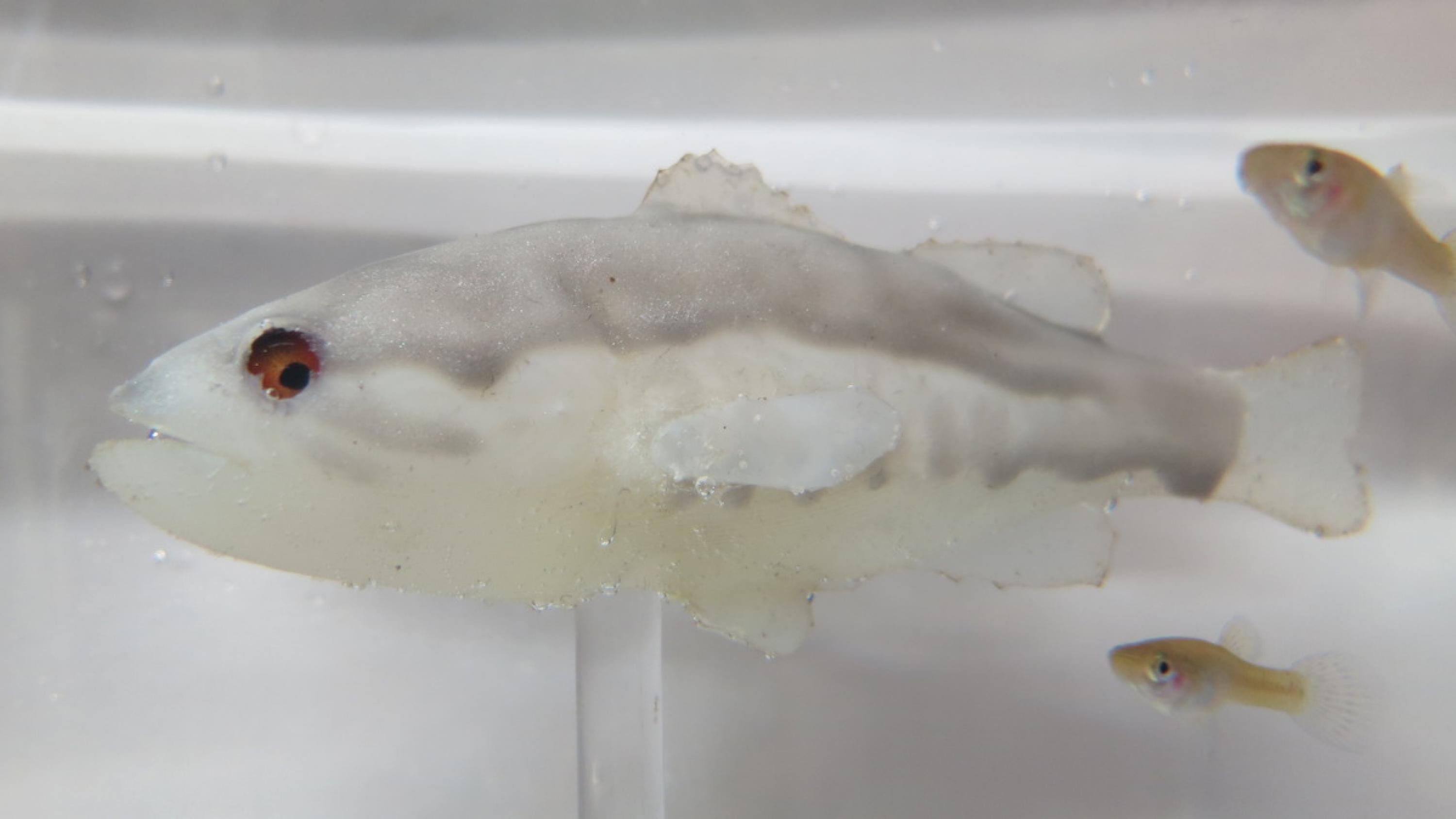
This is where technology-driven approaches matter. NOAA and partners have developed deep-water lionfish trap designs intended to control populations beyond normal diver depths. Meanwhile, robotic and semi-robotic concepts for lionfish capture have attracted attention because they could eventually reach areas people cannot safely or efficiently work. Even when a robot is not fully autonomous, the larger lesson still stands: invasive species control improves when machines expand the range, precision, and endurance of human operators.
That is an important point for the broader conversation. “Robotics” does not always mean a fully independent metal creature patrolling the ocean like a low-budget movie villain. Sometimes it means a smart trap, a remotely operated system, an imaging platform, or an automated sampling device. The category is broad, and that is a good thing. Invasive species problems are broad too.
What Robotics Still Cannot Do Well
This is the part where we keep our feet on the ground, even if the drone is in the air. Robotics is promising, but it is not a cure-all.
First, identification is hard. Plants change appearance with season, weather, light, growth stage, and background clutter. Aquatic visibility can be awful. Species may overlap visually. AI models can improve, but they still depend on good training data and careful validation. A robot that confidently misidentifies a native plant as an invasive one is not helpful. It is a very expensive source of chaos.
Second, cost remains a real barrier. Some advanced systems are expensive to buy, maintain, insure, and train on. For large agencies or well-funded operations, that may be manageable. For smaller conservation groups, municipalities, or farms, it may not be. Adoption depends not only on technical performance but also on whether the system makes economic sense in the field.
Third, robotics works best when paired with management strategy. A drone can map an infestation, but somebody still has to decide what to do with the map. An autonomous sampler can detect a threat, but a response plan must already exist. A weeding robot can remove targets, but managers still need ecological goals, monitoring protocols, and thresholds for action.
Finally, invasive species management often happens in messy environments: mud, wind, glare, tangled vegetation, murky water, steep slopes, and regulations that limit access or equipment use. Nature is not a polished warehouse floor. It is rude, wet, and full of surprises. Robotics must be built for that reality.
Why the Future Still Looks Bright
Even with those limits, the long-term direction is clear. Robotics is making invasive species management more proactive. That is a major shift. Instead of waiting for a problem to become obvious, agencies and land managers can increasingly build systems for continuous surveillance, repeated mapping, and targeted response.
The most effective future model will likely be a hybrid one. Humans will set priorities, interpret context, make ethical and ecological decisions, and carry out complex fieldwork. Machines will handle repetitive scouting, broad-area imaging, autonomous sample collection, data processing, and some forms of precision treatment. That combination is powerful because it matches the strengths of both sides.
And that, really, is the best reason to be optimistic. Robotics is not about removing people from conservation. It is about giving people better tools for doing conservation at the scale modern invasions require. In a world where invasive species can spread quickly and budgets rarely grow as fast as the problem, smarter tools are not a luxury. They are becoming necessary.
Experience From the Field: What This Work Really Feels Like
If you talk to the people actually dealing with invasive species through robotics, the experience is rarely as sleek as the technology brochures suggest. It is part science, part troubleshooting, part patience, and part muddy improvisation. The most common feeling is not “Wow, the robot solved everything.” It is more like, “Great, now we finally know where the problem is.” And honestly, that is a huge win.
In many real-world projects, the first experience teams report is relief. A drone flight can reveal patches of invasive plants that would have taken days to find on foot. A robotic water sampler can collect repeat samples without requiring a person to revisit the site again and again. An underwater imaging system can gather more consistent information than scattered manual checks. These tools do not erase hard work, but they reduce the exhausting uncertainty that used to come before the hard work.
Then comes the second experience: reality checks. Batteries run low. Weather changes. Water gets cloudy. Dense vegetation confuses image classifiers. Field crews realize that a robot can map a patch beautifully, but getting trucks, staff, permits, and follow-up treatment in place is still a very human puzzle. In that sense, robotics often makes the workflow more honest. It shows exactly where the weak points are. Sometimes the weak point is detection. Sometimes it is staffing. Sometimes it is simply that the infestation is larger than anyone hoped.
There is also a learning curve that people outside the field do not always appreciate. Managers have to trust the data before they trust the machine. That trust does not appear overnight. It grows when a map matches what crews see on the ground, when repeated eDNA detections line up with other evidence, or when a robot weeder performs well enough over time that operators stop hovering over it like nervous parents at a school play. Reliability matters. Repeatability matters. A flashy demo is nice, but field teams want something far less glamorous: consistency.
Another common experience is that robotics changes how people spend their time. Instead of using most of their energy just looking for the invader, they can spend more time deciding how to respond. That sounds simple, but it is a major upgrade. Better detection means better planning, better planning means better treatment, and better treatment usually means fewer wasted passes over the same ground. People feel that difference in their schedules, budgets, and stress levels.
And yes, there is excitement too. When a tool works, it can feel like a breakthrough. A clear drone map, a confirmed early detection, a successful precision treatment, or a repeatable robotic survey can all create real momentum for a project. Teams stop reacting blindly and start managing strategically. That psychological shift matters. It is easier to stay motivated when progress is visible.
But the deepest lesson from field experience is this: robotics works best when it is treated as part of a system, not as a miracle. The successful teams are usually the ones that combine technology with ecological knowledge, local context, trained staff, and follow-up monitoring. They know the robot is a tool, not a hero. The hero is still the management program that uses the tool wisely.
So what is the human experience of dealing with invasive species through robotics? It is hopeful, demanding, occasionally frustrating, and increasingly practical. It feels less like science fiction and more like better fieldwork. And for people trying to protect landscapes and waters that cannot wait for perfect solutions, better fieldwork is exactly the point.
Conclusion
Dealing with invasive species through robotics is not about replacing field biologists, growers, divers, or land managers with gadgets. It is about making those professionals more effective in the places where invasive species are hardest to detect and most expensive to control. Drones can map infestations faster. Autonomous samplers can catch aquatic threats earlier. Underwater imaging and AI can improve surveillance. Robotic weeders and precision treatment systems can reduce waste and sharpen control.
The biggest takeaway is simple: invasive species management becomes stronger when detection is earlier, response is more targeted, and monitoring is easier to repeat. Robotics helps on all three fronts. It is not magic. It is not cheap in every case. And it still needs human judgment at every important step. But it is already shifting the field from reactive cleanup toward smarter prevention, smarter control, and smarter use of limited resources.
That makes robotics one of the most promising tools in modern invasive species management. Not because the machines are flashy, but because the problem is stubborn. When the challenge is persistent, scalable, and biologically sneaky, better tools are not a luxury. They are part of staying in the fight.