Internet family drama usually arrives with a clear villain, a clear victim, and a comment section ready to hand down a sentence before the coffee gets cold. But this viral stay-at-home mom debate? It came with dirty bottles, an exhausted baby, one angry sister, one overwhelmed brother, one crying new mom, and a whole lot of people realizing that parenting is messy in more ways than one.
The phrase that lit the match was brutal and memorable: being a stay-at-home mom does not mean being a “stay-in-bed mom.” Ouch. In the online story, a woman said she snapped at her sister-in-law after repeatedly seeing her brother come home from long workdays to a chaotic house while his wife stayed in bed, scrolled on her phone, and said she needed a break. The brother got angry, the wife cried, and the internet promptly divided itself into two camps: Team “someone had to say it” and Team “congratulations, you just bullied a struggling postpartum mother.”
That split says a lot about modern parenting. It also says a lot about how quickly people confuse burnout with laziness, or responsibility with martyrdom, or concern with cruelty. And that is exactly why this story struck such a nerve.
What Happened In The Viral Stay-At-Home Mom Story?
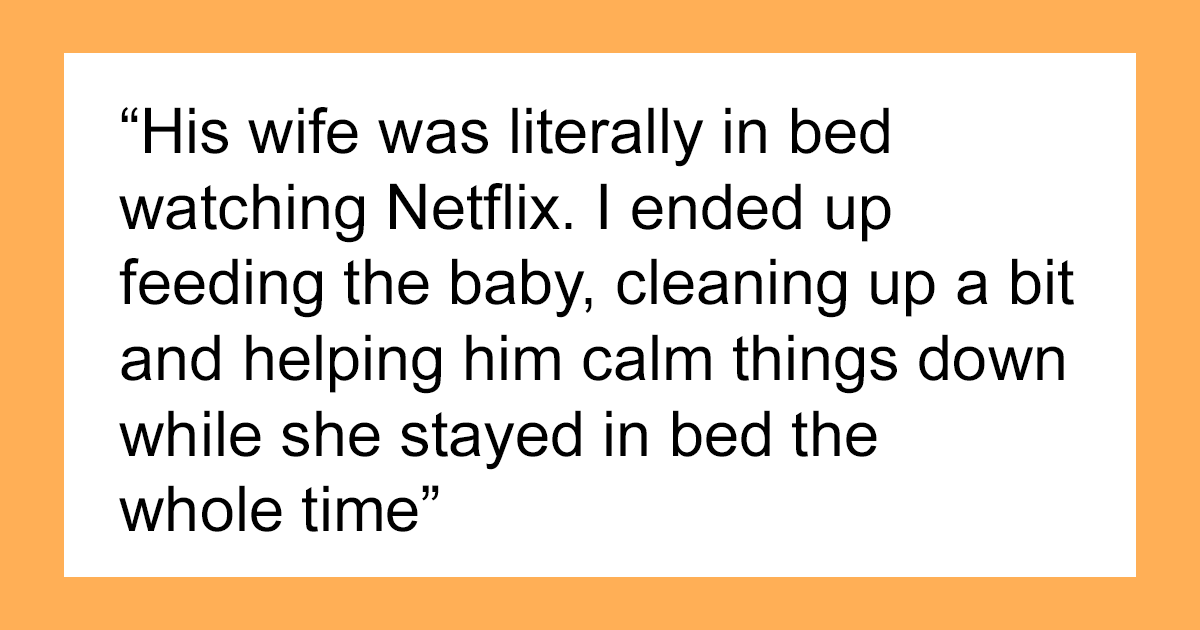
According to the now-viral account, the woman lived about 10 minutes from her brother and his wife, who had a 5-month-old baby. She said she occasionally stopped by to help and kept finding the same scene: a messy home, unfinished chores, a crying infant, and her sister-in-law in bed saying she was exhausted. The tipping point came when the brother called, overwhelmed, while trying to cook with one hand and hold the baby with the other.
The sister stepped in, fed the baby, cleaned up a bit, and then confronted her sister-in-law. Instead of leading with concern, she led with judgment, telling her that staying home with a baby did not mean lying in bed all day watching shows. The reaction was immediate. The sister-in-law cried. The brother sided with his wife. The internet, naturally, grabbed popcorn and started deliberating.
Many commenters argued that the woman had overstepped, especially because the baby was only 5 months old. Others said the brother clearly needed support, too, and that a hard truth was better than endless enabling. In other words, this was not just another family spat. It became a referendum on motherhood, invisible labor, postpartum recovery, and how much grace people think a struggling parent deserves before concern turns into criticism.
Why The “Stay-In-Bed Mom” Line Hit Such A Nerve
Part of the reason this story exploded is simple: people already carry strong opinions about stay-at-home moms. The role is oddly romanticized and minimized at the same time. One minute, society treats full-time caregiving like sacred labor. The next, it acts like being home all day means endless free time, spotless counters, and a roast chicken that somehow bastes itself.
That stereotype does not match reality. In the United States, stay-at-home parenting is still a significant part of family life, and mothers make up the majority of those parents. But the title “stay-at-home mom” hides a mountain of work: feeding, soothing, monitoring naps, managing appointments, tracking supplies, washing bottles, keeping a tiny human alive, and doing it all while sleep-deprived enough to mistake the TV remote for a burp cloth.
There is also the mental load, a phrase that sounds suspiciously like office jargon until you realize it explains half of domestic resentment. The mental load is the invisible planning, remembering, anticipating, and emotional management required to run a household. It is not just doing laundry. It is noticing the detergent is low, remembering the pediatrician appointment, keeping track of nap windows, and calculating whether there are enough clean onesies to survive a diaper blowout situation. Parenting often includes this hidden work even when the visible chores are piling up in the sink like a ceramic monument to human fatigue.
So when someone says a stay-at-home mom is “just in bed,” many readers hear more than one insult. They hear a dismissal of caregiving, a misunderstanding of postpartum life, and an old stereotype dressed up in a fresh internet outfit.
What Exhaustion Looks Like From The Outside
Here is the tricky part: extreme exhaustion often looks terrible from the outside. It can look lazy. It can look careless. It can look like someone has “given up.” But those visuals can be misleading, especially in a home with an infant.
A messy kitchen does not automatically mean neglect. Sometimes it means every time a parent starts a task, the baby cries, spits up, cluster-feeds, refuses to be put down, or decides that sleep is for the weak. A parent may spend the entire day moving nonstop and still have nothing “to show for it” except a fed baby and a survival-level hairstyle.
That does not mean every concerning situation should be ignored. It does mean outsiders should be cautious before slapping a laziness label on someone whoseiness label on someone whose body, hormones, sleep, and mental health may all still be in recovery mode. Parenting burnout is real. Health experts and mental health professionals have warned for years that parental stress can accumulate into emotional exhaustion, cynicism, reduced functioning, and a scary sense of detachment from daily life.
The broader context matters, too. Parents in the United States consistently report higher stress than other adults. When you add financial pressure, social isolation, uneven division of labor, and the 24/7 demands of infant care, families do not need much more to reach the “everyone is one dirty bottle away from a meltdown” stage.
The Postpartum Question The Internet Could Not Ignore
A huge number of commenters zeroed in on one possibility: postpartum depression or another postpartum mental health struggle. And that is where the conversation shifted from gossip to something more serious.
No one online can diagnose a stranger through a dramatic retelling. Still, the concern was understandable. Postpartum depression can involve persistent sadness, anxiety, irritability, low energy, sleep problems, difficulty functioning, and a loss of interest in things that once felt manageable. It is not the same as the short-lived “baby blues,” which many new mothers experience soon after birth. When symptoms linger, intensify, or interfere with daily functioning, the issue may be something more than ordinary new-parent fatigue.
That matters because postpartum struggles do not always look cinematic. They are not always dramatic sobbing on the nursery floor while sad violin music plays in the background. Sometimes they look like staring at the wall. Sometimes they look like staying in bed because every task feels impossible. Sometimes they look like doomscrolling because your brain is too fried to do anything more demanding than thumb movement. Not exactly glamorous, but painfully human.
Commenters were also quick to point out that five months postpartum is not ancient history. Recovery does not end just because the baby has moved out of the newborn stage. Some mothers are still dealing with sleep deprivation, hormonal shifts, feeding challenges, loneliness, pain, anxiety, depression, and identity shock well beyond those first few weeks. In fact, postpartum depressive symptoms can still show up months later, which is one reason experts urge screening and support instead of assumptions.
So was the sister-in-law lazy? Maybe. Was she depressed, depleted, touched out, isolated, or burned out? Also maybe. The point is that “maybe” should make people curious before it makes them cruel.
Why Some Readers Still Sympathized With The Brother
Even so, the other side of the internet was not entirely wrong to feel for the brother. If he was working long hours, coming home to a house in chaos, and then immediately taking over cooking, baby care, and emotional triage, resentment was almost guaranteed to show up like an uninvited relative at Thanksgiving.
One reason this story split people so sharply is that two things can be true at once. A new mother can be genuinely overwhelmed, and her partner can also be drowning. One person’s possible depression does not magically erase another person’s exhaustion. And if the household has fallen into a pattern where one adult feels abandoned, that problem needs attention fast.
Some commenters argued that while the sister’s delivery was harsh, the family might have been ignoring warning signs for too long. If the mother truly was spending much of the day in bed while the home and baby care were becoming harder to manage, that was not a situation for passive politeness. It was a situation for action. Just not mean-girl action.
In other words, concern about the sister-in-law’s well-being and concern about the brother’s overload do not cancel each other out. They belong in the same conversation.
What The Sister Got Wrong
The biggest issue was not that she noticed a problem. It was how she framed it. She treated the scene like a character flaw before treating it like a red flag.
That distinction matters. When someone appears checked out, the response should begin with questions, not accusations. “Are you okay?” is worlds apart from “Why are you always in bed?” One opens a door. The other slams it.
She also made a common mistake when talking about her brother: saying he “still helps with the baby.” The internet pounced on that wording because parenting your own child is not “helping”; it is parenting. That does not mean the brother was doing nothing wrong. It means the baseline standard should be shared responsibility, not applause for basic fatherhood.
And yes, there is a difference between childcare and housework. A clean home is nice. A cared-for baby is essential. In early parenthood, those categories do not always line up neatly. A parent may have spent 12 nonstop hours on childcare and still be too wrecked to touch the dishes. That is not success in a Pinterest sense, but it may still be success in the real-world sense that counts.
What Families Should Do Instead Of Playing Blame Olympics
1. Lead with concern, not contempt
If a new parent seems disengaged, tearful, constantly in bed, unable to keep up, or emotionally flat, start by checking in gently. Ask direct but kind questions. Listen for whether the issue is fatigue, depression, physical recovery, feeding stress, anxiety, or something else entirely.
2. Separate the practical problem from the moral judgment
The practical problem may be that the baby needs more support and the household is collapsing. The moral judgment is the leap to “lazy” or “bad parent.” Solve the first one before indulging the second.
3. Stop treating partners like assistants
One of the healthiest takeaways from the internet’s reaction is that both adults are parents. If one is home all day and the other works outside the home, the labor is different, but neither gets to claim permanent martyr status. Nights, weekends, and emotional care still need to be shared.
4. Get professional help when warning signs pile up
If a parent seems persistently down, withdrawn, unable to function, or overwhelmed for weeks at a time, it is worth involving a doctor or mental health professional. Compassion is wonderful. Compassion plus actual treatment options is better.
5. Offer concrete help
Not “Let me know if you need anything.” That phrase sounds lovely and accomplishes almost nothing. Better options: “I can hold the baby while you shower.” “I’m bringing dinner.” “I’ll fold the laundry.” “Let’s call your doctor together.” Real help beats decorative kindness every time.
The Bigger Lesson Behind The Stay-At-Home Mom Debate
This viral argument resonated because it exposed a modern parenting paradox. Everyone says parenting is hard, but plenty of people still judge parents as if the hard part should stay invisible. We praise caregiving in theory and critique it in practice. We tell mothers to ask for help, then side-eye them when asking for help looks like not functioning at full speed. We tell fathers to be more involved, then call it “helping” when they do the bare minimum required by biology and decency.
The internet was split because the story contained familiar frustrations on all sides. There was the overworked partner, the overwhelmed mother, the meddling relative, the messy house, the crying baby, and the creeping suspicion that no one in the situation was getting what they needed. That is not really a story about one “lazy” sister-in-law. It is a story about how fragile a household becomes when exhaustion, resentment, and poor communication all move in together.
And honestly, they are terrible roommates.
What Situations Like This Often Feel Like In Real Life
From the outside, these homes can look like chaos with a Wi-Fi password. From the inside, they often feel like time has stopped working. Morning arrives, then somehow it is 3 p.m., and the parent at home has not eaten a real meal, the coffee is cold enough to qualify as an emotional support beverage, and the baby has operated on the principle that being put down is a personal betrayal. The sink keeps filling up. The laundry seems to reproduce when no one is looking. A single pediatrician appointment can take the logistical planning of a small military campaign.
A lot of new parents describe the experience less as “doing nothing” and more as never being fully off duty. Even rest is weird. You lie down, but one ear stays tuned to every sound from the crib. You scroll your phone not because life is great, but because your brain is running on fumes and social media requires less energy than making another decision. Should you nap? Wash bottles? Answer texts? Cry in the bathroom? There is no elegant answer, only the next thing that must be handled before someone screams. Sometimes that someone is the baby. Sometimes it is the adult holding the baby.
Partners often have their own version of this spiral. The one working outside the home may feel trapped in an endless loop of job pressure followed by household pressure, with no transition time in between. They may walk in already tired, see the mess, hear the crying, and instantly feel like they have been cast in a sequel they did not audition for. If they are also worried about their spouse, the frustration gets tangled with guilt. Are they allowed to feel resentful if the other parent might be depressed? Are they selfish for feeling exhausted when the person at home looks worse? Nobody gets a satisfying answer. They just get another long night.
Relatives, meanwhile, are notorious for entering these scenes like guest judges on a reality show nobody asked to film. They see a snapshot, not the whole episode. Maybe they really are witnessing a parent who has checked out. Maybe they are seeing the exact 20-minute stretch when a person finally collapsed after being climbed on, cried at, and needed by another human for 14 straight hours. Both possibilities exist. That is what makes these situations so combustible. People confuse one moment with a full diagnosis of someone’s character.
And then there is the emotional weirdness of early parenthood, which no spreadsheet can capture. Some parents feel deep love and deep depletion at the same time. Some feel grateful and trapped. Some feel proud of surviving the day and embarrassed by what the house looks like. Some are desperate for help but too ashamed to ask for it clearly. Others do ask, but the request comes out as irritability, withdrawal, or tears, and everyone around them hears attitude instead of distress.
That is why stories like this make so many people react from the gut. They remind readers of a season when nobody felt like the best version of themselves. The mom may not have looked productive. The dad may not have looked patient. The relative may not have looked compassionate. But often the deeper truth is that everyone was under-supported, under-rested, and one sharp sentence away from turning private pain into public conflict. The real tragedy in these households is not usually that someone forgot to do the dishes. It is that the people inside start treating each other like opponents when they most need to act like a team.
Conclusion
The phrase “stay-at-home mom” can make the role sound simple, but nothing about caring for a baby full time is simple. This viral family fight resonated because it touched a raw nerve: the fear that someone is not pulling their weight, and the equally real fear that someone is quietly falling apart. In the end, the internet split because the story was never just about laziness. It was about burnout, judgment, postpartum strain, invisible labor, and how badly families communicate when they are all running on empty.
The smartest takeaway is not that the sister was entirely right or entirely wrong. It is that households with new babies do not need more sarcasm. They need more curiosity, more shared responsibility, and sometimes more professional support. Real life is not won in the comments section. It is survived in the kitchen, at 2 a.m., with a crying baby, a tired partner, and the choice to ask what is really going on before deciding who deserves the blame.