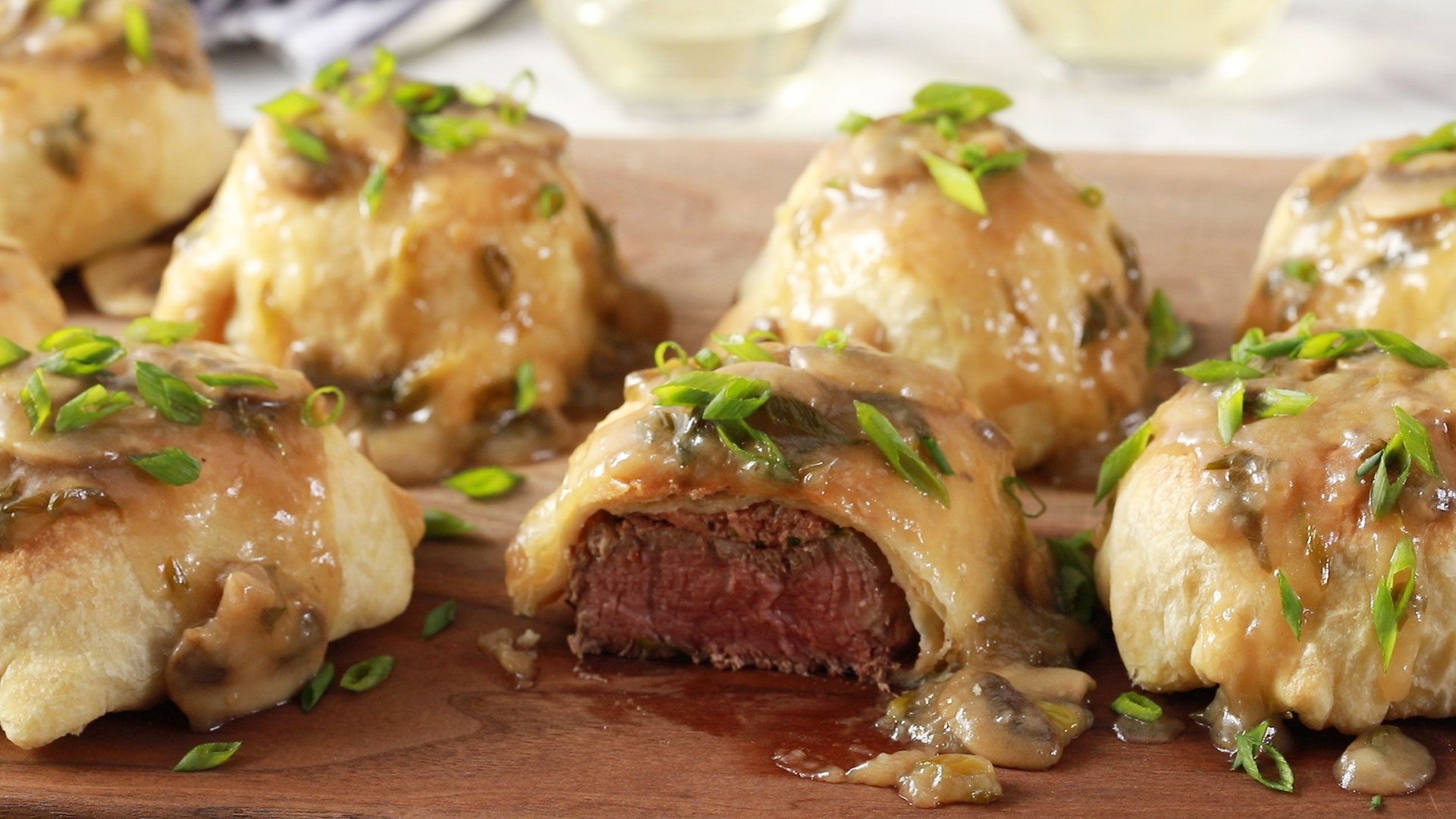
There are dinners, and then there are events. Beef Steaks Wellington belongs firmly in the second category. It is the kind of meal that makes people sit up straighter, glance at their plates with admiration, and suddenly start talking like food critics who own at least one linen napkin. The good news? This classic is far less terrifying than its reputation suggests. When you break it down, you are really making individual steak parcels with a savory mushroom filling, wrapping them in puff pastry, and baking until the outside is bronzed and crisp while the inside stays juicy and luxurious.
This version focuses on individual beef steaks Wellington rather than one giant roast. That makes it easier to portion, easier to serve, and much easier to pull off without muttering suspicious things at your oven. Each parcel gets its own flaky crust, rich mushroom filling, and tender beef center. It is elegant enough for holidays, anniversaries, or date night, but still approachable for home cooks who want something special without enrolling in culinary school.
If you have been searching for a Beef Steaks Wellington recipe that feels practical, flavorful, and worthy of publication, this is it. You will get the ingredients, the method, timing tips, common mistakes to avoid, and a little real-world kitchen wisdom so your pastry puffs instead of pouting.
Why This Beef Steaks Wellington Recipe Works
The magic of individual Beef Wellingtons is all about balance. Filet or tenderloin steaks cook quickly, which means they can be seared for flavor without turning into hockey pucks later in the oven. The mushroom filling adds deep, savory flavor and helps protect the beef from drying out. A thin layer of prosciutto acts like a delicious insurance policy, creating a barrier between the moist filling and the puff pastry. The pastry, meanwhile, brings crunch, butter, and pure dinner-party drama.
Another advantage of the individual format is timing. A giant Wellington is stunning, but it can be nerve-racking. One end may be perfect while the other seems to have gone on a personal journey. With beef steaks Wellington, each parcel is smaller and more predictable. That means less guessing, less slicing anxiety, and fewer awkward “let’s just call it rustic” moments.
Best of all, this recipe delivers the classic flavors people expect from a steak Wellington recipe while staying friendly to real kitchens. No gold-plated gadgets. No chef yelling in the background. Just smart technique, quality ingredients, and a little patience.
Ingredients for Beef Steaks Wellington
For the steaks
- 4 beef tenderloin steaks or filet mignon steaks, about 5 to 6 ounces each and 1 to 1 1/2 inches thick
- 1 teaspoon kosher salt
- 1/2 teaspoon freshly ground black pepper
- 1 tablespoon neutral oil or olive oil
- 2 tablespoons Dijon mustard
For the mushroom filling
- 12 ounces cremini or button mushrooms, finely chopped
- 1 large shallot, finely chopped
- 2 cloves garlic, minced
- 1 tablespoon unsalted butter
- 1 teaspoon fresh thyme leaves
- 1/4 teaspoon salt
- 1/4 teaspoon black pepper
For assembly
- 4 thin slices prosciutto
- 1 sheet puff pastry, thawed but still cold
- 1 large egg
- 1 tablespoon water
- Flour, for rolling
- Flaky salt, optional
Optional quick pan sauce
- 1 tablespoon butter
- 1 tablespoon minced shallot
- 1/2 cup beef stock
- 1/4 cup dry red wine
- 1 teaspoon Dijon mustard
Ingredient note: If you want a more old-school version, you can add a thin smear of pâté under the mushroom mixture. If you want something easier and a bit lighter, skip it. The recipe will still taste rich enough to make everyone suspicious that you hired a private chef.
How to Make Beef Steaks Wellington
1. Prep the beef
Pat the steaks dry with paper towels. Season them with salt and pepper on all sides. Heat a skillet over high heat and add the oil. Sear the steaks for about 45 seconds to 1 minute per side, including the edges if possible. You are not cooking them through here; you are building flavor and color. Transfer the steaks to a plate and let them cool for a few minutes, then brush them lightly with Dijon mustard.
This quick sear is not optional unless you enjoy serving pale beef in a pastry coat. The crust created in the pan gives the finished dish a deeper flavor and keeps the meat tasting like steak instead of expensive confusion.
2. Make the mushroom filling
In the same skillet, reduce the heat to medium. Add the butter, then the mushrooms, shallot, garlic, thyme, salt, and pepper. Cook the mixture until the mushrooms release all their moisture and that liquid cooks away completely. Stir often. This usually takes 8 to 12 minutes. The finished filling should look concentrated, almost like a savory mushroom paste, not a spoonful of soup.
Let the mushroom mixture cool fully. If it is warm, it can soften the prosciutto and pastry and sabotage your beautiful little parcels before they even enter the oven. Puff pastry loves cold conditions. Treat it like a diva and keep it cool.
3. Set up the wrapping station
Lay one slice of prosciutto on a clean work surface for each steak. Spoon a quarter of the mushroom mixture onto each slice and spread it into a thin layer. Set a mustard-brushed steak on top. Wrap the prosciutto around the steak. This helps create a moisture barrier and gives the finished Wellington that savory, salty backbone that keeps the dish from tipping into pure butteriness.
Place the wrapped steaks on a tray and chill them for 10 to 15 minutes. This step helps firm everything up and makes the pastry wrapping much easier.
4. Roll and cut the puff pastry
Preheat the oven to 425°F. Line a baking sheet with parchment paper. On a lightly floured surface, roll the puff pastry just enough to smooth out the folds. Cut it into 4 equal squares. If your steaks are especially thick, make sure the squares are large enough to wrap around each steak without leaving giant pastry overlaps.
Too much pastry is one of the classic Beef Wellington traps. It looks innocent at first, then bakes into a doughy jacket that never quite cooks through. Aim for a snug fit, not a duvet.
5. Wrap the steaks
Whisk the egg with the water to make an egg wash. Place one wrapped steak in the center of each pastry square. Brush the edges of the pastry with egg wash. Fold the pastry up and around the steak, trimming excess dough if necessary. Press the seams gently to seal and place each parcel seam-side down on the baking sheet.
Brush the tops with egg wash. If you have extra pastry scraps, cut out small leaves or simple strips and attach them with more egg wash. Then lightly score the top with a sharp knife. Do not cut all the way through. You want decoration, not a pastry blowout.
6. Chill briefly, then bake
Refrigerate the assembled Wellingtons for 10 minutes if your kitchen is warm or if the pastry has softened. Then bake for 18 to 25 minutes, depending on the thickness of the steaks and how cold they were going in. The pastry should be deeply golden and crisp.
Use an instant-read thermometer if you want precision. Insert it through the side into the center of the steak. If you are following USDA food-safety guidance for steaks and roasts, cook to 145°F and rest for at least 3 minutes. If you are cooking for guests with different preferences, the thermometer is your best friend and your least dramatic dinner guest.
7. Rest before serving
Let the Beef Steaks Wellington rest for 5 to 10 minutes before serving. This gives the juices time to settle and keeps the pastry from collapsing the moment you cut into it. Resting is not wasted time. It is the difference between “wow” and “why is there a beef river on my plate?”
8. Make the optional sauce
While the Wellingtons rest, melt the butter in a small saucepan. Add the shallot and cook for 1 minute. Add the stock, wine, and Dijon. Simmer until reduced slightly, about 5 to 7 minutes. Spoon around the Wellingtons or serve on the side so the pastry stays crisp.
Best Tips for a Crisp, Juicy Steak Wellington
Dry out the mushroom mixture thoroughly
If your mushroom filling is watery, your pastry will pay the price. Cook the mushrooms until the pan looks nearly dry. This is one of the most important steps in the whole recipe.
Keep the pastry cold
Cold puff pastry is easier to handle and bakes higher and flakier. If the dough becomes soft or sticky, chill it for a few minutes instead of trying to wrestle it into cooperation.
Do not over-sear the beef
You only need a quick sear. Remember, the steaks will continue cooking inside the pastry. If you fully cook them in the skillet first, the oven will finish the job by turning them into a very elegant life lesson.
Use a thermometer
This is a special-occasion beef dinner, and a thermometer removes guesswork. For many cooks, that tiny tool is the line between triumph and “well, the pastry looks nice.”
Make parts ahead
The mushroom filling can be made a day or two ahead. You can also sear the steaks ahead of time. If you want to assemble the parcels earlier in the day, keep them chilled until baking. That makes this recipe far more manageable than it first appears.
What to Serve with Beef Steaks Wellington
Because individual beef Wellington is rich, the best sides are simple and bright. Think mashed potatoes, roasted green beans, asparagus, glazed carrots, or a crisp salad with a sharp vinaigrette. A small spoonful of sauce goes a long way, and a fresh vegetable side keeps the meal from feeling like you wrapped your whole evening in butter. Delicious, yes. Balanced, also yes.
For a dinner-party menu, try this combination: Beef Steaks Wellington, creamy mashed potatoes, roasted green beans, and a lemony salad. For a date-night version, pair the steaks with roasted fingerling potatoes and a glass of red wine. The candle is optional, but strongly encouraged for dramatic effect.
Common Mistakes to Avoid
- Skipping the chill time: Warm steak plus warm mushrooms plus warm pastry equals pastry sadness.
- Using soggy filling: Mushrooms must be cooked down until concentrated.
- Wrapping with too much pastry: Thick folds can stay gummy in the center.
- Cutting immediately after baking: Resting improves both the texture and presentation.
- Forgetting the seasoning: Tenderloin is tender, but it still needs salt, pepper, mustard, and savory support.
Storage and Reheating
Beef Steaks Wellington is best the day it is made, because puff pastry is basically a crispy little diva that loses some charm on day two. Still, leftovers can be stored in the refrigerator for up to 2 days. Reheat in a 350°F oven until warmed through. Avoid the microwave if possible unless you are comfortable watching crisp pastry turn into a soft life choice.
If you want to prep ahead, assemble the parcels and refrigerate them for several hours before baking. That is the sweet spot between convenience and quality.
Frequently Asked Questions
Can I use another cut of beef?
Tenderloin or filet mignon is the best choice because it is tender and cooks quickly. Other cuts may be flavorful, but they are usually not ideal for this wrapped-and-baked format.
Do I have to use prosciutto?
No, but it helps protect the pastry from moisture and adds savory depth. Thin ham can work in a pinch.
Can I make Beef Steaks Wellington without pâté?
Absolutely. Many modern versions skip it and lean on mushrooms, mustard, and prosciutto instead. The result is still rich, elegant, and considerably easier to source.
How do I know when the pastry is done?
The exterior should be deeply golden, not pale blond. A properly baked Wellington looks confident, crisp, and ready for compliments.
Real-Life Experiences Cooking Beef Steaks Wellington
The first time I made Beef Steaks Wellington, I treated it like a high-stakes exam. I had the nervous energy of someone assembling a tiny edible tuxedo. I kept checking the pastry, checking the mushrooms, checking the thermometer, and checking whether I had somehow invented a new way to ruin expensive beef. Then the Wellingtons came out of the oven looking gloriously golden, puffed, and far more professional than I felt. That is one of the sneaky pleasures of this dish: it makes ordinary home cooks look suspiciously accomplished.
What I learned quickly is that this recipe rewards patience more than brilliance. The mushroom mixture has to cook longer than you think. The pastry needs to stay colder than you expect. The beef should be seared just enough to build flavor, not enough to finish cooking. In other words, Beef Steaks Wellington is less about dramatic talent and more about calm, slightly stubborn attention to detail. It is a dish that says, “Take your time, and I will make you look good.”
I also learned that individual steak Wellingtons are much less stressful than the giant centerpiece version. With one big roast, you slice and hope for applause. With individual parcels, everyone gets their own crisp, flaky package, and the portions feel intentional and restaurant-worthy. It is cleaner, easier to plate, and much friendlier for people who want a special dinner without the pressure of carving a showpiece at the table while relatives stare.
There is also something weirdly fun about the assembly process. Once the steaks are cooled and the mushroom filling is ready, it starts to feel like a delicious craft project. Spread, wrap, fold, brush, score. It is the culinary equivalent of gift wrapping, except the gift is beef. If you enjoy recipes that feel hands-on and a little theatrical, this one absolutely scratches that itch.
Over time, I found that the biggest difference between a decent Wellington and a fantastic one is moisture control. On one attempt, I rushed the mushrooms and ended up with a softer bottom crust. It still tasted great, because butter and beef are famously forgiving, but the texture was not quite the crisp, shattery pastry dream I wanted. Once I slowed down and cooked the mushrooms until nearly dry, the result improved dramatically. That one step transformed the whole recipe.
I have also served Beef Steaks Wellington for different kinds of meals, and the reaction is always similar: first silence, then compliments, then someone asking whether it was hard to make. That is the best part. It looks wildly fancy, but it is really a sequence of manageable steps. You do not need to be a trained chef. You just need decent ingredients, a thermometer, and the willingness to let puff pastry remain cold and bossy.
If you are cooking for a holiday, an anniversary, or one of those dinners where you want the table to feel a little more memorable, this recipe absolutely delivers. It feels celebratory without being gimmicky. It is rich without being ridiculous. And it gives you that rare kitchen victory where the food tastes every bit as impressive as it looks. In a world full of rushed dinners eaten over the sink, Beef Steaks Wellington is a strong argument for slowing down, setting the table, and making something that feels like an occasion.
So yes, make the Beef Steaks Wellington. Chill the pastry. Dry the mushrooms. Trust the thermometer. Then serve those golden parcels with something green and something creamy, and enjoy the moment when everyone at the table suddenly believes you have your life together. Even if your kitchen says otherwise.
Conclusion
This Beef Steaks Wellington recipe proves that a classic special-occasion dish can absolutely work in a home kitchen. By using individual beef tenderloin steaks, a deeply savory mushroom filling, crisp puff pastry, and a few smart techniques, you get a dinner that feels luxurious without becoming impossible. It is ideal for holidays, dinner parties, or any evening that deserves a little extra sparkle. And once you make it successfully, you may begin to carry yourself with the confidence of a person who casually wraps steak in pastry on weeknights. Use that power wisely.