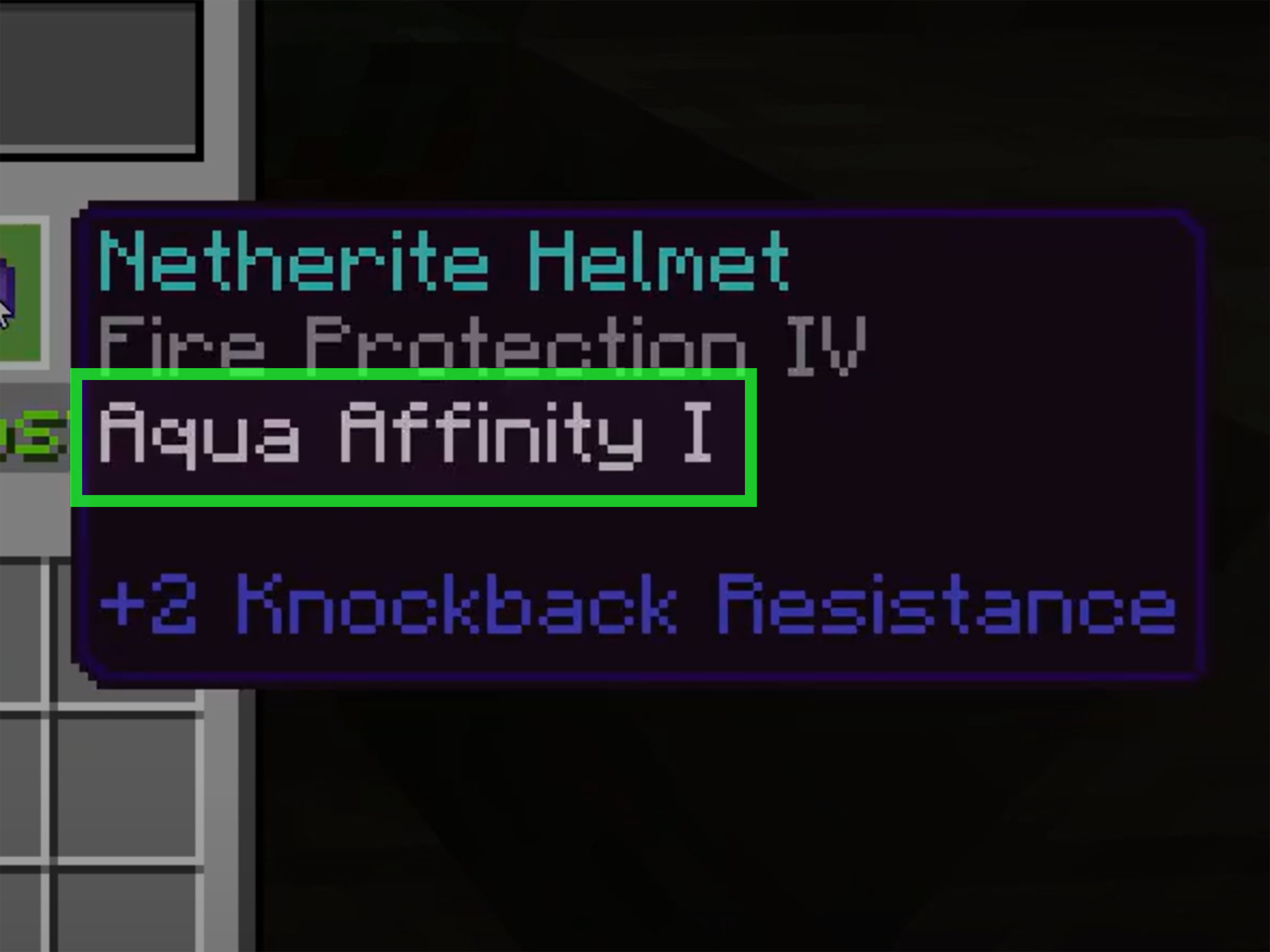
If you have ever tried mining underwater in Minecraft without the right gear, you know the feeling: your pickaxe suddenly moves like it is stirring cold oatmeal. One block takes forever, your air bubbles vanish, and a drowned appears nearby like an unpaid supervisor. That is where Aqua Affinity in Minecraft becomes one of the most underrated enchantments in the game.
Aqua Affinity is not flashy like Sharpness, dramatic like Fire Aspect, or rich-player fancy like Mending. It does one job, but it does that job beautifully: it helps you mine underwater at normal speed. For players building ocean bases, clearing shipwrecks, raiding ocean monuments, collecting clay, or digging tunnels under lakes, this helmet enchantment can save a shocking amount of time.
In this guide, we will cover what Aqua Affinity does, how to get it, which items can use it, the best enchantment combinations, common mistakes, and real gameplay tips from the wet, blocky trenches.
What Is Aqua Affinity in Minecraft?
Aqua Affinity is a helmet enchantment that improves underwater mining speed. In normal Minecraft gameplay, mining blocks while your head is underwater is much slower than mining on land. Aqua Affinity removes that underwater mining slowdown, allowing you to break blocks underwater at the same speed you would on dry land, assuming you are not floating.
The enchantment has only one level: Aqua Affinity I. There is no Aqua Affinity II, III, or secret super version hiding behind a suspicious wandering trader. Level I is the full effect.
Quick Aqua Affinity Facts
- Enchantment type: Helmet enchantment
- Maximum level: Aqua Affinity I
- Main use: Faster underwater mining
- Works on: Helmets and turtle shells
- Best paired with: Respiration, Depth Strider, Mending, Unbreaking
- Does not help with: Breathing underwater or swimming faster
What Does Aqua Affinity Do?
Aqua Affinity removes the mining speed penalty caused by being underwater. Without it, breaking blocks underwater can feel painfully slow. With Aqua Affinity on your helmet, mining becomes much smoother and more practical.
This is especially useful when working with blocks commonly found underwater, such as sand, gravel, clay, prismarine, sea lanterns, stone, deepslate near flooded caves, and blocks around ocean ruins. It also helps when you are building underwater structures and need to remove misplaced blocks. Because yes, even experienced builders accidentally place glass in the wrong spot and then stare at it like the block betrayed them personally.
Important Detail: Aqua Affinity Does Not Remove the Floating Penalty
Here is the part many players miss: Aqua Affinity removes the underwater mining penalty, but it does not remove the separate slowdown that happens when you are floating and not standing on a block. To get the best speed, stand on the seafloor, a platform, or any solid block while mining.
If you are bobbing around in the water like a confused cork, mining may still feel slower than expected. The solution is simple: place a temporary block beneath you, crouch if needed, and mine from a stable position. Minecraft rewards preparation. It also rewards people who bring doors, boats, buckets, and snacks. Mostly snacks in real life, but still.
How to Get Aqua Affinity in Minecraft
There are several ways to obtain Aqua Affinity in Minecraft. Some are quick, some depend on luck, and some involve negotiating with villagers who charge emerald prices like they run a luxury beach resort.
1. Use an Enchanting Table
The most common way to get Aqua Affinity is by using an enchanting table. Place a helmet in the enchanting table, add lapis lazuli, and check the available enchantments. Since Aqua Affinity only has one level, it can appear without needing a complicated setup, although bookshelves improve your access to stronger enchantment options overall.
If Aqua Affinity does not appear, enchant another low-value item or book to refresh the enchantment list. Many players use spare books for this because they are cheap and useful later.
2. Use an Enchanted Book and Anvil
You can also apply Aqua Affinity using an enchanted book. Once you have an Aqua Affinity book, place the helmet and the book in an anvil, pay the experience cost, and the helmet receives the enchantment.
This method is great because it gives you more control. Instead of gambling with the enchanting table, you can search for the specific book and add it to the exact helmet you want.
3. Trade With Librarian Villagers
Librarian villagers can sell enchanted books, including Aqua Affinity. This is one of the best long-term methods for players who enjoy building trading halls. A librarian’s available trades depend on its profession setup, and players often cycle trades before locking them in.
Once you find a librarian offering Aqua Affinity, protect that villager like royalty. Give them a safe house, a bed, lighting, and maybe a nice view. You do not want your perfect trade disappearing because a zombie wandered in and started a workplace incident.
4. Find Aqua Affinity in Loot Chests
Enchanted books can appear in various loot chests throughout the game. You may find Aqua Affinity in structures such as dungeons, mineshafts, desert temples, jungle temples, strongholds, underwater ruins, ancient cities, and other generated locations with enchanted book loot.
This method is less predictable, but it is fun for exploration-focused players. If you already enjoy raiding structures, Aqua Affinity may show up naturally while you are hunting for diamonds, name tags, saddle loot, or yet another music disc you did not ask for.
5. Fishing for Enchanted Books
Fishing can produce enchanted books, and Aqua Affinity may appear this way. The odds are not something you should build your entire survival strategy around, but fishing is peaceful, renewable, and sometimes surprisingly generous.
If you use a fishing rod with Luck of the Sea, you improve your chances of treasure catches. Fishing is also a nice option early in survival when you want enchantments before creating a full villager system.
Which Items Can Have Aqua Affinity?
Aqua Affinity can be applied to helmets. This includes leather caps, chainmail helmets, iron helmets, golden helmets, diamond helmets, netherite helmets, and turtle shells.
For most players, the best choice is a diamond or netherite helmet because it offers strong protection and long-term value. However, a turtle shell can be excellent for underwater projects because it naturally supports an aquatic playstyle and gives extra breathing time when worn.
Best Helmet for Aqua Affinity
The best helmet depends on your stage of the game:
- Early game: Iron helmet with Aqua Affinity is affordable and useful.
- Mid game: Diamond helmet gives better durability and protection.
- Late game: Netherite helmet with Aqua Affinity, Respiration, Mending, and Unbreaking is the dream setup.
- Ocean-focused play: Turtle shell is fun and thematic, especially for underwater exploration.
Aqua Affinity vs. Respiration: What Is the Difference?
Aqua Affinity and Respiration are often mentioned together, but they do very different things.
Aqua Affinity
Aqua Affinity improves underwater mining speed. It helps you break blocks faster while underwater.
Respiration
Respiration increases how long you can stay underwater before losing air. It also improves underwater visibility slightly, making exploration more comfortable.
In simple terms: Aqua Affinity helps your pickaxe. Respiration helps your lungs. If Minecraft had a tiny underwater HR department, it would recommend using both.
Best Enchantments to Combine With Aqua Affinity
Aqua Affinity is useful by itself, but it becomes much better when added to a strong underwater helmet build.
Respiration III
Respiration III is one of the best partners for Aqua Affinity. It lets you stay underwater longer, which means more time mining, building, and exploring before returning to the surface.
Unbreaking III
Unbreaking III increases helmet durability. Since underwater projects can take a long time, this helps keep your gear from wearing down too quickly.
Mending
Mending repairs your helmet using experience orbs. For late-game players, Mending is almost mandatory on valuable armor. A netherite helmet without Mending is like a sports car without insurance: exciting, but emotionally stressful.
Protection IV
Protection IV improves overall defense. It is useful when exploring ocean monuments, underwater caves, or any place where mobs might interrupt your peaceful mining session with unnecessary violence.
Best Uses for Aqua Affinity in Minecraft
Aqua Affinity is not just a convenience enchantment. In the right situations, it changes how efficiently you can play.
Building Underwater Bases
Underwater bases look amazing, but building them can be a slow process. You need to clear space, remove sand or gravel, fix mistakes, and shape the structure. Aqua Affinity makes all of that faster.
If you are planning a glass dome, ocean laboratory, coral-view bedroom, or secret villain lair under the sea, Aqua Affinity belongs on your helmet before the first block is placed.
Clearing Ocean Monuments
Ocean monuments are packed with prismarine, dark prismarine, sea lanterns, and danger. Aqua Affinity helps you mine blocks more efficiently once you are prepared to deal with guardians and elder guardians.
Keep in mind that Mining Fatigue from elder guardians can still slow you down heavily. Aqua Affinity is helpful, but it does not magically cancel every negative effect. Bring milk buckets, good armor, weapons, and patience.
Collecting Clay, Sand, and Gravel
Rivers, lakes, and shallow oceans are full of useful materials. Clay is great for bricks and terracotta production. Sand is essential for glass, concrete, and TNT. Gravel gives flint and is useful for concrete powder.
With Aqua Affinity, gathering these materials underwater becomes far less annoying. Add Depth Strider boots, and suddenly your underwater resource run feels like a professional operation instead of a soggy punishment.
Exploring Flooded Caves
Flooded caves can contain ores, geodes, and interesting terrain. Aqua Affinity makes it easier to mine blocks while navigating these areas. Pair it with Respiration and a good light source, and you can turn flooded caves into productive mining routes.
Fixing Underwater Build Mistakes
Every Minecraft builder knows the pain of misplacing blocks. Underwater, that pain is multiplied by slow mining, limited air, and the constant sensation that a drowned is watching you from behind a kelp plant.
Aqua Affinity makes corrections easier. Whether you placed glass one block too far left or need to remove temporary dirt scaffolding, this enchantment keeps the workflow moving.
Common Mistakes Players Make With Aqua Affinity
Thinking It Helps You Breathe
Aqua Affinity does not increase air supply. For that, you need Respiration, turtle shells, water breathing potions, conduits, or bubble columns. Aqua Affinity only affects underwater mining speed.
Thinking It Makes You Swim Faster
Aqua Affinity does not improve swimming speed. If you want better underwater movement, use Depth Strider boots or dolphins when available.
Mining While Floating
If Aqua Affinity feels like it is not working, check whether you are floating. Stand on a block while mining to avoid the separate floating penalty.
Putting It on a Temporary Helmet Too Early
It is fine to use Aqua Affinity early, but if you find a rare enchanted book, consider saving it for a diamond or netherite helmet. That said, Aqua Affinity is not extremely rare, so do not be afraid to use it when you need it.
Is Aqua Affinity Worth It?
Yes, Aqua Affinity is absolutely worth it if you spend any serious time underwater. It may not matter much if you only cross rivers and occasionally punch kelp, but it becomes extremely valuable for ocean bases, monuments, underwater mining, clay gathering, and flooded cave exploration.
The best part is that Aqua Affinity has no downside. It does not conflict with Respiration, Protection, Mending, or Unbreaking. It is a clean upgrade for any helmet. Once you have used it during a large underwater project, going back to normal mining feels like trying to cut steak with a spoon.
Practical Tips for Using Aqua Affinity
- Stand on a block while mining underwater for the best results.
- Combine Aqua Affinity with Respiration III for longer underwater work sessions.
- Use Depth Strider boots to move around underwater more easily.
- Bring doors, magma blocks, or water breathing potions for longer builds.
- Use a conduit for major underwater construction projects.
- Keep a spare helmet if you are doing risky ocean monument raids.
Gameplay Experience: What Aqua Affinity Feels Like in Real Survival Worlds
The first time you use Aqua Affinity in Minecraft, it may not feel dramatic in the way a new sword enchantment does. There is no burst of fire, no giant damage number, and no mob flying backward in fear of your enchanted fashion choices. Instead, the improvement is practical. You start mining underwater, and the game simply stops fighting you.
One of the clearest examples is building an underwater base. Without Aqua Affinity, every misplaced block becomes a tiny tragedy. You place glass, realize it should be one block higher, then spend what feels like half a vacation breaking it. With Aqua Affinity, corrections are fast enough that building stays fun. You can shape domes, tunnels, floors, and viewing rooms without constantly swimming to the surface in frustration.
Another great experience is collecting clay from riverbeds. Clay is easy to overlook until you need bricks, decorative blocks, or a large building palette. With a normal helmet, gathering clay underwater feels slow and awkward. With Aqua Affinity, you can clear clay patches quickly, especially if you also wear Depth Strider boots. The whole job turns from “Why did I choose this hobby?” into “Actually, this is relaxing.”
Aqua Affinity also shines when exploring ocean ruins and shipwreck areas. Sometimes valuable blocks are buried under sand or gravel, and slow underwater mining makes the process feel clunky. With Aqua Affinity, you can dig around structures more naturally. You still need to watch your air supply, but at least the blocks are no longer moving at the speed of a sleepy turtle.
For ocean monuments, Aqua Affinity is useful but not a complete solution. Guardians and elder guardians are still dangerous, and Mining Fatigue can make mining painfully slow no matter how nice your helmet is. However, once you deal with the major threats, Aqua Affinity becomes excellent for collecting prismarine and sea lanterns. If you are draining a monument or converting it into a guardian farm, you will appreciate every second saved.
In flooded caves, Aqua Affinity can be the difference between grabbing resources confidently and giving up because everything takes too long. When paired with Respiration III and a strong pickaxe, it makes underwater ore collection feel much less risky. You can mine blocks, open paths, and escape tight spaces faster, which matters when your air bubbles are disappearing and your brain suddenly forgets where the exit is.
The enchantment also teaches an important Minecraft lesson: small upgrades matter. Not every powerful item has to be dramatic. Sometimes the best enchantment is the one that removes a constant annoyance. Aqua Affinity does exactly that. It does not turn you into Poseidon, ruler of the cubic seas, but it does make underwater work smoother, faster, and more enjoyable.
For players who love ocean builds, Aqua Affinity becomes part of the standard toolkit. You grab your enchanted helmet, your Respiration, your Depth Strider boots, a good pickaxe, and maybe a few water breathing potions. Suddenly, the ocean is not an obstacle. It is a construction site, a resource zone, and a scenic workplace with fish.
In short, Aqua Affinity is one of those enchantments you may underestimate until you need it. Then, after one large underwater project, you will wonder why you ever tried to mine beneath the waves without it. Minecraft has plenty of glamorous enchantments, but Aqua Affinity is the dependable friend who shows up with a toolbox, waterproof boots, and no complaints.
Conclusion
Aqua Affinity in Minecraft is a simple but powerful enchantment that makes underwater mining faster and more enjoyable. It has only one level, works on helmets and turtle shells, and is especially useful for ocean bases, flooded caves, monument clearing, clay gathering, and underwater construction.
It does not help you breathe underwater, swim faster, or defeat guardians, but it removes one of the most annoying underwater limitations in the game. Combine Aqua Affinity with Respiration, Depth Strider, Unbreaking, Mending, and strong armor, and you will be ready to treat the ocean like your personal construction zone.
Note: This article is written for standard Minecraft survival gameplay. Some servers, mods, snapshots, or custom data packs may change enchantment behavior, item access, or villager trading rules.