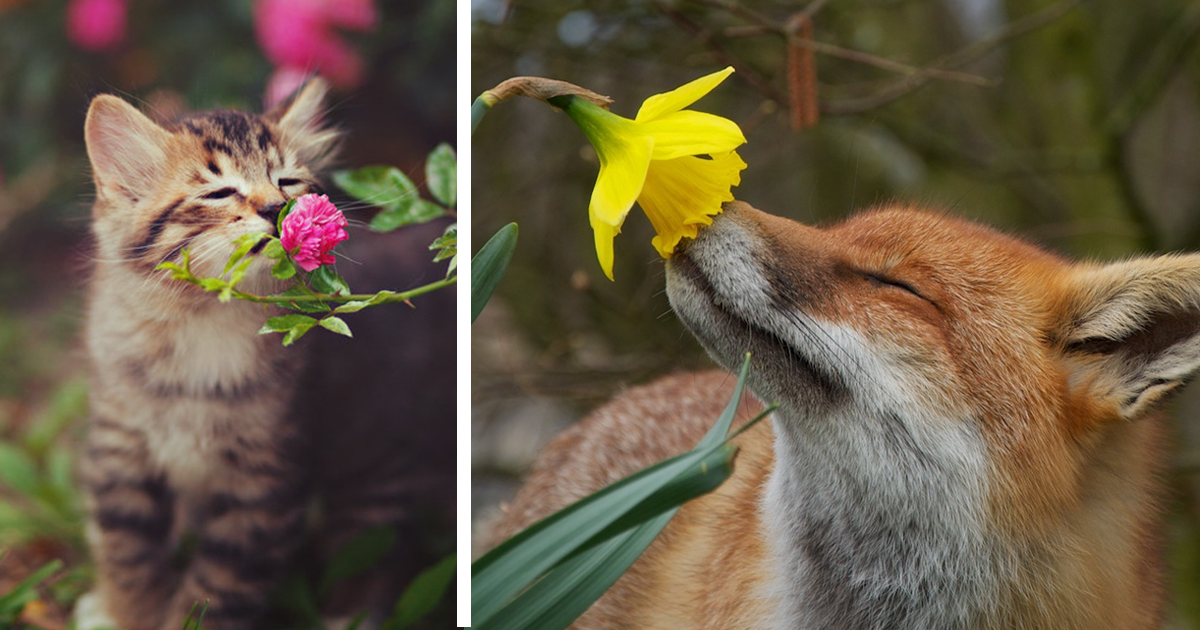
There are cute animal photos, and then there are animals sniffing flowersthe internet’s soft-focus, serotonin-sprinkled answer to a chaotic day. A dog pressing its nose into a daisy looks like it has just discovered poetry. A cat inspecting a rose appears to be judging both the fragrance and the florist’s career choices. A rabbit nibble-sniffing lavender? That is not a photo. That is emotional therapy with ears.
This collection of animals sniffing flowers celebrates one of the simplest, sweetest scenes in nature: curious creatures meeting blooms. Whether it is a puppy burying its face in sunflowers, a deer pausing near wildflowers, a kitten investigating a bouquet, or a butterfly hovering over nectar-rich petals, these moments feel instantly wholesome. They remind us that animals experience the world through senses we often overlookespecially smell.
Behind the cuteness, there is also real science. Flowers use color, scent, shape, nectar, and timing to attract pollinators. Dogs and cats rely heavily on smell to understand their surroundings. Bees, butterflies, moths, hummingbirds, bats, and even some mammals interact with flowers in ways that support ecosystems and food production. In other words, that adorable picture of a nose touching a petal is not just cute. It is a tiny scene from a very old relationship between animals and plants.
Why Animals Sniff Flowers in the First Place
Animals sniff flowers for many reasons: curiosity, food, territory, comfort, play, and instinct. Dogs gather information through scent the way humans read headlines. A flowerbed may tell them which animals passed by, whether another dog visited, whether insects are nearby, and whether something smells delicious or suspicious. To a dog, a garden is not just prettyit is a newspaper, restaurant menu, mystery novel, and neighborhood gossip column rolled into one.
Cats also have a highly sensitive sense of smell. They may sniff flowers to investigate a new object, identify a scent, or decide whether the bouquet deserves respect, indifference, or one dramatic paw swipe off the table. Some cats even open their mouths slightly while smelling, using a special scent-processing structure called the Jacobson’s organ. This can make them look shocked, offended, or as if they just remembered an unpaid bill.
Wild animals interact with flowers in even more practical ways. Bees and butterflies visit blooms for nectar and pollen. Hummingbirds look for nectar-rich tubular flowers. Moths often visit night-blooming flowers. Deer, rabbits, squirrels, and other mammals may sniff flowers while foraging or exploring. Sometimes they are gentle admirers. Sometimes they are tiny garden vandals with adorable faces.
The Science of Flower Scents: Nature’s Perfume Department
Flowers smell good for a reason. Their scents are chemical signals that help attract the right visitors. Sweet-smelling flowers may appeal to bees, butterflies, and other daytime pollinators. Stronger, musky, fruity, spicy, or even unpleasant odors can attract beetles, flies, or nocturnal pollinators. Some flowers are basically running a very targeted marketing campaign: “Free nectar, excellent pollen, limited-time bloom, come immediately.”
Color also matters. Bright red and orange tubular flowers often appeal to hummingbirds. Flat, open flowers can provide convenient landing pads for butterflies. White or pale flowers may stand out better at night for moths. Native plants often support local pollinators better than highly modified ornamental varieties, especially “double” flowers that look fancy but may offer less accessible nectar or pollen.
This is why photos of animals with flowers feel so magical. They capture a meeting point between beauty and biology. The bloom is not just decoration; it is a signal. The animal is not just posing; it is reading the world. And the camera catches the second where curiosity becomes comedy, tenderness, or pure “please frame this and put it on my wall.”
20 Adorable Animal-and-Flower Moments Worth Melting Over
Since the title promises 20 pics, imagine this as a gallery of tiny wholesome scenes. Each one has its own mood, personality, and very serious cuteness rating.
1. The Golden Retriever and the Sunflower
A golden retriever sniffing a sunflower looks like summer became a dog. The big yellow bloom, the happy face, the gentle curiosityit is basically a calendar photo waiting to happen.
2. The Kitten and the Rose
A kitten leaning toward a rose has major “small detective on a floral case” energy. Is it romantic? Is it suspicious? Is the rose secretly a snack? The kitten will decide after a full inspection.
3. The Rabbit in Lavender
Rabbits and lavender together are dangerously charming. The soft ears, purple flowers, and tiny nose twitches create the kind of scene that makes people whisper, “I needed this today.”
4. The Deer Among Wildflowers
A deer lowering its head near wildflowers feels like a fairy-tale illustration. It is peaceful, delicate, and only slightly misleading because the deer may also be considering the flowers as lunch.
5. The Puppy Discovering Daisies
A puppy sniffing daisies is pure beginner-level joy. Everything is new. Everything smells exciting. The puppy has never paid taxes and it shows.
6. The Cat in a Garden Bed
A cat sniffing flowers in a garden looks elegant for approximately three seconds, right before it sits directly on the plant you were trying to protect.
7. The Butterfly on Coneflower
Butterflies visiting coneflowers are not just pretty; they are part of the pollination story. Their delicate landings turn an ordinary garden into a tiny airport for winged jewels.
8. The Bumblebee on Lavender
A bumblebee on lavender is a fuzzy masterpiece. It looks clumsy, hardworking, and deeply committed to its floral career.
9. The Hummingbird Near Trumpet Flowers
Hummingbirds move so fast they seem battery-powered. When one pauses near a tubular flower, the moment feels like nature briefly hit the slow-motion button.
10. The Goat with a Flower Crown
A goat sniffing flowers has a mischievous vibe. You can almost hear it thinking, “Lovely bouquet. Be a shame if someone ate it.”
11. The Horse Smelling Spring Blossoms
A horse gently sniffing blossoms is graceful and cinematic. Big animals being delicate around tiny flowers will always win the internet.
12. The Hedgehog and the Tiny Bloom
A hedgehog near a small flower looks like a children’s book hero who lives in a teacup and gives excellent advice.
13. The Squirrel Inspecting a Tulip
Squirrels approach flowers like tiny parkour accountants. They sniff, calculate, twitch, and vanish before anyone understands the business model.
14. The Piglet in a Flower Field
A piglet sniffing flowers is comedy and sweetness in one round package. It is the kind of image that makes mud look charming.
15. The Cow Near Wildflowers
Cows have a calm, dreamy presence around flowers. A cow sniffing a bloom looks like it is contemplating pasture philosophy.
16. The Fox in Spring Grass
A fox pausing near flowers adds a wild, storybook mood. It feels like the start of a legend, except the legend probably involves stealing snacks.
17. The Duckling Beside Garden Blooms
A duckling near flowers is almost illegally cute. Add a little head tilt and the entire internet must take a short emotional break.
18. The Donkey and the Daisy
Donkeys have expressive faces made for flower photos. A donkey sniffing a daisy looks both tender and mildly unimpressed, which is a powerful combination.
19. The Tortoise in a Flower Patch
A tortoise near flowers brings slow-living energy. It reminds us that sometimes the best way to enjoy beauty is to arrive eventually and stay awhile.
20. The Senior Dog Smelling Roses
A senior dog sniffing roses may be the sweetest image of all. It says: joy does not need to be loud, fast, or complicated. Sometimes it is just a beloved old friend pausing to smell the flowers.
Why These Photos Make Us Feel So Good
Photos of cute animals with flowers work because they combine innocence, softness, color, and curiosity. Animals already trigger affection in many people, and flowers add a layer of freshness and beauty. Together, they create an emotional shortcut: the scene feels peaceful before we even analyze why.
There is also contrast. A huge horse with a tiny blossom, a serious-looking cat with a delicate rose, or a clumsy puppy in a neat garden creates visual humor. The mismatch makes the image memorable. The animal does not know it is being adorable, which somehow makes it even more adorable. Nobody told the rabbit to pose beside lavender like a cottagecore influencer. The rabbit simply arrived and became art.
These photos also remind us of slower attention. Modern life is noisy. A picture of an animal sniffing a flower asks nothing from us except to notice. It is simple, calm, and easy to love. No drama. No complicated plot. Just a nose, a bloom, and a second of curiosity.
Pet Safety: Cute, But Keep It Smart
While animals sniffing flowers is delightful, pet owners should be careful about which plants are nearby. Many common flowers and garden plants can be harmful to dogs, cats, horses, birds, and small pets if eaten. Lilies are especially dangerous for cats. Tulips, daffodils, hyacinths, irises, azaleas, oleander, and sago palm are also examples of plants that may cause serious problems for pets.
Sniffing is usually different from eating, but pets do not always respect that boundary. Some dogs treat the world like an all-you-can-chew buffet. Cats may nibble leaves, bat petals, or drink from vase water. Rabbits and guinea pigs may investigate with their mouths because that is basically their whole research department.
If you want safe flower photos with pets, choose pet-friendly options when possible. Sunflowers, zinnias, petunias, roses, orchids, snapdragons, and some herbs are commonly considered safer choices, though any plant material can still upset a sensitive stomach. Keep bouquets out of reach, avoid chemical sprays, skip toxic bulbs, and supervise photo sessions. A cute picture is not worth an emergency vet visit.
How to Photograph Animals Sniffing Flowers
Use Natural Light
Soft morning or late-afternoon light works beautifully for animal-and-flower photography. It flatters fur, feathers, petals, and tiny whiskers without harsh shadows. If the scene looks like a warm memory, you are doing it right.
Let the Animal Lead
The best photos happen when animals are allowed to explore naturally. Do not force a pet’s face into flowers. Place safe blooms nearby, let curiosity do the work, and be ready. Animals are not models; they are chaotic little freelancers.
Focus on the Eyes or Nose
For close-up shots, focus on the eyes or nose. The magic of animals sniffing flowers often lives in the tiny details: a wet nose near a petal, whiskers brushing a bloom, or a butterfly’s delicate landing.
Keep the Background Simple
A clean background helps the animal and flower stand out. Grass, soft sky, a garden path, or blurred greenery usually works better than clutter. Your cat may be dramatic enough without a laundry basket in the background.
Be Patient
Patience is the secret ingredient. You may take 40 blurry photos before one perfect moment appears. That is normal. Animal photography is mostly waiting, laughing, deleting, and occasionally gasping, “That’s the one!”
Flowers That Attract Wildlife to Your Yard
If these photos make you want a more wildlife-friendly garden, start with flowers that support pollinators. Native plants are often the best choice because they are adapted to local soil, weather, and wildlife. Planting a variety of blooms from spring through fall gives bees, butterflies, moths, and hummingbirds a steadier food supply.
Good pollinator-friendly choices may include coneflowers, bee balm, milkweed, asters, goldenrod, black-eyed Susans, native sages, sunflowers, and yarrow, depending on your region. For hummingbirds, red or orange tubular flowers are often especially attractive. For butterflies, flat clusters and nectar-rich blooms can make feeding easier. For moths, pale or fragrant night-blooming flowers can help.
Try planting flowers in groups rather than scattering single plants everywhere. Pollinators can spot and use clumps more easily. Avoid overusing pesticides, provide water sources safely, and leave some natural habitat when possible. A garden does not need to be perfect to be useful. In fact, a slightly messy, living garden may support more creatures than a flawless green carpet that looks like it has never met a bug.
The Emotional Power of Tiny Nature Moments
There is a reason people share pictures of pets smelling flowers again and again. These images are tiny reminders that wonder still exists in ordinary places. A dog does not need a luxury vacation to be fascinated by a marigold. A kitten does not need a five-step wellness routine to enjoy a sunbeam and a vase of roses. A bee does not require applause to do essential work among petals.
Animals teach us to experience the world more directly. They sniff, listen, pause, chase, stretch, nap, investigate, and move on. Their attention is physical and immediate. When an animal stops to smell a flower, the moment feels pure because it is not trying to be impressive. It is simply happening.
For humans, that can be surprisingly powerful. We spend so much time naming, posting, measuring, and comparing experiences that we sometimes forget to simply notice them. Animal flower photos bring us back to the basics: color, scent, softness, curiosity, sunlight. They say, very quietly, “Hey, look. This is nice.”
Personal Experiences: What Animals Sniffing Flowers Teaches Us
The first thing you learn from watching animals sniff flowers is that curiosity has no age limit. A puppy may charge into a garden like a joyful tornado, sniff three flowers, sneeze once, and look incredibly proud of itself. A senior dog may walk more slowly, but when it pauses near a rose bush, the moment feels even more meaningful. It is not performing. It is just taking in the world at its own pace.
One of the funniest experiences with animals and flowers is how seriously they investigate something so delicate. A cat can approach a bouquet like a museum inspector. It leans in, sniffs one flower, pauses, sniffs another, then gives a look that suggests the arrangement is acceptable but not groundbreaking. Dogs are usually less subtle. They bury their noses in petals, inhale dramatically, and sometimes sneeze with the facial expression of someone betrayed by a daisy.
Rabbits bring a different kind of charm. Their noses move so quickly that sniffing looks like a tiny machine working at full speed. Put a rabbit near a safe patch of herbs or flowers, and the whole scene becomes soft, quiet, and slightly ridiculous. You may intend to take a graceful photo, but the rabbit may immediately turn sideways, show only one ear, and begin negotiating with a leaf.
Gardens also change when animals are around. A flowerbed is no longer just a design project; it becomes a living stage. Bees arrive and make the place feel productive. Butterflies make it feel elegant. Birds bring quick flashes of motion. A dog lying near the blooms makes it feel like home. Even squirrels, with their suspicious little hands and dramatic exits, add personality.
There is also a practical lesson: beauty becomes better when it is shared safely. If pets will be near flowers, plant choices matter. It is wise to check whether flowers are toxic, avoid chemical sprays, and keep curious mouths away from risky plants. A safe garden lets the cute moments happen without worry. The goal is not just a pretty picture; it is a peaceful experience for the animal, the owner, and the little ecosystem around them.
Perhaps the sweetest part is how these moments slow people down. When an animal stops to smell a flower, you almost automatically stop too. You watch the nose twitch, the petals move, the sunlight hit the fur, and suddenly the day feels less rushed. That is the quiet gift hidden inside these photos. They are cute, yes, but they are also reminders. Notice small things. Let curiosity lead sometimes. Laugh at sneezes. Protect what is gentle. And when life gets noisy, follow the dog’s example: find a safe flower, lean in, and breathe.
Conclusion
Animals sniffing flowers may be one of the cutest things ever, but the appeal goes deeper than “aww.” These moments combine natural behavior, sensory curiosity, pollination, garden beauty, and the emotional comfort of seeing animals interact gently with the world. From puppies in daisies to hummingbirds near trumpet flowers, every photo tells a small story about attention, instinct, and wonder.
For pet lovers, the lesson is simple: enjoy the cuteness, but keep safety in mind. Choose pet-safe flowers, supervise curious animals, and remember that sniffing can quickly become nibbling. For gardeners, the invitation is just as clear: plant blooms that support pollinators, use fewer chemicals, and create spaces where wildlife can visit. For everyone else, the takeaway is even easierlook at the pictures, smile like a fool, and let a tiny flower-sniffing animal improve your day.
Note: This article is based on synthesized information from reputable U.S. animal care, veterinary, gardening, pollinator, and wildlife education resources, including veterinary poison-control guidance, university extension materials, national garden and wildlife organizations, and pet behavior references.