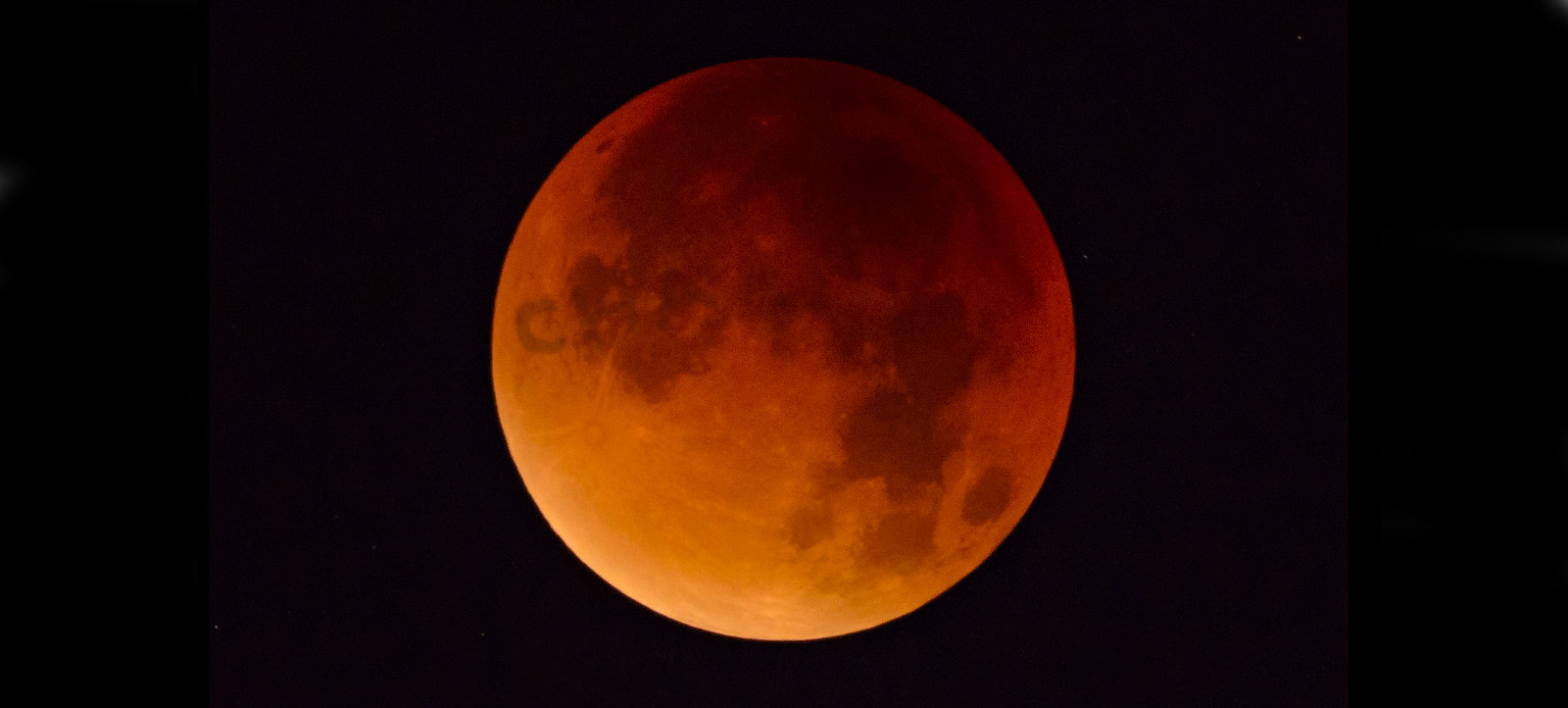
Most lunar eclipses already come with enough drama to make the night sky feel like it hired a lighting designer. The Moon slips into Earth’s shadow, turns coppery red, and suddenly everyone with a camera, a telescope, or a slightly too-confident smartphone zoom becomes an astronomer. But during the total lunar eclipse of January 21, 2019, skywatchers got a surprise bonus feature: a tiny flash of light on the Moon’s surface caused by a space rock slamming into it at extraordinary speed.
Yes, while millions of people were admiring the so-called “Super Blood Wolf Moon,” amateur astronomers and livestream viewers around the world noticed something unusual near the lunar limb. For a fraction of a second, the Moon blinked. It was not a camera glitch, not a passing satellite, not an overexcited pixel having a career moment. It was a real lunar impact flash, later confirmed and analyzed by professional researchers using telescopic data from the Moon Impacts Detection and Analysis System, better known as MIDAS.
The event became a landmark in citizen science and lunar research. It was the first impact flash unambiguously recorded during a lunar eclipse and discussed in the scientific literature. More importantly, it showed how amateur astronomers, casual observers, and professional monitoring programs can work together to catch rare space events that happen faster than a sneeze and much farther away than your neighbor’s porch light.
What Happened During the Lunar Eclipse?
During a total lunar eclipse, Earth moves directly between the Sun and the Moon. Instead of disappearing completely, the Moon often turns red or orange because sunlight bends through Earth’s atmosphere and reaches the lunar surface. That filtered light gives the Moon its famous “blood moon” color. It is beautiful, slightly spooky, and excellent for convincing your friends that astronomy is cooler than they thought.
On January 21, 2019, just after the total phase of the eclipse began, observers saw a brief white flash near the western edge of the Moon. The flash occurred at about 04:41:38 Universal Time and lasted roughly 0.28 seconds. That is shorter than the blink of an eye, yet long enough for cameras and careful observers to capture it.
Researchers later identified the impact location near the crater Lagrange H, close to the Moon’s west-southwest limb. Scientific analysis estimated that the object weighed about 45 kilograms, or roughly the weight of a large punching bag with a very bad travel plan. It was likely around 30 to 60 centimeters across and struck the lunar surface at approximately 61,000 kilometers per hour, or about 38,000 miles per hour.
The impact released energy comparable to about 1.5 tons of TNT. That may sound modest compared with blockbuster explosions, but remember: this happened on the Moon, where there is no thick atmosphere to slow incoming debris. Even a relatively small meteoroid can arrive like an interplanetary hammer.
Why the Flash Was Visible From Earth
When a meteoroid hits the Moon, the collision is extremely violent. The incoming rock and some of the lunar surface material vaporize almost instantly, producing a hot plume of glowing debris. From Earth, this can appear as a tiny flash on the dark part of the Moon.
Normally, lunar impact flashes are easiest to detect when part of the Moon is dark but still visible from Earth. During a full Moon, the lunar surface is usually too bright for a small flash to stand out. A total lunar eclipse changes the situation. The Moon is full, but Earth’s shadow makes it dim enough that a bright impact can become visible. In other words, the eclipse accidentally turned down the Moon’s brightness, giving a tiny cosmic collision its moment in the spotlight.
That is what made this event so remarkable. Lunar impacts happen regularly, but seeing one during a total lunar eclipse is rare. The timing was almost theatrical. The Moon dimmed, the world watched, and a rock from space arrived exactly when cameras were rolling. If the universe has a sense of timing, this was one of its better performances.
Amateur Astronomers Played a Major Role
The January 2019 lunar impact became famous partly because it was not noticed by only one observatory. Amateur astronomers, livestream viewers, astrophotographers, and telescope users in different places saw or recorded the flash. Some observers checked their footage after seeing online discussions. Others had captured the moment without realizing it until later.
This is one of the best parts of modern astronomy: discovery is no longer reserved for mountaintop observatories with budgets that sound like phone numbers. A patient amateur with a modest telescope, a video camera, accurate timekeeping, and clear skies can contribute meaningful data. The Moon is close enough and bright enough to be monitored from backyards, school observatories, astronomy clubs, and small research stations.
Professional researchers still provide the deep analysis. They calculate impact energy, brightness, mass, speed, temperature, and possible crater size. But amateur observers expand the coverage. The more people watching the Moon, the better the chances of catching events that last less than a second.
The Science Behind Lunar Impact Flashes
The Moon Has Almost No Protection
Earth has an atmosphere that acts like a cosmic bug zapper. Many small meteoroids burn up before reaching the ground, creating the streaks we call meteors. The Moon, however, has no meaningful atmosphere. Space rocks do not slow down, flare gently, and apologize for the disturbance. They hit the surface directly.
That means the Moon is constantly being reshaped by impacts. Most are small. Some are too faint to see from Earth. Others create flashes bright enough to be detected by telescopes. Over long periods, this steady bombardment helps grind lunar rocks into fine dust and creates the cratered surface we see today.
Brightness Helps Estimate Energy
When astronomers record a lunar impact flash, they can estimate how bright it was and how long it lasted. From there, they calculate the amount of light produced by the collision. Because only a fraction of the impact energy becomes visible light, researchers use models to estimate the total kinetic energy of the impactor.
For the January 2019 event, multiwavelength observations helped researchers estimate the temperature of the flash and the energy involved. The debris plume reached temperatures comparable to the surface of the Sun. That sounds dramatic because it is dramatic. A small object, moving fast enough, can briefly create a glowing fireball on an airless world.
The Impact Likely Created a New Crater
Scientists estimated that the impact may have excavated a crater roughly 10 to 15 meters across. That is not large by lunar standards, where some craters are wider than cities, but it is big enough to interest researchers. New craters help scientists test models of impact physics, surface composition, ejecta behavior, and the current rate of meteoroid bombardment.
Fresh lunar craters are also useful because they expose newer material beneath the weathered surface. They are like tiny geological windows, opened violently and without a building permit.
Why This Discovery Matters
At first glance, a tiny flash on the Moon may seem like a fun space trivia item. But lunar impact monitoring has serious value. Understanding how often meteoroids strike the Moon helps scientists assess risks for future missions, astronauts, habitats, landers, rovers, and equipment.
NASA and other space agencies are planning long-term lunar exploration. Future crews may spend extended periods on or near the Moon. Unlike astronauts inside Earth’s protective atmosphere, lunar explorers will be operating in a harsher environment. Micrometeoroids and larger meteoroids are part of that risk picture.
Impact data also helps scientists understand the near-Earth object environment. Some meteoroids are too small to be easily detected before impact, but they still reveal themselves when they strike the Moon. By watching the lunar surface, researchers effectively use the Moon as a giant detector.
How Researchers Confirmed It Was Real
A single bright dot in a video is not automatically proof of a lunar impact. Cameras can record cosmic ray hits, sensor noise, reflections, aircraft lights, satellites, or processing artifacts. Astronomers are professional skeptics, which is a polite way of saying they do not let pixels get away with nonsense.
Confirmation requires comparing observations from multiple instruments or locations. If the flash appears in more than one camera at the same lunar position and at the same time, the case becomes much stronger. The MIDAS survey used multiple telescopes and video systems to validate the January 2019 event. Additional reports from amateur observers helped support the conclusion that the flash was a real impact.
The scientific analysis measured the timing, location, brightness, duration, and likely energy of the event. Researchers also considered whether the object might have belonged to a known meteor stream or the sporadic meteoroid background. The available evidence suggested a high-speed meteoroid impact on the Moon’s surface.
Citizen Science: The Backyard Observatory Advantage
Amateur astronomers are often described as hobbyists, but that word can undersell their contribution. Many are skilled observers with carefully maintained equipment, years of experience, and a heroic ability to stand outside in the cold while everyone else is indoors eating snacks.
For fast, unpredictable events such as lunar impact flashes, distributed observation is powerful. No single observatory can watch everything all the time. Clouds happen. Technical problems happen. Someone forgets a cable. But if thousands of observers are watching from different locations, the odds improve.
Modern digital cameras, sensitive sensors, affordable telescopes, and online communities have changed how discoveries spread. A possible flash can be posted, reviewed, compared, and discussed quickly. While social media is not a scientific instrument, it can help alert observers to check their footage. In this case, public attention helped turn a tiny flash into a widely studied event.
Could You Spot a Lunar Impact Flash?
Yes, but it takes patience, preparation, and a little luck. Lunar impact flashes are brief and unpredictable. You cannot point your telescope at the Moon and politely request one. The Moon does not take requests.
The best approach is video monitoring of the dark portion of the lunar surface. A telescope with a suitable camera can record the Moon for long periods. Later, software or careful review can identify short flashes. Observers need accurate timestamps, stable tracking, and enough image quality to distinguish real events from noise.
During meteor showers, the chance of lunar impacts may increase if the Moon’s position lines up with the stream of particles. However, many impacts come from sporadic meteoroids that are not tied to a major shower. That means patience matters more than hype. The sky rewards people who keep watching.
Why Lunar Eclipses Are Special for Observation
A lunar eclipse creates unusual observing conditions. The Moon is full, so the entire near side is facing Earth. But because Earth’s shadow darkens the surface, flashes can stand out more clearly than they would on a normal full Moon. This combination makes an eclipse a tempting target for impact monitoring.
However, eclipses are not perfect. The reddish illumination changes brightness across the lunar surface, and weather can ruin the show. Cameras must be adjusted carefully because the Moon’s brightness changes throughout the event. Observers also need to avoid confusing stars, sensor noise, or atmospheric effects with real flashes.
Still, the 2019 event proved that lunar eclipses can produce valuable impact observations. It also gave the public a vivid reminder that the Moon is not a static decoration. It is an active surface, still being struck, scarred, and studied.
What This Means for Future Moon Missions
As space agencies and private companies prepare for more lunar missions, impact monitoring becomes more practical and more important. Lunar habitats, solar panels, scientific instruments, communications systems, and vehicles will need protection from the harsh space environment. Meteoroid impacts are part of that environment.
The January 2019 flash helped researchers refine estimates of how often objects in a certain size range strike the Moon. These estimates can inform engineering decisions. A tiny particle moving at tens of kilometers per second can damage exposed equipment. Larger impacts are rarer but more dangerous.
Future lunar bases may rely on shielding, underground construction, regolith-covered habitats, and careful site planning. The more scientists know about impact rates, the better they can design systems that survive long enough to do useful work. The Moon may look calm from Earth, but up close it is a target in a cosmic shooting gallery.
Lessons From the 2019 Lunar Impact
The first lesson is simple: keep recording. Many discoveries happen because someone had a camera running at the right time. The second lesson is that amateur astronomy matters. Backyard observers are not just taking pretty pictures; they can capture scientifically valuable events.
The third lesson is that space is dynamic. The Moon changes. The solar system is not a museum display behind glass. Rocks move, collide, break apart, and leave marks. Sometimes those marks are visible from Earth for less than a second, but they still tell a story billions of years in the making.
Experience Notes: Watching the Moon Like an Amateur Astronomer
For anyone interested in the experience of watching a lunar eclipse with the hope of spotting something unusual, the first thing to understand is that astronomy rewards preparation more than expensive gear. A high-end telescope is wonderful, but a clear plan is even better. Before an eclipse, experienced observers usually check the timing of each phase, scout a location with an open view of the sky, test camera batteries, confirm storage space, and practice focusing on the Moon. Nothing teaches humility quite like discovering your memory card is full while the Moon is turning red.
The emotional rhythm of a lunar eclipse is also unique. At first, it feels slow. The shadow creeps across the Moon so gradually that impatient observers may wonder if anything is happening at all. Then, as totality approaches, the atmosphere changes. The Moon darkens, stars become more visible, and the night feels strangely theatrical. People who were chatting suddenly get quiet. Cameras click. Telescope users adjust focus. Someone usually says, “Wow,” and for once, that is a complete scientific statement.
Trying to catch an impact flash adds another layer of excitement. You are not only watching the eclipse; you are monitoring for an event that may not happen, may happen outside your camera’s field of view, or may happen so quickly that you miss it while reaching for coffee. That uncertainty is part of the fun. Amateur astronomy is full of these tiny negotiations with chance. You prepare carefully, then let the universe decide whether it wants to show off.
A practical observing setup does not need to be extravagant. A small telescope or telephoto lens, a sturdy tripod or tracking mount, and a video-capable camera can be enough to begin. The key is stability and continuous recording. Still photos are beautiful, but video is better for detecting flashes that last only a few frames. Accurate timekeeping is also important. If multiple observers record the same event, timestamps help researchers compare data and confirm whether the flash was real.
Another experience many observers share is the importance of community. Astronomy clubs, online forums, and citizen science groups can help beginners learn what to record, how to process footage, and how to report suspicious flashes. After the 2019 lunar impact, many people reviewed their own eclipse videos because others had reported seeing something. That collective curiosity turned scattered recordings into useful evidence.
There is also a lesson in patience. Most nights will not produce a lunar impact flash. Most videos will contain only the Moon, atmospheric shimmer, and perhaps the occasional accidental bump of the tripod. But that is not failure. Regular observation builds skill. You learn how the Moon looks under different lighting, how your equipment behaves, and how to separate real signals from false alarms. The rare event becomes meaningful because of all the quiet hours spent watching.
Finally, the 2019 impact reminds observers that science can begin with a simple question: “Did anyone else see that?” It is a wonderfully human question. It contains surprise, doubt, curiosity, and the beginning of verification. A tiny flash on the Moon became a scientific event because people noticed, recorded, shared, checked, and analyzed. That is the heart of citizen astronomy. You look up, stay curious, and sometimes the Moon blinks back.
Conclusion
The meteorite impact spotted during the January 2019 lunar eclipse was more than a lucky flash in the night sky. It was a rare scientific moment captured by amateur astronomers, casual observers, and professional monitoring systems working together, whether they planned it that way or not.
The event showed that the Moon is still being shaped by impacts, that small space rocks can produce visible flashes, and that citizen scientists can make meaningful contributions to astronomy. It also reminded everyone watching that the sky is not just scenery. It is active, unpredictable, and occasionally very dramatic.
For future lunar missions, impact monitoring will help scientists better understand the risks astronauts and equipment may face on the Moon. For amateur astronomers, the lesson is even more direct: keep your camera running. The next important discovery might last less than a second, and it might happen while the whole world is looking up.