Some kitchen tools make a dramatic entrance. A stand mixer hums like a small spaceship. A chef’s knife gets all the heroic slow-motion chopping shots. And then there is the colander: humble, hole-filled, usually waiting in the sink like it just heard gossip from the pasta pot. But if you cook often, a good colander is not a background character. It is the unsung bouncer of the kitchen, letting water leave the party while keeping your tortellini, berries, broccoli, and dignity safely inside.
That is where All-Clad stainless-steel colanders come in. Known for premium cookware and professional-style kitchen tools, All-Clad offers stainless-steel colanders designed for daily draining, rinsing, washing, and cooling tasks. They look polished, feel sturdy, and bring that “serious cook lives here” energy to even the simplest Tuesday night spaghetti situation.
This guide takes a close look at what makes All-Clad colanders appealing, how they compare with ordinary plastic or silicone options, which size makes sense for your kitchen, how to care for stainless steel, and whether this premium tool deserves a spot next to your pots and pans. Spoiler: if your current colander bends when you pour pasta into it, this may feel like upgrading from a lawn chair to a chef’s throne.
What Are All-Clad Stainless-Steel Colanders?
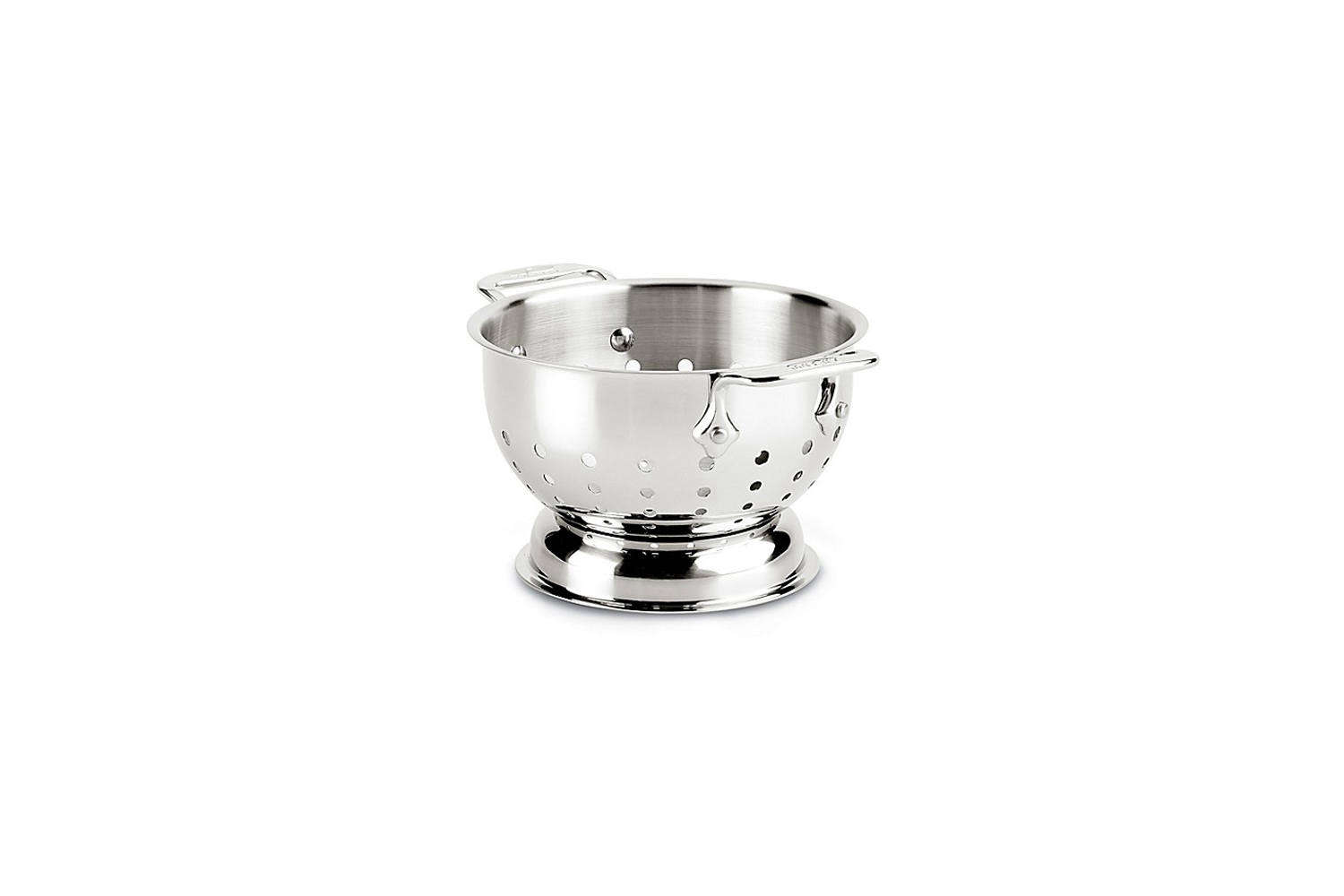
All-Clad stainless-steel colanders are perforated, bowl-shaped kitchen tools made for draining liquid from food. They are commonly used for pasta, vegetables, fruit, potatoes, canned beans, shrimp, blanched greens, and anything else that needs a rinse or a drain without turning dinner into sink confetti.
Typical All-Clad colanders are available in practical sizes such as 1.5 quart, 3 quart, and 5 quart. Depending on the retailer, they may be sold individually or as a nesting set. The smaller size works well for berries, herbs, canned beans, and single portions. The 3-quart model is the everyday middle child: not too small, not too bossy. The 5-quart colander is the pasta-night hero, ready for family-sized portions, big bunches of greens, or a mountain of farmers market produce.
The design usually includes 18/10 stainless steel construction, graduated drainage holes, a pedestal base for stability, and side handles for lifting. Some versions feature riveted or die-cast handles, giving the colander a secure, substantial feel. In plain English: it is built to stand up in the sink, drain quickly, and avoid the terrifying wobble that happens when boiling pasta meets flimsy plastic.
Why Stainless Steel Matters
There are plenty of colanders in the world. Plastic ones. Silicone ones. Mesh ones. Collapsible ones. Some are clever. Some are cute. Some look like they were designed during a very ambitious lunch break. Stainless steel, however, remains a favorite for cooks who want durability, heat resistance, and a clean professional look.
Durability for Daily Cooking
A stainless-steel colander can handle hot pasta water, heavy produce, and repeated dishwasher cycles better than many lightweight materials. It will not absorb food odors, stain easily from tomato sauce, or warp from heat in the way some plastics can. If you drain pasta several times a week or wash produce daily, that strength matters.
Heat Resistance
Pouring boiling water through a colander is one of those everyday kitchen actions that feels simple until the tool fails you. Stainless steel is naturally suited for high-heat draining. While the handles and bowl can become hot, the material itself is far more heat-tolerant than plastic. Use pot holders when draining very hot foods, because bravery is admirable but fingertip burns are not a personality trait.
A Cleaner, More Professional Look
All-Clad stainless-steel colanders have a polished, classic appearance that matches stainless cookware, metal mixing bowls, and modern kitchen appliances. If you keep tools visible on open shelving or hanging racks, the All-Clad colander looks intentional rather than “I bought this during my first apartment panic shop.”
Key Features of All-Clad Stainless-Steel Colanders
Graduated Holes for Faster Drainage
One standout feature is the pattern of graduated holes. These perforations are designed to move water away quickly while still holding larger foods. That makes the colander especially useful for pasta shapes like penne, rigatoni, shells, elbows, and farfalle. It is also helpful for rinsing vegetables because water does not pool at the bottom as easily.
For tiny grains, quinoa, or very small pasta such as orzo, a fine-mesh strainer may still be better. A colander is built for speed and volume, while a strainer is built for precision. Think of the colander as the wide highway and the fine-mesh strainer as the careful airport security line.
Pedestal Base for Stability
The pedestal base helps the colander sit above the bottom of the sink. This is more important than it sounds. If food sits directly in the sink, it can touch standing water or splashback. A raised base improves airflow and drainage while keeping your food slightly elevated. It also reduces tipping, which is critical when you are managing a pot full of boiling water and trying not to perform an accidental kitchen magic trick.
Large Side Handles
All-Clad colanders typically include strong side handles for lifting, shaking, and carrying. Handles matter because draining food is not always gentle. A full 5-quart colander of potatoes or pasta can be heavy. Secure handles help you toss produce under running water, lift food out of the sink, and transfer ingredients to a serving bowl without using the famous “panic grip.”
Multiple Size Options
The availability of multiple sizes is one of the most useful parts of the All-Clad colander lineup. A 1.5-quart colander is excellent for small jobs like rinsing strawberries, draining chickpeas, or washing cherry tomatoes. A 3-quart colander handles everyday cooking for one to three people. A 5-quart colander is better for large pasta batches, leafy greens, corn, potatoes, or family meal prep.
If you cook often and have the storage space, a set of three can be surprisingly practical. They usually nest together, so the storage footprint is not as dramatic as owning three separate bulky tools. Your cabinet may still complain, but only quietly.
Best Uses for All-Clad Stainless-Steel Colanders
Draining Pasta
This is the colander’s grand stage. All-Clad stainless-steel colanders are especially well suited to draining spaghetti, penne, rotini, rigatoni, and other medium-to-large pasta shapes. The strong construction helps when you pour a heavy pot of water and pasta into the bowl. The quick-draining holes reduce the chance of pasta sitting in excess water and becoming soggy.
For long noodles, give the colander a gentle shake after draining. Do not attack it like a maraca at a salsa concert; a few steady movements are enough. Reserve a cup of pasta water before draining if you are making a sauce, because that starchy liquid is basically culinary glue with better public relations.
Rinsing Fruits and Vegetables
A stainless-steel colander is excellent for washing apples, tomatoes, grapes, herbs, green beans, broccoli, and salad greens. The pedestal base keeps produce elevated, while the holes allow water to escape quickly. For delicate berries, use a gentler stream of water and avoid overloading the colander. Stainless steel is sturdy; raspberries are not.
Cooling Boiled Foods
After boiling potatoes, eggs, green beans, or corn, a colander helps release steam and excess water. For blanched vegetables, drain them in the colander and then transfer them quickly to an ice bath if you want to stop cooking and preserve color. This is especially helpful for green beans, asparagus, broccoli, and peas.
Draining Canned Goods
Beans, chickpeas, corn, olives, and canned vegetables can all be rinsed in a colander. The 1.5-quart size is particularly handy here. It is small enough to use quickly and easy to clean afterward. If you are draining very small lentils or broken bits, use a fine-mesh strainer instead.
Airflow Storage for Produce
A stainless-steel colander can temporarily hold onions, potatoes, citrus, or washed produce because the holes encourage airflow. This does not replace proper long-term storage, but it is useful while prepping a meal. It also looks better on the counter than a plastic grocery bag slumped in defeat.
All-Clad Colanders vs. Plastic, Silicone, and Mesh Colanders
Compared With Plastic Colanders
Plastic colanders are lightweight and affordable. They are great for casual use and often come in cheerful colors. However, they may stain, retain odors, flex under weight, or become less attractive over time. Hot water can also be an issue for lower-quality plastic. All-Clad stainless steel costs more, but it offers a sturdier feel and a longer-lasting appearance.
Compared With Silicone Colanders
Silicone colanders are often collapsible, making them excellent for small kitchens, dorms, RVs, or anyone whose cabinets already resemble a cookware avalanche. The tradeoff is structure. Some collapsible designs can feel less stable with heavy food. A stainless-steel All-Clad colander is less space-saving but more rigid and confidence-inspiring.
Compared With Fine-Mesh Strainers
Fine-mesh strainers are better for rice, quinoa, seeds, pulp, sauces, stocks, and very small pasta. They catch tiny ingredients that would slip through larger colander holes. But they are slower to drain and can clog more easily. Ideally, a well-equipped kitchen has both: a stainless-steel colander for volume and a fine-mesh strainer for detail work. One handles the pasta party; the other handles the quinoa drama.
Which Size Should You Buy?
Choose 1.5 Quart for Small Prep
The 1.5-quart All-Clad colander is best for compact jobs: berries, herbs, cherry tomatoes, canned beans, olives, and single servings. It is also a smart choice if you cook mostly for one person or have limited storage. It will not replace a larger colander for pasta night, but it may become the tool you reach for most often during everyday prep.
Choose 3 Quart for Everyday Cooking
The 3-quart size is the best all-around option for many households. It can drain vegetables, wash fruit, handle modest pasta portions, and still fit comfortably in most sinks. If you want only one All-Clad stainless-steel colander, this is the safest middle-ground choice.
Choose 5 Quart for Families and Batch Cooking
The 5-quart colander is ideal for larger households, meal prep, pasta dinners, big salads, and produce-heavy cooking. It has the capacity to handle bulkier foods without crowding. If you cook for a family or regularly prep large quantities, the 5-quart model is the most practical.
Choose the Set If You Cook Often
A three-piece set gives you flexibility. You can rinse berries in the small colander while draining pasta in the large one, or wash herbs separately from sandy greens. For frequent cooks, this is more convenient than it sounds. The downside is price. All-Clad is a premium brand, so buying the set is an investment. But if you value long-term durability and consistent design, the set can make sense.
Care and Cleaning Tips
All-Clad stainless-steel colanders are generally easy to clean. Most stainless-steel colanders are dishwasher safe, but hand washing can help preserve the polished finish. Warm water, dish soap, and a soft sponge are enough for everyday cleaning.
After washing, dry the colander promptly to reduce water spots. Stainless steel can look cloudy if minerals from water dry on the surface. This does not usually affect performance, but if you bought a shiny All-Clad tool, you probably want it to keep looking like it pays rent in a magazine kitchen.
For stubborn discoloration or water marks, a stainless-steel cleaner such as Bar Keepers Friend can help. Use it gently, rinse thoroughly, and avoid harsh abrasive pads that may scratch the finish. Also, clean around the base and handles where small bits of food can hide. Pasta starch is sneaky. Spinach is sneakier.
Pros and Cons of All-Clad Stainless-Steel Colanders
Pros
The biggest advantages are durability, stability, heat resistance, and design. All-Clad stainless-steel colanders feel substantial in the hand, sit securely in the sink, and drain quickly. They are attractive enough to leave visible and strong enough for frequent use. The different sizes make them adaptable to many cooking routines.
Cons
The main drawback is cost. All-Clad colanders are more expensive than many plastic, silicone, or generic stainless-steel options. They can also be heavier than lightweight alternatives. The large size requires cabinet space, and stainless steel may show water spots if not dried after washing. Also, because the holes are designed for drainage, they are not ideal for tiny grains or very small pasta.
Who Should Buy All-Clad Stainless-Steel Colanders?
These colanders make the most sense for home cooks who value sturdy tools, cook frequently, and prefer stainless steel over plastic. They are especially appealing if you already own All-Clad cookware or like a coordinated kitchen setup. They are also a good fit for people who drain pasta often, prep lots of produce, or want a tool that feels dependable every time it is used.
They may be overkill for someone who cooks rarely or only needs a basic colander once a month. In that case, a less expensive stainless-steel or plastic model may do the job. But if you believe kitchen tools should be bought once, used hard, and still look good years later, All-Clad belongs on your shortlist.
Practical Buying Tips
Before buying, think about your sink size, cabinet space, and most common cooking tasks. A 5-quart colander is useful, but it can feel oversized in a tiny apartment sink. A 1.5-quart model is charming and handy, but it will not save you during a giant pasta dinner. The 3-quart size is usually the safest choice if you are unsure.
Check whether the listing is for one colander or a set. Also compare handle style, dimensions, and return policy, because product listings can vary slightly by retailer. If matching cookware matters to you, choose the All-Clad finish that best coordinates with your existing stainless-steel pieces.
Real-Life Experience With All-Clad Stainless-Steel Colanders
Using an All-Clad stainless-steel colander feels different from using a bargain-bin plastic one. The first thing you notice is the weight. It does not feel flimsy or nervous. It sits in the sink like it has a job, a mortgage, and strong opinions about al dente pasta. That sturdiness matters most when draining a heavy pot. With a lightweight colander, you may find yourself pouring slowly, adjusting the angle, and whispering motivational phrases to dinner. With a solid stainless-steel colander, the task feels calmer and more controlled.
In everyday cooking, the 3-quart size is often the most useful. It is large enough for washing salad greens, draining a few servings of pasta, rinsing grapes, or handling steamed broccoli. It is not so large that it takes over the sink. For a small household, it can become the default colander. You pull it out for everything from taco-night lettuce to canned black beans. It is the kitchen equivalent of a reliable friend with a truck.
The 5-quart size shines during batch cooking. If you cook pasta for a family, prep vegetables for soup, rinse several bunches of kale, or drain boiled potatoes for potato salad, the extra room is a relief. Food drains faster when it is not packed tightly, and large greens have space to relax instead of forming a wet vegetable brick. The pedestal base also helps because water moves away from the food rather than collecting underneath.
The small 1.5-quart colander is easy to underestimate until you own one. It is perfect for rinsing berries, herbs, radishes, cherry tomatoes, and small amounts of beans. Instead of dragging out a large colander for one can of chickpeas, you can use the small one and clean it quickly. It also works nicely for cocktail garnishes, lemon wedges, or washed grapes for a lunchbox. The only danger is emotional attachment. You may start calling it “the little guy.” This is normal. Probably.
Cleaning is simple, but stainless steel rewards small habits. Rinse it soon after use, especially after draining starchy pasta or vegetables that leave tiny pieces behind. Put it in the dishwasher when convenient, but dry it afterward if you care about shine. If water spots appear, they are mostly cosmetic. A soft sponge and a stainless-steel cleaner can bring back the polished look. Avoid steel wool unless you enjoy creating abstract scratch art.
One practical experience worth noting: a stainless-steel colander can get hot when draining boiling water. The side handles may warm up, especially if steam surrounds them. Keep a towel or pot holder nearby. This is not a design failure; it is physics being dramatic. Also, because the holes are not fine mesh, tiny ingredients can escape. Rinse quinoa, rice, and small lentils in a fine-mesh strainer instead.
Overall, the best part of using an All-Clad stainless-steel colander is not glamour. It is confidence. It does not flex, flop, stain easily, or make you question your choices while holding four quarts of boiling pasta water. It simply drains food well, cleans up neatly, and looks good doing it. That may not sound thrilling until you realize how many kitchen frustrations come from tools that almost work. The All-Clad colander is the opposite: quiet, capable, and ready for the next pasta emergency.
Conclusion
All-Clad stainless-steel colanders are premium kitchen tools built for cooks who want strength, stability, and long-term usefulness. They are not the cheapest colanders on the shelf, but they offer a sturdy feel, quick drainage, polished design, and practical size options. Whether you choose the compact 1.5-quart model, the everyday 3-quart size, the family-friendly 5-quart version, or a full nesting set, the key benefit is the same: dependable performance.
For pasta lovers, produce washers, meal preppers, and anyone tired of flimsy plastic tools, an All-Clad stainless-steel colander is a smart upgrade. It will not chop onions for you or convince your family to agree on dinner, but it will drain, rinse, and hold food with quiet competence. In a busy kitchen, that is more valuable than it sounds.